Kirjojen hintavertailu. Mukana 11 424 648 kirjaa ja 12 kauppaa.

Kirjahaku

Etsi kirjoja tekijän nimen, kirjan nimen tai ISBN:n perusteella.

3 kirjaa tekijältä David M. Malone

The International Struggle Over Iraq

The International Struggle Over Iraq

David M. Malone

Oxford University Press
2007
nidottu
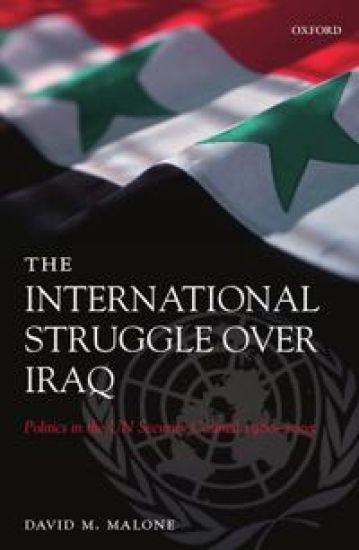
Iraq has dominated international headlines in recent years, but its controversial role in international affairs goes back much further. The key arena for these power politics over Iraq has been the United Nations Security Council. Spanning the last quarter century,The International Struggle over Iraq examines the impact the United Nations Security Council has had on Iraq - and Iraq's impact on the Security Council. The story is a fascinating one. Beginning in 1980, in the crucible of the Iran-Iraq War, the Council found a common voice as a peacemaker after the divisions of the cold war. That peacemaking role was cemented when a UN-mandated force expelled Iraqi forces from Kuwait in 1991, offering a glimpse of a new role for the UN in the 'New World Order'. But unilateralism soon set in, as the Security Council struggled under the weight and bureaucratic demands of its changing identity. The Security Council gradually abandoned its traditional political and military tools for the legal-regulatory approach, but was unable to bridge the gap between those who believed allegations of Iraqi possession of weapons of mass destruction and those who didn't. Growing paralysis led eventually to deadlock in the Council in 2002, with the result that it was sidelined during the 2003 Coalition invasion. This relegation, when combined with the loss of some of its best and brightest in a massive truck bomb in Iraq later that year, precipitated a deep crisis of confidence. The future role of the UN Security Council has now, once again, become uncertain. The paperback edition contains a substantial new preface covering recent developments. Drawing on the author's unparalleled access to UN insiders, this volume offers radical new insights into one of the most persistent crises in international affairs, and the different roles the world's central peace-making forum has played in it.
Does the Elephant Dance?

Does the Elephant Dance?

David M. Malone

Oxford University Press
2011
sidottu
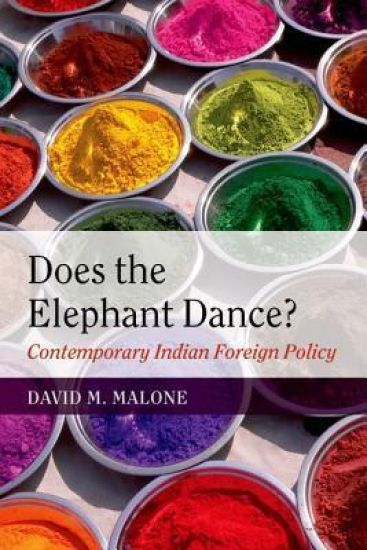
India today looms large globally, where it hardly loomed at all twenty years ago. It is likely to be a key global actor throughout the twenty-first century and could well emerge soon as one of the top five global powers. Does the Elephant Dance? seeks to survey the main features of Indian foreign policy. It identifies elements of Indian history relevant to the topic; examines the role therein of domestic politics and internal and external security challenges, and of domestic and international economic factors; and in successive chapters delves into the specifics of India's policy within its South Asian neighbourhood, and with respect to China, the USA, West Asia (the Middle East), East Asia, Europe and Russia, and multilateral diplomacy. It also touches on Indian ties to Africa and Latin America and the Caribbean. India's "soft power", the role of migration in its policy, and other cross-cutting issues are analyzed, as is the role and approach of several categories of foreign policy actors in India. Substantive conclusions close out the volume, and touch, inter alia, on policies India may want or need to change in its quest for international stature.
Does the Elephant Dance?

Does the Elephant Dance?

David M. Malone

Oxford University Press
2012
nidottu
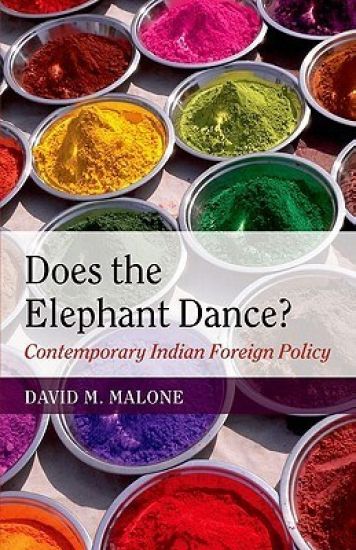
India today looms large globally, where it hardly loomed at all twenty years ago. It is likely to be a key global actor throughout the twenty-first century and could well emerge soon as one of the top five global powers. Does the Elephant Dance? seeks to survey the main features of Indian foreign policy. It identifies elements of Indian history relevant to the topic; examines the role therein of domestic politics and internal and external security challenges, and of domestic and international economic factors; and in successive chapters delves into the specifics of India's policy within its South Asian neighbourhood, and with respect to China, the USA, West Asia (the Middle East), East Asia, Europe and Russia, and multilateral diplomacy. It also touches on Indian ties to Africa and Latin America and the Caribbean. India's "soft power", the role of migration in its policy, and other cross-cutting issues are analyzed, as is the role and approach of several categories of foreign policy actors in India. Substantive conclusions close out the volume, and touch, inter alia, on the absence of an organizing framework for Indian foreign policy.