Kirjojen hintavertailu. Mukana 11 717 486 kirjaa ja 12 kauppaa.

Kirjahaku

Etsi kirjoja tekijän nimen, kirjan nimen tai ISBN:n perusteella.

24 kirjaa tekijältä David Maidment

North West Railways Gallery

North West Railways Gallery

David Maidment

PEN SWORD BOOKS LTD
2025
sidottu
This book contains a selection of mainly unpublished photographs from the vast collection of railway photos and slides held in the archives of the Manchester Locomotive Society, founded in 1935, and based at their clubrooms on Stockport station. Many were taken by the original members of the club during the 1930s and in the post-war period of the early 1950s. Their locations range from Stafford in the south to Shap in the north and Shrewsbury/Llandudno in the west to Peak Forest in the east and their dates range from the Victorian era to the present day. Most of the photos are of locomotives and trains of the London & North Western and Lancashire and Yorkshire Railways and the successor LMS Company, but the range includes some Midland and Great Western subjects. The book will be of interest to railway historians and modellers of the period and timescales portrayed and to those just fascinated by the railways of the industrial north-west and the magnificent scenery of the locations in North Wales, the Peak and Lake Districts.
Large Tank Locomotive Classes of the Southern Railway
The three main constituent companies of the Southern Railway had different policies for tank engine design. The London & South Western built tank engines for suburban, branch and heavy goods work, the London, Brighton and South Coast had many designs for express passenger, mixed traffic and goods work as their main routes were short enough to be resourced by tank engines with limited water capacity and the South Eastern and Chatham ventured into a similar policy in its last days with the ‘River’ class only for the Southern Railway to be dissuaded from further development following the disastrous Sevenoaks accident in 1927. Unlike the other three post-Grouping railways, the Southern made no further effort to adopt the tank engine design for passenger or mixed traffic purposes apart from Maunsells ‘W’ and ‘Z’ for freight and shunting until Bulleid’s revolutionary (and unsuccessful) ‘Leader’ class. This book describes the design, construction, operation and performance of all these pre- and post-Grouping classes and the final adoption of the LMS and BR Standard 2-6-4 and 2-6-2 tank engines to fill the void in the Southern Region’s locomotive fleet.
The Toss of a Coin: An autobiography of a railway career
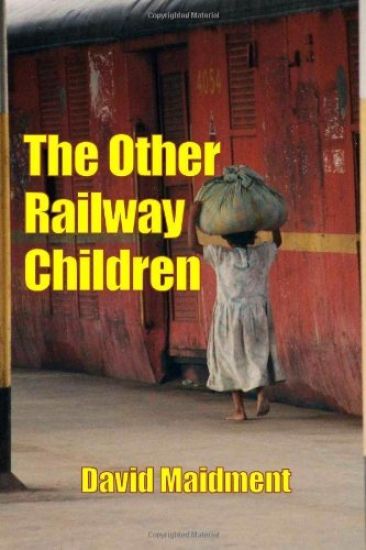
David Maidment traces the origins of his career choice through early enthusiasm for steam trains, through a fascinating three year period as a 'Traffic Apprentice' and then a career in Operations Management influenced by the fateful toss of the coin referred to in the title of the book. David was at the forefront of the significant change from reactive to proactive safety management systems on the railways in both the UK and overseas and encounters with street children on stations in other countries he visited stimulated him to found the Railway Children charity in 1995. The book is based on ten hours of interviews made for the National Rail Museum's oral history archive. All royalties from this book will be donated to the Railway Children charity (Charity Commission 1058991, www.railwaychildren.org.uk)
The Madonna and Her Sons

The Madonna and Her Sons

David Maidment

Lulu.com
2015
nidottu
How do you tell your children that their eldest brother is their nation's long promised Messiah? And when? And what is the outcome? Matthew's Gospel in the bible quotes the names of at least four of Jesus' brothers by name and infers a minimum of two unnamed sisters and other passages hint that not all was well in the relationship between Jesus and his family. This novel explores the possible tensions in the family as the young 'Joshua' (Jesus) grows from boyhood through youth to maturity, the exchanges with his cousin John and the inevitable clash with the Jewish and Roman establishment. The youth and three year mission of this 'Joshua' is recounted mainly through the eyes of his mother, now trying to hold her family together through turbulent time in the history and culture of 1st century Israel.
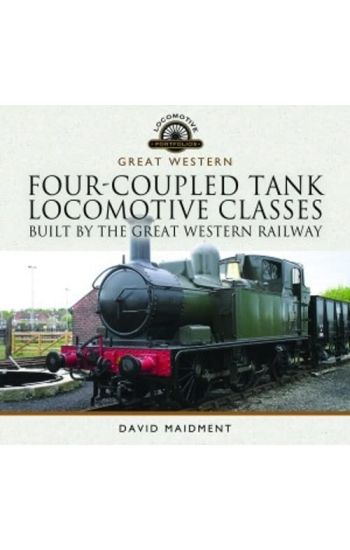
Four-Coupled Tank Locomotive Classes Built by the Great Western Railway
This book is a comprehensive history of all twenty-six classes of four coupled tank engines commissioned by the Great Western Railway or built at their Wolverhampton and Swindon Works, from the Broad Gauge 2-4-0 and 4-4-0 tanks of the 1840s and 1850s to the well known Collett 0-4-2 branch line engines of classes 48XX (later renumbered 14XX) and 58XX of the 1930s. As well as the Broad Gauge engines, the strange looking Covertibles' of William Dean, a number of experimental one-off' designs, the numerous Wolverhampton 0-4-2Ts of the 517' class and the Swindon built 2-4-0 Metro Tanks' are described with - where known - their allocation and operation. The book includes twenty weight diagrams and nearly 300 photographs, over 50 in colour. The four-coupled tank engines absorbed by the Great Western from other companies at or before 1923 will be featured in a separate volume to follow.
The LMS Princess Coronation Pacifics, The Final Years & Preservation
This book follows on from the author's book on the Princess Coronation pacific locomotives from their construction in 1937 to their operation in 1956\. It picks up from the story in 1957 with their operation and performance on the Caledonian', Royal Scot' and Midday Scot' accelerated services of the late 1950s, their continuing heavy work as dieselisation of the West Coast mainline is implemented and the sudden withdrawal of the remaining examples at the end of the 1964 summer timetable. Included are the author's personal experiences and photographs and the descriptions by three Crewe men who fired these engines on the heavy overnight Crewe - Perth sleeper services in the late 1950s, two of whom, Les Jackson and Bill Andrew, drove 6229 and 6233 in the preservation era. As well as their stories of their experiences in BR days, they describe runs with the preserved locomotives and have included photographs from their personal collections. Crewe Works fitter, Keith Collier includes his experiences of their maintenance and the author in conclusion compares them with the finest steam locomotives of France, Germany and the USA.
Great Western Castle Class  4-6-0 Locomotives in the Preservation Era
This third volume in the series on the Great Western Castle class locomotives focuses on the eight that have been preserved and goes into depth on the reconstruction of three of them, the two Tyseley ones, 5043 and 7029 described by Bob Meanley and Didcot's 4079 recounted by David Maidment from the records of the Great Western Society, including the full story of 4079's prolonged stay in Western Australia, its return to the UK and subsequent restoration. The history of all eight is covered and copiously illustrated, including over 100 colour photographs, with many during the restoration work by Bob Meanley and in operation by David Maidment. The book includes records of their operation and performance since restoration when some of the most remarkable performances of these locomotives were achieved.
London & North Eastern Railway 4-4-0 Tender Locomotives
This first volume on the LNER 4-4-0 locomotives describes the design, construction, history, operation and performance of the Great Northern, Great Central and Great Eastern examples, classified by the LNER at the Grouping as classes, D1 - D4, D5 - D12 and D13 - D16 respectively. It covers from their emergence in the late nineteenth century to their demise in the mid or late 1950s and their performance at their peak operation times, mainly in the inter-war years of LNER ownership. It also includes the former Midland & Great Northern Railway engines that were later absorbed by the LNER as classes D52 - D54.
London & North Eastern Railway 4-4-0 Tender Locomotives - North Eastern, North British, Great North of Scotland, L N E R
This second volume on the LNER 4-4-0 locomotives describes the design, construction, history, operation and performance of the North Eastern, North British, Great North of Scotland and Gresley LNER built examples, classified by the LNER at the Grouping as classes, D17 - D24, D25 - D36, D38 - D48 and D49 respectively. It covers from their emergence in the late nineteenth century to their demise in the mid or late 1950s and early 1960s with their performance at their peak operation times, mainly in the inter-war years of LNER ownership.
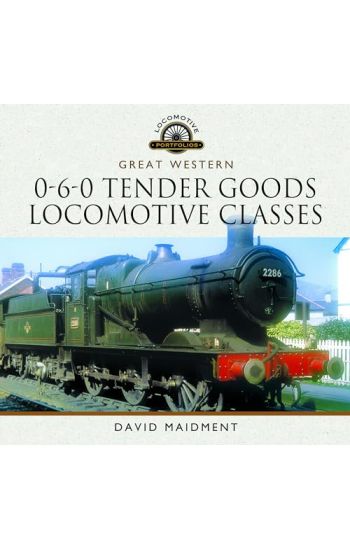
Great Western, 0-6-0 Tender Goods Locomotive Classes
This book is a comprehensive history of all the 0-6-0 tender locomotives built by the Great Western Railway or by railways absorbed by the GWR from the very earliest broad gauge engines designed by Daniel Gooch to the Collett 2251 class of the 1930s some of which were still under construction at nationalisation. It includes the Joseph Armstrong ‘Standard Goods’ and the famous Dean Goods, many of which served overseas in the two world wars. The text of 40,000 words describes the design, construction and operation of eight GW and five ‘Absorbed’ broad gauge classes, and thirteen GW and thirteen ‘Absorbed’ standard gauge classes. The book has over 250 black and white and 30 colour photos, weight diagrams and drawings.
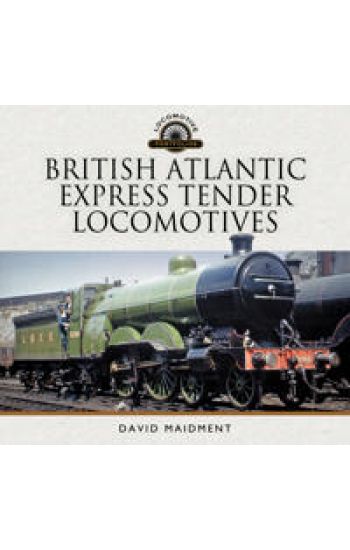
British Atlantic Express Tender Locomotives

British Atlantic Express Tender Locomotives

David Maidment

PEN SWORD BOOKS LTD
2025
sidottu
The British Atlantic locomotive flourished in the first decade of the nineteenth century especially on the relatively level stretches of the East Coast mainline. This book describes the design, construction, history, operation and performance of the Great Northern, Great Central, North Eastern and North British Atlantics and the London Brighton & South Coast engines that were developed from the GN design. More unusual were the Lancashire & Yorkshire ‘Highflyers’ which were some of the earliest and also included are the most powerful of all, Churchward’s Great Western Atlantics (converted to 4-6-0s later) and his three French Compounds. Most had been replaced by 4-6-0 and 4-6-2 designs by the 1920s and were withdrawn before the Second World War, though a few lingered to the post-war period and just reached the era of British Railways, though only the Brighton Atlantics survived longer. The last of all, 32424 Beachy Head, was withdrawn in 1958 and has been recreated for the Heritage industry. The book concludes with a brief look for comparative purposes at some of the most influential Atlantics on the rest of the world’s railways.
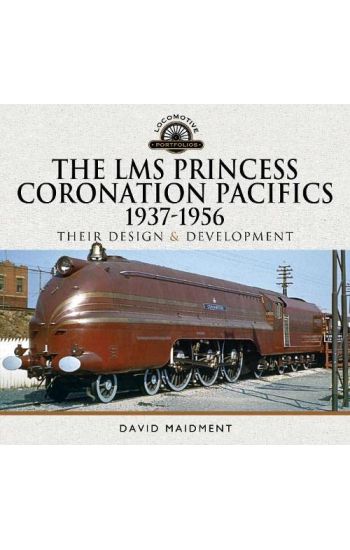
The LMS Princess Coronation Pacifics, 1937-1956

The LMS Princess Coronation Pacifics, 1937-1956

David Maidment

PEN SWORD BOOKS LTD
2023
sidottu
This book covers the design, construction, operation and performance of Sir William Stanier's masterpiece, the Princess Coronation pacific locomotives, better known as the Duchesses'. Included are pen portraits of the LMS engineers, a chapter on the express locomotives of the early LMS period that preceded their introduction and the internal rivalries and politics that Stanier was brought in to resolve. Chapters and photographs cover the streamline era, the war years and aftermath, the early years of nationalisation including the 1948 locomotive exchanges and the recovery of performance in the mid-1950s. The author includes some of his own experiences and photographs. The book includes 200 photographs including a few in colour from the LMS era, and an appendix with weight diagrams, and statistics of the locomotive construction and withdrawal, names, liveries, allocations and mileages.
Great Western Castle Class 4-6-0 Locomotives - The Final Years 1960- 1965
The author's second volume about the Great Western's classic express locomotives covers their final six years in British Railways service. In 1960 the Castles, many now modernised with double chimneys and 4-row superheaters, were still in charge of most of the Western Region's expresses, but by the summer of 1963 their regular express work was limited to the London - Worcester route. Their declining numbers in the last couple of years covered special summer and relief trains, parcels and freight work, deputising for failed or unavailable diesels and a flurry of excursions and railtours where their prowess could still be demonstrated. The author worked and lived alongside them in these years and the book includes much of his own personal experience on the footplate, on their trains and on shed. The book recaps briefly their first 25 years and covers their history, operation and performance in their final years and is copiously illustrated including over 100 colour photographs.
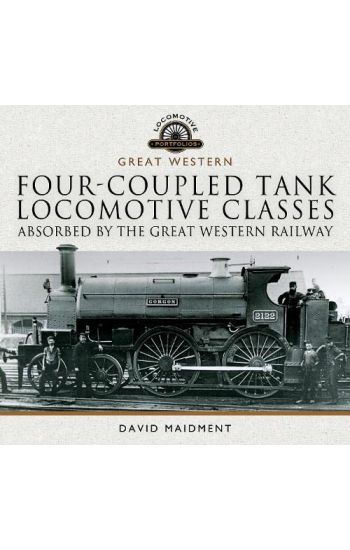
Four-coupled Tank Locomotive Classes Absorbed by the Great Western Railway
This book is a comprehensive history of the four coupled tank engines absorbed by the Great Western Railway - locomotives of nine Broad Gauge companies, nineteen Standard Gauge companies, mainly in the South West which became part of the GWR between the 1870s and 1914, and a further eighteen companies, mainly in South Wales absorbed by the GWR in 1922 and 1923 at the formation of the Big Four' Grouping. The locomotives described and illustrated range from the 4-4-0 Broad Gauge saddle tanks of the South Devon and Bristol & Exeter Railways to the large 4-4-4 tank locomotives of the Midland & South Western Junction Railway, not forgetting the numerous and varied 0-4-0 pug saddle tanks of the Swansea Harbour Trust and the Powlesland & Mason company. The book includes thirty-two weight diagrams and nearly 200 photographs, many of exotic and rare locomotives.
Great Western, Pannier Tank Classes

Great Western, Pannier Tank Classes

David Maidment

Pen Sword Transport
2019
sidottu
This is the tenth book by David Maidment in the ‘Locomotive Portfolio’ series and covers the large number of designs from 1860 onwards of 0-6-0 saddle tanks built for both the Great Western Railway and the independent railway companies in South Wales, most of which were converted to pannier tanks in the Churchward and Collett eras as they were reboilered with raised Belpaire fireboxes between the early 1900s and the late 1920s. As well as the Armstrong and Dean engines, the book goes on to describe the design, construction and operation of the largest class of steam engines built in the UK in the last century – Collett’s familiar 57XX class, examples of which were still being built after nationalisation. Collett also designed pannier tank engines for branch passenger and freight work – the 54,64 & 74XX series, and Hawksworth continued the GW tradition with a tapered boiler version, the 94XX, after the Second World War as well as the light 16XX and the outside cylinder Walschaerts valve geared 15XX. This is a very comprehensive book covering so many classes, valuable for the modeller, and has over 400 photographs, and a full colour section.
Great Western, Grange Class Locomotives

Great Western, Grange Class Locomotives

David Maidment

Pen Sword Transport
2019
sidottu
Churchward proposed a 5ft 8in wheeled 4-6-0 for mixed traffic duties in 1901 and it was seriously considered in 1905, but it took until 1936 before his successor, Charles Collett, realised the plan by persuading the GWR Board to replace many of the 43XX moguls with modern standard mixed traffic engines that bore a remarkable likeness to the Churchward proposal. David Maidment has written another in his series of Locomotive Portfolios' for Pen & Sword to coincide with the construction of a new Grange' at Llangollen from GW standard parts to fill the gap left by the total withdrawal and scrapping of one of that railway's most popular classes - to their crews at the very least. As well as covering the type's design and construction, the author deals comprehensively with the allocation and operation of the eighty locomotives and in particular has researched their performance and illustrated it with many examples of recorded logs from the 1930s as well as in more recent times. As in previous volumes, the author has added his own personal experiences with the engines and has sourced more than 250 photos, over 40 of which are in colour.