Kirjojen hintavertailu. Mukana 11 244 527 kirjaa ja 12 kauppaa.

Kirjahaku

Etsi kirjoja tekijän nimen, kirjan nimen tai ISBN:n perusteella.

134 kirjaa tekijältä David Martin

The Education of David Martin

The Education of David Martin

David Martin

SPCK Publishing
2013
nidottu
David Martin is one of the most distinguished writers on Christianity and society in modern times. Known and respected internationally for his critique of the secularisation theory that once dominated sociology, David Martin is credited with generating the first comparative general theory of secularisation. A regular contributor to media debates on the role of religion in society, his many influential writings and broadcasts range extensively over issues of religion, politics, violence and war. David Martin's vivid, elegant and absorbing prose offers surprising and often moving insights into his life, times and intellectual development. As Professor Emeritus of Sociology at the LSE he gives a compelling behind-the-scenes account of the protests during the 1960s and 1970s. He also recounts the ups and downs of his leading role in championing the King James Bible and the Prayer Book in the 1980's. It will be a must read for the many people, both within and without the church, who have been influenced by his seminal writings.
An Examination of Mr. Emlyn's Answer to the Dissertation Upon the Seventh Verse of the Fifth Chapter of the First Epistle of St. John, ... By Mr. Martin, ... Translated From the French
The 18th century was a wealth of knowledge, exploration and rapidly growing technology and expanding record-keeping made possible by advances in the printing press. In its determination to preserve the century of revolution, Gale initiated a revolution of its own: digitization of epic proportions to preserve these invaluable works in the largest archive of its kind. Now for the first time these high-quality digital copies of original 18th century manuscripts are available in print, making them highly accessible to libraries, undergraduate students, and independent scholars.The Age of Enlightenment profoundly enriched religious and philosophical understanding and continues to influence present-day thinking. Works collected here include masterpieces by David Hume, Immanuel Kant, and Jean-Jacques Rousseau, as well as religious sermons and moral debates on the issues of the day, such as the slave trade. The Age of Reason saw conflict between Protestantism and Catholicism transformed into one between faith and logic -- a debate that continues in the twenty-first century.++++The below data was compiled from various identification fields in the bibliographic record of this title. This data is provided as an additional tool in helping to insure edition identification: ++++British LibraryT094147London: printed for W. and J. Innys, 1719. 6],114p.; 8
Reflections on Sociology and Theology

Reflections on Sociology and Theology

David Martin

Clarendon Press
1996
sidottu
Reflections on Sociology and Theology is a collection of essays by a distinguished sociologist exploring the relationship between sociology and religious issues. After laying out the main themes to be explored, David Martin divides the essays into three sections: Part I: Theoretical Considerations have a strong methodological content, and examine the nature of sociology and theology, and their inter-relationship. Part II: Practical Issues discusses sociological and practical issues of interest to theologians, such as peace studies, Christian Unity, and the nature of religious comment on politics. Part III: Addresses to Clergy and to Teachers of Sociology divides into two parts: the first address is directed against the notion of collective guilt as propagated by both religious and secular sources. The second, aimed at the clergy, sets out the empirical situation of western Christianity and suggests a socio-theological response. David Martin presents an elegant, compelling argument that religion and sociology can - and should - co-exist.
Vicksburg Campaign

Vicksburg Campaign

David Martin

Da Capo Press Inc
2002
pokkari
"Sam" Grant had his faults, but he was always willing to fight, and often able to win. Frustrated by a tactical stalemate in Virginia in 1863 Ulysses S. Grant embarked upon a strategy of strangling the Confederate supply line on the Mississippi. Central to the Union strategy was the capture of the Confederate-held Mississippi town of Vicksburg.Grant combined the coolness under fire necessary for operational command with a storekeeper's ability to figure odds, anticipate supply needs, and calculate rates of movement of his own and his opponent's armies. Facing him was a determined and talented Confederate opposition. Nathan Bedford Forrest's campaign of protracted cavalry raids frequently placed Grant's supplies and reinforcements in constant jeopardy. Isaac Brown and his scratch-built Confederate ironclad Arkansas took on the Union river fleet single-handedly, writing one of the most interesting chapters in American naval history. Inside the besieged Vicksburg itself, Southern soldiers and civilians alike suffered from hunger and bombardment. Grant's soldiers endured in their turn heat, disease, and costly attacks on the Confederate fortifications.Grant's Vicksburg operations and the experiences of the opposing sides are of lasting historical interest. Day-to-day courage in pursuit of a grand strategic vision combined land and naval operations, guerrilla raids, political infighting and interference, and the riverine operations of America's first "brown water" navy all have been brought together here in a powerful narrative of military history.
Gettysburg July 1

Gettysburg July 1

David Martin

Da Capo Press Inc
2003
pokkari
Gettysburg, July 1 presents the most detailed regimental-level account ever written of the critical first day of the Civil War's greatest battle. Using firsthand sources, most of which are unpublished and some never before cited, Gettysburg, July 1 combines recent scholarly interpretations of the action with original analysis by the author. It takes a fresh approach to the battle at the tactical level, with emphasis on the experience and competence of regimental and brigade commanders.
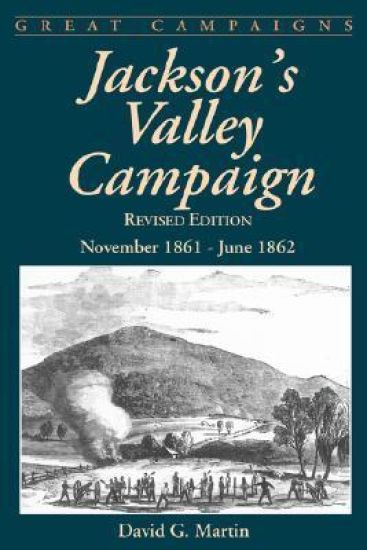
Jackson's Valley Campaign

Jackson's Valley Campaign

David Martin

Da Capo Press Inc
2003
pokkari
In a few short months in the Shenandoah Valley, Stonewall Jackson rewrote military history. Accompanied by George Patton's great-uncle and a staff of able subordinates, the Bible-quoting general used his own unique view of past military doctrine to defeat a series of converging enemy armies. American military strategy has never been the same since. Jackson's aggressive personality enabled him to constantly maintain the initiative. While cloaking his own operations in tight security, he was often able to discern the aims of his opponent. Frequently outnumbered, he managed to keep enemy units separated, and to defeat them in detail. Jackson was able to co-ordinate infantry, cavalry, and artillery operations, and was particularly successful in turning the normally slow-moving infantry into an effective mobile strike force.Jackson's Valley Campaign is supplemented by sidebars on famous units, weapons, incidents, and in-depth personality profiles of Jackson and his opponents. Complete orders of battle and special maps that clearly illustrate Jackson's operational doctrine are enhanced by unique charts that show the distances and rates of march of Jackson's "foot cavalry" between all major points in the Shenandoah Valley.In the long-awaited revision of his out-of-print classic, the author describes Jackson's war of maneuver and the tactical ideas it represented, without losing sight of the individuals and units on both sides who tested military theory with their lives. John C. Frémont, "Napoleon" Banks, Turner Ashby, Belle Boyd, the Louisiana Tigers, Blenker's German Division, and the Stonewall Brigade all live again in this colourful but thoughtfully written account.
The Philadelphia Campaign

The Philadelphia Campaign

David Martin

Da Capo Press Inc
2003
pokkari
Brandywine, Germantown, Valley Forge, Monmouth. These are some of the most famous locales of the Revolution, yet not one was the scene of an American victory. The Philadelphia campaign, which ran for well over a year from early 1777 to mid-summer 17778, is recognized as the high point of the Revolution. It was a campaign during which the British won almost every battle and gloriously seized their objective, the Colonial capital at Philadelphia, yet they were not able to win the war. Thanks to the fortitude and determination of leaders like Greene, Wayne, Morgan, Lafayette, Von Steuben, and especially George Washington, the brave American citizen soldiers refused to admit defeat and weathered the dark days of Valley Forge to emerge a more efficient fighting machine, determined to win the war no matter how long it took. Such was the patriotism of the Colonial troops who won their nation's independence from the professional soldiers and Hessian hirelings of King George.Military historian Dr. David G. Martin's The Philadelphia Campaign is a lively account of an epic period in American history. His narrative includes detailed strategic and tactical analyses of the movements of the general and their battles for the city of Philadelphia along with the story of hardships and trials of soldiers on both sides. What emerges is a story of courage, incompetence, tenacity, jealousy, and intrigue. The book is well illustrated with contemporary drawings and maps. A reader's guide provides a basis for further study and there is information about sites from the war which can still be seen today. Sidebars provide information on the period such as the leadership o both armies, the weapons they used, the role of African-Americans in the Revolutionary War, and the stories of heroines Lydia Darragh and Molly Pitcher.
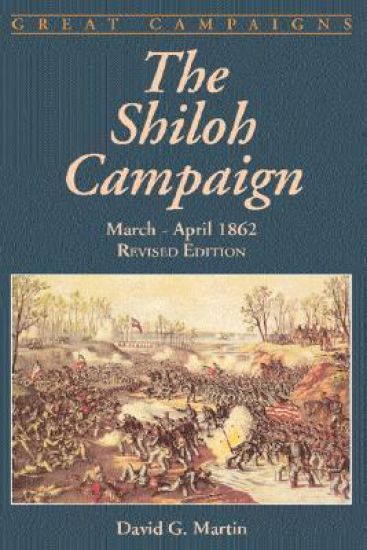
The Shiloh Campaign

The Shiloh Campaign

David Martin

Da Capo Press Inc
2003
pokkari
The battle of Shiloh on April 6-7, 1862, was the biggest battle of the Civil War up to that date. Confederate General A.S. Johnston's daring surprise attack failed and cost him his life. The gallant stand of the then-unknown Union General Ulysses S. Grant created a new national hero and was the turning point in the career of the Civil war's eventually victor.The Shiloh Campaign provides a moment-by-moment account of the battle at the level of the individual soldier, but also examines the grand tactics of the Civil War's Western theatre and problems at the highest level of leadership on both sides. Grant's uneasy relationship with his then commander Henry Halleck is described, as well as Grant's and Sherman's very modern-sounding problems with the press.David G. Martin's The Shiloh Campaign provides the most accurate order of battle available. A special "Leaders" section profile 33 major personalities of the battle and the book's "Campaign" format shows the relationship of Shiloh to previous engagements at Fort Donelson and Island No. 10, and the opening up of the decisive Western theatre of the Civil War.On the Confederate side, Martin describes the unique concentration of Mississippi and Gulf Coast garrisons that gave Johnston his strike force for the attack on Grant's camp at Sihloh. Also featured is an in-depth examination of General Beauregard's controversial role in the campaign, and his relationship with other Confederate generals. A unique "Sharing the Blame" section explores the tactical successes and failures of both sides. A combination of contemporary and specially commissioned maps add clarity to the river campaigns against Forts Henry and Donalson and Island No. 10, and the final conflict at Shiloh.The battle of Shiloh showed all America how bloody and serious a conflict the Civil War really was. The closely fought battle was long and intense and proved to both sides that the war was a serious affair and would not be decided quickly.
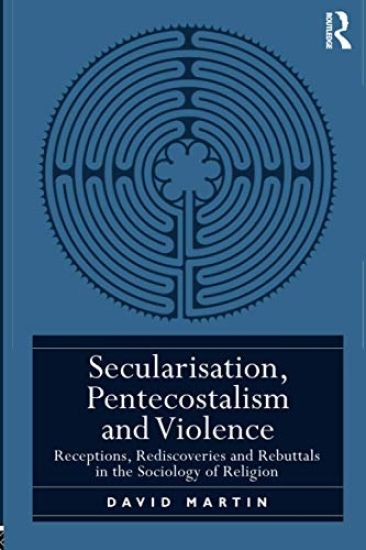
Secularisation, Pentecostalism and Violence
In this book David Martin brings together a coherent summary of his many years of ground-breaking academic work on the sociology of religion. Covering key and contentious areas from the last half-century such as secularisation, religion and violence, and the global rise of Pentecostalism, it presents a critical recuperation of these themes, some of them first initiated by the author, and a review of their reception history. It then reviews that reception history in a way that discusses not only the subjects themselves, but also the academic practices that have surrounded them. As such, this collection is vital reading for all academics with an interest in David Martin’s work, as well as those involved with the sociology of religion and the study of secularisation more generally.
Geographic Information Systems

Geographic Information Systems

David Martin

Routledge
1995
sidottu
This second edition of Geographic Information Systems builds on the strengths of the first, and incorporates important recent advances in GIS development and major new socioeconomic datasets including new census data. Martin presents an accessible introduction to the history, principles and techniques of GIS, with a unique focus on socioeconomic applications. This non-technical volume addresses the needs of students and professionals who must understand and use GIS for the first time.
Geographic Information Systems

Geographic Information Systems

David Martin

Routledge
1995
nidottu
This second edition of Geographic Information Systems builds on the strengths of the first, and incorporates important recent advances in GIS development and major new socioeconomic datasets including new census data. Martin presents an accessible introduction to the history, principles and techniques of GIS, with a unique focus on socioeconomic applications. This non-technical volume addresses the needs of students and professionals who must understand and use GIS for the first time.
Secularisation, Pentecostalism and Violence
In this book David Martin brings together a coherent summary of his many years of ground-breaking academic work on the sociology of religion. Covering key and contentious areas from the last half-century such as secularisation, religion and violence, and the global rise of Pentecostalism, it presents a critical recuperation of these themes, some of them first initiated by the author, and a review of their reception history. It then reviews that reception history in a way that discusses not only the subjects themselves, but also the academic practices that have surrounded them. As such, this collection is vital reading for all academics with an interest in David Martin’s work, as well as those involved with the sociology of religion and the study of secularisation more generally.
Ferret Dreams: Crittertude

Ferret Dreams: Crittertude

David Martin

Crittertude
2012
nidottu
How much trouble can an eclectic bunch of cats, birds, a white fluffy dog and one squiggly ferret get themselves into while living under the same roof? If you've never experienced Crittertude before, then you'll gather a glimpse into the magical realm of possibilities: Alien abduction, time travel, mechanical finches, a devious plot to take over the world (again) and, just perhaps, an unattainable desire to answer a ferret's ultimate question, "Yes, but who will feed me?" In our stories about these household critters, we've tried to remain true to the unique character traits of each animal. Some are innocent, while others are less so. All, however, are dear to us and, surprisingly enough, to our readers as well. Frequently Asked Questions (FAQ) Who are the main characters? Perhaps the rising star in all of this is Mady, the squiggly ferret, who adds a certain unpredictability and air of innocence to the house. Booper the white fluffy Maltese dog is the guardian of the house and general underdog for the innocent (no pun intended). Lazy Orange Fat Cat is, essentially, a cranky behemoth with an appetite that is rivaled only by her girth. Melvin is our resident green cheek conure who constantly vies for attention and, according to a pet psychic reading we once took on a dare, secretly wishes that all the other animals in the house would just pack up, go away and die. Sitting in the cage below, our Zebra and Java Rice finches share a common nest and are the best of friends. While Black Sneaky Cat is an easy-going, simple silent observer, he tends to be undone by his own obsessive-compulsive desire for playtime and overall power. Finally, there's One of Six, the only surviving bird out of a litter of six baby European Starlings that took nest in our roof. We're fairly certain that he exists with the mere purpose of uttering phrases in English and other various Star Trek sounds. And then there's the occasional household guest or two. Are all of the critters yours? For better or worse, they're all part of the household. Occasionally a critter is featured that is a temporary household guest; the others are the primary residents. Is any of this Photoshopped? Believe it or not, the majority of all the pictures are real, with the notable exception of the occasional flying saucer, lightsaber, small mouse (this is a mouse-free household) or objective-oriented mechanical finch. Situations also tend to be real and are rarely "staged", as is the interaction between all the animals. While Photoshop is used occasionally, it is minor and typically for image post-processing, inserting special effects or just general tomfoolery. Do they all really get along that well? The cats both stalk and tolerate the ferret (pointy teeth and claws prevent certain death). Melvin (the Green Cheek Conure) fears nothing except for the ferret. The white fluffy dog likes everyone except for the sharp biting conure. Of all the critters, Black sneaky cat is the most suspicious of all others. The starling (One-of-Six) just sits around reciting English phrases and Star Trek noises all day. Where did you come up with the name "Crittertude"? We'd love to say it was the result of much involved soul-searching. Frankly, it literally just came to us.
Tongues of Fire

Tongues of Fire

David Martin

Blackwell Publishers
1993
nidottu
Now available in paperback, Tongues of Fire deals with one of the most extraordinary developments in the world today - the rapid spread of Evangelical Protestantism in vast areas of the underdeveloped societies, notable Latin America. The growth of Evangelical Protestantism since the 1960's from its epicentre in the United States has been a religious and social phenomenon of extraordinary proportions. David Martin, one of the world's leading authorities on the sociology of religion, examines this remarkable phenomenon, taking account of how the religious elements have affected and have been affected by the cultural and political conditions and the future of the Americas, but also by those concerned with the relation of religion and social change throughout the contemporary world.
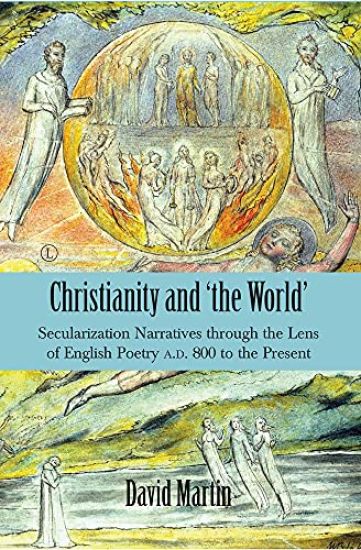
Christianity and 'the World'

Christianity and 'the World'

David Martin

Lutterworth Press
2021
nidottu
David Martin was one of the world's leading commentators on secularization theory. He was also a committed and lifelong reader of English poetry. Christianity and 'The World' develops Martin's argument against simplistic secularization narratives with reference to the history of poetry, a topic with which few social theorists have been concerned. Martin shows the enduring but ever-changing centrality of Christian thought and practice, in its many different forms, to English poetry. Always mindful that the most important aspects of poetry's history can be captured only by attending to the minutest particulars of individual poems and poets, Martin's study sheds unexpected light on a wide range of English poets, from Spenser and Shakespeare to T.S. Eliot and Geoffrey Hill. The result is a study at once informed by an authoritative sociological perspective on secularization and richly coloured by the singular intensity of Martin's own reading life.
Christian Language and its Mutations

Christian Language and its Mutations

David Martin

Ashgate Publishing Limited
2002
nidottu
Christian Language and its Mutations explores how Christian language alters in various social, cultural, historical and religious contexts. Having delineated the core language of Christianity, David Martin analyses how it mutates in different historical and social contexts, notably: peace and war; the arts - particularly painting and music; the sacred space (the city) and the sacred text (the liturgy); education; and the global situation of Christianity and contemporary secular society - evangelicalism, rational religion, Pentecostalism and Base Communities. Presenting a unique perspective to show how and why Christianity alters according to context, this book will prove insightful and accessible to students, clergy and general readers alike. David Martin is Honorary Professor in the Department of Religious Studies, Lancaster University, and Emeritus Professor of Sociology at the London School of Economics, UK. He is the author of some two dozen books, including many landmark titles in the sociology of religion.