Kirjojen hintavertailu. Mukana 11 342 296 kirjaa ja 12 kauppaa.

Kirjahaku

Etsi kirjoja tekijän nimen, kirjan nimen tai ISBN:n perusteella.

6 kirjaa tekijältä David Mikics

Who Was Jacques Derrida?

Who Was Jacques Derrida?

David Mikics

Yale University Press
2010
pokkari
Who Was Jacques Derrida? is the first intellectual biography of Derrida, the first full-scale appraisal of his career, his influence, and his philosophical roots. It is also the first attempt to define his crucial importance as the ambassador of "theory," the phenomenon that has had a profound influence on academic life in the humanities. Mikics lucidly and sensitively describes for the general reader Derrida's deep connection to his Jewish roots. He succinctly defines his vision of philosophy as a discipline that resists psychology. While pointing out the flaws of that vision and Derrida’s betrayal of his most adamantly expounded beliefs, Mikics ultimately concludes that “Derrida was neither so brilliantly right nor so badly wrong as his enthusiasts and critics, respectively, claimed."
Stanley Kubrick

Stanley Kubrick

David Mikics

Yale University Press
2020
sidottu
An engrossing biography of one of the most influential filmmakers in cinematic history"A cool, cerebral book about a cool, cerebral talent. . . . A brisk study of [Kubrick's] films, with enough of the life tucked in to add context as well as brightness and bite.”—Dwight Garner, New York Times"An engaging and well-researched primer to the work of a cinematic legend."—Library Journal Kubrick grew up in the Bronx, a doctor’s son. From a young age he was consumed by photography, chess, and, above all else, movies. He was a self-taught filmmaker and self-proclaimed outsider, and his films exist in a unique world of their own outside the Hollywood mainstream. Kubrick’s Jewishness played a crucial role in his idea of himself as an outsider. Obsessed with rebellion against authority, war, and male violence, Kubrick was himself a calm, coolly masterful creator and a talkative, ever-curious polymath immersed in friends and family. Drawing on interviews and new archival material, David Mikics for the first time explores the personal side of Kubrick’s films.
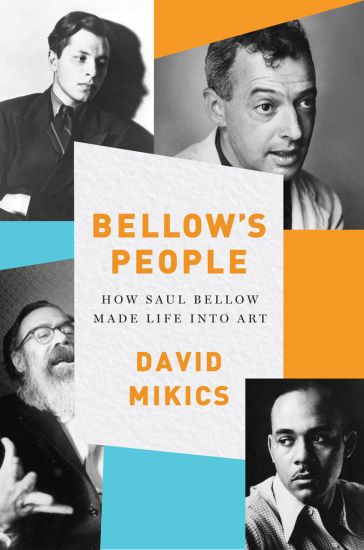
Bellow's People

Bellow's People

David Mikics

WW Norton Co
2016
sidottu
David Mikics has been hailed by Harold Bloom as one of our finest literary critics. In this fresh and revealing book, he examines Saul Bellow’s work through the real-life relationships and friendships that Bellow transmuted into the genius of his art. The book is divided into eight chapters on some of the extraordinary people who mattered most to Bellow—family members like his irascible brother Morrie; friends like the novelists and critics Ralph Ellison, Delmore Schwartz and Allan Bloom; and wives and lovers. Bellow’s People is a perfect introduction to Bellow’s life and work and an incisive study of the art of literature. As Mikics argues, “Bellow is our novelist of personality in all its wrinkles, its glories and shortcomings. Only through personality, he tells us, can we know the world.”
Slow Reading in a Hurried Age

Slow Reading in a Hurried Age

David Mikics

The Belknap Press
2013
sidottu
Wrapped in the glow of the computer or phone screen, we cruise websites; we skim and skip. We glance for a brief moment at whatever catches our eye and then move on. Slow Reading in a Hurried Age reminds us of another mode of reading--the kind that requires our full attention and that has as its goal not the mere gathering of information but the deeper understanding that only good books can offer.Slow Reading in a Hurried Age is a practical guide for anyone who yearns for a more meaningful and satisfying reading experience, and who wants to sharpen reading skills and improve concentration. David Mikics, a noted literary scholar, demonstrates exactly how the tried-and-true methods of slow reading can provide a more immersive, fulfilling experience. He begins with fourteen preliminary rules for slow reading and shows us how to apply them. The rules are followed by excursions into key genres, including short stories, novels, poems, plays, and essays.Reading, Mikics says, should not be drudgery, and not mere escape either, but a way to live life at a higher pitch. A good book is a pathway to finding ourselves, by getting lost in the words and works of others.
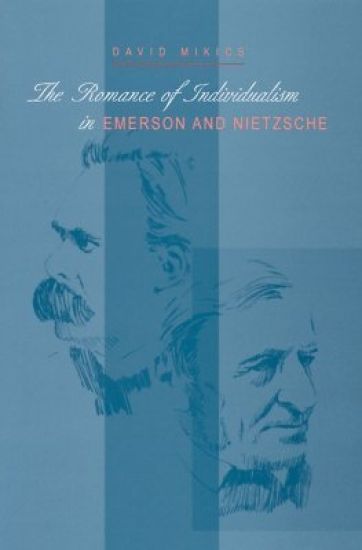
The Romance of Individualism in Emerson and Nietzsche
The great American thinker Ralph Waldo Emerson and the influential German philosopher Friedrich Nietzsche, though writing in different eras and ultimately developing significantly different philosophies, both praised the individual's wish to be transformed, to be fully created for the first time. Emerson and Nietzsche challenge us to undertake the task of identity on our own, in order to see (in Nietzsche's phrase) "how one becomes what one is." David Mikics's The Romance of Individualism in Emerson and Nietzsche examines the argument, as well as the affinity, between these two philosophers. Nietzsche was an enthusiastic reader of Emerson and inherited from him an interest in provocation as a means of instruction, an understanding of the permanent importance of moods and transitory moments in our lives, and a sense of the revolutionary character of impulse. Both were deliberately outrageous thinkers, striving to shake us out of our complacency. Rather than choosing between Emerson and Nietzsche, Professor Mikics attends to Nietzsche's struggle with Emerson's example and influence. Elegant in its delivery, The Romance of Individualism in Emerson and Nietzsche offers a significant commentary on the visions of several contemporary theorists whose interests intersect with those of Emerson and Nietzsche, especially Stanley Cavell, Jacques Lacan, Slavoj Zizek, and Harold Bloom.
MAD Files, The: Writers and Cartoonists on the Magazine that Warped America's Brain!
Celebrate America's zaniest and most subversive magazine in 26 essays and comix from all-star contributors, including Roz Chast, Jonathan Lethem, and Grady Hendrix. Before SNL and the wise-guy sarcasm of Letterman and Colbert, before The Simpsons and online memes, there was . . . MAD. A mainstay of countless American childhoods, MAD magazine exploded onto the scene in the 1950s and gleefully thumbed its nose at all the postwar pieties. MAD became the zaniest, most subversive satire magazine ever to be sold on America's newsstands, anticipating the spirit of underground comix and 'zines and influencing humor writing in movies, television, and the internet to this day. Edited by David Mikics, The MAD Files celebrates the magazine's impact and the legacy of the Usual Gang of Idiots who transformed puerile punchlines and merciless mockery into an art form. 26 essays and comics present a varied, perceptive, and often very funny account of MAD's significance, ranging from the cultural to the aesthetic to the personal. Art Spiegelman reflects on how he "couldn't learn much about America from my refugee immigrant parents--but I learned all about it from MAD"Roz Chast remembers how the magazine was "love at first sight. . . . It was one of my first inklings that there were other people out there who found the world as ridiculous as I did."David Hajdu and Grady Hendrix zero in on MAD's hilarious movie spoofsLiel Leibovitz delves into the Jewishness behind the magazine's humorand Rachel Shteir amplifies the often unsung contributions of MAD's women artists.Several essays are admiring profiles of the individual creators that made MAD what it was: Mort Drucker, Harvey Kurtzman, Al Jaffee, Antonio Prohias, and Will Elder. For longtime fans and new readers alike, The MAD Files is an indispensable guide to America's greatest satire magazine.