

Kirjahaku
Etsi kirjoja tekijän nimen, kirjan nimen tai ISBN:n perusteella.
111 kirjaa tekijältä David Miller

Measurement by the Physical Educator: Why and How
David Miller
McGraw-Hill Professional
2013
sidottu
The purpose of this text is to help the physical education, exercise science, or kinesiology major develop the necessary confidence and skills to conduct measurement techniques properly and effectively. However, more than just measurement techniques are presented. Emphasis is placed upon the reasons for the measurement and the responsibilities after measurement is completed. These inclusions should help the student develop an appreciation of the need for measurement in a variety of settings. In addition, every effort has been made to present all the material in an uncomplicated way, and only practical measurement techniques are included.

This book introduces readers to the concepts of political philosophy. It starts by explaining why the subject is important and how it tackles basic ethical questions such as 'how should we live together in society?' It looks at political authority, the reasons why we need politics at all, the limitations of politics, and whether there are areas of life that shouldn't be governed by politics. It explores the connections between political authority and justice, a constant theme in political philosophy, and the ways in which social justice can be used to regulate rather than destroy a market economy. David Miller discusses why nations are the natural units of government and whether the rise of multiculturalism and transnational co-operation will change this: will we ever see the formation of a world government? ABOUT THE SERIES: The Very Short Introductions series from Oxford University Press contains hundreds of titles in almost every subject area. These pocket-sized books are the perfect way to get ahead in a new subject quickly. Our expert authors combine facts, analysis, perspective, new ideas, and enthusiasm to make interesting and challenging topics highly readable.

This book explores the various aspects of social justice--to each according to his rights, to each acording to his desert, and to each according to his need--comparing the writings of Hume, Spencer, and Kropotkin. Miller demonstrates that there are radical differences in outlook on social justice between societies, and that these differences can be explained by reference to features of the social structure.

Philosophy and Ideology in Hume's Political Thought
David Miller
Oxford University Press
1981
sidottu
This book was written with three aims in mind. The first was to provide a reasonably concise account of Hume's social and political thought that might help students coming to it for the first time. The second aim was to say something about the relationship between philosophy and politics, with explicit attention to Hume, but implicit reference to a general issue. The third is to offer an integrated account of Hume's thought. The book accounts for the varying interpretation of the conservative and liberalist traditions by arguing that the distinction between liberalism and conservatism had little application in mid-18th-century Britain. Hume's ideology contained elements that we should now identify as conservative and liberal respectively, and so by selective emphasis it is possible to make him seem a thoroughbred conservative or liberal according to choice. These two problems the relationship between Hume's philosophy and his politics, and the ideological character of his thought are pursued through the first and second parts of the book respectively.

Can we conceive of a market economy that fulfils the ideals of socialism? In this book, David Miller provides a comprehensive examination, from the standpoint of political theory, of an economy in which market mechanisms retain a central role, but in which capitalist patterns of ownership have been superseded. In Part I, Dr Miller shows that liberal ideas of freedom, justice, and efficiency cannot be used to vindicate laissez faire capitalism. In Part II, he rebuts left-wing criticisms of a socialist market economy. Part III presents a new model of the socialist state, whose central idea is that of democratic citizenship. Dr Miller's book provides a clear and coherent statement of the theoretical basis of market socialism and justifies it as a viable political option. The principles the author develops represent a radical alternative both to the libertarian ideas of the New Right and to the statist ideas of traditional socialism.

Can we conceive of a market economy that fulfils the ideals of socialism? In this book, David Miller provides a comprehensive examination, from the standpoint of political theory, of an economy in which market mechanisms retain a central role, but in which capitalist patterns of ownership have been superseded.

Nationalism is a dominating force in contemporary politics, but political philosophers have been markedly reluctant to discuss, let alone endorse, nationalist ideas. In this book David Miller defends the principle of nationality. He argues that national identities are valid sources of personal identity; that we are justified in recognizing special obligations to our co-nationals; that nations have good grounds for wanting to be politically self-determining; but that recognizing the claims of nationality does not entail suppressing other sources of personal identity, such as ethnicity. Finally, he considers the claim that national identities are dissolving in the late twentieth century. This timely and provocative book offers the most compelling defence to date of nationality from a radical perspective. Series description Oxford Political Theory presents the best new work in contemporary political theory. It is intended to be broad in scope, including original contributions to political philosophy, and also work in applied political theory. The series will contain works of outstanding quality with no restriction as to approach or subject matter.

Nationalism is a dominating force in contemporary politics, but political philosophers have been markedly reluctant to discuss, let alone endorse, nationalist ideas. David Miller here defends the principle of nationality. He argues that national identities are valid sources of personal identity; that we are justified in recognizing special obligations to our co-nationals; that nations have good grounds for wanting to be politically self-determining; but that recognizing the claims of nationality does not entail suppressing other sources of personal identity, such as ethnicity. Finally, he considers the claim that national identities are dissolving in the late twentieth century. This timely and provocative study offers the most compelling defence to date of nationality from a radical perspective.

Oxford Political Theory presents the best new work in contemporary political theory. It is intended to be broad in scope, including original contributions to political philosophy, and also work in applied political theory. The series will contain works of outstanding quality with no restriction as to approach or subject matter. Series Editors: Will Kymlicka, David Miller, and Alan Ryan. This book presents a non-cosmopolitan theory of global justice. In contrast to theories that seek to extend principles of social justice, such as equality of opportunity or resources, to the world as a whole, it argues that in a world made up of self-determining national communities, a different conception is needed. The book presents and defends an account of national responsibility which entails that nations may justifiably claim the benefits that their decisions and policies produce, while also being held liable for harms that they inflict on other peoples. Such collective responsibility extends to responsibility for the national past, so the present generation may owe redress to those who have been harmed by the actions of their predecessors. Global justice, therefore, must be understood not in terms of equality, but in terms of a minimum set of basic rights that belong to human beings everywhere. Where these rights are being violated or threatened, remedial responsibility may fall on outsiders. The book considers how this responsibility should be allocated, and how far citizens of democratic societies must limit their pursuit of domestic objectives in order to discharge their global obligations. The book presents a systematic challenge to existing theories of global justice without retreating to a narrow nationalism that denies that we have any responsibilities to the world's poor. It combines discussion of practical questions such as immigration and foreign aid with philosophical exploration of, for instance, the different senses of responsibility, and the grounds of human rights.

This book presents a non-cosmopolitan theory of global justice. In contrast to theories that seek to extend principles of social justice, such as equality of opportunity or resources, to the world as a whole, it argues that in a world made up of self-determining national communities, a different conception is needed. The book presents and defends an account of national responsibility which entails that nations may justifiably claim the benefits that their decisions and policies produce, while also being held liable for harms that they inflict on other peoples. Such collective responsibility extends to responsibility for the national past, so the present generation may owe redress to those who have been harmed by the actions of their predecessors. Global justice, therefore, must be understood not in terms of equality, but in terms of a minimum set of basic rights that belong to human beings everywhere. Where these rights are being violated or threatened, remedial responsibility may fall on outsiders. The book considers how this responsibility should be allocated, and how far citizens of democratic societies must limit their pursuit of domestic objectives in order to discharge their global obligations. The book presents a systematic challenge to existing theories of global justice without retreating to a narrow nationalism that denies that we have any responsibilities to the world's poor. It combines discussion of practical questions such as immigration and foreign aid with philosophical exploration of, for instance, the different senses of responsibility, and the grounds of human rights. Oxford Political Theory presents the best new work in contemporary political theory. It is intended to be broad in scope, including original contributions to political philosophy, and also work in applied political theory. The series will contain works of outstanding quality with no restriction as to approach or subject matter. Series Editors: Will Kymlicka, David Miller, and Alan Ryan.
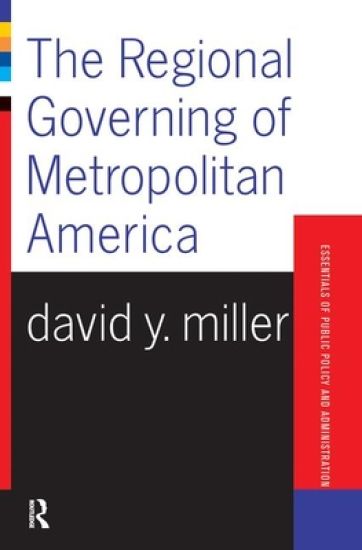
The book explores the regional governing of metropolitan America in a comprehensive and systematic fashion. It reviews the financial system of state and local government at the broadest possible level?the national level?and explores the relationships between the federal government, the 50 state governments, and the 86,000 local governments that con

Little Big Horn--June 25, 1876 The day began with the killing of a ten-year-old Native American boy by U.S. cavalry troopers. Before it ended, all of those troopers and their commander, George Armstrong Custer, lay dead on the battlefield of the Little Big Horn--the worst defeat ever inflicted by Native Americans on the U.S. military. Now, the full story of that dramatic day, the events leading up to it, and its aftermath are told by the only ones who survived to recount it--the Native Americans. Based on the author's twenty-two years of research, and on the oral testimony of seventy-two Native American eyewitnesses, Custer's Fall is both a superbly skillful weaving of many voices into a gripping narrative fabric, and a revelatory reconstruction that stands as the definitive version of the battle that became a legend and only now emerges as it really was. "The excitement, the carnage, and tales of bravery are here for every lover of Indian drama."--Library Journal "One of the most important accounts of Custer's 'last stand'... as illuminating as it is controversial."--Paul Andrew Hutton, University of New Mexico

An important though little understood aspect of the response of nineteenth-century Americans to nature is the widespread interest in the scenery of swamps, jungles, and other wastelands. Dark Eden focuses on this developing interest in order to redefine cultural values during a transformative period of American history. Professor Miller shows how for many Americans in the period around the Civil War nature came to be regarded less as a source of high moral insight and more as a sanctuary from an ever more urbanised and technological environment. In the swamps and jungles of the South a whole range of writers and artists found a set of strange and exotic images by which to explore changing social realities of the times and the deep-seated personal pressures that accompanied them.

An important though little understood aspect of the response of nineteenth-century Americans to nature is the widespread interest in the scenery of swamps, jungles, and other wastelands. Dark Eden focuses on this developing interest in order to redefine cultural values during a transformative period of American history. Professor Miller shows how for many Americans in the period around the Civil War nature came to be regarded less as a source of high moral insight and more as a sanctuary from an ever more urbanised and technological environment. In the swamps and jungles of the South a whole range of writers and artists found a set of strange and exotic images by which to explore changing social realities of the times and the deep-seated personal pressures that accompanied them.

Rethinking Northern Ireland provides a coherent and critical account of the Northern Ireland conflict. Most writing on Northern Ireland is informed by British propaganda, unionist ideology or currently popular 'ethnic conflict' paradigm which allows analysts to wallow in a fascination with tribal loyalty. Rethinking Northern Ireland sets the record straight by reembedding the conflict in Ireland in the history of an literature on imperialism and colonialism. Written by Irish, Scottish and English women and men it includes material on neglected topics such as the role of Britain, gender, culture and sectarianism. It presents a formidable challenge to the shibboleths of contemporary debate on Northern Ireland. A just and lasting peace necessitates thorough re-evaluation and Rethinking Northern Ireland provides a stimulus to that urgent task.



A brand new story of strength, fortitude and growth inspired by the astronauts of the 21st century.Mike and Sue prepare to make history for NASA on the Moon ... but is it the history they expected?A geologist with a passion for space, Mike Trellis enjoys carefree life. As a US Navy test pilot and young mother, Sue Bright dreams of being the first woman on Mars. Mike and Sue are new trainee astronauts for NASA as it prepares to return to the Moon after 50 years. Do they have the right stuff that their predecessors had? They have the desire, but do they have the knowledge, the ability, the fortitude and the worldview to succeed? Can they and their diverse team unite to overcome the dangers of space travel? Or will their actions derail their mission and their lives? And what place does faith have in the life of an astronaut in the 21st century? Other nations are racing to access the resources of the Moon first. Will they disrupt the Artemis 3 mission? And will the mission be remembered for reasons they expect? And how will they cope? Artemis 3: The Journey is David Miller's first novel. An avid reader since childhood, growing up during the Apollo and Space Shuttle eras, he has a passion for space, science and faith.

Social justice has been the animating ideal of democratic governments throughout the twentieth century. Even those who oppose it recognize its potency. Yet the meaning of social justice remains obscure, and existing theories put forward by political philosophers to explain it have failed to capture the way people in general think about issues of social justice. This book develops a new theory. David Miller argues that principles of justice must be understood contextually, with each principle finding its natural home in a different form of human association. Because modern societies are complex, the theory of justice must be complex, too. The three primary components in Miller’s scheme are the principles of desert, need, and equality.The book uses empirical research to demonstrate the central role played by these principles in popular conceptions of justice. It then offers a close analysis of each concept, defending principles of desert and need against a range of critical attacks, and exploring instances when justice requires equal distribution and when it does not. Finally, it argues that social justice understood in this way remains a viable political ideal even in a world characterized by economic globalization and political multiculturalism. Accessibly written, and drawing upon the resources of both political philosophy and the social sciences, this book will appeal to readers with interest in public policy as well as to students of politics, philosophy, and sociology.