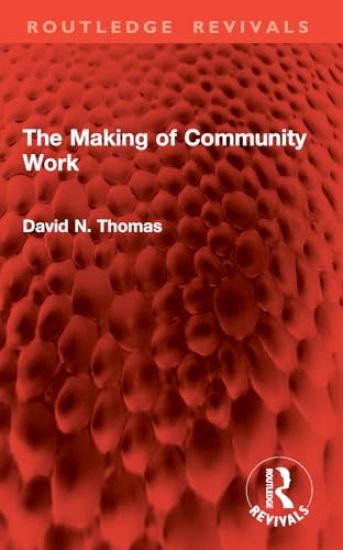
Kirjojen hintavertailu. Mukana 11 244 527 kirjaa ja 12 kauppaa.

Kirjahaku

Etsi kirjoja tekijän nimen, kirjan nimen tai ISBN:n perusteella.

6 kirjaa tekijältä David N. Thomas

Organising for Social Change

Organising for Social Change

David N. Thomas

Taylor Francis Ltd
2021
sidottu
Originally published in 1976, the aim of this book was to understand the contribution of community work to meeting some of the problems to be found in many of Britain’s inner city neighbourhoods. It describes the community work process and the tasks, roles and skills of the professional community worker as he interacts with neighbourhood groups and service agencies. The author also indicates some of the strengths of collective action and its likely benefits and costs to those who participate. The book includes an examination of how to effect changes in the delivery of services from statutory and voluntary agencies, as well as an assessment of the community project of which the author was a staff member. The book is a contribution to the theory of community work and practice, and it is based upon the experience of those who worked in, and used, the Southwark Community Project, established by the National Institute for Social Work. It was written for practitioners, teachers and students of community work, as well as for other closely involved in community affairs such as teachers, playground workers, planners and social workers.
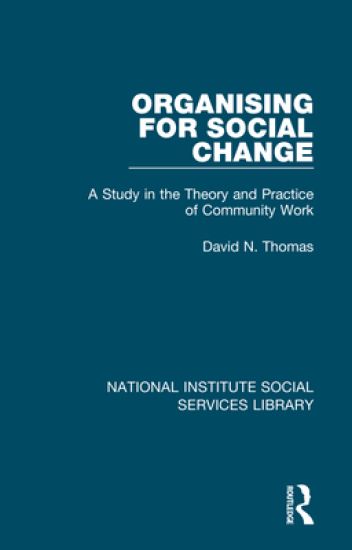
Organising for Social Change

Organising for Social Change

David N. Thomas

TAYLOR FRANCIS LTD
2023
nidottu
Originally published in 1976, the aim of this book was to understand the contribution of community work to meeting some of the problems to be found in many of Britain’s inner city neighbourhoods. It describes the community work process and the tasks, roles and skills of the professional community worker as he interacts with neighbourhood groups and service agencies. The author also indicates some of the strengths of collective action and its likely benefits and costs to those who participate. The book includes an examination of how to effect changes in the delivery of services from statutory and voluntary agencies, as well as an assessment of the community project of which the author was a staff member. The book is a contribution to the theory of community work and practice, and it is based upon the experience of those who worked in, and used, the Southwark Community Project, established by the National Institute for Social Work. It was written for practitioners, teachers and students of community work, as well as for other closely involved in community affairs such as teachers, playground workers, planners and social workers.
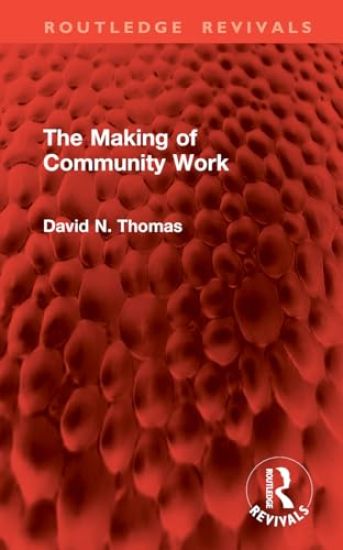
The Making of Community Work

The Making of Community Work

David N. Thomas

TAYLOR FRANCIS LTD
2024
sidottu
Originally published in 1983, The Making of Community Work is the outcome of a two-year study of community work in the United Kingdom. The main purpose of the study was to review the development of community work, and to suggest some of the issues in practice and training that might be important in the 1980s. Much of the first part of the book is taken up with the emergence of community work as an occupation; David Thomas tries to clarify its contribution to a number of political and social processes, and to define community work in a way which distinguishes it from other kinds of interventions. The second part of the book deals with training, research, literature and employment in community work; it includes a review of college and field-based training opportunities, and a critical discussion of the state of theory and ideology in the occupation.It was hoped it would be an important source of ideas and inspiration for the years ahead. It was the first major review of community work since its re-discovery in the 1960s; it will still be of interest to all those involved in community work, or wishing to understand its influence on other professions. The book was intended for fieldworkers, administrators, policy-makers, trainers and students in community work and in related occupations and disciplines. Thomas presents his ideas clearly, and his ability to look critically at some of the basic assumptions in community work makes for stimulating and enjoyable reading.
White Bolts, Black Locks

White Bolts, Black Locks

David N. Thomas

TAYLOR FRANCIS LTD
2024
sidottu
Originally published in 1986, White Bolts, Black Locks was a major contribution to the national debate about racism, racial justice and the relationships between the white and black British. It examines the participation of black people in community activities, and the effects on that participation of personal and institutional forms of racism. This thought-provoking and readable book has much to say to white and black professionals who work together, for the author describes the way in which ‘white speak’ and ‘black speak’ are used to build self-protective stockades.David Thomas explores the idea of community capability, and how black and white neighbours try to live together and improve their livelihood. He presents stimulating material about neighbourhoods, and suggests why they must be given more recognition as a proper part of the social structure.The book will still be of historical interest to practitioners, volunteers and local residents working in urban neighbourhoods, and to students in social work, community development, politics, sociology and social policy and administration. It is a book that should not be ignored by anyone with an interest in the significance of neighbourhood processes and development.
White Bolts, Black Locks

White Bolts, Black Locks

David N. Thomas

TAYLOR FRANCIS LTD
2026
nidottu
Originally published in 1986, White Bolts, Black Locks was a major contribution to the national debate about racism, racial justice and the relationships between the white and black British. It examines the participation of black people in community activities, and the effects on that participation of personal and institutional forms of racism. This thought-provoking and readable book has much to say to white and black professionals who work together, for the author describes the way in which ‘white speak’ and ‘black speak’ are used to build self-protective stockades. David Thomas explores the idea of community capability, and how black and white neighbours try to live together and improve their livelihood. He presents stimulating material about neighbourhoods, and suggests why they must be given more recognition as a proper part of the social structure. The book will still be of historical interest to practitioners, volunteers and local residents working in urban neighbourhoods, and to students in social work, community development, politics, sociology and social policy and administration. It is a book that should not be ignored by anyone with an interest in the significance of neighbourhood processes and development.
The Making of Community Work

The Making of Community Work

David N. Thomas

TAYLOR FRANCIS LTD
2026
nidottu
Originally published in 1983, The Making of Community Work is the outcome of a two-year study of community work in the United Kingdom. The main purpose of the study was to review the development of community work, and to suggest some of the issues in practice and training that might be important in the 1980s. Much of the first part of the book is taken up with the emergence of community work as an occupation; David Thomas tries to clarify its contribution to a number of political and social processes, and to define community work in a way which distinguishes it from other kinds of interventions. The second part of the book deals with training, research, literature and employment in community work; it includes a review of college and field-based training opportunities, and a critical discussion of the state of theory and ideology in the occupation. It was hoped it would be an important source of ideas and inspiration for the years ahead. It was the first major review of community work since its re-discovery in the 1960s; it will still be of interest to all those involved in community work, or wishing to understand its influence on other professions. The book was intended for fieldworkers, administrators, policy-makers, trainers and students in community work and in related occupations and disciplines. Thomas presents his ideas clearly, and his ability to look critically at some of the basic assumptions in community work makes for stimulating and enjoyable reading.