Kirjojen hintavertailu. Mukana 11 699 587 kirjaa ja 12 kauppaa.

Kirjahaku

Etsi kirjoja tekijän nimen, kirjan nimen tai ISBN:n perusteella.

7 kirjaa tekijältä David Naguib Pellow

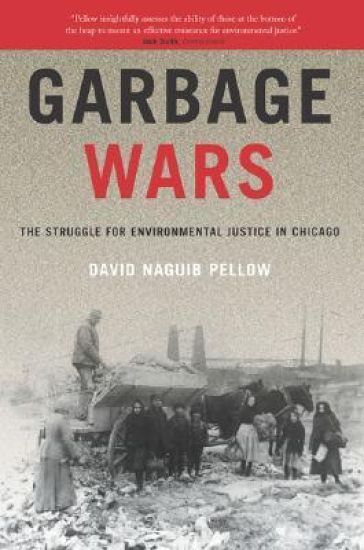
Garbage Wars

Garbage Wars

David Naguib Pellow

MIT Press
2004
pokkari
A study of the struggle for environmental justice, focusing on conflicts over solid waste and pollution in Chicago.In Garbage Wars, the sociologist David Pellow describes the politics of garbage in Chicago. He shows how garbage affects residents in vulnerable communities and poses health risks to those who dispose of it. He follows the trash, the pollution, the hazards, and the people who encountered them in the period 1880-2000. What unfolds is a tug of war among social movements, government, and industry over how we manage our waste, who benefits, and who pays the costs.Studies demonstrate that minority and low-income communities bear a disproportionate burden of environmental hazards. Pellow analyzes how and why environmental inequalities are created. He also explains how class and racial politics have influenced the waste industry throughout the history of Chicago and the United States. After examining the roles of social movements and workers in defining, resisting, and shaping garbage disposal in the United States, he concludes that some environmental groups and people of color have actually contributed to environmental inequality.By highlighting conflicts over waste dumping, incineration, landfills, and recycling, Pellow provides a historical view of the garbage industry throughout the life cycle of waste. Although his focus is on Chicago, he places the trends and conflicts in a broader context, describing how communities throughout the United States have resisted the waste industry's efforts to locate hazardous facilities in their backyards. The book closes with suggestions for how communities can work more effectively for environmental justice and safe, sustainable waste management.
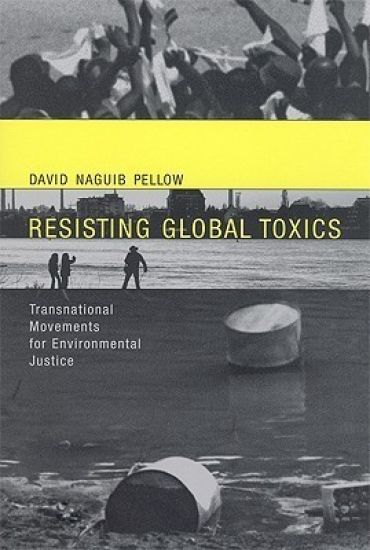
Resisting Global Toxics

Resisting Global Toxics

David Naguib Pellow

MIT Press
2007
pokkari
Examines the export of hazardous wastes to poor communities of color around the world and charts the global social movements that challenge them.Every year, nations and corporations in the "global North" produce millions of tons of toxic waste. Too often this hazardous material-inked to high rates of illness and death and widespread ecosystem damage-is exported to poor communities of color around the world. In Resisting Global Toxics, David Naguib Pellow examines this practice and charts the emergence of transnational environmental justice movements to challenge and reverse it. Pellow argues that waste dumping across national boundaries from rich to poor communities is a form of transnational environmental inequality that reflects North/South divisions in a globalized world, and that it must be theorized in the context of race, class, nation, and environment. Building on environmental justice studies, environmental sociology, social movement theory, and race theory, and drawing on his own research, interviews, and participant observations, Pellow investigates the phenomenon of global environmental inequality and considers the work of activists, organizations, and networks resisting it. He traces the transnational waste trade from its beginnings in the 1980s to the present day, examining global garbage dumping, the toxic pesticides that are the legacy of the Green Revolution in agriculture, and today's scourge of dumping and remanufacturing high tech and electronics products. The rise of the transnational environmental movements described in Resisting Global Toxics charts a pragmatic path toward environmental justice, human rights, and sustainability.
What is Critical Environmental Justice?

What is Critical Environmental Justice?

David Naguib Pellow

Polity Press
2017
sidottu
Human societies have always been deeply interconnected with our ecosystems, but today those relationships are witnessing greater frictions, tensions, and harms than ever before. These harms mirror those experienced by marginalized groups across the planet. In this novel book, David Naguib Pellow introduces a new framework for critically analyzing Environmental Justice scholarship and activism. In doing so he extends the field's focus to topics not usually associated with environmental justice, including the Israel/Palestine conflict and the Black Lives Matter movement in the United States. In doing so he reveals that ecological violence is first and foremost a form of social violence, driven by and legitimated by social structures and discourses. Those already familiar with the discipline will find themselves invited to think about the subject in a new way. This book will be a vital resource for students, scholars, and policy makers interested in transformative approaches to one of the greatest challenges facing humanity and the planet.
What is Critical Environmental Justice?

What is Critical Environmental Justice?

David Naguib Pellow

Polity Press
2017
nidottu
Human societies have always been deeply interconnected with our ecosystems, but today those relationships are witnessing greater frictions, tensions, and harms than ever before. These harms mirror those experienced by marginalized groups across the planet. In this novel book, David Naguib Pellow introduces a new framework for critically analyzing Environmental Justice scholarship and activism. In doing so he extends the field's focus to topics not usually associated with environmental justice, including the Israel/Palestine conflict and the Black Lives Matter movement in the United States. In doing so he reveals that ecological violence is first and foremost a form of social violence, driven by and legitimated by social structures and discourses. Those already familiar with the discipline will find themselves invited to think about the subject in a new way. This book will be a vital resource for students, scholars, and policy makers interested in transformative approaches to one of the greatest challenges facing humanity and the planet.
Total Liberation

Total Liberation

David Naguib Pellow

University of Minnesota Press
2014
nidottu
When in 2001 Earth Liberation Front activists drove metal spikes into hundreds of trees in Gifford Pinchot National Forest, they were protesting the sale of a section of the old-growth forest to a timber company. But ELF’s communiquÉ on the action went beyond the radical group’s customary brief. Drawing connections between the harms facing the myriad animals who make their home in the trees and the struggles for social justice among ordinary human beings resisting exclusion and marginalization, the dispatch declared, “all oppression is linked, just as we are all linked,” and decried the “patriarchal nightmare” in the form of “techno-industrial global capitalism.” In Total Liberation, David Naguib Pellow takes up this claim and makes sense of the often tense and violent relationships among humans, ecosystems, and nonhuman animal species, expanding our understanding of inequality and activists’ uncompromising efforts to oppose it. Grounded in interviews with more than one hundred activists, on-the-spot fieldwork, and analyses of thousands of pages of documents, websites, journals, and zines, Total Liberation reveals the ways in which radical environmental and animal rights movements challenge inequity through a vision they call “total liberation.” In its encounters with such infamous activists as scott crow, Tre Arrow, Lauren Regan, Rod Coronado, and Gina Lynn, the book offers a close-up, insider’s view of one of the most important-and feared-social movements of our day. At the same time, it shows how and why the U.S. justice system plays to that fear, applying to these movements measures generally reserved for “jihadists”-with disturbing implications for civil liberties and constitutional freedom. How do the adherents of “total liberation” fight oppression and seek justice for humans, nonhumans, and ecosystems alike? And how is this pursuit shaped by the politics of anarchism and anticapitalism? In his answers, Pellow provides crucial in-depth insight into the origins and social significance of the earth and animal liberation movements and their increasingly common and compelling critique of inequality as a threat to life and a dream of a future characterized by social and ecological justice for all.
What is Critical Environmental Justice?

What is Critical Environmental Justice?

David Naguib Pellow

JOHN WILEY AND SONS LTD
2025
sidottu
Human societies have always been deeply interconnected with our ecosystems, but today those relationships are witnessing greater frictions, tensions, and harms than ever before. These dynamics mirror those experienced by marginalized communities across the planet, but they also provide a foundation for transformative thinking and action to address these challenges. In this updated edition of his innovative contribution, David Naguib Pellow introduces a new framework for critically analyzing Environmental Justice scholarship and activism. In doing so he extends the field’s focus to topics not usually associated with environmental justice, including policing, incarceration, the Israel/Palestine conflict, and the Black Lives Matter movement. In doing so he reveals that ecological violence is first and foremost a form of social violence, driven by and legitimated by social structures and discourses. He enriches this radical approach to Environmental Justice by drawing on Indigenous Studies, the Black Radical Tradition, Disability Studies, Queer and Transgender Studies, and Multi-Species Justice, among others. Those already familiar with the discipline will find themselves invited to think about the subject in entirely new ways. This book is a vital resource for students, scholars, and policy makers interested in innovative approaches to one of the greatest challenges facing humanity and the planet.
What is Critical Environmental Justice?

What is Critical Environmental Justice?

David Naguib Pellow

JOHN WILEY AND SONS LTD
2025
nidottu
Human societies have always been deeply interconnected with our ecosystems, but today those relationships are witnessing greater frictions, tensions, and harms than ever before. These dynamics mirror those experienced by marginalized communities across the planet, but they also provide a foundation for transformative thinking and action to address these challenges. In this updated edition of his innovative contribution, David Naguib Pellow introduces a new framework for critically analyzing Environmental Justice scholarship and activism. In doing so he extends the field’s focus to topics not usually associated with environmental justice, including policing, incarceration, the Israel/Palestine conflict, and the Black Lives Matter movement. In doing so he reveals that ecological violence is first and foremost a form of social violence, driven by and legitimated by social structures and discourses. He enriches this radical approach to Environmental Justice by drawing on Indigenous Studies, the Black Radical Tradition, Disability Studies, Queer and Transgender Studies, and Multi-Species Justice, among others. Those already familiar with the discipline will find themselves invited to think about the subject in entirely new ways. This book is a vital resource for students, scholars, and policy makers interested in innovative approaches to one of the greatest challenges facing humanity and the planet.