Kirjojen hintavertailu. Mukana 11 342 296 kirjaa ja 12 kauppaa.

Kirjahaku

Etsi kirjoja tekijän nimen, kirjan nimen tai ISBN:n perusteella.

13 kirjaa tekijältä David Nicholas

The Middle East, Its Oil, Economies and Investment Policies
The wide variety of reference sources include not only books and journals, but also annual reports, directories, statistics, unpublished documents, computerized data bases, authors, and organizations active in the field. Special attention is paid to sources providing information on the impact of Middle-Eastern oil-generated investment on the major economies of the Western world.
Urban Europe 1100-1700

Urban Europe 1100-1700

David Nicholas

Red Globe Press
2003
nidottu
Reflecting the vigour of both urban and medieval history, this timely textbook by a leading scholar of urban studies is a broadly interdisciplinary work that breaks new ground by emphasising the links between the late medieval and early modern cities. Urban Europe, 1100-1700: - Examines the common social, governmental, economic and intellectual roles played by most pre-modern cities - Views cities as originating in local market relations, then expanding with the growing complexity of their functions into regional centres of culture, government and exchange - Adopts an organic, evolutionary and environmental approach, particularly in its application of geographical systems to early urbanisation - Makes extensive use of maps and original source material to illustrate aspects of the urban experience David Nicholas' study will appeal to students and scholars of history, geography and urban studies. Sociologists and political economists will also value its demonstration of the continuing relevance of the thought of Max Weber, while urban planners will find its analysis of the rationality of pre-modern cities highly useful.
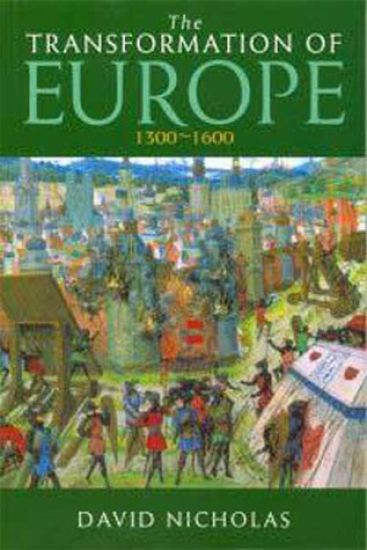
The Transformation of Europe 1300-1600

The Transformation of Europe 1300-1600

David Nicholas

Hodder Arnold
1999
nidottu
The 'Transformation of Europe' gently subverts a conventional vision of Europe that divides the world between the late-medieval and early modern periods, emphasizing the distortion involved in that construction. Important changes towards 'modernity' are evident, the book argues, as early as the fourteenth century; only in religious history does there appear to be some justification for retaining the traditional notion that 'modern age' began with Martin Luther, though even in that arena the institutional break of the Protestants with Rome cannot conceal fundamental continuity of expression and attitude. The 'transformation' of the title emphasizes gradual, if significant change in the period. Change to the political configuration and governing institutions of Europe, to the economy and to society, to the region's relations with the broader world, to the course of creative activity, and to religious attitudes. Professor Nicholas is an effective and experienced guide to the important themes and unfolding events in Europe's history from the onset of the Hundred Years war to the great confessional divide of the sixteenth century.
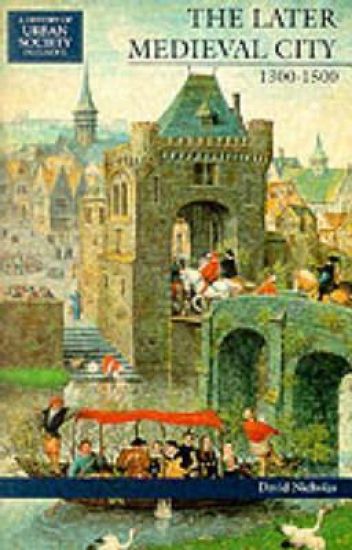
The Later Medieval City

The Later Medieval City

David Nicholas

Longman
1997
nidottu
The Later Medieval City, 1300-1500, the second part of David Nicholas's ambitious two-volume study of cities and city life in the Middle Ages, fully lives up to its splendid precursor, The Growth of the Medieval City. (Like that volume it is fully self-sufficient, though many readers will want to use the two as a continuum.) This book covers a much shorter period than the first. That traced the rise of the medieval European city system from late Antiquity to the early fourteenth century; this offers a portrait of the fully developed late medieval city in all its richness and complexity.David Nicholas begins with the economic and demographic realignments of the last two medieval centuries. These fostered urban growth, raising living standards and increasing demand for a growing range of urban manufactures. The hunger for imports and a shortage of coin led to sophisticated credit mechanisms that could only function through large cities. But, if these changes brought new opportunities to the wealthy, they also created a growing problem of urban poverty: violence became endemic in the later medieval city. Moreover, although more rebellions were sparked by taxes than by class conflict, class divisions were deepening. Most cities came to be governed by councils chosen from guild-members, and most guilds were dominated by merchants. The landowning elite that had dominated the early medieval cities of the first volume still retained its prestige, but its wealth was outstripped by the richer merchants; while craftsmen, who had little political influence, were further disadvantaged as access to the guilds became more restricted. The later medieval cities developed permanent bureaucracies providing a huge range of public services, and they were paid for by sophisticated systems of taxation and public borrowing. The survival of their fuller, richer records allow us not only to apply a more statistical approach, but also to get much closer, to the splendours and squalors of everyday city-life than was possible in the earlier volume. The book concludes with a set of vibrant chapters on women and children and religious minorities in the city, on education and culture, and on the tenor of ordinary urban existence. Like its predecessor, this book is massively, and vividly, documented. Its approach is interdisciplinary and comparative, and its examples and case studies are drawn from across Europe: from France, England, Germany, the Low Countries, Iberia and Italy, with briefer reviews of the urban experience elsewhere from Baltic to Balkans. The result is the most wide-ranging and up-to-date study of its multifaceted subject. It is a formidable achievement.
Medieval Flanders

Medieval Flanders

David Nicholas

Routledge
1992
nidottu
Cradle of northern Europe's later urban and industrial pre-eminence, medieval Flanders was a region of immense political and economic importance -- and already, as so often later, the battleground of foreign powers. Yet this book is, remarkably, the first comprehensive modern history of the region. Within the framework of a clear political narrative, it presents a vivid portrait of medieval Flemish life that will be essential reading for the medievalist -- and a boon for the many visitors to Bruges and Ghent eager for a better understanding of what they see.
Assessing Information Needs

Assessing Information Needs

David Nicholas

TAYLOR FRANCIS LTD
2000
nidottu
Provides a systematic method of identifying, evaluating and comparing information needs, as well as a framework to enable information services to gather information from users to aid information system design, and monitor the effectiveness of an information service. Examines the role of the Internet in meeting information needs.The section on collecting data now includes web log analysis and focus group interviews. Introduces the concept of the I-player, the digital information user.
Trade, Urbanisation and the Family

Trade, Urbanisation and the Family

David Nicholas

Variorum
1996
sidottu
Flanders, best known for its large cities and export-grade woollen cloth, is the setting for these articles. Professor Nicholas here emphasises the region's broader importance in the economy of medieval Europe as a focus of demand for grain and industrial raw materials. Imports to supply the bloated internal markets were more important in establishing the Flemish cities and creating the capital base of their elites than were cloth exports, which by the 14th century were being undercut by competitors from England and Brabant. The second part of the book looks at the turbulent domestic politics of the Flemish cities, conditioned by a network of nuclear and extended families whose personal antagonisms and heightened consciousness of honour led to decimating vendettas of a severity once associated mainly with Italy. It also examines the mix of urban and rural interests that characterised the elite, showing for instance that the famous van Arteveldes were as noteworthy in the swamps of northeastern Flanders as in the streets of Ghent.
The Later Medieval City

The Later Medieval City

David Nicholas

Routledge
2016
sidottu
The Later Medieval City, 1300-1500, the second part of David Nicholas's ambitious two-volume study of cities and city life in the Middle Ages, fully lives up to its splendid precursor, The Growth of the Medieval City. (Like that volume it is fully self-sufficient, though many readers will want to use the two as a continuum.) This book covers a much shorter period than the first. That traced the rise of the medieval European city system from late Antiquity to the early fourteenth century; this offers a portrait of the fully developed late medieval city in all its richness and complexity.David Nicholas begins with the economic and demographic realignments of the last two medieval centuries. These fostered urban growth, raising living standards and increasing demand for a growing range of urban manufactures. The hunger for imports and a shortage of coin led to sophisticated credit mechanisms that could only function through large cities. But, if these changes brought new opportunities to the wealthy, they also created a growing problem of urban poverty: violence became endemic in the later medieval city.Moreover, although more rebellions were sparked by taxes than by class conflict, class divisions were deepening. Most cities came to be governed by councils chosen from guild-members, and most guilds were dominated by merchants. The landowning elite that had dominated the early medieval cities of the first volume still retained its prestige, but its wealth was outstripped by the richer merchants; while craftsmen, who had little political influence, were further disadvantaged as access to the guilds became more restricted. The later medieval cities developed permanent bureaucracies providing a huge range of public services, and they were paid for by sophisticated systems of taxation and public borrowing. The survival of their fuller, richer records allow us not only to apply a more statistical approach, but also to get much closer, to the splendours and squalors of everyday city-life than was possible in the earlier volume. The book concludes with a set of vibrant chapters on women and children and religious minorities in the city, on education and culture, and on the tenor of ordinary urban existence. Like its predecessor, this book is massively, and vividly, documented. Its approach is interdisciplinary and comparative, and its examples and case studies are drawn from across Europe: from France, England, Germany, the Low Countries, Iberia and Italy, with briefer reviews of the urban experience elsewhere from Baltic to Balkans. The result is the most wide-ranging and up-to-date study of its multifaceted subject. It is a formidable achievement.

Medieval Flanders

Medieval Flanders

David Nicholas

Routledge
2015
sidottu
Cradle of northern Europe's later urban and industrial pre-eminence, medieval Flanders was a region of immense political and economic importance -- and already, as so often later, the battleground of foreign powers. Yet this book is, remarkably, the first comprehensive modern history of the region. Within the framework of a clear political narrative, it presents a vivid portrait of medieval Flemish life that will be essential reading for the medievalist -- and a boon for the many visitors to Bruges and Ghent eager for a better understanding of what they see.
The Northern Lands

The Northern Lands

David Nicholas

Wiley-Blackwell (an imprint of John Wiley Sons Ltd)
2009
sidottu
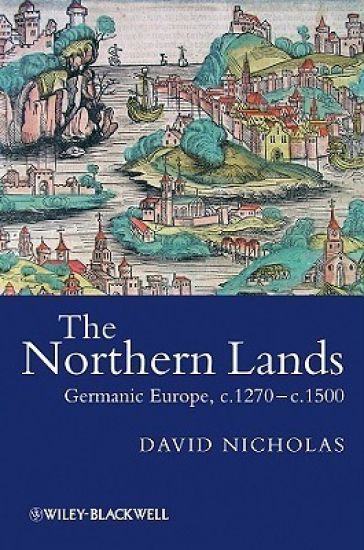
The Northern Lands Northern Europe in the late Middle Ages was in many ways distinct from the areas bordering the Mediterranean that were more directly influenced by vestiges of the Roman Empire. The northern lands developed a separate regional identity with broadly common cultural, political, economic, and social features. Scholars, however, have tended to ignore elements of this regional identity that survived beyond 1200. The Northern Lands: Germanic Europe, c.1270-c.1500 explores the region bordering the North and Baltic Seas, an area which remained more culturally and economically integrated during the late Middle Ages than scholars have generally perceived. The first part of the book provides the reader with context, with broad overviews of England, the Low Countries, Scandinavia, and the Holy Roman Empire during the late medieval period, followed by an analysis of the distinctive features, similarities, and differences of their governing institutions and laws. Further chapters explore themes including rural elites, family law and structures across social orders, urban society and government, and the development of a commercial and financial network. The Northern Lands will stimulate further debate and advance ongoing research into the unique regional identity that blossomed in northern Europe during the late medieval period.
The Northern Lands

The Northern Lands

David Nicholas

Wiley-Blackwell (an imprint of John Wiley Sons Ltd)
2009
nidottu
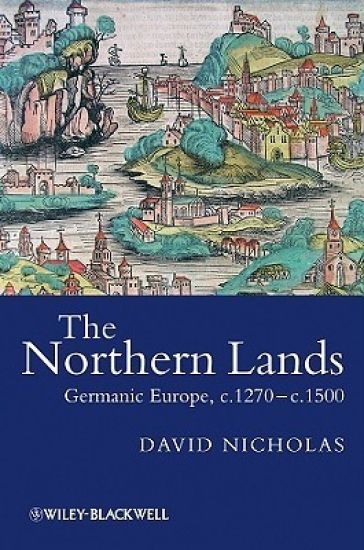
The Northern Lands Northern Europe in the late Middle Ages was in many ways distinct from the areas bordering the Mediterranean that were more directly influenced by vestiges of the Roman Empire. The northern lands developed a separate regional identity with broadly common cultural, political, economic, and social features. Scholars, however, have tended to ignore elements of this regional identity that survived beyond 1200. The Northern Lands: Germanic Europe, c.1270-c.1500 explores the region bordering the North and Baltic Seas, an area which remained more culturally and economically integrated during the late Middle Ages than scholars have generally perceived. The first part of the book provides the reader with context, with broad overviews of England, the Low Countries, Scandinavia, and the Holy Roman Empire during the late medieval period, followed by an analysis of the distinctive features, similarities, and differences of their governing institutions and laws. Further chapters explore themes including rural elites, family law and structures across social orders, urban society and government, and the development of a commercial and financial network. The Northern Lands will stimulate further debate and advance ongoing research into the unique regional identity that blossomed in northern Europe during the late medieval period.