Kirjojen hintavertailu. Mukana 11 244 527 kirjaa ja 12 kauppaa.

Kirjahaku

Etsi kirjoja tekijän nimen, kirjan nimen tai ISBN:n perusteella.

23 kirjaa tekijältä David Novak

Jewish-Christian Dialogue

Jewish-Christian Dialogue

David Novak

Oxford University Press Inc
1992
nidottu
Most of the available books that deal with the Jewish-Christian relationship are primarily historical studies concentrating on the Jewish background of Christianity, the separation of Christianity from Judaism, or the medieval disputations between Judaism and Christianity. This volume is a philosophically constructed theological argument carefully drawing upon classical Jewish sources. It advocates that there is actual justification from within the Jewish religious tradition for the new relationship between Judaism and Christianity. As such, the book lays the groundwork for a more theologically serious development of Jewish-Christian dialogue.
The Election of Israel

The Election of Israel

David Novak

Cambridge University Press
2007
pokkari
In this book, David Novak conducts an historical, philosophical and theological reflection on the central Jewish doctrine of Israel's election by God, also known as the idea of the chosen people. Historically, he analyses the great change in modern Jewish thought brought about by Spinoza's inversion of the doctrine: that it was not God who elected Israel, but Israel who elected God. The development of that inversion is illustrated by the thought of the German philosopher-theologian, Hermann Cohen. Philosophically, Novak explores the ontological implications of the two differing theologies of election. Theologically, he argues for the correlation of election and revelation, and maintains that a theology of election is required in order to deal with two central questions, namely: who are the Jews, and how are Jews to be related to the world? The constructive picture which results leads to a fresh understanding of Jewish modernity.
Natural Law in Judaism

Natural Law in Judaism

David Novak

Cambridge University Press
2008
pokkari
This 1998 book presents a theory of natural law, significant for the study of Judaism, philosophy and comparative ethics. It demonstrates that the assumption that Judaism has no natural law theory to speak of is simply wrong. The book shows how natural law theory, using a variety of different terms for itself throughout the ages, has been a constant element in Jewish thought. The book sorts out the varieties of Jewish natural law theory, illuminating their strengths and weaknesses. It also presents a case for utilizing natural law theory in order to deal with theological and philosophical questions in Judaism's ongoing reflection on its own meaning and its meaning for the wider world. David Novak combines great erudition in the Jewish tradition, the history of philosophy and law, and the imagination to argue for Judaism in the context of current debates, both theoretical and practical.
The Election of Israel

The Election of Israel

David Novak

Cambridge University Press
1995
sidottu
In this book, David Novak conducts an historical, philosophical, and theological reflection on the central Jewish doctrine of Israel’s election by God, also known as the idea of the chosen people. Historically, he analyses the great change in modern Jewish thought brought about by Spinoza’s inversion of the doctrine: that it was not God who elected Israel, but Israel who elected God. The development of that inversion is illustrated by the thought of the German philosopher-theologian, Hermann Cohen. Philosophically, Novak explores the ontological implications of the two differing theologies of election. Theologically, he argues for the correlation of election and revelation, and maintains that a theology of election is required in order to deal with two central questions, namely: who are the Jews, and how are Jews to be related to the world? The constructive picture which results leads to a new understanding of Jewish modernity.
Natural Law in Judaism

Natural Law in Judaism

David Novak

Cambridge University Press
1998
sidottu
This book breaks new ground in the study of Judaism, in philosophy, and in comparative ethics. It demonstrates that the assumption that Judaism has no natural law theory to speak of, held by the vast majority of scholars, is simply wrong. The book shows how natural law theory, using a variety of different terms for itself throughout the ages, has been a constant element in Jewish thought. The book sorts out the varieties of Jewish natural law theory, illuminating their strengths and weaknesses. It also presents a case for utilising natural law theory in order to deal with current theological and philosophical questions in Judaism’s ongoing reflection on its own meaning and its meaning for the wider world. David Novak combines great erudition in the Jewish tradition, the history of philosophy and law, and the imagination to argue for Judaism in the context of current debates, both theoretical and practical.
The Jewish Social Contract

The Jewish Social Contract

David Novak

Princeton University Press
2005
sidottu
The Jewish Social Contract begins by asking how a traditional Jew can participate politically and socially and in good faith in a modern democratic society, and ends by proposing a broad, inclusive notion of secularity. David Novak takes issue with the view--held by the late philosopher John Rawls and his followers--that citizens of a liberal state must, in effect, check their religion at the door when discussing politics in a public forum. Novak argues that in a "liberal democratic state, members of faith-based communities--such as tradition-minded Jews and Christians--ought to be able to adhere to the broad political framework wholly in terms of their own religious tradition and convictions, and without setting their religion aside in the public sphere. Novak shows how social contracts emerged, rooted in biblical notions of covenant, and how they developed in the rabbinic, medieval, and "modern periods. He offers suggestions as to how Jews today can best negotiate the modern social contract while calling upon non-Jewish allies to aid them in the process. The Jewish Social Contract will prove an enlightening and innovative contribution to the ongoing debate about the role of religion in liberal democracies.
Covenantal Rights

Covenantal Rights

David Novak

Princeton University Press
2009
pokkari
Covenantal Rights is a groundbreaking work of political theory: a comprehensive, philosophically sophisticated attempt to bring insights from the Jewish political tradition into current political and legal debates about rights and to bring rights discourse more fully into Jewish thought. David Novak pursues these aims by presenting a theory of rights founded on the covenant between God and the Jewish people as that covenant is constituted by Scripture and the rabbinic tradition. In doing so, he presents a powerful challenge to prevailing liberal and conservative positions on rights and duties and opens a new chapter in contemporary Jewish political thinking. For Novak, "covenantal rights" are rooted in God's primary rights as creator of the universe and as the elector of a particular community whose members relate to this God as their sovereign. The subsequent rights of individuals and communities flow from God's covenantal promises, which function as irrevocable entitlements. This presents a sharp contrast to the liberal tradition, in which rights flow above all from individuals. It also challenges the conservative idea that duties can take precedence over rights, since Novak argues that there are no covenantal duties that are not backed by correlative rights. Novak explains carefully and clearly how this theory of covenantal rights fits into Jewish tradition and applies to the relationships among God, the covenanted community, and individuals. This work is a profound and provocative contribution to contemporary religious and political theory.
Japanoise

Japanoise

David Novak

Duke University Press
2013
sidottu
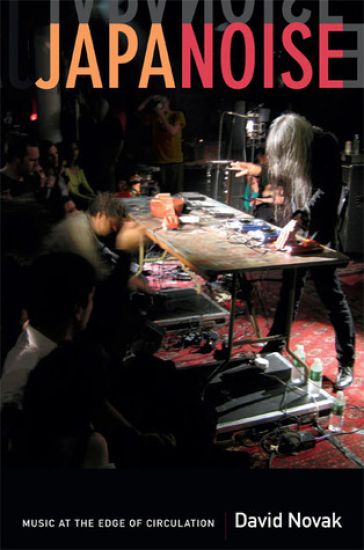
Noise, an underground music made through an amalgam of feedback, distortion, and electronic effects, first emerged as a genre in the 1980s, circulating on cassette tapes traded between fans in Japan, Europe, and North America. With its cultivated obscurity, ear-shattering sound, and over-the-top performances, Noise has captured the imagination of a small but passionate transnational audience.For its scattered listeners, Noise always seems to be new and to come from somewhere else: in North America, it was called "Japanoise." But does Noise really belong to Japan? Is it even music at all? And why has Noise become such a compelling metaphor for the complexities of globalization and participatory media at the turn of the millennium?In Japanoise, David Novak draws on more than a decade of research in Japan and the United States to trace the "cultural feedback" that generates and sustains Noise. He provides a rich ethnographic account of live performances, the circulation of recordings, and the lives and creative practices of musicians and listeners. He explores the technologies of Noise and the productive distortions of its networks. Capturing the textures of feedback-its sonic and cultural layers and vibrations-Novak describes musical circulation through sound and listening, recording and performance, international exchange, and the social interpretations of media.
Japanoise

Japanoise

David Novak

Duke University Press
2013
pokkari
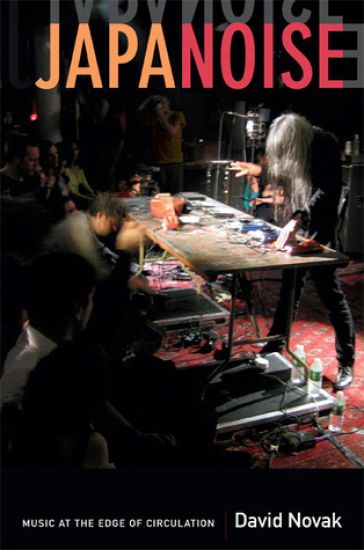
Noise, an underground music made through an amalgam of feedback, distortion, and electronic effects, first emerged as a genre in the 1980s, circulating on cassette tapes traded between fans in Japan, Europe, and North America. With its cultivated obscurity, ear-shattering sound, and over-the-top performances, Noise has captured the imagination of a small but passionate transnational audience.For its scattered listeners, Noise always seems to be new and to come from somewhere else: in North America, it was called "Japanoise." But does Noise really belong to Japan? Is it even music at all? And why has Noise become such a compelling metaphor for the complexities of globalization and participatory media at the turn of the millennium?In Japanoise, David Novak draws on more than a decade of research in Japan and the United States to trace the "cultural feedback" that generates and sustains Noise. He provides a rich ethnographic account of live performances, the circulation of recordings, and the lives and creative practices of musicians and listeners. He explores the technologies of Noise and the productive distortions of its networks. Capturing the textures of feedback-its sonic and cultural layers and vibrations-Novak describes musical circulation through sound and listening, recording and performance, international exchange, and the social interpretations of media.
Leo Strauss and Judaism

Leo Strauss and Judaism

David Novak

Rowman Littlefield
1996
nidottu
This collection of original essays by prominent scholars of political philosophy analyzes Leo Strauss's thoughts concerning the relationship between revelation and reason within the context of Jewish religion and thought. Unlike other edited collections about Strauss, the contributors to Leo Strauss and Judaism: Jerusalem and Athens Critically Revisited examine their subject using a wide range of ideological and methodological approaches, arriving at a variety of conclusions, many of which are controversial. This book will be of interest to students and scholars of Leo Strauss, Jewish philosophy, and political theory.
Zionism and Judaism

Zionism and Judaism

David Novak

Cambridge University Press
2015
sidottu
Why should anyone be a Zionist, a supporter of a Jewish state in the land of Israel? Why should there be a Jewish state in the land of Israel? This book seeks to provide a philosophical answer to these questions. Although a Zionist need not be Jewish, nonetheless this book argues that Zionism is only a coherent political stance when it is intelligently rooted in Judaism, especially in the classical Jewish doctrine of God's election of the people of Israel and the commandment to them to settle the land of Israel. The religious Zionism advocated here is contrasted with secular versions of Zionism that take Zionism to be a replacement of Judaism. It is also contrasted with versions of religious Zionism that ascribe messianic significance to the State of Israel, or which see the main task of religious Zionism to be the establishment of an Israeli theocracy.
Zionism and Judaism

Zionism and Judaism

David Novak

Cambridge University Press
2016
pokkari
Why should anyone be a Zionist, a supporter of a Jewish state in the land of Israel? Why should there be a Jewish state in the land of Israel? This book seeks to provide a philosophical answer to these questions. Although a Zionist need not be Jewish, nonetheless this book argues that Zionism is only a coherent political stance when it is intelligently rooted in Judaism, especially in the classical Jewish doctrine of God's election of the people of Israel and the commandment to them to settle the land of Israel. The religious Zionism advocated here is contrasted with secular versions of Zionism that take Zionism to be a replacement of Judaism. It is also contrasted with versions of religious Zionism that ascribe messianic significance to the State of Israel, or which see the main task of religious Zionism to be the establishment of an Israeli theocracy.
Jewish Justice

Jewish Justice

David Novak

Baylor University Press
2017
sidottu
In Jewish Justice David Novak explores the continuing role of Judaism for crafting ethics, politics, and theology. Drawing on sources as diverse as the Bible, the Talmud, and ancient, medieval, and modern philosophy, Novak asserts Judaism's integral place in communal discourse of the public square.According to Novak, biblical revelation has universal implications - that it is ultimately God's law to humanity because humans made in God's image are capable of making intelligent moral choices. The universality of this claim, however, stands in tension with the particularities of Jewish monotheism (one God, one people, one law). Novak's challenge is for Judaism to capitalize on the way God's law transcends particularity without destroying difference. Thus it is as Jews that Jews are called to join communities across the faithful denominations, as well as secular ones, to engage in debates about the common good. Jewish Justice follows a logical progression from grounded ethical quandaries to larger philosophical debates. Novak begins by considering the practical issues of capital punishment, mutilation and torture, corporate crime, the landed status of communities and nations, civil marriage, and religious marriage. He next moves to a consideration of theoretical concerns: God's universal justice, the universal aim of particular Jewish ethics, human rights and the image of God, the relation of post-Enlightenment social contract theory to the recently enfranchised Jewish community, and the voices of Jewish citizens in secular politics and the public sphere. Novak also explores the intersection of universality and particularity by examining the practice of interfaith dialogue among Jews, Christians, and Muslims.
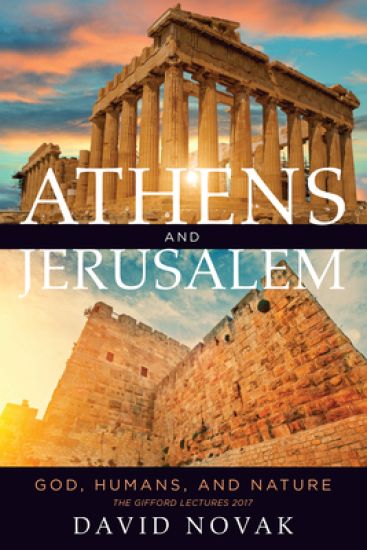
Athens and Jerusalem

Athens and Jerusalem

David Novak

University of Toronto Press
2019
sidottu
What is the relation of philosophy and theology? This question has been a matter of perennial concern in the history of Western thought. Written by one of the premier philosophers in the areas of Jewish ethics and interfaith issues between Judaism and Christianity, Athens and Jerusalem contends that philosophy and theology are not mutually exclusive. Based on the Gifford Lectures David Novak delivered at the University of Aberdeen in 2017, this book explores the commonalities and common concerns that exist between philosophy and theology on metaphysical, epistemological, and ethical questions. Where are they different and where are they the same? And, how can they speak to one another?
Athens and Jerusalem

Athens and Jerusalem

David Novak

University of Toronto Press
2019
pokkari
What is the relation of philosophy and theology? This question has been a matter of perennial concern in the history of Western thought. Written by one of the premier philosophers in the areas of Jewish ethics and interfaith issues between Judaism and Christianity, Athens and Jerusalem contends that philosophy and theology are not mutually exclusive. Based on the Gifford Lectures David Novak delivered at the University of Aberdeen in 2017, this book explores the commonalities and common concerns that exist between philosophy and theology on metaphysical, epistemological, and ethical questions. Where are they different and where are they the same? And, how can they speak to one another?
God-Talk

God-Talk

David Novak

ROWMAN LITTLEFIELD
2024
sidottu
David Novak, one of the most distinguished Jewish theologians in the world, offers a new interpretation of how the Jewish people and the Jewish tradition talk about God. What does the Torah say about God? How does the God of the Torah talk about Godself? And how does the God of the Torah talk about human beings? The book traces the history and theology of God-talk in Judaism, and how it remains relevant, now more than ever, and speaks directly to contemporary issues such as human rights.
God-Talk

God-Talk

David Novak

BLOOMSBURY PUBLISHING PLC
2024
nidottu
David Novak, one of the most distinguished Jewish theologians in the world, offers a new interpretation of how the Jewish people and the Jewish tradition talk about God. What does the Torah say about God? How does the God of the Torah talk about Godself? And how does the God of the Torah talk about human beings? The book traces the history and theology of God-talk in Judaism, and how it remains relevant, now more than ever, and speaks directly to contemporary issues such as human rights.
The Sanctity of Human Life

The Sanctity of Human Life

David Novak

Georgetown University Press
2007
sidottu
Heated debates are not unusual when confronting tough medical issues where it seems that moral and religious perspectives often erupt in conflict with philosophical or political positions. In The Sanctity of Human Life, Jewish theologian David Novak acknowledges that it is impossible not to take into account the theological view of human life, but the challenge is how to present the religious perspective to nonreligious people. In doing so, he shows that the two positions—the theological and the philosophical—aren't as far apart as they may seem. Novak digs deep into Jewish scripture and tradition to find guidance for assessing three contemporary controversies in medicine and public policy: the use of embryos to derive stem cells for research, socialized medicine, and physician-assisted suicide. Beginning with thinkers like Plato, Aristotle, Kant, and Nietsche, and drawing on great Jewish figures in history—Maimonides, Rashi, and various commentators on the Torah (written law) and the Mishnah (oral law)—Novak speaks brilliantly to these modern moral dilemmas. The Sanctity of Human Life weaves a rich and sophisticated tapestry of evidence to conclude that the Jewish understanding of the human being as sacred, as the image of God, is in fact compatible with philosophical claims about the rights of the human person—especially the right to life—and can be made intelligible to secular culture. Thus, according to Novak, the use of stem cells from embryos is morally unacceptable; the sanctity of the human person, and not capitalist or socialist approaches, should drive our understanding of national health care; and physician-assisted suicide violates humankind's fundamental responsibility for caring for one another. Novak's erudite argument and rigorous scholarship will appeal to all scholars and students engaged in the work of theology and bioethics.
The Sanctity of Human Life

The Sanctity of Human Life

David Novak

Georgetown University Press
2009
pokkari
Heated debates are not unusual when confronting tough medical issues where it seems that moral and religious perspectives often erupt in conflict with philosophical or political positions. In "The Sanctity of Human Life", Jewish theologian David Novak acknowledges that it is impossible not to take into account the theological view of human life, but the challenge is how to present the religious perspective to nonreligious people. In doing so, he shows that the two positions - the theological and the philosophical - aren't as far apart as they may seem. Novak digs deep into Jewish scripture and tradition to find guidance for assessing three contemporary controversies in medicine and public policy: the use of embryos to derive stem cells for research, socialized medicine, and physician-assisted suicide. Beginning with thinkers like Plato, Aristotle, Kant, and Nietsche, and drawing on great Jewish figures in history - Maimonides, Rashi, and various commentators on the Torah (written law) and the Mishnah (oral law) - Novak speaks brilliantly to these modern moral dilemmas. "The Sanctity of Human Life" weaves a rich and sophisticated tapestry of evidence to conclude that the Jewish understanding of the human being as sacred, as the image of God, is in fact compatible with philosophical claims about the rights of the human person-especially the right to life - and can be made intelligible to secular culture. Thus, according to Novak, the use of stem cells from embryos is morally unacceptable; the sanctity of the human person, and not capitalist or socialist approaches, should drive our understanding of national health care; and physician-assisted suicide violates humankind's fundamental responsibility for caring for one another. Novak's erudite argument and rigorous scholarship will appeal to all scholars and students engaged in the work of theology and bioethics.
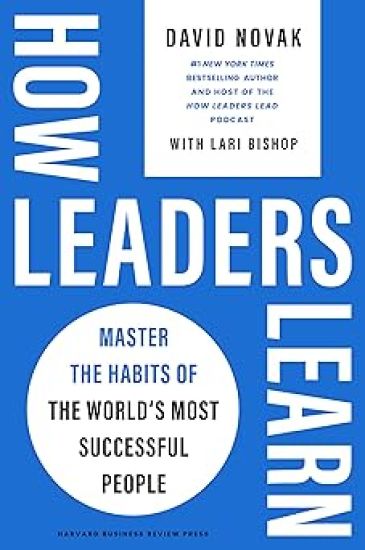
How Leaders Learn

How Leaders Learn

David Novak

Harvard Business Review Press
2024
sidottu
The differentiating mindset and habits that help you turn insight into action.When you put learning at the center of everything you do, you grow your career, your leadership, your relationships, and your joy and fulfillment in life. But even for people who are naturally curious and interested in solving problems, being an effective learner who can turn their learning into action takes insight and practice.With infectious enthusiasm and optimism, David Novak shows you how to master active learning. A trailer-park kid who lived in twenty-three states before entering high school, Novak rapidly ascended the ranks at PepsiCo to become cofounder and CEO of one of the largest corporations in the world, the global restaurant icon Yum! Brands (KFC, Taco Bell, Pizza Hut, and the Habit Burger Grill). And he credits active learning with getting him there. This compilation of wisdom and practical habits from Novak's life and from some of the most successful leaders in the world—CEOs from many industries, military and political leaders, sports greats, experts, and coaches—is your active-learning practice manual. Chapter by chapter, Novak and his all-star roster of leaders share how they've climbed to the highest levels in their fields.Through stories of wins and losses, missteps and miracle saves, challenges tackled, and problems solved, Novak shows you all the ways, big and small, that you can become an active learner. A leadership devotional for the modern age, How Leaders Learn will inspire you to reach new levels of success in your own life and work.