Kirjojen hintavertailu. Mukana 11 378 579 kirjaa ja 12 kauppaa.

Kirjahaku

Etsi kirjoja tekijän nimen, kirjan nimen tai ISBN:n perusteella.

5 kirjaa tekijältä David O. Stewart

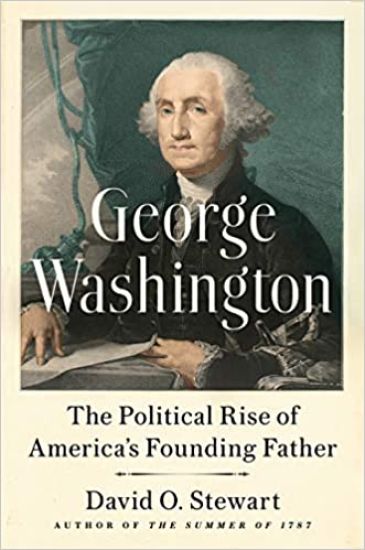
George Washington

George Washington

David O. Stewart

Dutton
2021
sidottu
A fascinating and illuminating account of how George Washington became the single most dominant force in the creation of the United States of America, from award-winning author David O. Stewart Washington's rise constitutes one of the greatest self-reinventions in history. In his midtwenties, this third son of a modest Virginia planter had ruined his own military career thanks to an outrageous ego. But by his midforties, that headstrong, unwise young man had evolved into an unassailable leader chosen as the commander in chief of the fledgling Continental Army. By his midfifties, he was unanimously elected the nation's first president. How did Washington emerge from the wilderness to become the central founder of the United States of America? In this remarkable new portrait, award-winning historian David O. Stewart unveils the political education that made Washington a master politician--and America's most essential leader. From Virginia's House of Burgesses, where Washington learned the craft and timing of a practicing politician, to his management of local government as a justice of the Fairfax County Court to his eventual role in the Second Continental Congress and his grueling generalship in the American Revolution, Washington perfected the art of governing and service, earned trust, and built bridges. The lessons in leadership he absorbed along the way would be invaluable during the early years of the republic as he fought to unify the new nation.
George Washington

George Washington

David O. Stewart

Penguin Putnam Inc
2022
nidottu
A fascinating and illuminating account of how George Washington became the dominant force in the creation of the United States of America, from award-winning author David O. Stewart "An outstanding biography . . . George Washington] has a narrative drive such a life deserves."--The Wall Street Journal Washington's rise constitutes one of the greatest self-reinventions in history. In his midtwenties, this third son of a modest Virginia planter had ruined his own military career thanks to an outrageous ego. But by his midforties, that headstrong, unwise young man had evolved into an unassailable leader chosen as the commander in chief of the fledgling Continental Army. By his midfifties, he was unanimously elected the nation's first president. How did Washington emerge from the wilderness to become the central founder of the United States of America? In this remarkable new portrait, award-winning historian David O. Stewart unveils the political education that made Washington a master politician--and America's most essential leader. From Virginia's House of Burgesses, where Washington mastered the craft and timing of a practicing politician, to his management of local government as a justice of the Fairfax County Court to his eventual role in the Second Continental Congress and his grueling generalship in the American Revolution, Washington perfected the art of governing and service, earned trust, and built bridges. The lessons in leadership he absorbed along the way would be invaluable during the early years of the republic as he fought to unify the new nation.
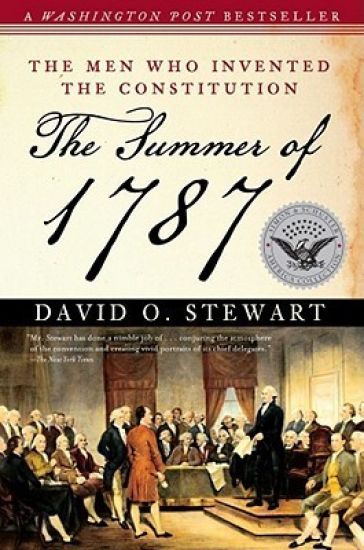
The Summer of 1787: The Men Who Invented the Constitution
The Summer of 1787 takes us into the sweltering room in which the founding fathers struggled for four months to produce the Constitution: the flawed but enduring document that would define the nation--then and now. George Washington presided, James Madison kept the notes, Benjamin Franklin offered wisdom and humor at crucial times. The Summer of 1787 traces the struggles within the Philadelphia Convention as the delegates hammered out the charter for the world's first constitutional democracy. Relying on the words of the delegates themselves to explore the Convention's sharp conflicts and hard bargaining, David O. Stewart lays out the passions and contradictions of the, often, painful process of writing the Constitution. It was a desperate balancing act. Revolutionary principles required that the people have power, but could the people be trusted? Would a stronger central government leave room for the states? Would the small states accept a Congress in which seats were allotted according to population rather than to each sovereign state? And what of slavery? The supercharged debates over America's original sin led to the most creative and most disappointing political deals of the Convention. The room was crowded with colorful and passionate characters, some known--Alexander Hamilton, Gouverneur Morris, Edmund Randolph--and others largely forgotten. At different points during that sultry summer, more than half of the delegates threatened to walk out, and some actually did, but Washington's quiet leadership and the delegates' inspired compromises held the Convention together. In a country continually arguing over the document's original intent, it is fascinating to watch these powerful characters struggle toward consensus--often reluctantly--to write a flawed but living and breathing document that could evolve with the nation.
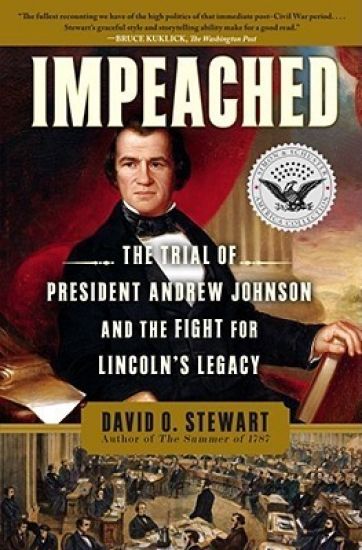
Impeached: The Trial of President Andrew Johnson and the Fight for Lincoln's Legacy
Historian and Constitution expert David O. Stewart recaps the landmark impeachment trial of President Andrew Johnson. "The fullest recounting we have of the high politics of that immediate post-Civil War period...Stewart's graceful style and storytelling ability make for a good read." --The Washington Post In 1868 Congress impeached President Andrew Johnson of Tennessee, the man who had succeeded the murdered Lincoln, bringing the nation to the brink of a second civil war. Enraged to see the freed slaves abandoned to brutal violence at the hands of their former owners, distraught that former rebels threatened to regain control of Southern state governments, and disgusted by Johnson's brawling political style, congressional Republicans seized on a legal technicality as the basis for impeachment -- whether Johnson had the legal right to fire his own secretary of war, Edwin Stanton. The fiery but mortally ill Congressman Thaddeus Stevens of Pennsylvania led the impeachment drive, abetted behind the scenes by the military hero and president-in-waiting, General Ulysses S. Grant. The Senate trial featured the most brilliant lawyers of the day, along with some of the least scrupulous, while leading political fixers maneuvered in dark corners to save Johnson's presidency with political deals, promises of patronage jobs, and even cash bribes. Johnson escaped conviction by a single vote. David Stewart, the author of the highly acclaimed The Summer of 1787, the bestselling account of the writing of the Constitution, challenges the traditional version of this pivotal moment in American history. Rather than seeing Johnson as Abraham Lincoln's political heir, Stewart explains how the Tennessean squandered Lincoln's political legacy of equality and fairness and helped force the freed slaves into a brutal form of agricultural peonage across the South. When the clash between Congress and president threatened to tear the nation apart, the impeachment process substituted legal combat for violent confrontation. Both sides struggled to inject meaning into the baffling requirement that a president be removed only for "high crimes and misdemeanors," while employing devious courtroom gambits, backstairs spies, and soaring rhetoric. When the dust finally settled, the impeachment process had allowed passions to cool sufficiently for the nation to survive the bitter crisis.
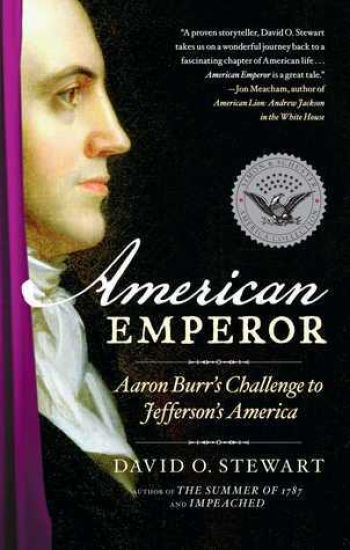
American Emperor: Aaron Burr's Challenge to Jefferson's America
In this vivid and brilliant biography, David Stewart describes Aaron Burr, the third vice president, as a daring and perhaps deluded figure who shook the nation's foundations in its earliest, most vulnerable decade. In this vivid and brilliant biography, David O. Stewart portrays Aaron Burr, the third vice president, as a daring and perhaps deluded figure who shook the nation's foundations in its earliest, most vulnerable decade. Stewart's vivid account of Burr's tumultuous life offers a rare and eye-opening description of the brand-new nation struggling to define itself.