Kirjojen hintavertailu. Mukana 12 016 292 kirjaa ja 12 kauppaa.

Kirjahaku

Etsi kirjoja tekijän nimen, kirjan nimen tai ISBN:n perusteella.

12 kirjaa tekijältä David Orrell

Apollos Arrow

Apollos Arrow

David Orrell

Harper Perennial
2016
pokkari
From seers to scientists, mystics to meteorologists, there have always been peoplewho claim to know what will happen in the future. The Oracle at Delphi, Pythagoras, Newton and the stock analyst on a business report have all endeavoured to look forward in time. But even with recent technological advances and the help of computers and satellites, are we any better at predicting the future now than we were in the distant past? How can scientists claim to foresee future climate events when even three-day forecasts prove a serious challenge?In Apollo's Arrow, David Orrell looks at the history of prognostication to show how scientists (and charlatans) have tried to forecast the future. He then breaks down the mathematics of what really goes into apredictive model. Orrell has created a compelling, elegantly written history of our future that addresses some of the most important issues of our time.
Truth or Beauty

Truth or Beauty

David Orrell

Yale University Press
2012
sidottu
In this sweeping book, applied mathematician and popular author David Orrell questions the promises and pitfalls of associating beauty with truth, showing how ideas of mathematical elegance have inspired—and have sometimes misled—scientists attempting to understand nature.Orrell shows how the ancient Greeks constructed a concept of the world based on musical harmony; later thinkers replaced this model with a program, based on Newton’s “rational mechanics,” to reduce the universe to a few simple equations. He then turns to current physical theories, such as supersymmetric string theory—again influenced by deep aesthetic principles. The book sheds new light on historical investigations and also recent research, including the examinations ongoing at the Large Hadron Collider. Finally, broadening his discussion to other fields of research, including economics, architecture, and health, Orrell questions whether these aesthetic principles reflect an accurate way to explain and understand the structure of our world.
Economyths

Economyths

David Orrell

John Wiley Sons Ltd
2015
nidottu
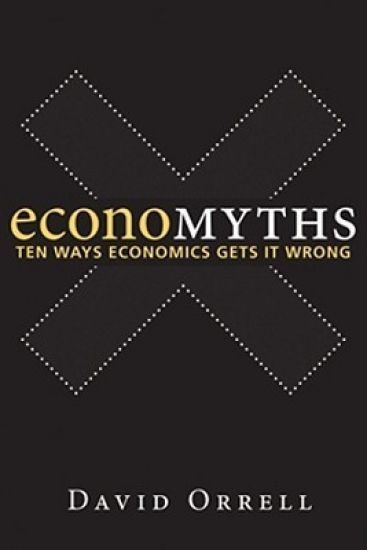
From the inability of wealth to make us happier, to ourcatastrophic blindness to the credit crunch, Economythsreveals ten ways in which economics has failed us all. Forecasters predicted a prosperous year in 2008 for financialmarkets - in one influential survey the average prediction was foran eleven percent gain. But by the end of the year, the Standardand Poor's 500 index - a key economic barometer - was down 38percent, and major economies were plunging into recession. Even theQueen asked - "Why did no one see it coming?" An even bigger casualty was the credibility of economics, whichfor decades has claimed that the economy is a rational, stable,efficient machine, governed by well-understood laws. Mathematician David Orrell traces the history of this idea fromits roots in ancient Greece to the financial centres of London andNew York, shows how it is mistaken, and proposes new alternatives.Economyths explains how the economy is the result of complexand unpredictable processes; how risk models go astray; why theeconomy is not rational or fair; why no woman has ever won theNobel Prize for economics; why financial crashes are less BlackSwans than part of the landscape; and finally, how new ideas inmathematics, psychology, and environmentalism are helping toreinvent economics.
The Future of Everything

The Future of Everything

David Orrell

Avalon Publishing Group
2008
pokkari
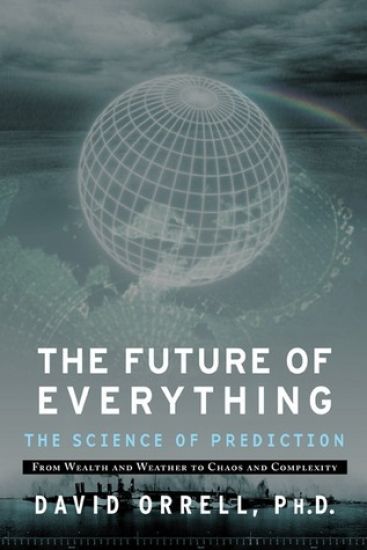
For centuries, scientists have strived to predict the future. But to what extent have they succeeded? Can past events-Hurricane Katrina, the Internet stock bubble, the SARS outbreak-help us understand what will happen next? Will scientists ever really be able to forecast catastrophes, or will we always be at the mercy of Mother Nature, waiting for the next storm, epidemic, or economic crash to thunder through our lives? In The Future of Everything, David Orrell looks back at the history of forecasting, from the time of the oracle at Delphi to the rise of astrology to the advent of the TV weather report, showing us how scientists (and some charlatans) predicted the future. How can today's scientists claim to anticipate future weather events when even thee-day forecasts prove a serious challenge? How can we predict and control epidemics? Can we accurately foresee our financial future? Or will we only find out about tomorrow when tomorrow arrives?
Economyths

Economyths

David Orrell

Icon Books Ltd
2017
pokkari
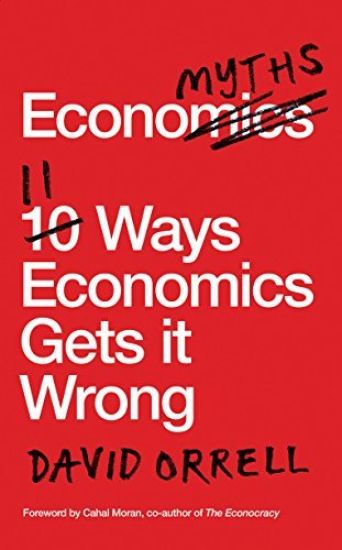
When Economyths was first published in 2010, David Orrell showed how mainstream economics is based on key myths such as fair competition, rational behaviour, stability and eternal growth - and how these myths lead paradoxically to their opposites: inequality, an irrational economy, financial instability and a collision with nature's limits.Since then, we've had Occupy, political upheaval, flash crashes in financial markets, the warmest few years in recorded history - and a growing chorus demanding fundamental reform. So how has economics responded?In this revised and expanded edition, Orrell shows how the ten myths still dominate economics. He reveals their roots in thought that goes back to the ancient Greeks, making them hard to dislodge. And he uncovers, demolishes and develops an alternative to the greatest economyth of all - the one that will lead to the collapse of orthodox economics.
Quantum Economics

Quantum Economics

David Orrell

Icon Books Ltd
2019
pokkari
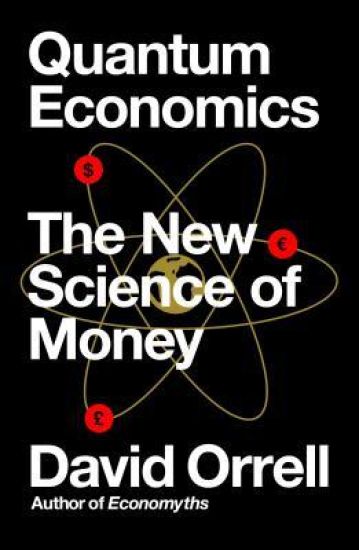
A decade after the financial crisis, there is a growing consensus that economics has failed and needs to go back to the drawing board. David Orrell argues that it has been trying to solve the wrong problem all along.Economics sees itself as the science of scarcity. Instead, it should be the science of money (which plays a surprisingly small role in mainstream theory). And money is a substance that turns out to have a quantum nature of its own.Just as physicists learn about matter by studying the exchange of particles at the subatomic level, so economics should begin by analysing the nature of money-based transactions. Quantum Economics therefore starts with the meaning of the phrase 'how much' - or, to use the Latin word, quantum. From quantum physics to the dualistic properties of money, via the emerging areas of quantum finance and quantum cognition, this profoundly important book reveals that quantum economics is to neoclassical economics what quantum physics is to classical physics - a genuine turning point in our understanding.
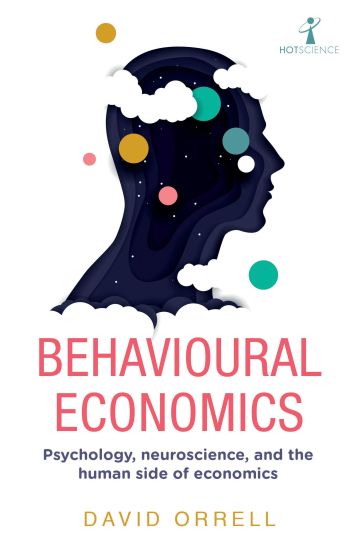
Behavioural Economics

Behavioural Economics

David Orrell

Icon Books Ltd
2021
pokkari
The controversial science that claims to have revolutionised economics.For centuries, economics was dominated by the idea that we are rational individuals who optimise our own 'utility'. Then, in the 1970s, psychologists demonstrated that the reality is a lot messier. We don't really know what our utility is, and we care about people other than ourselves. We are susceptible to external nudges. And far from being perfectly rational we are prone to 'cognitive biases' with complex effects on decision-making, such as forgetting to prepare for retirement. David Orrell explores the findings from psychology and neuroscience that are shaking up economics - and that are being exploited by policy-makers and marketers alike, to shape everything from how we shop for food, to how we tackle societal happiness or climate change. Finally, he asks: is behavioural economics a scientific revolution, or just a scientific form of marketing?
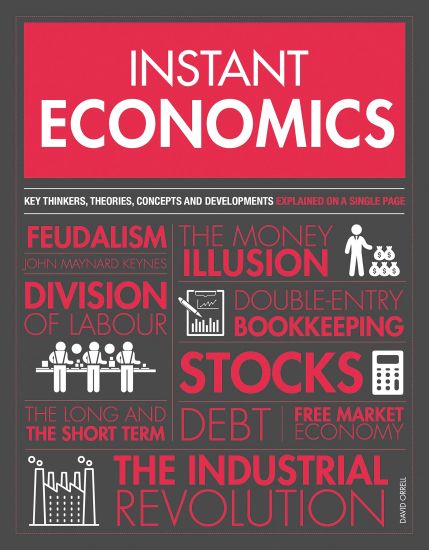
Instant Economics

Instant Economics

David Orrell

Welbeck Publishing Group
2021
pokkari
Instant Economics pulls together all the pivotal economic knowledge and thought into one concise volume. Each page contains a discrete 'cheat sheet', which tells you the most important facts in bite-sized chunks, meaning you can become an expert in an instant. From Adam Smith to Karl Marx, taxation to debt crisis, and inequality to economic freedom, every key figure, discovery, controversy and concept is explained with succinct and lively text and graphics. Perfect for the knowledge hungry and time poor, this collection of graphic-led lessons makes economics interesting and accessible. Everything you need to know is here.
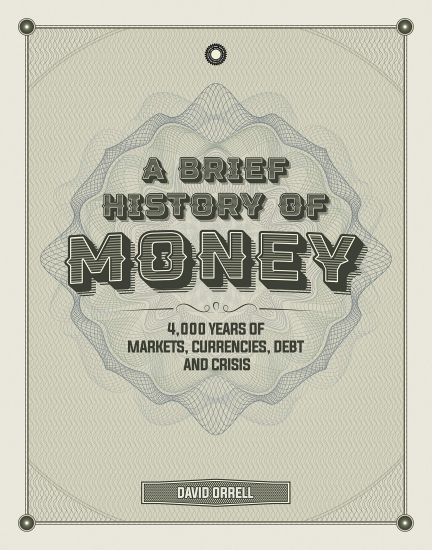
A Brief History of Money

A Brief History of Money

David Orrell

Welbeck Publishing Group
2020
sidottu
What do cacao beans, cowrie shells, paper cards, cigarettes and digital databases all have in common? At some time, they have been used as a form of money. Money is an essential aspect of everyday life and something that we usually take for granted until it all goes wrong. This book traces the role, growth and impact of money and finance on individuals, human civilisation and the type of economy we live in. The financial history of the world reads like a fascinating novel with innumerable twists and turns. We strive for financial stability and security, yet this often proves surprisingly ephemeral. Just as we hope we have reached a new plateau of prosperity, the financial system has a habit of throwing a spanner in the works, forcing us to change and adapt to new circumstances. This book traces the financial system from its birth as a credit system in ancient Mesopotamia, to the financial revolutions of the 20th and 21st centuries. This is the story of money, finance and economics but also its interaction with people, governments and society. Why did the American forces desperately try to destroy money during the American Revolution? Why do we tend to succumb to boom and busts? And if inflation is bad, why is deflation even worse? Also, the book looks at the effect money has on ourselves. Does money make us irrational? Is money really the root of all evil, or should we celebrate money for its potential to create prosperity and overcome poverty?
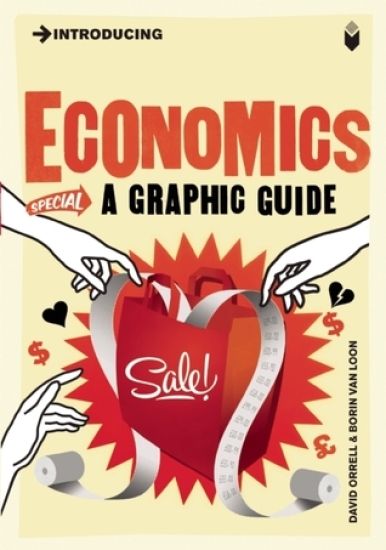
Introducing Economics

Introducing Economics

David Orrell

Icon Books Ltd
2011
nidottu
A comic-book introduction to economics from David Orrell, the author of Economyths: 11 Ways Economics Gets it Wrong. With illustrations from Borin Van Loon. Part of the internationally-recognised Introducing Graphic Guide series.Today, it seems, all things are measured by economists. The so-called 'dismal science' has never been more popular - or, given its failure to predict or prevent the recent financial crisis, more controversial.But what are the findings of economics? Is it really a science? And how can it help our lives?Introducing Economics traces the history of the subject from the ancient Greeks to the present day. Orrell and Van Loon bring to life the contributions of great economists - such as Adam Smith, Karl Marx, John Maynard Keynes and Milton Friedman - and delve into ideas from new areas such as ecological and complexity economics that are revolutionizing the field.