Kirjojen hintavertailu. Mukana 11 342 296 kirjaa ja 12 kauppaa.

Kirjahaku

Etsi kirjoja tekijän nimen, kirjan nimen tai ISBN:n perusteella.

5 kirjaa tekijältä David P. Jackson

The Nepalese Legacy in Tibetan Painting

The Nepalese Legacy in Tibetan Painting

David P. Jackson

Rubin Museum of Art
2010
sidottu
The Newar painting style (Beri) in Tibet, which originated in Nepal, is the most recent of two early Indian-inspired painting styles to take hold in Tibet. The style flourished in Tibet for about four centuries, from the late 12th to the early 17th century. Alone among styles, it was adopted universally across Tibet for a century at its height (1360-1460). Later in its development, some of the best-known thangkas in this style were commissioned by abbots of Ngor Monastery, an important Sakyapa monastery in Tsang Province.Most previous scholars linked the paintings in this style exclusively with the Sakyapa religious school and Tsang Province, if not with the monastery of Ngor. In addition to exploring the powerful aesthetic appeal of the Beri style, one of the main goals of this publication is to overcome the erroneous limiting of the style to the Sakyapa and to demonstrate its full historical and religious extent. Another main goal is to introduce a method for analyzing structure and lineages in Tibetan paintings.
Mirror of the Buddha

Mirror of the Buddha

David P. Jackson

Rubin Museum of Art
2011
sidottu
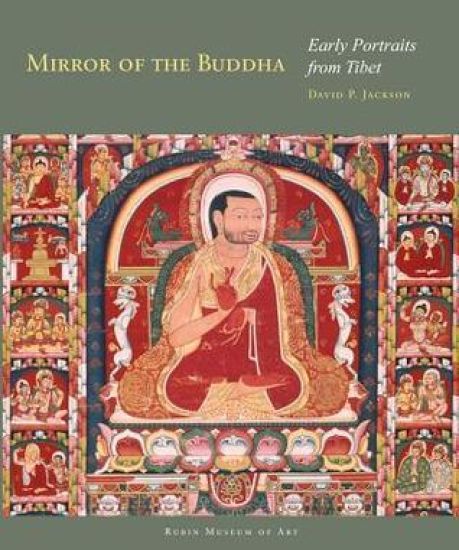
In their art, Tibetans aimed at faithfully transmitting and preserving Buddhism as a spiritual discipline as they had learned it from earlier teachers. Each thangka painting was a small contribution to the larger cause of keeping Buddhism alive and radiant. In this third volume on Tibetan painting, David Jackson investigates painted portraits of early Tibetan teachers. Images of these eminent personages embodied Buddhist ideals in human form. In creating these depictions, Tibetan painters of the 12th through the 14th centuries imitated the artistic conventions developed in Pala- and Sensa-ruled eastern India (Bengal). This style, called Sharri, spread from India to many parts of Asia, but its classic Indian forms, delicate colors, and intricate decorative details were emulated most faithfully by the Tibetans.
Painting Traditions of the Drigung Kagyu School

Painting Traditions of the Drigung Kagyu School

David P. Jackson

Rubin Museum of Art
2014
sidottu
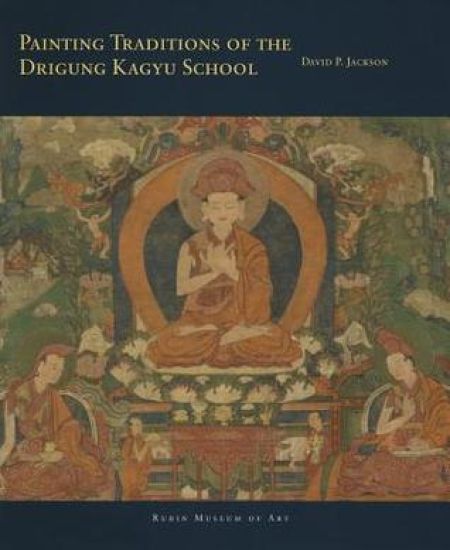
Though the Drigung Kagyu was one of the most prominent and powerful schools of Tibetan Buddhism during its early period (12th - 14th century), its art is still relatively poorly known, even among Tibetans. With its mother monastery destroyed twice, once in the late 13th century and again during the Great Cultural Revolution, much of the art was lost or dispersed. The iconography of the Drigung School is examined with regard to its three main periods - early, middle, and late - in combination with the distinctive influences of the Sharri, Khyenri, and Driri styles. The book aims elucidate to the painting traditions of the Drigung Kagyu School and investigate lineage depictions and methods of dating, while referring to previously overlooked Tibetan sources, both ancient and modern. The publication and related exhibition also explores the beneficial quality ascribed to the works of art and the elements they contain.
A Revolutionary Artist of Tibet

A Revolutionary Artist of Tibet

David P. Jackson

Rubin Museum of Art
2016
sidottu
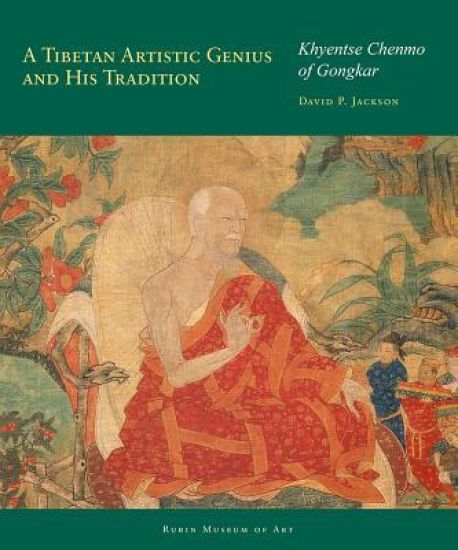
In A Revolutionary Artist of Tibet author David Jackson focuses on the Khyenri style, the least known among the three major painting styles of Tibet, dating from the mid-fifteenth through the seventeenth century.The painting of Khyentse Chenmo, the founder of the Khyenri style who flourished from the 1450s to the 1490s, was significant for his radical rejection of the prevailing, classic Indic (especially Nepalese-inspired) styles with formal red backgrounds, enthusiastically replacing them with the intense greens and blues of Chinese landscapes. Khyentse was famed for his fine and realistic looking work, both as a painter and sculptor. His painting style has often been overlooked or misunderstood by scholars—sometimes misidentified as an early example of the Karma Gardri style — but it is a missing link in the history of Tibetan painting.The Khyenri style is now most closely linked with a small sub-school of the Sakya tradition, the Gongkarwa. The most important in-situ murals of the Khyenri style survive at the Gongkar Monastery in southern Tibet, south of Lhasa near the Gongkar airport. There we find murals by the hand of Khyentse Chenmo himself; many of them were covered by a layer of whitewash and thus escaped destruction during the Cultural Revolution. Jackson also brings to light several of Khyentse's paintings in museums outside Tibet, including some that have been unrecognized for over a century.
A Saint in Seattle

A Saint in Seattle

David P. Jackson

Wisdom Publications,U.S.
2004
nidottu
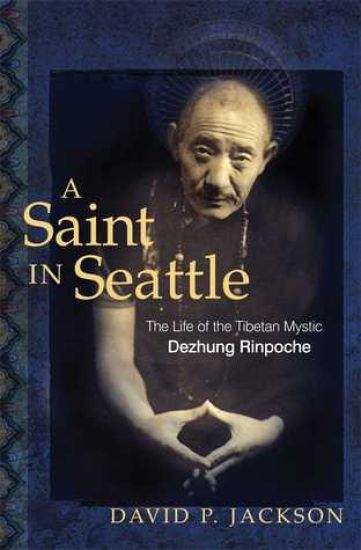
In 1960, the Tibetan lama Dezhung Rinpoche (1906-87) arrived in Seattle after being forced into exile from his native land by the Communist Chinese. Already a revered master of the teachings of all Tibetan Buddhist schools, he would eventually become a teacher of some of Western Buddhism's most notable scholars. This inspiring and unlikely biography of a modern Buddha is fully annotated, and includes photographs.