Kirjojen hintavertailu. Mukana 11 244 527 kirjaa ja 12 kauppaa.

Kirjahaku

Etsi kirjoja tekijän nimen, kirjan nimen tai ISBN:n perusteella.

7 kirjaa tekijältä David Pace

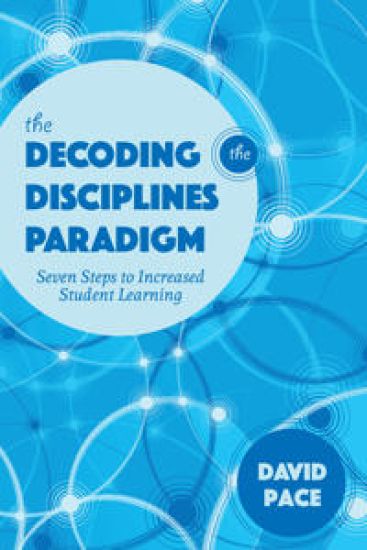
The Decoding the Disciplines Paradigm

The Decoding the Disciplines Paradigm

David Pace

Indiana University Press
2017
sidottu
Teaching and learning in a college setting has never been more challenging. How can instructors reach out to their students and fully engage them in the conversation? Applicable to multiple disciplines, the Decoding the Disciplines Paradigm offers a radically new model for helping students respond to the challenges of college and provides a framework for understanding why students find academic life so arduous. Teachers can help their pupils overcome obstacles by identifying bottlenecks to learning and systematically exploring the steps needed to overcome these obstacles. Often, experts find it difficult to define the mental operations necessary to master their discipline because they have become so automatic that they are invisible. However, once these mental operations have been made explicit, the teacher can model them for students, create opportunities for practice and feedback, manage additional emotional obstacles, assess results, and share what has been learned with others.
The Decoding the Disciplines Paradigm

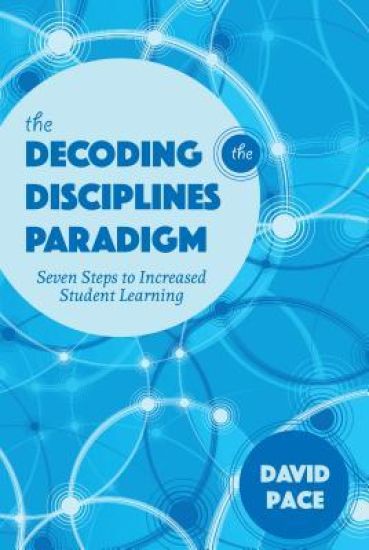
The Decoding the Disciplines Paradigm

David Pace

Indiana University Press
2017
pokkari
Teaching and learning in a college setting has never been more challenging. How can instructors reach out to their students and fully engage them in the conversation? Applicable to multiple disciplines, the Decoding the Disciplines Paradigm offers a radically new model for helping students respond to the challenges of college and provides a framework for understanding why students find academic life so arduous. Teachers can help their pupils overcome obstacles by identifying bottlenecks to learning and systematically exploring the steps needed to overcome these obstacles. Often, experts find it difficult to define the mental operations necessary to master their discipline because they have become so automatic that they are invisible. However, once these mental operations have been made explicit, the teacher can model them for students, create opportunities for practice and feedback, manage additional emotional obstacles, assess results, and share what has been learned with others.

Claude Levi-Strauss

Claude Levi-Strauss

David Pace

Routledge
2015
sidottu
Lévi-Strauss is one of the intellectual giants of the twentieth century yet he is a very private and isolated figure, who has been reticent about himself. This book, first published in 1983,provides a fascinating insight into his character through a careful reading of the more speculative passages of his books and interviews. His personal existential and psychological orientation is explored through a structural analysis of Tristes Tropiques, his most personal book, and his writings on art, nature and civilization and through a consideration of his debt to Rousseau. Dr Pace examines in depth Lévi-Strauss’s critique of cultural evolutionism and his attack on the notion of world history. He assesses the political implications of Lévi-Strauss’s own interpretation of human progress through an examination of his debates with Sartre and other Marxists in the 1950s and 1960s and his subsequent movement to the right. The author’s concern throughout is to place the world-view of this great French anthropologist in the context of twentieth-century intellectuals’ struggle to come to grips with cultural relativism and the ‘problem’ of the primitive.
Claude Levi-Strauss

Claude Levi-Strauss

David Pace

Routledge
2017
nidottu
Lévi-Strauss is one of the intellectual giants of the twentieth century yet he is a very private and isolated figure, who has been reticent about himself. This book, first published in 1983,provides a fascinating insight into his character through a careful reading of the more speculative passages of his books and interviews. His personal existential and psychological orientation is explored through a structural analysis of Tristes Tropiques, his most personal book, and his writings on art, nature and civilization and through a consideration of his debt to Rousseau. Dr Pace examines in depth Lévi-Strauss’s critique of cultural evolutionism and his attack on the notion of world history. He assesses the political implications of Lévi-Strauss’s own interpretation of human progress through an examination of his debates with Sartre and other Marxists in the 1950s and 1960s and his subsequent movement to the right. The author’s concern throughout is to place the world-view of this great French anthropologist in the context of twentieth-century intellectuals’ struggle to come to grips with cultural relativism and the ‘problem’ of the primitive.