Kirjahaku
Etsi kirjoja tekijän nimen, kirjan nimen tai ISBN:n perusteella.
48 kirjaa tekijältä David Parker
For 40 years, David Parker served as a teacher in San Francisco's inner-city schools. Unlike most of his colleagues, however, he did not place his faith and his future in the teachers' union or the government. Instead, he simultaneously became a real estate investor and entrepreneur, as well as a jazz musician. As Parker jokingly says, "I have 150 years of experience." His financial journey has been very successful.A perennial student as well as a teacher, to write "Income and Wealth," Parker went back to school to study math, finance and economics. It became clear that individual responsibility and initiative are essential keys to financial success, and that government regulation of important sectors of life including healthcare and education will always be a recipe for disaster.Parker's message is a positive one. He not only assures readers that financial independence is possible, regardless of annual income, but he provides a step-by-step plan for achieving this desirable goal. "Income and Wealth" will provide readers with thought-provoking insights into the way the economy really works. It is scholarly writing in political economy, yet provides useful insights into financial decision-making on a daily basis.

Visualizing Information with Microsoft® Office Visio® 2007
David Parker
McGraw-Hill Professional
2007
nidottu
Publisher's Note: Products purchased from Third Party sellers are not guaranteed by the publisher for quality, authenticity, or access to any online entitlements included with the product.Create and distribute data-connected Microsoft Office Visio diagrams and reportsGet full details on the powerful features of Microsoft Office Visio 2007 inside this comprehensive volume. Written by Visio expert David Parker, Visualizing Information with Microsoft Office Visio 2007 demonstrates how to effectively visualize, explore, and communicate complex business information. Learn to use PivotDiagrams, Data Graphics, and Smart Tags, as well as link data to shapes and create meaningful Visio documents and reports. Plus, you'll get vital security information, time-saving tips, troubleshooting techniques, and downloadable macros and code samples.Essential Skills for Database Users and ProfessionalsCreate shapes and link them to dataSummarize and analyze information using PivotDiagramsUse Data Graphics, Smart Tags, and SmartShapes to reinforce informationGenerate robust Excel, HTML, and XML reportsCreate custom, reusable templates, stencils, and mastersUpdate and enhance diagrams with Reviewer's comments and markups Integrate Visio diagrams with other Windows applicationsPublish and securely distribute Visio documents and summariesExtend functionality using VBA macros, add-ins, and wrapper applications

This book discusses how the ideas, expectations and mind-sets that formed within different US foreign policy making institutions during the Cold War have continued to influence US foreign policy making vis-à-vis Russia in the post-Cold War era, with detrimental consequences for US–Russia relations. It analyses what these ideas, expectations and mind-sets are, explores how they have influenced US foreign policy towards Russia as ideational legacies, including the ideas that Russia is untrustworthy, has to be contained and that in some aspects the relationship is necessarily adversarial, and outlines the consequences for US–Russian relations. It considers these ideational legacies in depth in relation to NATO enlargement, democracy promotion, and arms control and sets the subject in its wider context where other factors, such as increasingly assertive Russian foreign policy, impact on the relationship. It concludes by demonstrating how tension and mistrust have continued to grow during the Trump administration and considers the future for US–Russian relations.
Class and State in Early Modern France explores the economic, social, ideological and political foundations of French Absolutism. David Parker's challenging interpretation presents French Absolutism as a remarkably successful attempt to preserve the political and ideological structures of the traditional order. This reassessment runs contrary to much revisionist historiography, rejecting the widespread tendency to treat French Absolutism either as an instrument of capitalism or political modernisation. It also discusses a number of contentious issues such as the agrarian foundations of capitalism, the relationship between class and status, as well as the structure and ideology of the absolute state itself. It will be of interest to early modern historians of France, Britain and Europe.

International and interdisciplinary, this important book provides a clear, user-friendly introduction to contemporary debates on urban life. It explores the concepts and methodologies through which sociology, cultural studies and cultural geography are coming to terms with the changing configurations of space, time and social relations in cities.The conceptual framework for understanding urban everyday life is introduced through a summary of relevant classical and contemporary ideas. The book goes on to develop this framework through the exploration of a number of urban domains, including: mobility and travelconsumption and urban spectacleeverynight lifenew communications technologies. Throughout the book, illustrative material is drawn from a range of cities in Britain, North America and East Asia, and examples from a range of urban contexts are included, as well as brief biographical portraits of key urban thinkers. This comprehensive text includes end of chapter resources, suggestions for further reading and information on relevant internet sites, all of which make it an ideal student reference.
International and interdisciplinary, this important book provides a clear, user-friendly introduction to contemporary debates on urban life. It explores the concepts and methodologies through which sociology, cultural studies and cultural geography are coming to terms with the changing configurations of space, time and social relations in cities.The conceptual framework for understanding urban everyday life is introduced through a summary of relevant classical and contemporary ideas. The book goes on to develop this framework through the exploration of a number of urban domains, including: mobility and travelconsumption and urban spectacleeverynight lifenew communications technologies. Throughout the book, illustrative material is drawn from a range of cities in Britain, North America and East Asia, and examples from a range of urban contexts are included, as well as brief biographical portraits of key urban thinkers. This comprehensive text includes end of chapter resources, suggestions for further reading and information on relevant internet sites, all of which make it an ideal student reference.

This first volume of the Official History studies the background to privatisation, and the privatisations of the first two Conservative Governments led by Margaret Thatcher from May 1979 to June 1987. First commissioned by the then Prime Minister Tony Blair as an authoritative history, this volume addresses a number of key questions: To what extent was privatisation a clear policy commitment within the Thatcher Governments of the 1980s - or did Government simply stumble on the idea? Why were particular public corporations sold early in the 1980s and other sales delayed until well into the 1990s? What were the privatisation objectives and how did they change over time, if at all? How was each privatisation planned and executed, how were different City advisers appointed and remunerated, what precise roles did they play? How was each privatisation administered; in what ways did the methods evolve and change and why? How were sale prices determined? Which government departments took the lead role; what was the input of the Treasury and Bank of England; and what was the relationship between Ministers and civil servants? The study draws heavily from the official records of the British Government to which the author was given full access and from interviews with leading figures involved in each of the privatisations – including ex-Ministers, civil servants, business and City figures, as well as academics that have studied the subject. This new official history will be of much interest to students of British political history, economics and business studies.

This is Volume II of Professor Parker's authoritative Official History of Privatisation, covering the period from the re-election of Margaret Thatcher in 1987 to the election of Tony Blair in 1997.Volume II considers in detail several of the major privatisations, including those of airports, steel, water, electricity, coal and the railways, as well as a number of smaller ones. Each privatisation involved major challenges in terms of industrial restructuring, organising successful sales and, in a number of cases, establishing effective regulatory regimes. The policy evolved and new methods of selling and regulating were put in place that enabled further disposals to occur. Monolithic nationalised industries with their emphasis on the benefits of economies of scale, vertical integration and rationalisation, were replaced by industrial structures rooted in the importance of commercial management, risk taking and competition. In government departments and parts of the National Health Service, direct employees were replaced by private contractors, and private investment became a characteristic of public infrastructure in the form of PFI/PPP schemes. This study draws heavily on the official records of the British government, to which the author was given full access and on interviews with the leading figures involved in each of the privatisations, including ex-ministers, civil servants, business and City figures, as well as academics that have studied the subject. This book will of great interest to students of privatisation, British political history and of business and economics in general.
Class and State in Early Modern France explores the economic, social, ideological and political foundations of French Absolutism. David Parker's challenging interpretation presents French Absolutism as a remarkably successful attempt to preserve the political and ideological structures of the traditional order. This reassessment runs contrary to much revisionist historiography, rejecting the widespread tendency to treat French Absolutism either as an instrument of capitalism or political modernisation. It also discusses a number of contentious issues such as the agrarian foundations of capitalism, the relationship between class and status, as well as the structure and ideology of the absolute state itself. It will be of interest to early modern historians of France, Britain and Europe.

The virtual suppression of explicit ethical and evaluative discourse by current literary theory can be seen as the momentary triumph of a sceptical post Enlightenment reflective tradition over others vital to a full account of human and literary worth. In Ethics, Theory and the Novel, David Parker brings together recent developments in moral philosophy and literary theory. He questions many currently influential movements in literary criticism, showing that their silences about ethics are as damaging as the political silences of Leavisism and New Criticism in the 1950s and 1960s. He goes on to examine Middlemarch, Anna Karenina, and three novels by D. H. Lawrence, and explores the consequences for major literary works of the suppression of either the Judeo-Christian or the Romantic-expressivist ethical traditions. Where any one tradition becomes a master-narrative, he argues, imaginative literature ceases to have the deepest interest and relevance for us.

The virtual suppression of explicit ethical and evaluative discourse by current literary theory can be seen as the triumph of one post-Enlightenment tradition over others vital to a full account of humanity and literary value. In this book David Parker brings together recent developments in moral philosophy and literary theory. He questions many currently influential movements in literary criticism, showing that their silences about ethics are as damaging as the political silences of Leavisism and New Criticism in the 1950s and 1960s. He goes on to examine Middlemarch, Anna Karenina and three novels by D. H. Lawrence, and explores the consequences for major literary works of the suppression of either the Judeo-Christian or the Romantic-expressivist ethical traditions. Overall, this book is an essay in a new evaluative discourse, the implications of which go far beyond the particular works it analyses.

Thematically divided, this fascinating study explores the experiences of many of Devon’s people during the First World War: soldiers; aliens and spies (real and imagined); refugees; conscientious objectors; nurses and doctors; churchmen; the changing roles of women and children; and finally the controversies surrounding farming and agriculture. It provides a moving tribute to the price paid by Devon and its people during the War to End all Wars.
The First World War claimed over 995,000 British lives, and its legacy continues to be remembered today. Great War Britain: Exeter offers an intimate portrayal of the city and its people living in the shadow of the 'war to end all wars'. A beautifully illustrated and highly accessible volume, it describes local reaction to the outbreak of war; charts the experience of individuals who enlisted; the changing face of industry; the work of the many hospitals in the area; the effect of the conflict on local children; the women who defied convention to play a vital role on the home front; and concludes with a chapter dedicated to how the city and its people coped with the transition to life in peacetime once more. The Great War story of Exeter is told through the voices of those who were there and is vividly illustrated, including many evocative images from the archives of the Devon and Exeter Institution.
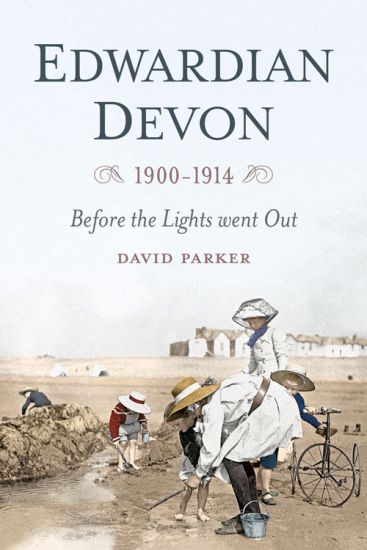
A century ago, Britain was locked in a devastating worldwide conflict that would change every aspect of society. This book explores life in Devon between 1900 and 1914, offering a revealing glimpse of a world now long-vanished before war broke out. Devon was no backwater; its railways and shipping were busy bringing tourists in and sending vast quantities of produce out. It was, though, a county of contrasts and change. Farming had reinvented itself after the late Victorian depression, but villages were in decline; churches and chapels were full but religion bitterly divided communities; the wealthy enjoyed extravagant lifestyles on great estates but their authority was under attack. Devon’s upper-, middle- and lower-class schools perfectly reflected the Edwardian social hierarchy, but as the county’s elections revealed, society was being torn asunder by bitter controversies over exactly who should have the vote, rule the country, and control the Empire. It was a worrying time overseas too: Great Britain’s supremacy was increasingly challenged, and the warships in Devon’s harbours and army manoeuvres on the moors drew many comments as the storm clouds began to gather over Europe. Using mainly contemporary sources, this engaging book examines the attitudes and experiences of people across all social classes in this tumultuous era.
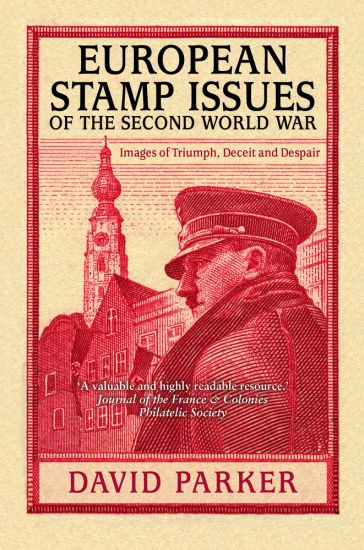
Today, European nations use stamps to commemorate aspects of a nation’s culture, history and achievements. During the Second World War, however, stamps were considered far more important in conveying political and ideological messages about their country’s change in fortunes – whether it was as triumphant occupier, willing or unwilling ally, or oppressed victim. Some issues and overprints contained obvious messages, but many others were skilfully designed and subtle in their intentions.Stamps and their accompanying postmarks offer an absorbing and surprisingly detailed insight into the hopes and fears of nations at this tumultuous time.This remarkable collection examines and interprets the stamps of twenty-two countries across Western and Eastern Europe, revealing the aspirations, assumptions and anxieties of so many nations as their destinies hung in the balance.

All of us take our moral bearings from a conception of the good, or a range of goods, that we consider most important. We are in this sense selves in moral space. Building on the work of the philosopher Charles Taylor, among others, David Parker examines a range of classic and contemporary autobiographies—including those of St. Augustine, William Wordsworth, Friedrich Nietzsche, Edmund Gosse, Roland Barthes, Seamus Heaney, and J. M. Coetzee—to reveal a whole domain of life narrative that has been previously ignored, one that enables a new approach to the question of what constitutes a "good" life narrative. Moving from an ethics toward an aesthetics of life writing, Parker follows Wittgenstein's view that ethics and aesthetics are one. The Self in Moral Space is distinctive in that its key ethical question is not What is it right for the life writer to do? but the broader question What is it good to be? This question opens up an important debate with the dominant postmodern paradigms that prevail in life writing studies today. In Parker's estimation, such paradigms are incapable of explaining why life writing matters in the contemporary context. Life narrative, he argues, faces readers with the perennial ethical question How should a human being live? We need a new reconstructive paradigm, as offered by this book, in order to gain a fuller understanding of life narrative and its humanistic potential.