Kirjojen hintavertailu. Mukana 11 717 486 kirjaa ja 12 kauppaa.

Kirjahaku

Etsi kirjoja tekijän nimen, kirjan nimen tai ISBN:n perusteella.

28 kirjaa tekijältä David Patterson

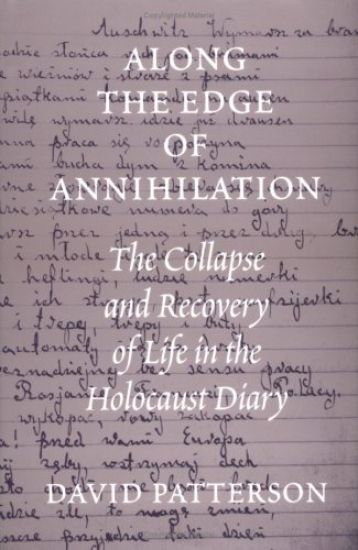
Along the Edge of Annihilation

Along the Edge of Annihilation

David Patterson

University of Washington Press
1999
sidottu
This extraordinary book is based on more than fifty diaries of Jewish Holocaust victims of all ages, written while the events described were actually taking place. Many of the writers did not survive. Patterson's book is unique not only in the number of diaries and original texts it examines but also in the questions it raises and in the approach it takes from within Jewish traditions and contexts.Patterson has organized his book around a series of themes that lead to a deeper understanding of the meaning of these works for both their writers and their readers, affirming the Holocaust diary as a form of spiritual resistance. Throughout, he draws upon his impressive knowledge of Jewish texts, ancient and modern—Torah, Talmud, Midrash, Zohar, the medieval commentators, the Hasidic masters, and modern Jewish philosophers and thinkers.In Along the Edge of Annihilation David Patterson illuminates the spiritual and physical devastation experienced by the Jews of Europe during the Holocaust, and shows how they chose life and the spirit of life in the midst of the Inferno.
Along the Edge of Annihilation

Along the Edge of Annihilation

David Patterson

University of Washington Press
1999
pokkari
This extraordinary book is based on more than fifty diaries of Jewish Holocaust victims of all ages, written while the events described were actually taking place. Many of the writers did not survive. Patterson's book is unique not only in the number of diaries and original texts it examines but also in the questions it raises and in the approach it takes from within Jewish traditions and contexts.Patterson has organized his book around a series of themes that lead to a deeper understanding of the meaning of these works for both their writers and their readers, affirming the Holocaust diary as a form of spiritual resistance. Throughout, he draws upon his impressive knowledge of Jewish texts, ancient and modern—Torah, Talmud, Midrash, Zohar, the medieval commentators, the Hasidic masters, and modern Jewish philosophers and thinkers.In Along the Edge of Annihilation David Patterson illuminates the spiritual and physical devastation experienced by the Jews of Europe during the Holocaust, and shows how they chose life and the spirit of life in the midst of the Inferno.
Open Wounds

Open Wounds

David Patterson

University of Washington Press
2006
sidottu
In this book, David Patterson sets out to describe why Jews must live -- but especially think -- in a way that is distinctly Jewish.For Patterson, the primary responsibility of post-Holocaust Jewish thought is to avoid thinking in the same categories that led to the attempted extermination of the Jewish people. The Nazis, he says, were not anti- Semitic because they were racists; they were racists because they were anti-Semitic, and their anti-Semitism was furthered by a Western ontological tradition that made God irrelevant by placing the thinking ego at the center of being.If the Jewish people, in their particularity, are "chosen" to attest to the universal "chosenness" of every human being, then each human being is singled out to assume an absolute responsibility to and for all human beings. And that, Patterson says, is why the anti-Semite hates the Jew: because the very presence of the Jew robs him of his ego and serves as a constant reminder that we are all forever in debt, and that redemption is always yet to be. Thus the Nazis, before they killed Jewish bodies, were compelled to murder Jewish souls through the degradations of the Shoah.But why is the need for a revitalized Jewish thought so urgent today? It is not only because modern Jewish thought, hoping to accommodate itself to rational idealism, is thereby obliged to put itself in league with postmodernists who "preach tolerance for everything except biblically based religion, beginning with Judaism," and who effectively call on Jews, as fellow "citizens of the global village," to disappear. It is also because without the Jewish reality of Jerusalem, there is only the Jewish abstraction of Auschwitz, for in Auschwitz the Jews were murdered not as husbands and wives, parents and children, but as efficiently numbered units. If the Jews, Patterson claims, are not a people set apart by "a Voice that is other than human," then the Holocaust can never be understood as evil rather than simply immoral.With Open Wounds, Patterson aims to make possible a religious response to the Holocaust. Post-Holocaust Jewish thinking, confronting the work of healing the world -- of tikkun haolam -- must recover not just Jewish tradition but also the category of the holy in human beings' thinking about humanity.
Hebrew Language and Jewish Thought

Hebrew Language and Jewish Thought

David Patterson

Routledge
2005
sidottu
Drawing on more than three hundred Hebrew roots, the author shows that Jewish thought employs Hebrew concepts and categories that are altogether distinct from those that characterize the Western speculative tradition. Among the key categories that shape Jewish thought are holiness, divinity, humanity, prayer, responsibility, exile, dwelling, gratitude, and language itself. While the Hebrew language is central to the investigation, the reader need not have a knowledge of Hebrew in order to follow it. Essential reading for students and scholars of Judaism, this book will also be of value to anyone interested in the categories of thinking that form humanity's ultimate concerns.
Hebrew Language and Jewish Thought

Hebrew Language and Jewish Thought

David Patterson

Routledge
2009
nidottu
Drawing on more than three hundred Hebrew roots, the author shows that Jewish thought employs Hebrew concepts and categories that are altogether distinct from those that characterize the Western speculative tradition. Among the key categories that shape Jewish thought are holiness, divinity, humanity, prayer, responsibility, exile, dwelling, gratitude, and language itself. While the Hebrew language is central to the investigation, the reader need not have a knowledge of Hebrew in order to follow it. Essential reading for students and scholars of Judaism, this book will also be of value to anyone interested in the categories of thinking that form humanity's ultimate concerns.
A Genealogy of Evil

A Genealogy of Evil

David Patterson

Cambridge University Press
2010
pokkari
Based on extensive scrutiny of primary sources from Nazi and Jihadist ideologues, David Patterson argues that Jihadist anti-Semitism stems from Nazi ideology. This book challenges the idea that Jihadist anti-Semitism has medieval roots, identifying its distinctively modern characteristics and tracing interconnections that link the Nazis to the Muslim Brotherhood to the PLO, Fatah, Hamas, Islamic Jihad, Hezbollah, Al-Qaeda, the Sudan, the Iranian Islamic Republic, and other groups with an anti-Semitic worldview. Based on his close reading of numerous Jihadist texts, Patterson critiques their antisemitic teachings and affirms the importance of Jewish teaching, concluding that humanity needs the very Jewish teaching and testimony that the Jihadists advocate destroying.
A Genealogy of Evil

A Genealogy of Evil

David Patterson

Cambridge University Press
2010
sidottu
Based on extensive scrutiny of primary sources from Nazi and Jihadist ideologues, David Patterson argues that Jihadist anti-Semitism stems from Nazi ideology. This book challenges the idea that Jihadist anti-Semitism has medieval roots, identifying its distinctively modern characteristics and tracing interconnections that link the Nazis to the Muslim Brotherhood to the PLO, Fatah, Hamas, Islamic Jihad, Hezbollah, Al-Qaeda, the Sudan, the Iranian Islamic Republic, and other groups with an anti-Semitic worldview. Based on his close reading of numerous Jihadist texts, Patterson critiques their antisemitic teachings and affirms the importance of Jewish teaching, concluding that humanity needs the very Jewish teaching and testimony that the Jihadists advocate destroying.
Sun Turned to Darkness

Sun Turned to Darkness

David Patterson

Syracuse University Press
1998
sidottu
An examination of the recorded memoirs of 50 Holocaust survivors. Patterson draws on the sacred texts of Jewish tradition and the philosophy of Fackenheim and Levinas. He discusses the recovery of tradition, recovery seen as recovery from illness, and recovery as a process which has no resolution.
Emil L. Fackenheim

Emil L. Fackenheim

David Patterson

Syracuse University Press
2008
sidottu
Emil Fackenheim was the last in a long line of Jewish philosophers to emerge from Germany, the modern center of Western philosophy, following Moses Mendelssohn, Leo Baeck, and Martin Buber. In this revealing book, David Patterson explores Fackenheim's rigorous pursuit of a philosophical response to the tragedy of the Holocaust. Fackenheim's writing sheds light on the tensions between Jewish thinking and German philosophy, illustrating how elements of the latter were used by the Nazis to justify Jewish annihilation. In addition, he emphasizes the important implications of defining Jewish philosophy as its own entity, separate from the tenets of the Jewish cultural tradition.
Emil L. Fackenheim

Emil L. Fackenheim

David Patterson

Syracuse University Press
2008
nidottu
Emil Fackenheim was the last in a long line of Jewish philosophers to emerge from Germany, the modern center of Western philosophy, following Moses Mendelssohn, Leo Baeck, and Martin Buber. In this revealing book, David Patterson explores Fackenheim's rigorous pursuit of a philosophical response to the tragedy of the Holocaust. Fackenheim's writing sheds light on the tensions between Jewish thinking and German philosophy, illustrating how elements of the latter were used by the Nazis to justify Jewish annihilation. In addition, he emphasizes the important implications of defining Jewish philosophy as its own entity, separate from the tenets of the Jewish cultural tradition.
A Phoenix in Fetters

A Phoenix in Fetters

David Patterson

Rowman Littlefield
1990
sidottu
Between the French Revolution and World War I, Hebrew literature experienced a veritable renaissance, first in Central Europe and then in Eastern Europe. Its vigorous search for new modes of expression played a major role in the revival of Hebrew as a living language. In A Phoenix in Fetters, David Patterson describes the extraordinary paradox affecting Hebrew literature in the 19th century. On the one hand it aspired to serve as a conduit for the Jews of eastern Europe from the medieval to the modern world. On the other hand, it embraced a theory of literature that artificially restricted its development. The paradox was resolved only in the first decades of the 20th century.
Judaism, Antisemitism, and Holocaust

Judaism, Antisemitism, and Holocaust

David Patterson

Cambridge University Press
2022
sidottu
In this book, David Patterson offers original insights into the dynamics that underlie the phenomenon of endemic antisemitism, arguing that in all its manifestations, antisemitism is fundamentally anti-Judaism. Structured in a unique matrix of chapters that are linked historically and theoretically, his book elucidates the interconnections that tie antisemitism with the Holocaust, as well as the Judaism that the Nazis sought to obliterate from the world. As Patterson demonstrates this is an ongoing effort and is the basis of today's antisemitism. Spelling out the historical, theological, and philosophical viewpoints that led to the Holocaust and that are with us even now, he offers insights into the basis of the hatred of Jews that permeates much of today's world. Patterson here addresses the 'big questions' that define our humanity. His volume is written for those who wish to have a deeper understanding of both the history and the current manifestations of Antisemitism.
Shoah and Torah

Shoah and Torah

David Patterson

Taylor Francis Ltd
2021
sidottu
Shoah and Torah systematically takes up the task of reading the Shoah through the lens of the Torah and the Torah through the lens of the Shoah.The investigation rests upon (1) the metaphysical standing that the Nazis ascribed to the Torah, (2) the obliteration of the Torah in the extermination of the Jews, (3) the significance of the Torah for an understanding of the Shoah, and (4) the significance of the Shoah for an understanding of the Torah.The basis for the inquiry lies not in the content of a certain belief but in the categories of a certain mode of thought. Distinct from all other studies, this book is grounded in the categories of Jewish thought and Judaism—the categories of creation, revelation, and redemption—that the Nazis sought to obliterate in the Shoah.Thus, the investigation is itself a response to the Nazi project of the extermination of the Jews and the millennial testimony of the Jews to the Torah.
Shoah and Torah

Shoah and Torah

David Patterson

TAYLOR FRANCIS LTD
2023
nidottu
Shoah and Torah systematically takes up the task of reading the Shoah through the lens of the Torah and the Torah through the lens of the Shoah.The investigation rests upon (1) the metaphysical standing that the Nazis ascribed to the Torah, (2) the obliteration of the Torah in the extermination of the Jews, (3) the significance of the Torah for an understanding of the Shoah, and (4) the significance of the Shoah for an understanding of the Torah.The basis for the inquiry lies not in the content of a certain belief but in the categories of a certain mode of thought. Distinct from all other studies, this book is grounded in the categories of Jewish thought and Judaism—the categories of creation, revelation, and redemption—that the Nazis sought to obliterate in the Shoah.Thus, the investigation is itself a response to the Nazi project of the extermination of the Jews and the millennial testimony of the Jews to the Torah.
Genocide in Jewish Thought

Genocide in Jewish Thought

David Patterson

Cambridge University Press
2012
sidottu
Among the topics explored in this book are ways of viewing the soul, the relation between body and soul, environmentalist thought, the phenomenon of torture, and the philosophical and theological warrants for genocide. Presenting an analysis of abstract modes of thought that have contributed to genocide, the book argues that a Jewish model of concrete thinking may inform our understanding of the abstractions that can lead to genocide. Its aim is to draw upon distinctively Jewish categories of thought to demonstrate how the conceptual defacing of the other human being serves to promote the murder of peoples, and to suggest a way of thinking that might help prevent genocide.
Anti-Semitism and its Metaphysical Origins

Anti-Semitism and its Metaphysical Origins

David Patterson

Cambridge University Press
2015
sidottu
This book articulates a deeper understanding of the phenomenon of Jew hatred as a metaphysical aspect of the human soul. Proceeding from the Jewish thinking that the anti-Semites oppose, David Patterson argues that anti-Semitism arises from the most ancient of temptations, the temptation to be as God, and thus to flee from an absolute accountability to and for the other human being.
Anti-Semitism and its Metaphysical Origins

Anti-Semitism and its Metaphysical Origins

David Patterson

Cambridge University Press
2018
pokkari
This book articulates a deeper understanding of the phenomenon of Jew hatred as a metaphysical aspect of the human soul. Proceeding from the Jewish thinking that the anti-Semites oppose, David Patterson argues that anti-Semitism arises from the most ancient of temptations, the temptation to be as God, and thus to flee from an absolute accountability to and for the other human being.
Genocide in Jewish Thought

Genocide in Jewish Thought

David Patterson

Cambridge University Press
2014
pokkari
Among the topics explored in this book are ways of viewing the soul, the relation between body and soul, environmentalist thought, the phenomenon of torture, and the philosophical and theological warrants for genocide. Presenting an analysis of abstract modes of thought that have contributed to genocide, the book argues that a Jewish model of concrete thinking may inform our understanding of the abstractions that can lead to genocide. Its aim is to draw upon distinctively Jewish categories of thought to demonstrate how the conceptual defacing of the other human being serves to promote the murder of peoples, and to suggest a way of thinking that might help prevent genocide.
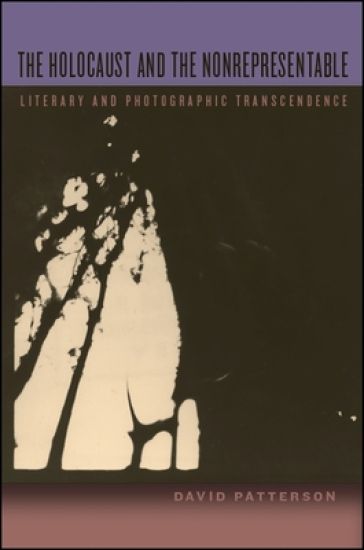
The Holocaust and the Nonrepresentable

The Holocaust and the Nonrepresentable

David Patterson

State University of New York Press
2019
pokkari
Argues that Holocaust representation has ethical implications fundamentally linked to questions of good and evil.Many books focus on issues of Holocaust representation, but few address why the Holocaust in particular poses such a representational problem. David Patterson draws from Emmanuel Levinas's contention that the Good cannot be represented. He argues that the assault on the Good is equally nonrepresentable and this nonrepresentable aspect of the Holocaust is its distinguishing feature. Utilizing Jewish religious thought, Patterson examines how the literary word expresses the ineffable and how the photographic image manifests the invisible. Where the Holocaust is concerned, representation is a matter not of imagination but of ethical implication, not of what it was like but of what must be done. Ultimately Patterson provides a deeper understanding of why the Holocaust itself is indefinable-not only as an evil but also as a fundamental assault on the very categories of good and evil affirmed over centuries of Jewish teaching and testimony.
The Holocaust and the Nonrepresentable

The Holocaust and the Nonrepresentable

David Patterson

State University of New York Press
2018
sidottu
Argues that Holocaust representation has ethical implications fundamentally linked to questions of good and evil.Many books focus on issues of Holocaust representation, but few address why the Holocaust in particular poses such a representational problem. David Patterson draws from Emmanuel Levinas's contention that the Good cannot be represented. He argues that the assault on the Good is equally nonrepresentable and this nonrepresentable aspect of the Holocaust is its distinguishing feature. Utilizing Jewish religious thought, Patterson examines how the literary word expresses the ineffable and how the photographic image manifests the invisible. Where the Holocaust is concerned, representation is a matter not of imagination but of ethical implication, not of what it was like but of what must be done. Ultimately Patterson provides a deeper understanding of why the Holocaust itself is indefinable-not only as an evil but also as a fundamental assault on the very categories of good and evil affirmed over centuries of Jewish teaching and testimony.