Kirjojen hintavertailu. Mukana 11 627 463 kirjaa ja 12 kauppaa.

Kirjahaku

Etsi kirjoja tekijän nimen, kirjan nimen tai ISBN:n perusteella.

8 kirjaa tekijältä David Peterson del Mar

The American Family

The American Family

David Peterson del Mar

Palgrave Macmillan
2011
sidottu
Traces the movement from mutualism to individualism in the context of American family life. Families survived or even flourished during colonization, Revolution, slavery, immigration and economic upheaval. In the past century, prosperity created a culture devoted to pleasure and individual fulfilment.
The American Family

The American Family

David Peterson del Mar

Palgrave Macmillan
2011
nidottu
Traces the movement from mutualism to individualism in the context of American family life. Families survived or even flourished during colonization, Revolution, slavery, immigration and economic upheaval. In the past century, prosperity created a culture devoted to pleasure and individual fulfilment.
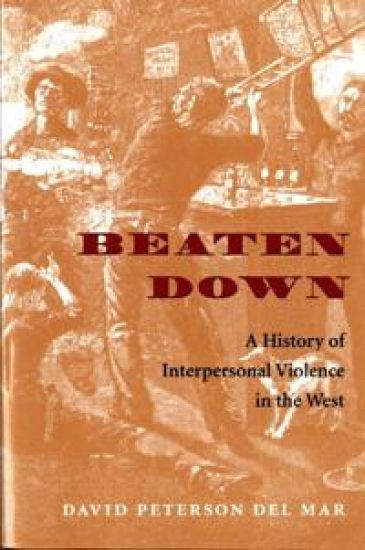
Beaten Down

Beaten Down

David Peterson del Mar

University of Washington Press
2005
pokkari
Selected by Choice as an Outstanding Academic Title for 2003The word "violence" conjures up images of terrorism, bombings, and lynchings. Beaten Down is concerned with more prosaic acts of physical force—a husband slapping his wife, a parent taking a birch branch to a child, a pair of drunken friends squaring off to establish who was the "better man." David Peterson del Mar accounts for the social relations of power that lie behind this intimate form of violence, this "white noise" that has always been with us, humming quietly between more explosive acts of violence.Broad in its chronological and cultural sweep, Beaten Down examines interpersonal violence in Washington, Oregon, and British Columbia beginning with Native American cultures before colonization and continuing into the mid-twentieth century. It contrasts the disparate ways of practicing and punishing interpersonal violence on each side of the U.S.-Canadian border. Del Mar concludes that we cannot comprehend the causes and moral consequences of a violent act without considering larger social relations of power, whether between colonizers and original inhabitants, between spouses, between parents and children, or between and among different ethnic groups.The author has drawn on a vast array of vivid sources, including newspaper accounts, autobiographies, novels, oral histories, historical and ethnographic publications, and hundreds of detailed court cases to account for not only the relative frequency of different forms of violence, but also the shifting definitions and perceptions of what constitutes violence. This is a thoughtful and probing account of how and why people have hit each other and the manner in which opinion makers and ordinary citizens have censured, defended, or celebrated such acts. Del Mar's conclusions have important implications for an understanding of violence and perceptions of violence in contemporary society.
Beaten Down

Beaten Down

David Peterson del Mar

University of Washington Press
2015
sidottu
Selected by Choice as an Outstanding Academic Title for 2003The word "violence" conjures up images of terrorism, bombings, and lynchings. Beaten Down is concerned with more prosaic acts of physical force—a husband slapping his wife, a parent taking a birch branch to a child, a pair of drunken friends squaring off to establish who was the "better man." David Peterson del Mar accounts for the social relations of power that lie behind this intimate form of violence, this "white noise" that has always been with us, humming quietly between more explosive acts of violence.Broad in its chronological and cultural sweep, Beaten Down examines interpersonal violence in Washington, Oregon, and British Columbia beginning with Native American cultures before colonization and continuing into the mid-twentieth century. It contrasts the disparate ways of practicing and punishing interpersonal violence on each side of the U.S.-Canadian border. Del Mar concludes that we cannot comprehend the causes and moral consequences of a violent act without considering larger social relations of power, whether between colonizers and original inhabitants, between spouses, between parents and children, or between and among different ethnic groups.The author has drawn on a vast array of vivid sources, including newspaper accounts, autobiographies, novels, oral histories, historical and ethnographic publications, and hundreds of detailed court cases to account for not only the relative frequency of different forms of violence, but also the shifting definitions and perceptions of what constitutes violence. This is a thoughtful and probing account of how and why people have hit each other and the manner in which opinion makers and ordinary citizens have censured, defended, or celebrated such acts. Del Mar's conclusions have important implications for an understanding of violence and perceptions of violence in contemporary society.
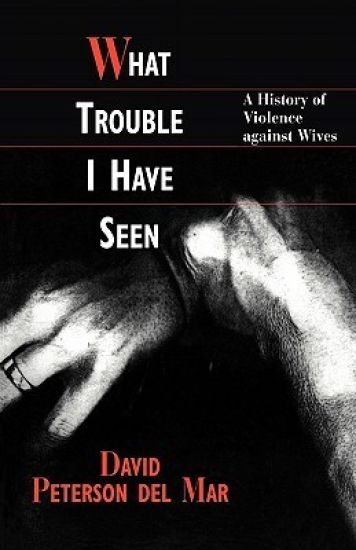
What Trouble I Have Seen

What Trouble I Have Seen

David Peterson del Mar

Harvard University Press
1998
nidottu
It was 1869 and Sarah Moses, with "a very black eye," told her father: The world will never know what trouble I have seen. What she'd seen was violence at the hands of her husband. Does the world know any more of such things today than it did in Sarah's time?Sarah, it so happens, lived in Oregon, that Edenic state on the Pacific Coast, and it is here that David Peterson del Mar centers his history of violence against wives. What causes such violence? Has it changed over time? How does it relate to the state of society as a whole? And how have women tried to stop it, resist it, escape it? These are the questions Peterson del Mar pursues, and the answers he finds are as fascinating as they are disturbing.Thousands of thickly documented divorce cases from the Oregon circuit courts let us listen to voices who often go unheard. These are the people who didn't keep diaries or leave autobiographies, who sometimes could not write at all. Here they speak of a society that quietly condoned wife beating until the spread of an ethos of self-restraint in the late nineteenth century. And then, Peterson del Mar finds, the practice increased with a vengeance with the florescence of expressive individualism during the twentieth century.What Trouble I Have Seen also traces a dramatic shift in wives' response to their husbands' violence. Settler and Native American women commonly fought abusive mates. Most wives of the late nineteenth century acted more cautiously and relied on others for protection. But twentieth-century privatism, Peterson del Mar discovers, often isolated modern wives from family and neighbors, casting abused women on the mercy of the police, women's shelters, and, most important, their own resources. Thus a new emphasis on self-determination, even as it stimulated violence among men, enhanced the ability of women to resist and escape violent husbands.The first sustained history of violence toward wives, What Trouble I Have Seen offers remarkable testimony to the impact of social trends on the most private arrangements, and the resilience of women subject to a seemingly timeless crime.
Environmentalism

Environmentalism

David Peterson del Mar

Routledge
2011
nidottu
Why are our environmental problems still growing despite a huge increase in global conservation efforts? Peterson del Mar untangles this paradox by showing how prosperity is essential to environmentalism. Industrialization drove people to look for meaning in nature even as they consumed its products more relentlessly. Hence England led the way in both manufacturing and preserving its countryside, and the United States created a matchless set of national parks as it became the world's pre-eminent economic and military power.Environmental movements have produced some impressive results, including cleaner air and the preservation of selected species and places. But agendas that challenged western prosperity and comfort seldom made much progress, and many radical environmentalists have been unabashed utopianists. Environmentalism considers a wide range of conservation and preservation movements and less organized forms of nature loving (from seaside vacations to ecotourism) to argue that these activities have commonly distracted us from the hard work of creating a sustainable and sensible relationship with the environment.
African, American

African, American

David Peterson del Mar

Zed Books Ltd
2017
nidottu
Africa has long gripped the American imagination. From the Edenic wilderness of Edgar Rice Burroughs’s Tarzan novels to the ‘black Zion’ of Garvey’s Back-to-Africa movement, all manner of Americans - whether white or black, male or female - have come to see Africa as an idealized stage on which they can fashion new, more authentic selves. In this remarkable, panoramic work, David Peterson del Mar explores the ways in which American fantasies of Africa have evolved over time, as well as the role of Africans themselves in subverting American attitudes to their continent.Spanning seven decades, from the post-war period to the present day, and encompassing sources ranging from literature, film and music to accounts by missionaries, aid workers and travel writers, African, American is a fascinating deconstruction of ‘Africa’ as it exists in the American mindset.
African, American

African, American

David Peterson del Mar

Zed Books Ltd
2017
sidottu
Africa has long gripped the American imagination. From the Edenic wilderness of Edgar Rice Burroughs’s Tarzan novels to the ‘black Zion’ of Garvey’s Back-to-Africa movement, all manner of Americans - whether white or black, male or female - have come to see Africa as an idealized stage on which they can fashion new, more authentic selves. In this remarkable, panoramic work, David Peterson del Mar explores the ways in which American fantasies of Africa have evolved over time, as well as the role of Africans themselves in subverting American attitudes to their continent.Spanning seven decades, from the post-war period to the present day, and encompassing sources ranging from literature, film and music to accounts by missionaries, aid workers and travel writers, African, American is a fascinating deconstruction of ‘Africa’ as it exists in the American mindset.