Kirjojen hintavertailu. Mukana 11 590 110 kirjaa ja 12 kauppaa.

Kirjahaku

Etsi kirjoja tekijän nimen, kirjan nimen tai ISBN:n perusteella.

4 kirjaa tekijältä David Philip Miller

Discovering Water

Discovering Water

David Philip Miller

Ashgate Publishing Limited
2004
sidottu
The 'water controversy' concerns one of the central discoveries of modern science, that water is not an element but rather a compound. The allocation of priority in this discovery was contentious in the 1780s and has occupied a number of 20th century historians. The matter is tied up with the larger issues of the so-called chemical revolution of the late eighteenth century. A case can be made for James Watt or Henry Cavendish or Antoine Lavoisier as having priority in the discovery depending upon precisely what the discovery is taken to consist of, however, neither the protagonists themselves in the 1780s nor modern historians qualify as those most fervently interested in the affair. In fact, the controversy attracted most attention in early Victorian Britain some fifty to seventy years after the actual work of Watt, Cavendish and Lavoisier. The central historical question to which the book addresses itself is why the priority claims of long dead natural philosophers so preoccupied a wide range of people in the later period. The answer to the question lies in understanding the enormous symbolic importance of James Watt and Henry Cavendish in nineteenth-century science and society. More than credit for a particular discovery was at stake here. When we examine the various agenda of the participants in the Victorian phase of the water controversy we find it driven by filial loyalty and nationalism but also, most importantly, by ideological struggles about the nature of science and its relation to technological invention and innovation in British society. At a more general, theoretical, level, this study also provides important insights into conceptions of the nature of discovery as they are debated by modern historians, philosophers and sociologists of science.
James Watt, Chemist

James Watt, Chemist

David Philip Miller

University of Pittsburgh Press
2018
nidottu
In the Victorian era, James Watt became an iconic engineer, but in his own time he was also an influential chemist. Miller examines Watt’s illustrious engineering career in light of his parallel interest in chemistry, arguing that Watt’s conception of steam engineering relied upon chemical understandings.Part I of the book—Representations—examines the way James Watt has been portrayed over time, emphasizing sculptural, pictorial and textual representations from the nineteenth century. As an important contributor to the development of arguably the most important technology of industrialization, Watt became a symbol that many groups of thinkers were anxious to claim. Part II—Realities—focuses on reconstructing the unsung "chemical Watt" instead of the lionized engineer.
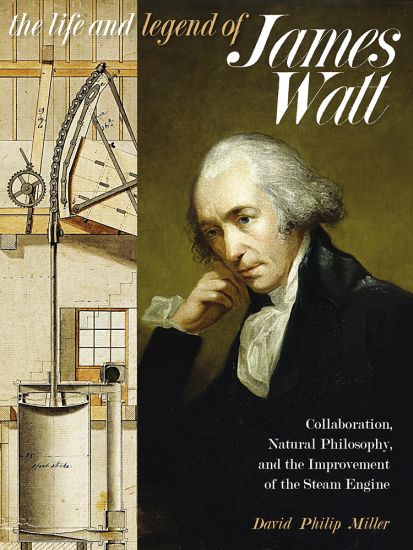
The Life and Legend of James Watt

The Life and Legend of James Watt

David Philip Miller

University of Pittsburgh Press
2019
nidottu
The Life and Legend of James Wattoffers a deeper understanding of the work and character of the great eighteenth-century engineer. Stripping away layers of legend built over generations, David Philip Miller finds behind the heroic engineer a conflicted man often diffident about his achievements but also ruthless in protecting his inventions and ideas, and determined in pursuit of money and fame. A skilled and creative engineer, Watt was also a compulsive experimentalist drawn to natural philosophical inquiry, and a chemistry of heat underlay much of his work, including his steam engineering. But Watt pursued the business of natural philosophy in a way characteristic of his roots in the Scottish “improving” tradition that was in tension with Enlightenment sensibilities. As Miller demonstrates, Watt’s accomplishments relied heavily on collaborations, not always acknowledged, with business partners, employees, philosophical friends, and, not least, his wives, children, and wider family. The legend created in his later years and “afterlife” claimed too much of nineteenth-century technology for Watt, but that legend was, and remains, a powerful cultural force.
Discovering Water

Discovering Water

David Philip Miller

Routledge
2017
nidottu
The 'water controversy' concerns one of the central discoveries of modern science, that water is not an element but rather a compound. The allocation of priority in this discovery was contentious in the 1780s and has occupied a number of 20th century historians. The matter is tied up with the larger issues of the so-called chemical revolution of the late eighteenth century. A case can be made for James Watt or Henry Cavendish or Antoine Lavoisier as having priority in the discovery depending upon precisely what the discovery is taken to consist of, however, neither the protagonists themselves in the 1780s nor modern historians qualify as those most fervently interested in the affair. In fact, the controversy attracted most attention in early Victorian Britain some fifty to seventy years after the actual work of Watt, Cavendish and Lavoisier. The central historical question to which the book addresses itself is why the priority claims of long dead natural philosophers so preoccupied a wide range of people in the later period. The answer to the question lies in understanding the enormous symbolic importance of James Watt and Henry Cavendish in nineteenth-century science and society. More than credit for a particular discovery was at stake here. When we examine the various agenda of the participants in the Victorian phase of the water controversy we find it driven by filial loyalty and nationalism but also, most importantly, by ideological struggles about the nature of science and its relation to technological invention and innovation in British society. At a more general, theoretical, level, this study also provides important insights into conceptions of the nature of discovery as they are debated by modern historians, philosophers and sociologists of science.