This is a comparative study focusing on Joyce as an Irish and European writer, best understood in the context of other times and writers, including Virginia Woolf."Joyce and Company" is a comparative study which encourages a way of thinking about Joyce not as an isolated figure but as someone who is best understood in the company of others whether from the past, the present or, indeed, the imagined future. Throughout, Pierce places Joyce and his time in dialogue with other figures or different historical periods or languages other than English. In this way, Joyce is seen anew in relation to other writers and contexts.The book is organised in four parts: Joyce and History, Joyce and Language, Joyce and the City, and Joyce and the Contemporary World. Pierce emphasises Joyce's position as both an Irish and a European writer and shows Joyce's continuing relevance to the twenty-first century, not least in his commitment to language, culture and a discourse on freedom.
"Joyce and Company" is a comparative study which encourages a way of thinking about Joyce not as an isolated figure but as someone who is best understood in the company of others whether from the past, the present or, indeed, the imagined future. Throughout, Pierce places Joyce and his time in dialogue with other figures or different historical periods or languages other than English. In this way, Joyce is seen anew in relation to other writers and contexts. The book is organised in four parts: Joyce and History, Joyce and Language, Joyce and the City, and Joyce and the Contemporary World. Pierce emphasises Joyce's position as both an Irish and a European writer and shows Joyce's continuing relevance to the twenty-first century, not least in his commitment to language, culture and a discourse on freedom.
`Is there one who understands me?' So wrote James Joyce towards the end of his final work, Finnegans Wake. The question continues to be asked about the author who claimed that he had put so many enigmas into Ulysses that it would `keep the professors busy for centuries' arguing over what he meant. For Joyce this was a way of ensuring his immortality, but it could also be claimed that the professors have served to distance Joyce from his audience, turning his writings into museum pieces, pored over and admired, but rarely touched. In this remarkable book, steeped in the learning gained from a lifetime's reading, David Pierce blends word, life and image to bring the works of one of the great modern writers within the reach of every reader. With a sharp eye for detail and an evident delight in the cadences of Joyce's work, Pierce proves a perfect companion, always careful and courteous, pausing to point out what might otherwise be missed. Like the best of critics, his suggestive readings constantly encourage the reader back to Joyce's own words. Beginning with Dubliners and closing with Finnegans Wake, Reading Joyce is full of insights that are original and illuminating, and Pierce succeeds in presenting Joyce as an author both more straightforward and infinitely more complex than we had perhaps imagined. T. S. Eliot wrote of Joyce's masterpiece, Ulysses, that it is `a book to which we are all indebted, and from which none of us can escape'. With David Pierce as a guide, the debt we owe to Joyce becomes clearer, and the need to flee is greatly reduced.
David Pierce is one of those rare beings - a real poet. He does not write for others, neither does he, strangely enough, write for himself. He writes because there are things to be said and someone has to say them, he writes because this is his means of communication, one that in his opinion makes people think and his writing style forces them to think. And if they don't want or are not able to think? Well, then they better try again.
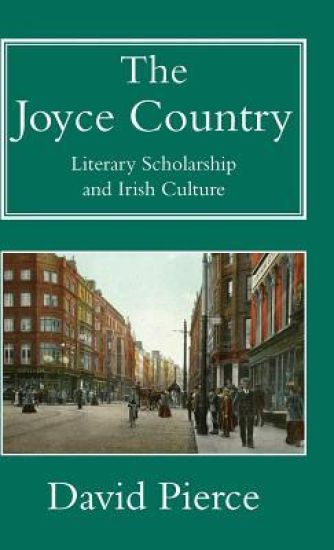
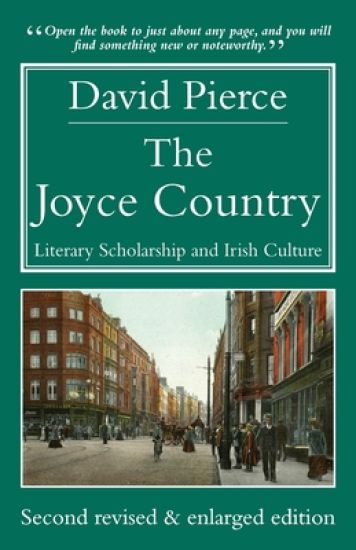
This new book by the eminent critic provides an informative and timely survey of contemporary approaches to Joyce and modern Irish writing over almost 40 years. In a fresh opening survey Pierce explores the new departure for fiction heralded by A Portrait of the Artist as a Young Man, and this is followed by essays on the hybrid landscape in Ulysses and on the distinctive style and humour of the 'Eumaeus' episode. Other pieces focus on the appeal of Irish short-story writer, Benedict Kiely, anthologies of Irish writing, and Irish writing in the years 2006-9. The second half of The Joyce Country is devoted to twenty-six reviews of books about Joyce written from the 1980s to the present and grouped under several headings including 'Joyce's European Cities', 'Joyce, Yeats and the Matter of Ireland', 'Ulysses in Perspective', and 'Joyce and Modernism'.
This new book by the eminent critic provides an informative and timely survey of contemporary approaches to Joyce and modern Irish writing over almost 40 years. In a fresh opening survey Pierce explores the new departure for fiction heralded by A Portrait of the Artist as a Young Man, and this is followed by essays on the hybrid landscape in Ulysses and on the distinctive style and humour of the 'Eumaeus' episode. Other pieces focus on the appeal of Irish short-story writer, Benedict Kiely, anthologies of Irish writing, and Irish writing in the years 2006-9. The second half of The Joyce Country is devoted to twenty-six reviews of books about Joyce written from the 1980s to the present and grouped under several headings including 'Joyce's European Cities', 'Joyce, Yeats and the Matter of Ireland', 'Ulysses in Perspective', and 'Joyce and Modernism'.
This new book by the seasoned and internationally acclaimed critic, David Pierce, provides further evidence that William Butler Yeats is still our contemporary but still in need of the critic. From a position which is at once inside and outside history, Yeats manages to hold our attention still. He continues to intrigue critics and readers alike. Lines from his poems are regularly quoted to clinch a viewpoint or judgement on the age we live in. This study constitutes an authoritative, handy, readable, and up-to-date guide both for students and the general reader. In the middle of the Irish Civil War, with warring participants around his tower-house at Ballylee on the Clare-Galway border, Yeats wrote that 'We are closed in, and the key is turned' and we pause with him. But then he adds on the following line 'On our uncertainty'.David Pierce provides a history of Yeats criticism with brief annotations of books and essays from 1915 to 2020. In 1915 the prescient Joseph Hone rightly noticed that Yeats was a writer who crossed bridges but left them behind intact for others to discern. Ever since, critics have returned with interest to all the bridges Yeats crossed to give us a more complete picture of the poet who never stood still.The book also includes a chronology of Yeats's life and times. One essay is devoted to a detailed consideration of 'Among School Children', a poem which has exercised critics for the best part of a century. Underlying Pierce's account is a concern with the terrain between what is inside and what is outside the poem. Among the topics dealt with are: the dialogue with his wife, his view of education and the Montessori method, the image of the dance, and his reading in philosophy (A. N. Whitehead), religion (St. Teresa of Avila), and politics (Gentile). The work also explores the lively debate on Yeats and Modernism, and what we can learn from it. Special attention is given to dates, origins, and characteristics, and how Yeats has reshaped our understanding of Modernism.