Kirjojen hintavertailu. Mukana 11 244 527 kirjaa ja 12 kauppaa.

Kirjahaku

Etsi kirjoja tekijän nimen, kirjan nimen tai ISBN:n perusteella.

58 kirjaa tekijältä David Potter

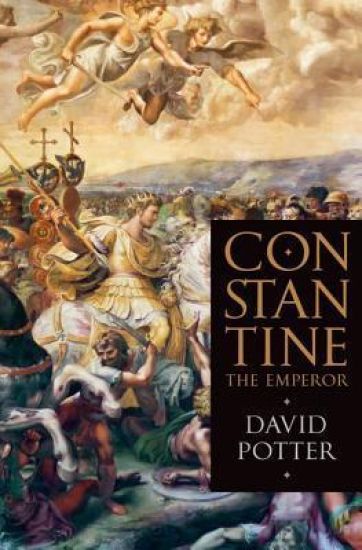
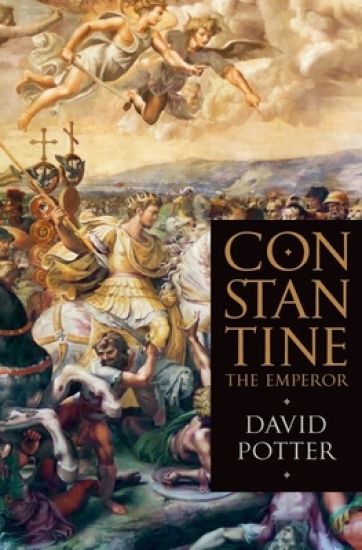
Constantine the Emperor

Constantine the Emperor

David Potter

Oxford University Press Inc
2015
nidottu
No Roman emperor had a greater impact on the modern world than did Constantine. The reason is not simply that he converted to Christianity, but that he did so in a way that brought his subjects along after him. Indeed, this major new biography argues that Constantine's conversion is but one feature of a unique administrative style that enabled him to take control of an empire beset by internal rebellions and external threats by Persians and Goths. The vast record of Constantine's administration reveals a government careful in its exercise of power but capable of ruthless, even savage, actions. Constantine executed (or drove to suicide) his father-in-law, two brothers-in-law, his eldest son, and his once beloved wife. An unparalleled general throughout his life, planning a major assault on the Sassanian Empire in Persia even on his deathbed. Alongside the visionary who believed that his success came from the direct intervention of his God resided an aggressive warrior, a sometimes cruel partner, and an immensely shrewd ruler. These characteristics combined together in a long and remarkable career, which restored the Roman Empire to its former glory. Beginning with his first biographer Eusebius, Constantine's image has been subject to distortion. More recent revisions include John Carroll's view of him as the intellectual ancestor of the Holocaust (Constantine's Sword) and Dan Brown's presentation of him as the man who oversaw the reshaping of Christian history (The Da Vinci Code). In Constantine the Emperor, David Potter confronts each of these skewed and partial accounts to provide the most comprehensive, authoritative, and readable account of Constantine's extraordinary life.
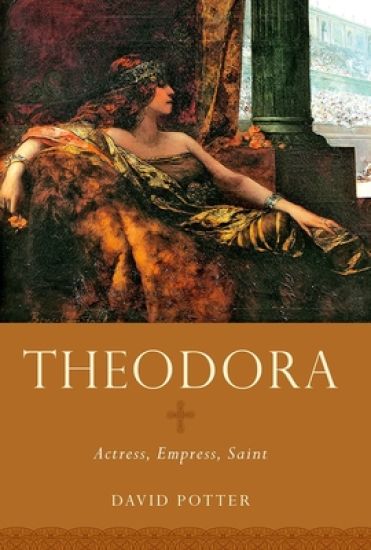
Theodora

Theodora

David Potter

Oxford University Press Inc
2017
nidottu
Two of the most famous mosaics from the ancient world, in the church of San Vitale in Ravenna, depict the sixth-century emperor Justinian and, on the wall facing him, his wife, Theodora (497-548). This majestic portrait gives no inkling of Theodora's very humble beginnings or her improbable rise to fame and power. Raised in a family of circus performers near Constantinople's Hippodrome, she abandoned a successful acting career in her late teens to follow a lover whom she was legally forbidden to marry. When he left her, she was a single mother who built a new life for herself as a secret agent, in which role she met the heir to the throne. To the shock of the ruling elite, the two were married, and when Justinian assumed power in 527, they ruled the Eastern Roman Empire together. Their reign was the most celebrated in Byzantine history, bringing wealth, prestige, and even Rome itself back to the Empire. Theodora was one of the dominant political figures of her era, helping shape imperial foreign and domestic policy and twice saving her husband from threatened deposition. She played a central role trying to solve the religious disputes of her era and proactively assisted women who were being trafficked. An extraordinarily able politician, she excited admiration and hatred from those around her. Enemies wrote extensively and imaginatively about her presumed early career as a prostitute, while supporters elevated her, quite literally, to sainthood. Theodora's is a tale of a woman of exceptional talent who overcame immense obstacles to achieve incredible power, which she exercised without ever forgetting where she had come from. In Theodora: Actress, Empress, Saint, David Potter penetrates the highly biased accounts of her found in the writings of her contemporaries and takes advantage of the latest research on early Byzantium to craft a modern, well-rounded, and engaging narrative of Theodora's life. This fascinating portrait will intrigue all readers with an interest in ancient and women's history.
Master of Rome

Master of Rome

David Potter

OXFORD UNIVERSITY PRESS INC
2025
sidottu
By any measure, Julius Caesar is one of the most significant and famous figures in Roman history. Self-identified as a "popular" politician, he advocated for effective government to better the lives of average Romans,but believed such a government could not be based upon the existing democracy. Only through his personal authority and the massive organization he built to overthrow the government could the prosperity of all Rome's citizens be ensured. Through a careful analysis of the ancient sources, especially Caesar's own writings, David Potter offers us a stunning and original portrait of this great general and statesman.Master of Rome reveals Caesar as a highly organized manager with an extraordinary ability to adjust to circumstances while maintaining the ancient equivalent of a positive "media presence." After his death, Caesar's followers put forward a narrative of his life that made his rise to power seem inevitable, but Caesar's own writing tells us a different story--one of a detail-oriented general who demanded a high degree of accountability from his subordinates. A critical aspect of Caesar's philosophy of command was the need to find room for former enemies to serve in his organization. While this philosophy catapulted Caesar to great fame as a general during the wars in Gaul, when he attempted to put this method into effect in the wake of the civil war that established him as the master of Rome, it led to his brutal assassination in 44 BCE. Master of Rome tells the dramatic story of one of history's most intriguing figures, who rose from the fringes of Roman political society to unprecedented heights. Along the way, Potter identifies the extraordinary qualities that enabled Caesar to dominate the world in which he lived.
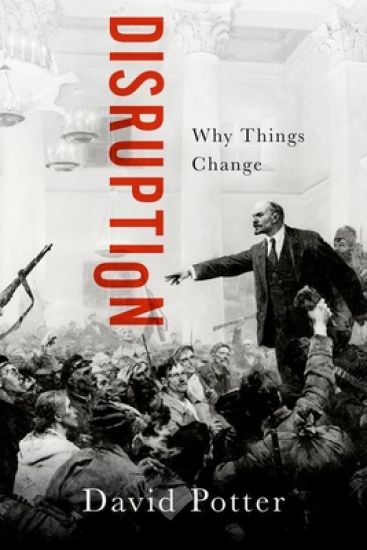
Disruption

Disruption

David Potter

Oxford University Press Inc
2021
sidottu
How do things change? The question is critical to the historical study of any era but it is also a profoundly important issue today as western democracies find the fundamental tenets of their implicit social contract facing extreme challenges from forces espousing ideas that once flourished only on the outskirts of society. This books argues that radical change always begins with ideas that took shape on the fringes. Throughout time the "mainstream" has been inherently conservative, allowing for incremental change but essentially dedicated to preserving its own power structures as the dominant ideology justifies existing relationships. In this tour of radical change across Western history, David Potter will show how ideologies that develop in opposition or reaction to those supporting the status quo are employed to effect profound changes in political structures that will in turn alter the way that social relations are constructed. Not all radical groups are the same, and all the groups that the book will explore take advantage of challenges that have already shaken the social order. They take advantage of mistakes that have challenged belief in the competence of existing institutions to be effective. It is the particular combination of an alternative ideological system and a period of community distress that are necessary conditions for radical changes in direction. The historical disruptions chronicled in this book-the rise of Christianity, rise of Islam, Protestant reformations, Age of Revolution (American and French), and Bolshevism and Nazism--will help readers understand when the preconditions exist for radical changes in the social and political order. As Disruption demonstrates, not all radical change follows paths that its original proponents might have predicted. An epilogue helps situate contemporary disruptions, from the rise of Trump and Brexit to the social and political consequences of technological change, in the wider historical forces surveyed by the book.
Disruption

Disruption

David Potter

OXFORD UNIVERSITY PRESS INC
2024
nidottu
How do things change? The question is critical to the historical study of any era but it is also a profoundly important issue today as western democracies find the fundamental tenets of their implicit social contract facing extreme challenges from forces espousing ideas that once flourished only on the outskirts of society. This books argues that radical change always begins with ideas that took shape on the fringes. Throughout time the "mainstream" has been inherently conservative, allowing for incremental change but essentially dedicated to preserving its own power structures as the dominant ideology justifies existing relationships. In this tour of radical change across Western history, David Potter will show how ideologies that develop in opposition or reaction to those supporting the status quo are employed to effect profound changes in political structures that will in turn alter the way that social relations are constructed. Not all radical groups are the same, and all the groups that the book will explore take advantage of challenges that have already shaken the social order. They take advantage of mistakes that have challenged belief in the competence of existing institutions to be effective. It is the particular combination of an alternative ideological system and a period of community distress that are necessary conditions for radical changes in direction. The historical disruptions chronicled in this book-the rise of Christianity, rise of Islam, Protestant reformations, Age of Revolution (American and French), and Bolshevism and Nazism--will help readers understand when the preconditions exist for radical changes in the social and political order. As Disruption demonstrates, not all radical change follows paths that its original proponents might have predicted. An epilogue helps situate contemporary disruptions, from the rise of Trump and Brexit to the social and political consequences of technological change, in the wider historical forces surveyed by the book.
Theodora

Theodora

David Potter

Oxford University Press Inc
2016
sidottu
Two of the most famous mosaics from the Byzantine period, from the church of San Vitale in Ravenna, depict the sixth-century Emperor Justinian and, on the wall facing him, his wife, Theodora (497-548). This magestic portrait gives no inkling to Theodora's very humble beginnings or her improbable rise to fame and power. Raised in a family of circus performers near Constantinople's Hippodrome, she became one of the most influential women in Byzantine history. It was on stage as an actress--or, as some said, "stage whore"--that Theodora caught the attention of the future emperor Justinian. To the shock of the ruling elite, the two were married, and when Justinian assumed power in 527, they ruled the Eastern Roman Empire together. Their reign was the most celebrated in Byzantine history, bringing wealth, prestige, and even Rome itself back to the Empire. During this time Theodora was Justinian's most trusted advisor, and her influence on the Empire is discernible in a variety of important ways. Her interest in social causes, for example, is seen in the added legal protections for women and the lower classes. Theodora's most lasting impact was her support for the unorthodox Christian sect of Monophysitism. Although her husband was orthodox, Theodora maintained her religions independence, and today in Syria, where the sect still thrives, she is revered as a saint. In Theodora: Actress, Empress, Saint, renowned historian David Potter provides a new account of the life and times of this important historical figure. Potter penetrates the highly biased accounts of her found in the writings of her contemporaries and takes advantage of the latest research on early Byzantium to craft a modern, well-rounded, and engaging narrative of Theodora's life. There is simply nothing of this scope currently available to historians or the general reader, and those with an interest in ancient and women's history will be intrigued by Potter's account of this fascinating figure.
Constantine the Emperor

Constantine the Emperor

David Potter

Oxford University Press Inc
2013
sidottu
This year Christians worldwide will celebrate the 1700th anniversary of Constantine's conversion and victory at the Battle of the Milvian Bridge. No Roman emperor had a greater impact on the modern world than did Constantine. The reason is not simply that he converted to Christianity but that he did so in a way that brought his subjects along after him. Indeed, this major new biography argues that Constantine's conversion is but one feature of a unique administrative style that enabled him to take control of an empire beset by internal rebellions and external threats by Persians and Goths. The vast record of Constantine's administration reveals a government careful in its exercise of power but capable of ruthless, even savage actions. Constantine executed (or drove to suicide) his father-in-law, two brothers-in-law, his eldest son, and his once beloved wife. An unparalleled general throughout his life, even on his deathbed he was planning a major assault on the Sassanian Empire in Persia. Alongside the visionary who believed that his success came from the direct intervention of his God resided an aggressive warrior, a sometimes cruel partner, and an immensely shrewd ruler. These characteristics combined together in a long and remarkable career, which restored the Roman Empire to its former glory. Beginning with his first biographer Eusebius, Constantine's image has been subject to distortion. More recent revisions include John Carroll's view of him as the intellectual ancestor of the Holocaust (Constantine's Sword) and Dan Brown's presentation of him as the man who oversaw the reshaping of Christian history (The Da Vinci Code). In Constantine the Emperor, David Potter confronts each of these skewed and partial accounts to provide the most comprehensive, authoritative, and readable account of Constantine's extraordinary life.
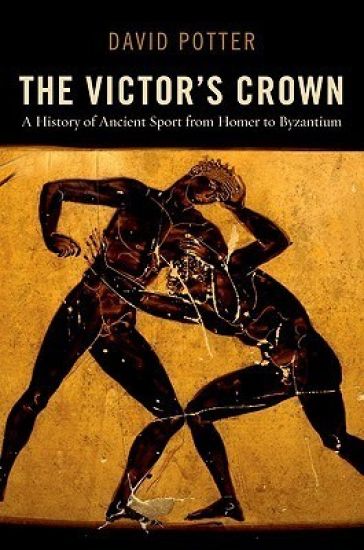
Victor's Crown: A History of Ancient Sport from Homer to Byzantium
The Victor's Crown brings to vivid life the signal role of sport in the classical world. Ranging over a dozen centuries--from Archaic Greece through to the late Roman and early Byzantine empires--David Potter's lively narrative shows how sport, to the ancients, was not just a dim reflection of religion and politics but a potent social force in its own right. The passion for sport among the participants and fans of antiquity has been matched in history only by our own time. Potter first charts the origins of competitive athletics in Greece during the eighth century BC and the emergence of the Olympics as a preeminent cultural event. He focuses especially on the experiences of spectators and athletes, especially in violent sports such as boxing and wrestling, and describes the physiology of conditioning, training techniques, and sport's role in education. Throughout, we meet the great athletes of the past and learn what made them great. The rise of the Roman Empire transformed the sporting world by popularizing new entertainments, particularly gladiatorial combat, a specialized form of chariot racing, and beast hunts. Here, too, Potter examines sport from the perspectives of both athlete and spectator, as he vividly describes competitions held in such famous arenas as the Roman Coliseum and the Circus Maximus. The Roman government promoted and organized sport as a central feature of the Empire, making it a sort of common cultural currency to the diverse inhabitants of its vast territory. While linking ancient sport to events such as religious ceremonies and aristocratic displays, Potter emphasizes above all that it was the thrill of competition--to those who competed and those who watched--that ensured sport's central place in the Greco-Roman world. "Vivid and authoritative. Potter skillfully reveals how the gymnasium lay at the heart of Greek life and culture, but his passion is clearly for the Olympics. When Potter moves on to Roman sport, things get livelier still. He meticulously traces the origins, careers and lifestyles of athletes, gladiators and charioteers alike, and demolished some cherished myths along the way. Most gladiatorial combats apparently ended in surrender, not death, although a crowd might well call out "ingula " (kill ), running their thousands of thumbs under their throats in the original 'thumbs up' gesture. Fascinating and impressive."--James McConnachie, Sunday Times
A History of France, 1460–1560

A History of France, 1460–1560

David Potter

Red Globe Press
1995
nidottu
A survey of French history from the reign of Louis XI to the outbreak of the Wars of Religion that isolates some of the controversial theories of the period: state building, nobility and clientage and the Reformation and discusses them with full attention to the regional diversity of France. It also introduces the reader to recent research on the court and government set in the context of the basic social and economic movements of the period. It is argued that the basic identity of France as a nation was reinforced under the aegis of monarchical legitimacy backed by the nobility and the church, setting the pattern for the rest of the Ancien Regime.
French Wars of Religion

French Wars of Religion

David Potter

Red Globe Press
1998
nidottu
This book aims - through translations of key documents concerning communal religious violence, political confrontation and war - to provide the means to study the French Wars of Religion through the most important contemporary sources. Documents include: -Key legislative acts of the period from the edicts concerning religion and toleration in 1560-62 to the 1590s - Sources on types of religious violence during the early years of the wars - A detailed examination of the massacre of Saint Bartholomew - And the breakdown of royal authority in the 1580s and its restoration by Henry IV. Each section is accompanied by a commentary which guides the reader through the documents translated.
Literary Texts and the Roman Historian
Literary Texts and the Roman Historian looks at literary texts from the Roman Empire which depict actual events. It examines the ways in which these texts were created, disseminated and read.Beside covering the major Roman historical authors such as Livy and Tacitus, he also considers the contributions of authors in other genres like:* Cicero* Lucian* Aulus Gellius.Literary Texts and the Roman Historian provides an accessible and concise introduction to the complexities of Roman historiography.
Literary Texts and the Roman Historian
Literary Texts and the Roman Historian looks at literary texts from the Roman Empire which depict actual events. It examines the ways in which these texts were created, disseminated and read.Beside covering the major Roman historical authors such as Livy and Tacitus, he also considers the contributions of authors in other genres like:* Cicero* Lucian* Aulus Gellius.Literary Texts and the Roman Historian provides an accessible and concise introduction to the complexities of Roman historiography.
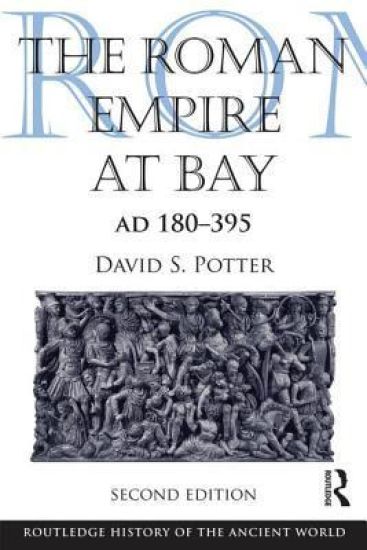
The Roman Empire at Bay, AD 180-395
The Roman Empire at Bay is the only one volume history of the critical years 180-395 AD, which saw the transformation of the Roman Empire from a unitary state centred on Rome, into a new polity with two capitals and a new religion—Christianity. The book integrates social and intellectual history into the narrative, looking to explore the relationship between contingent events and deeper structure. It also covers an amazingly dramatic narrative from the civil wars after the death of Commodus through the conversion of Constantine to the arrival of the Goths in the Roman Empire, setting in motion the final collapse of the western empire.The new edition takes account of important new scholarship in questions of Roman identity, on economy and society as well as work on the age of Constantine, which has advanced significantly in the last decade, while recent archaeological and art historical work is more fully drawn into the narrative. At its core, the central question that drives The Roman Empire at Bay remains, what did it mean to be a Roman and how did that meaning change as the empire changed? Updated for a new generation of students, this book remains a crucial tool in the study of this period.
The Roman Empire at Bay, AD 180-395
The Roman Empire at Bay is the only one volume history of the critical years 180-395 AD, which saw the transformation of the Roman Empire from a unitary state centred on Rome, into a new polity with two capitals and a new religion—Christianity. The book integrates social and intellectual history into the narrative, looking to explore the relationship between contingent events and deeper structure. It also covers an amazingly dramatic narrative from the civil wars after the death of Commodus through the conversion of Constantine to the arrival of the Goths in the Roman Empire, setting in motion the final collapse of the western empire.The new edition takes account of important new scholarship in questions of Roman identity, on economy and society as well as work on the age of Constantine, which has advanced significantly in the last decade, while recent archaeological and art historical work is more fully drawn into the narrative. At its core, the central question that drives The Roman Empire at Bay remains, what did it mean to be a Roman and how did that meaning change as the empire changed? Updated for a new generation of students, this book remains a crucial tool in the study of this period.
Rome in the Ancient World

Rome in the Ancient World

David Potter

Thames Hudson Ltd
2019
sidottu
This authoritative, highly readable textbook offers a complete survey of the history of Rome from its origins, through the Republic and Empire, to the period of its decline and fall, ending with the emergence of Mohammed in the 6th century. Written by a historian with an international reputation, the book incorporates the most recent scholarship and archaeological evidence. It describes the key events in Roman history, and offers fascinating insights into Roman life and culture as they changed and developed over the centuries.
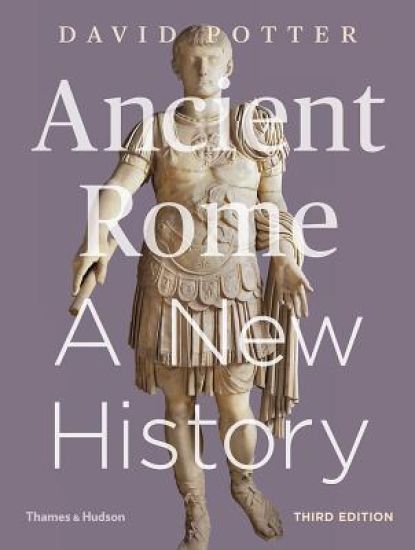
Ancient Rome: A New History

Ancient Rome: A New History

David Potter

THAMES HUDSON
2018
nidottu
Praised for its beautiful visuals, use of primary sources, and coverage into the early medieval period, Ancient Rome, Third Edition now includes a more student-friendly approach. With new chapter-opening maps, new family trees, more subheadings, and even more color images, the text is certain to increase student engagement. A new People of Ancient Rome online resource offers the best guidance for understanding the context of primary sources.
War and Government in the French Provinces

War and Government in the French Provinces

David Potter

Cambridge University Press
1993
sidottu
Few studies of the history of provincial France have hitherto spanned the conventional medieval/early-modern divide, and David Potter's detailed examination of war and government in Picardy, a region of France hitherto neglected by historians, has much to say about the development of French absolutism. Picardy emerged as a province after the campaigns of 1470–1477, and its experience of the first period of absolutism provides an enlightening contrast with that of other, more outlying provinces: the Picard nobility was notable for the extent of its participation in the army, the court and the government of France. David Potter provides a detailed analysis of the organisation of French military power in the province, and its impact during the period of the Habsburg-Valois wars. The work concludes with Picardy about to enter a difficult period of civil war.
War and Government in the French Provinces

War and Government in the French Provinces

David Potter

Cambridge University Press
2003
pokkari
Few studies of the history of provincial France have hitherto spanned the conventional medieval/early-modern divide, and David Potter’s detailed examination of war and government in Picardy, a region of France hitherto neglected by historians, has much to say about the development of French absolutism. Picardy emerged as a province after the campaigns of 1470–1477, and its experience of the first period of absolutism provides an enlightening contrast with that of other, more outlying provinces: the Picard nobility was notable for the extent of its participation in the army, the court and the government of France. David Potter provides a detailed analysis of the organisation of French military power in the province, and its impact during the period of the Habsburg-Valois wars. The work concludes with Picardy about to enter a difficult period of civil war.
Prophets and Emperors

Prophets and Emperors

David Potter

Harvard University Press
1994
sidottu
To the practical modern mind, the idea of divine prophecy is more ludicrous than sublime. Yet to our cultural forebears in ancient Greece and Rome, prophecy was anything but marginal; it was in fact the basic medium for recalling significant past events and expressing hopes for the future, and it offered assurance that divinities truly cared about mere mortals. Prophecy also served political ends, and it was often invoked to support or condemn an emperor's actions. In "Prophets and Emperors," David Potter shows us how prophecy worked, how it could empower, and how the diverse inhabitants of the Roman Empire used it to make sense of their world. This is a fascinating account of prophecy as a social, religious, and political phenomenon. The various systems of prophecy--including sacred books, oracles, astrological readings, interpretation of dreams, the sayings of holy men and women--come into sharp relief. Potter explores the use of prophecy as a nieans of historical analysis and political communication, and he describes it in the context of the ancient city. Finally, he traces the reformation of the prophetic tradition under the influence of Christianity in the fourth century. Drawing on diverse evidence--from inscriptions and ancient prophetic books to Greek and Roman historians and the Bible--Potter has produced a study that will engage anyone interested in the religions of the ancient Mediterranean and in the history and politics of the Roman Empire.