Kirjojen hintavertailu. Mukana 12 081 320 kirjaa ja 12 kauppaa.

Kirjahaku

Etsi kirjoja tekijän nimen, kirjan nimen tai ISBN:n perusteella.

29 kirjaa tekijältä David Quammen

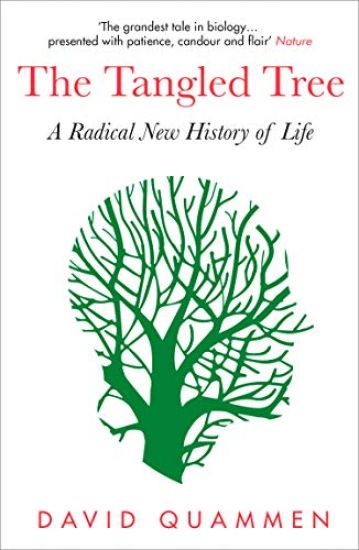
Tangled Tree

Tangled Tree

David Quammen

Harper Collins UK
2019
pokkari
Longlisted for the National Book Award for Nonfiction and A New York Times Notable Book of 2018. Our understanding of the â??tree of lifeâ??, with powerful implications for human genetics, human health and our own human nature, has recently completely changed.
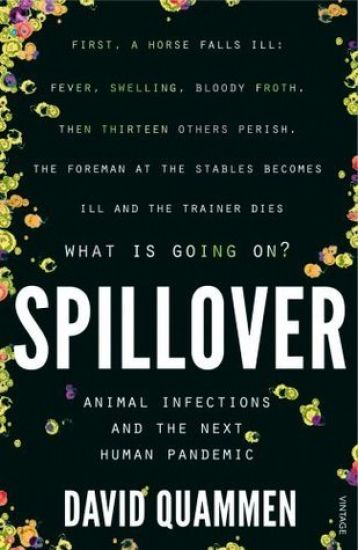
Spillover

Spillover

David Quammen

Vintage
2013
pokkari
First, a horse in Brisbane falls ill: fever, swelling, bloody froth. Then thirteen others drop dead. The foreman at the stables becomes ill and the trainer dies. This title tracks these infections to their source and asks what we can do to prevent some new pandemic spreading across the face of the earth.
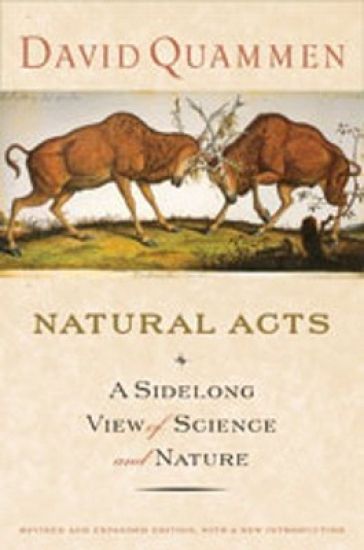
Natural Acts

Natural Acts

David Quammen

WW Norton Co
2008
sidottu
“Lively writing about science and nature depends less on the offering of good answers, I think, than on the offering of good questions,” said David Quammen in the original introduction to Natural Acts. For more than two decades, he has stuck to that credo. In this updated version of his first essay collection, Quammen’s lively curiosity leads him from New Mexico to Romania, from the Congo to the Amazon, asking questions about mosquitoes (what are their redeeming merits?), dinosaurs (how did they change the life of a dyslexic Vietnam vet?), and cloning (can it save endangered species?). This expanded edition returns to print Quammen’s best-loved “Natural Acts” columns, which first appeared in Outside magazine in the early 1980s, and includes recent pieces such as “Planet of Weeds,” an influential Harper’s cover story. The new Natural Acts is an eye-opening journey that will please both Quammen fans and newcomers to his work.
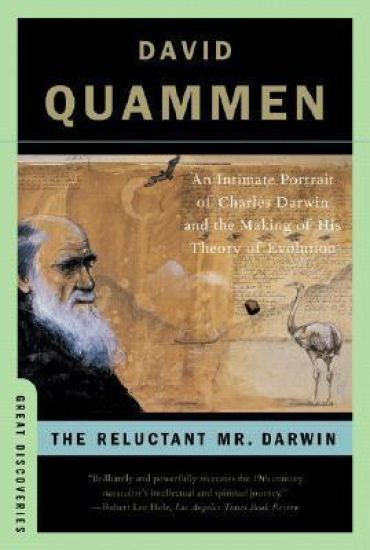
The Reluctant Mr. Darwin

The Reluctant Mr. Darwin

David Quammen

WW Norton Co
2007
pokkari
21 years passed between Charles Darwim's epiphany that 'natural selection' formed the basis of evolution and the scientist's publication of 'On the Origin of Species'. This text looks at why Darwin delayed the publication and examines what happened during the course of those two decades.
Natural Acts

Natural Acts

David Quammen

WW Norton Co
2009
nidottu
"Lively writing about science and nature depends less on the offering of good answers, I think, than on the offering of good questions," said David Quammen in the original introduction to Natural Acts. For more than two decades, he has stuck to that credo. In this updated version of curiosity leads him from New Mexico to Romania, from the Congo to the Amazon, asking questions about mosquitoes (what are their redeeming merits?), dinosaurs (how did they change the life of a dyslexic Vietnam vet?), and cloning (can it save endangered species?). This revised and expanded edition best-loved "Natural Acts" columns, which first appeared in Outside magazine in the early 1980s, and includes recent pieces such as "Planet of Weeds," an influential new Natural Acts is an eye-opening journey that will please both Quammen fans and newcomers to his work.
Spillover: Animal Infections and the Next Human Pandemic
In 2020, the novel coronavirus gripped the world in a global pandemic and led to the death of hundreds of thousands. The source of the previously unknown virus? Bats. This phenomenon--in which a new pathogen comes to humans from wildlife--is known as spillover, and it may not be long before it happens again. Prior to the emergence of our latest health crisis, renowned science writer David Quammen was traveling the globe to better understand spillover's devastating potential. For five years he followed scientists to a rooftop in Bangladesh, a forest in the Congo, a Chinese rat farm, and a suburban woodland in New York, and through high-biosecurity laboratories. He interviewed survivors and gathered stories of the dead. He found surprises in the latest research, alarm among public health officials, and deep concern in the eyes of researchers.Spillover delivers the science, the history, the mystery, and the human anguish of disease outbreaks as gripping drama. And it asks questions more urgent now than ever before: From what innocent creature, in what remote landscape, will the Next Big One emerge? Are pandemics independent misfortunes, or linked? Are they merely happening to us, or are we somehow causing them? What can be done? Quammen traces the origins of Ebola, Marburg, SARS, avian influenza, Lyme disease, and other bizarre cases of spillover, including the grim, unexpected story of how AIDS began from a single Cameroonian chimpanzee. The result is more than a clarion work of reportage. It's also the elegantly told tale of a quest, through time and landscape, for a new understanding of how our world works--and how we can survive within it.
The Chimp and the River

The Chimp and the River

David Quammen

WW Norton Co
2015
pokkari
The real story of AIDS how it originated with a virus in a chimpanzee, jumped to one human, and then infected more than 60 million people is very different from what most of us think we know. Recent research has revealed dark surprises and yielded a radically new scenario of how AIDS began and spread. First recounted in Spillover, which Walter Isaacson called a frightening and fascinating masterpiece, The Chimp and the River is the true account of how an unnoticed chimpanzee infection became a human plague. With a new introduction by the author, David Quammen s hair-raising report tracks the virus from chimp populations in the jungles of southeastern Cameroon to laboratories across the globe, as he unravels the mysteries of when, where, and under what circumstances such a consequential spillover can happen. An audacious search for answers amid more than a century of data, The Chimp and the River tells the haunting tale of one of the most devastating pandemics of our time. Extracted from Spillover by David Quammen, updated and with additional material."
Ebola

Ebola

David Quammen

WW Norton Co
2014
pokkari
In 1976 a deadly virus emerged from the Congo forest. As swiftly as it came, it disappeared, leaving no trace. Over the four decades since, Ebola has emerged sporadically, each time to devastating effect. It can kill up to 90 percent of its victims. In between these outbreaks, it is untraceable, hiding deep in the jungle. The search is on to find Ebola s elusive host animal. And until we find it, Ebola will continue to strike. Acclaimed science writer and explorer David Quammen first came near the virus while he was traveling in the jungles of Gabon, accompanied by local men whose village had been devastated by a recent outbreak. Here he tells the story of Ebola its past, present, and its unknowable future. Extracted from Spillover by David Quammen, updated and with additional material."
The Best American Science and Nature Writing 2000

The Best American Science and Nature Writing 2000

David Quammen

Houghton Mifflin (Trade)
2000
nidottu
With The Best American Science and Nature Writing, Houghton Mifflin expands its stellar Best American series with a volume that honors our long and distinguished history of publishing the best writers in these fields. David Quammen, together with series editor Burkhard Bilger, has assembled a remarkable group of writers whose selections appeared in periodicals from National Geographic, Science, and The New Yorker to Puerto Del Sol and Doubletake. Among the acclaimed writers represented in this volume are Richard Preston on "The Demon in the Freezer," John McPhee bidding "Farewell to the Nineteeth Century," Oliver Sacks remembering the "Brilliant Light" of his boyhood, and Wendell Berry going "Back to the Land." Also including such literary lights as Anne Fadiman, David Guterson, Edward Hoagland, Natalie Angier, and Peter Matthiessen, this new collection presents selections bound together by their timelessness.
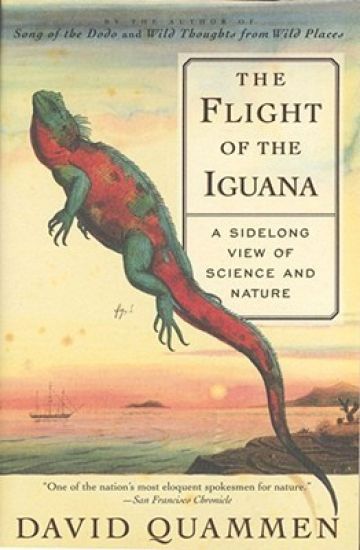
The Flight of the Iguana

The Flight of the Iguana

David Quammen

Scribner
1998
pokkari
From the award-winning author of The Tangled Tree and The Song of the Dodo comes a collection of essays in which various weird and wonderful aspects of nature are examined.From tales of vegetarian piranha fish and voiceless dogs to the scientific search for the genes that threaten to destroy the cheetah, Quammen captures the natural world with precision. Throughout, he illuminates the surprising intricacies of the natural world, and our human attitudes towards those intricacies. A distinguished essayist, Quammen’s reporting is masterful and thought provoking and his curiosity and fascination with the world of living things is infectious.
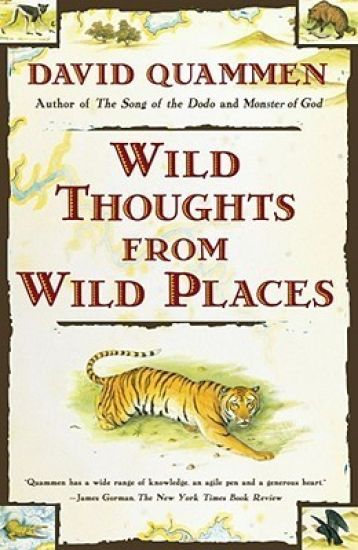
Wild Thoughts from Wild Places

Wild Thoughts from Wild Places

David Quammen

Scribner
1999
pokkari
Besides bringing together a couple of decades worth of literate, incisive forays into the natural world, this collection of essays from the prize-winning author of THE SONG OF THE DODO is both a wake-up call and a testimonial. Gathered in the main from magazine articles, in particular the authors 15 years of 'Natural Acts', a column in OUTSIDE magazine, Quammen reminds us of the many less quantifiable virtues of the wild that often get crushed in the path of so-called progress. Beginning with the Rocky Mountain trout that, as a young man, would change his life, and meandering through a variety of travels and experiences around the globe, he touches on issues of wildlife conservation, island biogeography and outdoor recreation. Quammen's articles are fascinating, surprising and often humorous, as he learns about the mountain lion by looking over the shoulder of a Montana Bow hunter and delights in the grace of white-water rodeo. Whether he is writing about hard science, art, literature, or the whims that colour our investigations of the world around us, David Quammen emerges as one of the most eloquent spokesmen and campaigners for nature.
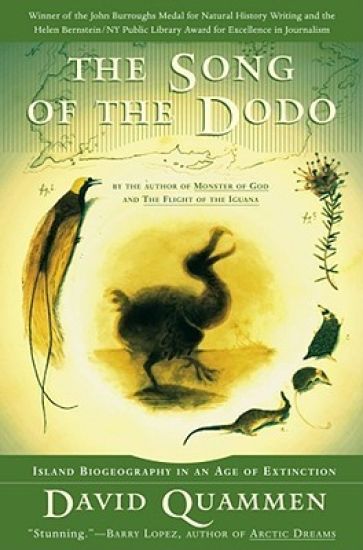
Song Of The Dodo

Song Of The Dodo

David Quammen

Vintage
1997
pokkari
Why have island ecosystems always suffered such high rates of extinction? Over the past eight years, David Quammen has followed the threads of island biogeography on a globe-encircling journey of discovery.
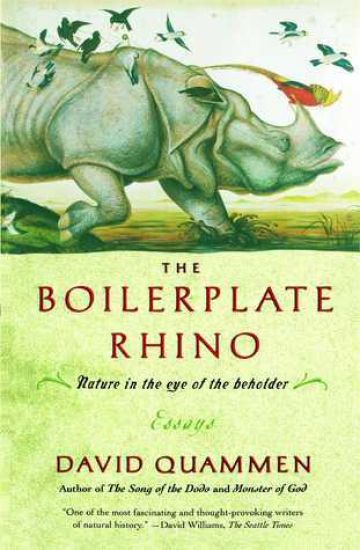
The Boilerplate Rhino

The Boilerplate Rhino

David Quammen

SIMON SCHUSTER
2001
pokkari
From 1981 to 1996 David Quammen delighted readers of OUTSIDE magazine with his thoughtful ruminations on the world around us in his monthly column, NATURAL ACTS. This is a selection of twenty-six of his most durable and engaging essays from that column. The Boilerplate Rhino presents Quammen's distinctive take on topics such as rattlesnake handlers and rattlesnakes, eel mythology and living eels and arachnaphobia and spiders. Each essay is written in the articulate and penetrating style for which Quammen is so renowned. Each touches upon the rich and sometimes horrifically fascinating tension between man and the natural world, in all its complexity and ambivalence. The result is another irrepressible assortment of ideas to explore, conundrums to contemplate, and wondrous creatures to behold. From the acclaimed author of WILD THOUGHTS FROM WILD PLACES and the award winning THE SONG OF THE DODO.
Yellowstone

Yellowstone

David Quammen

National Geographic Society
2016
sidottu
Best-selling author David Quammen takes readers on a breathtaking journey through America's most inspiring and imperilled ecosystem - Yellowstone National Park. Filled with amazing images captured by eight National Geographic photographers over an extensive two year deployment in the park, it is unlike any Yellowstone book before it. Yellowstone's storied past, rich ecosystem and dynamic landscape are brilliantly portrayed in a captivating mosaic of photographs and eloquently written text that blend history, science and research from the field.
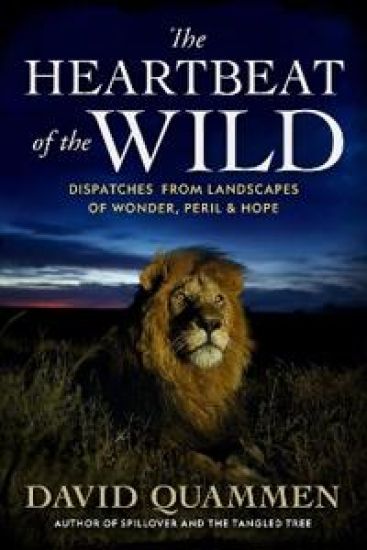
The Heartbeat of the Wild

The Heartbeat of the Wild

David Quammen

National Geographic Society
2023
sidottu
For more than two decades, award-winning science and nature writer David Quammen has traveled to Earth’s most far-flung and fragile destinations, sending back field notes from places caught in the tension between humans and the wild. This illuminating book features 20 of those assignments: elegantly written narratives, originally published in National Geographic magazine and updated for today, telling colorful and impassioned stories from some of the planet’s wildest locales. Quammen shares encounters with African elephants, chimpanzees, and gorillas (and their saviors, including Jane Goodall); the salmon of northeastern Russia and the people whose livelihood depends on them; the lions of Kenya and the villagers whose homes border on parks created to preserve the species; and the champions of rewilding efforts in southernmost South America, designed to rescue iconic species including jaguars and macaws.
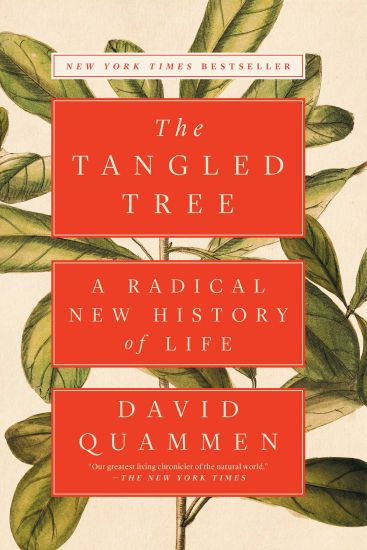
The Tangled Tree: A Radical New History of Life
In this New York Times bestseller and longlist nominee for the National Book Award, "our greatest living chronicler of the natural world" (The New York Times), David Quammen explains how recent discoveries in molecular biology affect our understanding of evolution and life's history. In the mid-1970s, scientists began using DNA sequences to reexamine the history of all life. Perhaps the most startling discovery to come out of this new field--the study of life's diversity and relatedness at the molecular level--is horizontal gene transfer (HGT), or the movement of genes across species lines. It turns out that HGT has been widespread and important; we now know that roughly eight percent of the human genome arrived sideways by viral infection--a type of HGT. In The Tangled Tree, "the grandest tale in biology....David Quammen presents the science--and the scientists involved--with patience, candor, and flair" (Nature). We learn about the major players, such as Carl Woese, the most important little-known biologist of the twentieth century; Lynn Margulis, the notorious maverick whose wild ideas about "mosaic" creatures proved to be true; and Tsutomu Wantanabe, who discovered that the scourge of antibiotic-resistant bacteria is a direct result of horizontal gene transfer, bringing the deep study of genome histories to bear on a global crisis in public health. "David Quammen proves to be an immensely well-informed guide to a complex story" (The Wall Street Journal). In The Tangled Tree, he explains how molecular studies of evolution have brought startling recognitions about the tangled tree of life--including where we humans fit upon it. Thanks to new technologies, we now have the ability to alter even our genetic composition--through sideways insertions, as nature has long been doing. "The Tangled Tree is a source of wonder....Quammen has written a deep and daring intellectual adventure" (The Boston Globe).
The Tangled Tree: A Radical New History of Life
Nonpareil science writer David Quammen explains how recent discoveries in molecular biology can change our understanding of evolution and life's history, with powerful implications for human health and even our own human nature.In the mid-1970s, scientists began using DNA sequences to reexamine the history of all life. Perhaps the most startling discovery to come out of this new field-the study of life's diversity and relatedness at the molecular level-is horizontal gene transfer (HGT), or the movement of genes across species lines. It turns out that HGT has been widespread and important. For instance, we now know that roughly eight percent of the human genome arrived not through traditional inheritance from directly ancestral forms, but sideways by viral infection-a type of HGT.In The Tangled Tree David Quammen, one of that rare breed of science journalists who blends exploration with a talent for synthesis and storytelling (Nature), chronicles these discoveries through the lives of the researchers who made them-such as Carl Woese, the most important little-known biologist of the twentieth century; Lynn Margulis, the notorious maverick whose wild ideas about mosaic creatures proved to be true; and Tsutomu Wantanabe, who discovered that the scourge of antibiotic-resistant bacteria is a direct result of horizontal gene transfer, bringing the deep study of genome histories to bear on a global crisis in public health.Quammen is no ordinary writer. He is simply astonishing, one of that rare class of writer gifted with verve, ingenuity, humor, guts, and great heart (Elle). Now, in The Tangled Tree, he explains how molecular studies of evolution have brought startling recognitions about the tangled tree of life-including where we humans fit upon it. Thanks to new technologies such as CRISPR, we now have the ability to alter even our genetic composition-through sideways insertions, as nature has long been doing. The Tangled Tree is a brilliant guide to our transformed understanding of evolution, of life's history, and of our own human nature.
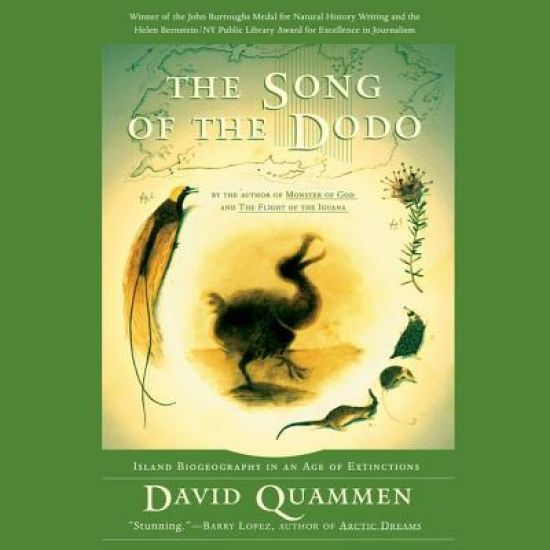
The Song of the Dodo: Island Biogeography in an Age of Extinctions
David Quammen's book, The Song of the Dodo, is a brilliant, stirring work, breathtaking in its scope, far-reaching in its message -- a crucial book in precarious times, which radically alters the way in which we understand the natural world and our place in that world. It's also a book full of entertainment and wonders. In The Song of the Dodo, we follow Quammen's keen intellect through the ideas, theories, and experiments of prominent naturalists of the last two centuries. We trail after him as he travels the world, tracking the subject of island biogeography, which encompasses nothing less than the study of the origin and extinction of all species. Why is this island idea so important? Because islands are where species most commonly go extinct -- and because, as Quammen points out, we live in an age when all of Earth's landscapes are being chopped into island-like fragments by human activity. Through his eyes, we glimpse the nature of evolution and extinction, and in so doing come to understand the monumental diversity of our planet, and the importance of preserving its wild landscapes, animals, and plants. We also meet some fascinating human characters. By the book's end we are wiser, and more deeply concerned, but Quammen leaves us with a message of excitement and hope.
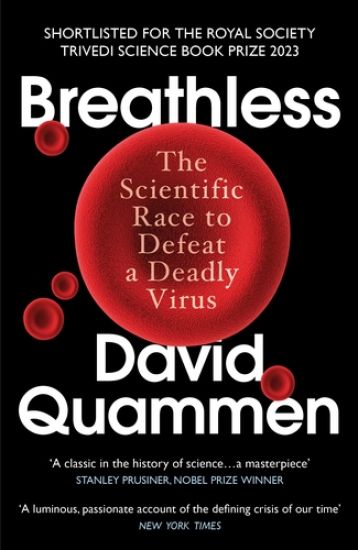
Breathless

Breathless

David Quammen

Vintage Publishing
2023
pokkari
**A NEW YORK TIMES BOOK OF THE YEAR 2022 and FINANCIAL TIMES BEST BOOK OF 2023***Shortlisted for the Royal Society Trivedi Science Book Prize 2023*From the author of Spillover, the book that predicted the pandemic, Breathless is the story of Covid-19 and its fierce journey through the human population, as seen by the scientists tasked with fighting it.Bestelling author David Quammen draws on countless interviews with experts, including leading virologists, to take us inside the global race to understand SARS-CoV-2, it's ever-changing nature and capacity to kill. In doing so, he explains how new viruses emerge when we disrupt ecosystems and suggests why the coronavirus may be here to stay.By peering over the shoulders of the brilliant scientists leading the chase, Breathless uncovers the warnings from infectious diseases experts that went unheeded; and which clues are the most compelling in the hunt for the virus' origin.'A viral howdunnit that is pacy and unafraid to educate readers' Observer'A luminous, passionate account of the defining crisis of our time' New York Times'A classic...a masterpiece' Stanley Prusiner, Nobel Prize Winner'As close to authoritative history as we have... It reads like a real-time thriller' Chicago Tribune