Kirjojen hintavertailu. Mukana 12 083 983 kirjaa ja 12 kauppaa.

Kirjahaku

Etsi kirjoja tekijän nimen, kirjan nimen tai ISBN:n perusteella.

8 kirjaa tekijältä David R. Cerbone

Heidegger: A Guide for the Perplexed

Heidegger: A Guide for the Perplexed

David R. Cerbone

Continuum International Publishing Group Ltd.
2008
sidottu
Martin Heidegger is one of the twentieth century's most influential, controversial and challenging philosophers. His "Being and Time" is a landmark text in modern philosophy, required reading for anyone studying Continental thought. However, the concepts encountered in Heidegger are intricate and frequently confusing, while the language through which they are articulated is deliberately dense and obscure. "Heidegger: A Guide for the Perplexed" is a thorough, cogent and reliable account of Heidegger's philosophy, ideal for the student who needs to reach a sound understanding of this complex and important thinker. The book covers Heidegger's oeuvre in its entirety, offering not only exposition of "Being and Time", but also his later work.His perspectives on, and contributions to, both ontology and phenomenology are explored in full, as is the concept of Dasein, Heidegger's term for the human way of existence. Geared toward the specific requirements of students who need to reach a sound understanding of Heidegger's philosophy, this is the ideal companion to the study of this most influential and challenging of twentieth century philosophers." Continuum's Guides for the Perplexed" are clear, concise and accessible introductions to thinkers, writers and subjects that students and readers can find especially challenging - or indeed downright bewildering. Concentrating specifically on what it is that makes the subject difficult to grasp, these books explain and explore key themes and ideas, guiding the reader towards a thorough understanding of demanding material.

Heidegger: A Guide for the Perplexed

Heidegger: A Guide for the Perplexed

David R. Cerbone

Continuum International Publishing Group Ltd.
2008
nidottu
Martin Heidegger is one of the twentieth century's most influential, controversial and challenging philosophers. His "Being and Time" is a landmark text in modern philosophy, required reading for anyone studying Continental thought. However, the concepts encountered in Heidegger are intricate and frequently confusing, while the language through which they are articulated is deliberately dense and obscure. "Heidegger: A Guide for the Perplexed" is a thorough, cogent and reliable account of Heidegger's philosophy, ideal for the student who needs to reach a sound understanding of this complex and important thinker. The book covers Heidegger's oeuvre in its entirety, offering not only exposition of "Being and Time", but also his later work.His perspectives on, and contributions to, both ontology and phenomenology are explored in full, as is the concept of Dasein, Heidegger's term for the human way of existence. Geared toward the specific requirements of students who need to reach a sound understanding of Heidegger's philosophy, this is the ideal companion to the study of this most influential and challenging of twentieth century philosophers." Continuum's Guides for the Perplexed" are clear, concise and accessible introductions to thinkers, writers and subjects that students and readers can find especially challenging - or indeed downright bewildering. Concentrating specifically on what it is that makes the subject difficult to grasp, these books explain and explore key themes and ideas, guiding the reader towards a thorough understanding of demanding material.
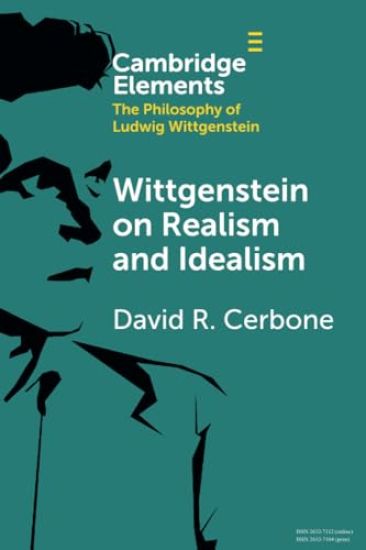
Wittgenstein on Realism and Idealism

Wittgenstein on Realism and Idealism

David R. Cerbone

Cambridge University Press
2024
sidottu
This Element concerns Wittgenstein's evolving attitude toward the opposition between realism and idealism in philosophy. Despite the marked – and sometimes radical – changes Wittgenstein's thinking undergoes from the early to the middle to the later period, there is an underlying continuity in terms of his unwillingness at any point to endorse either position in a straightforward manner. Instead, Wittgenstein can be understood as rejecting both positions, while nonetheless seeing insights in each position worth retaining. The author traces these “neither-nor” and “both-and” strands of Wittgenstein's attitude toward realism and idealism to his – again, evolving – insistence on seeing language and thought as worldly phenomena. That thought and language are about the world and happen amidst the world they are about undermines the attempt to formulate any kind of general thesis concerning their interrelation.
Wittgenstein on Realism and Idealism

Wittgenstein on Realism and Idealism

David R. Cerbone

Cambridge University Press
2024
pokkari
This Element concerns Wittgenstein's evolving attitude toward the opposition between realism and idealism in philosophy. Despite the marked – and sometimes radical – changes Wittgenstein's thinking undergoes from the early to the middle to the later period, there is an underlying continuity in terms of his unwillingness at any point to endorse either position in a straightforward manner. Instead, Wittgenstein can be understood as rejecting both positions, while nonetheless seeing insights in each position worth retaining. The author traces these “neither-nor” and “both-and” strands of Wittgenstein's attitude toward realism and idealism to his – again, evolving – insistence on seeing language and thought as worldly phenomena. That thought and language are about the world and happen amidst the world they are about undermines the attempt to formulate any kind of general thesis concerning their interrelation.
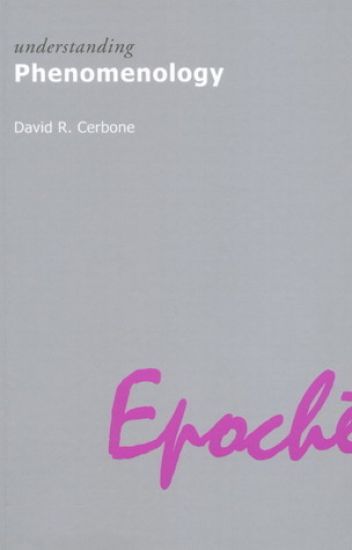
Understanding Phenomenology

Understanding Phenomenology

David R. Cerbone

Acumen Publishing Ltd
2006
sidottu
"Understanding Phenomenology" provides a guide to one of the most important schools of thought in modern philosophy. The book traces phenomenology's historical development, beginning with its founder, Edmund Husserl and his "pure" or "transcendental" phenomenology, and continuing with the later, "existential" phenomenology of Martin Heidegger, Jean-Paul Sartre, and Maurice Merleau-Ponty. The book also assesses later, critical responses to phenomenology - from Derrida to Dennett - as well as the continued significance of phenomenology for philosophy today. Written for anyone coming to phenomenology for the first time, the book guides the reader through the often bewildering array of technical concepts and jargon associated with phenomenology and provides clear explanations and helpful examples to encourage and enhance engagement with the primary texts.
Understanding Phenomenology

Understanding Phenomenology

David R. Cerbone

Acumen Publishing Ltd
2006
nidottu
"Understanding Phenomenology" provides a guide to one of the most important schools of thought in modern philosophy. The book traces phenomenology's historical development, beginning with its founder, Edmund Husserl and his "pure" or "transcendental" phenomenology, and continuing with the later, "existential" phenomenology of Martin Heidegger, Jean-Paul Sartre, and Maurice Merleau-Ponty. The book also assesses later, critical responses to phenomenology - from Derrida to Dennett - as well as the continued significance of phenomenology for philosophy today. Written for anyone coming to phenomenology for the first time, the book guides the reader through the often bewildering array of technical concepts and jargon associated with phenomenology and provides clear explanations and helpful examples to encourage and enhance engagement with the primary texts.