Kirjojen hintavertailu. Mukana 12 016 292 kirjaa ja 12 kauppaa.

Kirjahaku

Etsi kirjoja tekijän nimen, kirjan nimen tai ISBN:n perusteella.

5 kirjaa tekijältä David R. McCabe

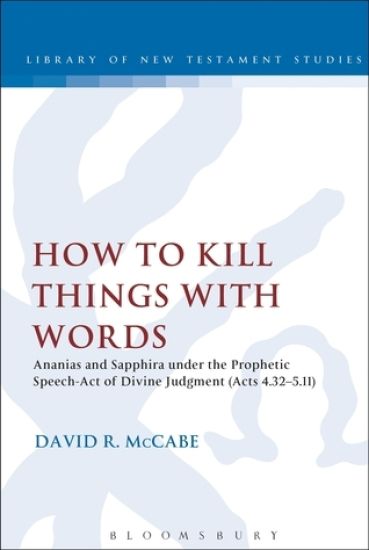
How to Kill Things with Words

How to Kill Things with Words

David R. McCabe

T. T.Clark Ltd
2013
nidottu
This work examines the dynamics of the Ananias and Sapphira episode in Acts and its role in the narrative of Luke-Acts. McCabe locates the passage within its literary context, and emphasizes the manner in which it is embedded in a discourse on the life of the Christian community expressed through shared goods. Utilizing Speech-Act Theory, McCabe argues that Peter's words, divinely sanctioned, directly execute the divine judgment upon the couple. This is argued by appealing to the social processes and conventions of language-use within the context of a 'community-of-goods' discourse as present in the Lukan narrative. McCabe appeals to the conventions deployed in the narrative world of Luke-Acts which undergird the efficacy of prophetic speech to effect divine judgment, including the patterns established by prophetic figures in the Scriptures of Israel and Luke's own characterization of Jesus as Prophet-King, followed by an examination of Luke's characterization of Peter as an apostolic-prophetic successor to Jesus, deputized to speak on behalf of God. McCabe concludes by examining the successful execution of the speech-act of divine judgment.
How to Kill Things with Words

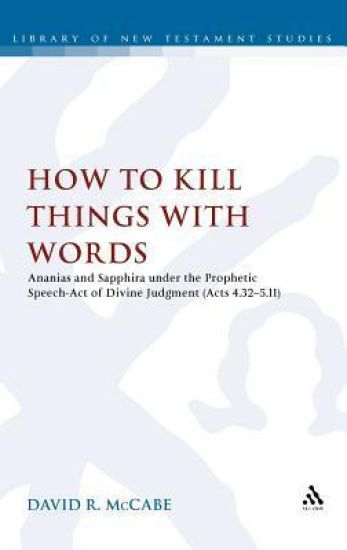
How to Kill Things with Words

David R. McCabe

T. T.Clark Ltd
2011
sidottu
This work studies the literary and socio-discursive contexts of 'the Ananias and Sapphira episode' in "Acts" as a narrative illustrating the negative-ethos of community goods. This work examines the dynamics of the Ananias and Sapphira episode in "Acts" and its role in the narrative of "Luke-Acts". McCabe locates the passage within its literary context, and emphasizes the manner in which it is embedded in a discourse on the life of the Christian community expressed through shared goods. Utilizing "Speech-Act Theory", McCabe argues that Peter's words, divinely sanctioned, directly execute the divine judgment upon the couple. This is argued by appealing to the social processes and conventions of language-use within the context of a 'community-of-goods' discourse as present in the Lukan narrative. McCabe appeals to the conventions deployed in the narrative world of "Luke-Acts" which undergird the efficacy of prophetic speech to effect divine judgment, including the patterns established by prophetic figures in the Scriptures of Israel and Luke's own characterization of Jesus as Prophet-King, followed by an examination of Luke's characterization of Peter as an apostolic-prophetic successor to Jesus, deputized to speak on behalf of God. McCabe concludes by examining the successful execution of the speech-act of divine judgment. This is formerly the "Journal for the Study of the New Testament Supplement", a book series that explores the many aspects of New Testament study including historical perspectives, social-scientific and literary theory, and theological, cultural and contextual approaches. "The Early Christianity in Context" series, a part of "JSNTS", examines the birth and development of early Christianity up to the end of the third century CE. The series places Christianity in its social, cultural, political and economic context. "European Seminar on Christian Origins" and "Journal for the Study of the Historical Jesus Supplement" are also part of "JSNTS".
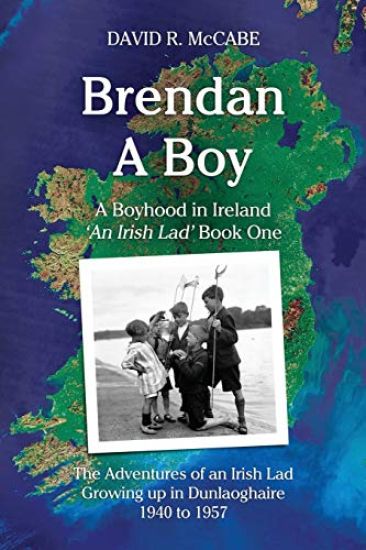
Brendan A Boy: The Adventures of an Irish Lad Growing up in Dunlaoghaire 1940 to 1957
(formerly published under the title Pinkeens to Diddies)In this gently humorous story, young, sensitive Brendan Harris learns much about life, family and the need to fit in while growing up during the 1940s in semi-rural Southern Ireland. Raised in a Protestant household and attending a private school in this predominantly Catholic country, Brendan stumbles his way through the confusion of social differences and sexual maturity while his mother, Alice, often embarrasses him with her good intentions among the local 'poor'...which, all too often, end in total disaster.Life brings the typical surprises for young boys turning into young men, as Brendan grows up fishing for 'pinkeens' and later learns his fair share about the opposite sex, and the delights and disappointments of coming of age.
Brendan Ashore: The Adventures of an Irish Lad Seeking his Fortunes in Liverpool in the Early 1960s
Brendan Harris spent his childhood in semi-rural Ireland in the 1940's and went on to join the Merchant Navy- a career cut short by a horrific accident. Now at the age of twenty-three he- as the saying went at the time-'takes the boat' leaving Ireland to make his fortune in Liverpool.In this the third book of the 'An Irish Lad' series, we follow Brendan as he takes up lodgings with a lonely landlady in Bootle, gets a temporary job as a storeman in a department store in the city, goes to football matches and dancing, meets girls and visits the now famous Cavern Club. With a surprising turn of events Brendan starts a new career and a new life.Written in David's relaxed, humorous style Brendan Ashore offers an insight into life in the 1960's in the north of England - as seen through the eyes of 'An Irish Lad'
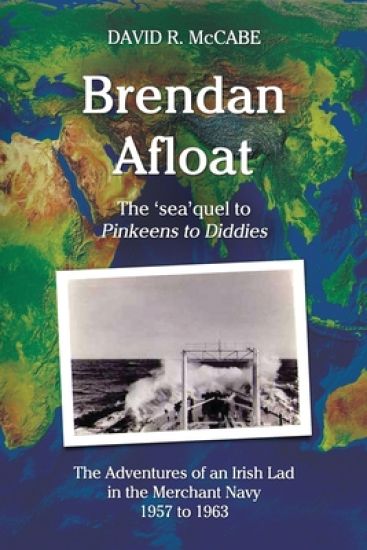
Brendan Afloat: The Adventures of an Irish Lad in the Merchant Navy 1957 to 1963
Brendan Harris spent his childhood in semi-rural Ireland in the 1940s and went on to join the Merchant Navy-a career cut short by a horrific road accident. Now, at the age of twenty-three, he-as the saying went at the time-'takes the boat' leaving Ireland to make his fortune in Liverpool.In this, the third book of the 'An Irish Lad' series, we follow Brendan as he takes up lodgings with a lonely landlady in Bootle, gets a temporary job as store man in a department store in the city, goes to football matches and dancing, meets girls and visits the now famous Cavern Club. With a surprising turn of events, Brendan starts a new career and a new life.Written in David's relaxed, humorous style, Brendan Ashore offers an insight into life in the 1960s in the north of England-as seen through the eyes of 'An Irish Lad'.