For well over a century educational reformers have looked for a breakthrough in the sciences of psychology and pedagogy that would dramatically improve the effectiveness of schooling. This book shows why such an ambition is an illusion. Schools are institutions which attempt to balance the needs of a bureaucratic society that funds them with the personal goals, interests, hopes and ambitions of the students who enroll in them. Reform efforts attempt to realign that balance without any clear conception of how the two are related. This book offers a theoretical account of the relation between the minds of learners and the institutional structure of the school that would account both for the ways that schooling remakes minds and societies and why such institutions are resistant to change.
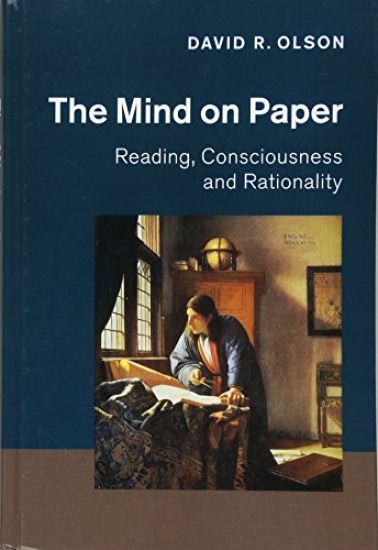
What role has writing played in the development of our modern understanding of language, nature and ourselves? In this historical and developmental account, David Olson offers a new perspective on this process. Reversing the traditional assumption about the relation between speech and writing, he argues that writing provides an important model of the way we think about speech; our consciousness of language is structured by our writing system. In addition, writing provides our dominant models for thinking about nature and the mind, and shows how our understanding of the world - our science - and our understanding of ourselves - our psychology - are by-products of our ways of creating and interpreting written texts. This challenging study draws on recent advances in history, anthropology, linguistics and psychology, and will be of interest to readers across the range of these subjects.
For well over a century educational reformers have looked for a breakthrough in the sciences of psychology and pedagogy that would dramatically improve the effectiveness of schooling. This book shows why such an ambition is an illusion. Schools are institutions which attempt to balance the needs of a bureaucratic society that funds them with the personal goals, interests, hopes and ambitions of the students who enroll in them. Reform efforts attempt to realign that balance without any clear conception of how the two are related. This book offers a theoretical account of the relation between the minds of learners and the institutional structure of the school that would account both for the ways that schooling remakes minds and societies and why such institutions are resistant to change.
When this book was first published, David Olson was examining the developing representation and use of diagonals in the context of much larger questions, questions also explored by Vygotsky, Cassirer, Gombrich, and Bruner. These include such issues as conceptual development, conceptual change, and stage-like transitions in one's knowledge and belief. Some of these problems remain at virtually the same stage of solution to this day. Other problems have indeed been solved or at least come closer to solution, leading the author to think about the precise cognitive representations that allowed for the cognitive growth he examined in such scrupulous detail. The author hopes that both readers and re-readers of this volume will be led to wonder -- as he did while working on the book -- just what there is about a simple diagonal that makes its reproduction so difficult. In so doing, readers will again be reminded of the remarkable resources that children bring to bear on their understanding of the world as well as the blind spots that no simple telling can quite fill in.
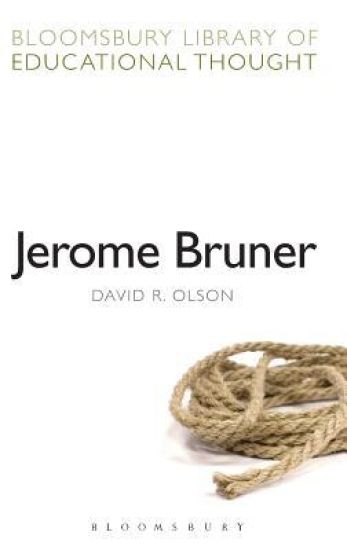
Jerome Bruner is indisputably a major thinker in education. David Olson's volume offers the most coherent account of Bruner's educational thought. This work is divided into: intellectual biography; critical exposition of Bruner's work; the reception and influence of Bruner's work; the relevance of the work today; and excerpts from an interview with Jerome Bruner.This volume is part of a major international reference series providing comprehensive accounts of the work of seminal educational thinkers from a variety of periods, disciplines and traditions. It is the most ambitious and prestigious such project ever published - a definitive resource for at least a generation. The thinkers include: Aquinas, Aristotle, Bourdieu, Bruner, Dewey, Foucault, Freire, Holt, Kant, Locke, Montessori, Neill, Newman, Owen, Peters, Piaget, Plato, Rousseau, Steiner, Vygotsky, West and Wollstonecraft.
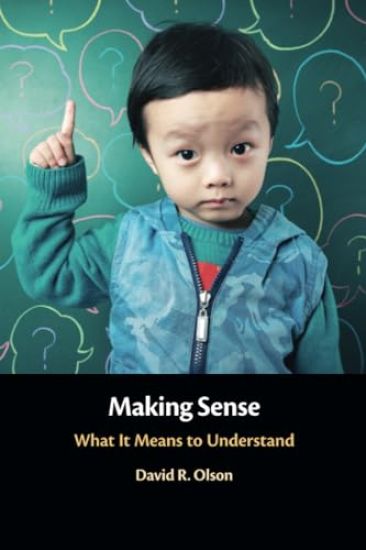
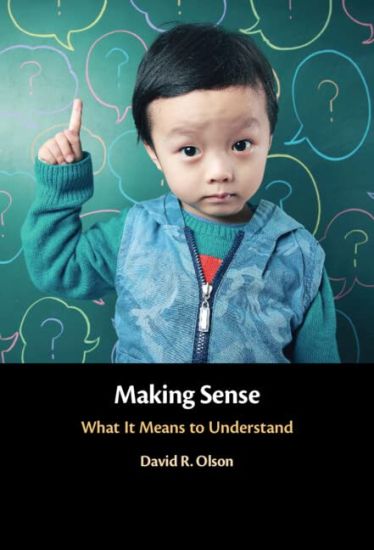
Understanding, as Descartes, Locke and Kant all insisted, is the primary 'faculty' of the mind; yet our modern sciences have been slow to advance a clear and testable account of what it means to understand, of children's acquisition of this concept and, in particular, how children come to ascribe understanding to themselves and others. By drawing together developmental and philosophical theories, this book provides a systematic account of children's concept of understanding and places understanding at the heart of children's 'theory of mind'. Children's subjective awareness of their own minds, of what they think, depends on learning a language for ascribing mental states to themselves and others. This book will appeal to researchers in developmental psychology, cognitive science, education and philosophy who are interested in the cognitive and emotional development of children and in the more basic question of what it means to have a mind.
Although the importance of literacy is widely acknowledged in society and remains at the top of the political agenda, writing has been slow to establish a place in the cognitive sciences. Olson argues that to understand the cognitive implications of literacy, it is necessary to see reading and writing as providing access to and consciousness of aspects of language, such as phonemes, words and sentences, that are implicit and unconscious in speech. Reading and writing create a system of metarepresentational concepts that bring those features of language into consciousness as a subject of discourse. This consciousness of language is essential not only to acquiring literacy but also to the formation of systematic thought and rationality. The Mind on Paper is a compelling exploration of what literacy does for our speech and hence for our thought, and will be of interest to readers in developmental psychology, cognitive science, linguistics, and education.
Understanding, as Descartes, Locke and Kant all insisted, is the primary 'faculty' of the mind; yet our modern sciences have been slow to advance a clear and testable account of what it means to understand, of children's acquisition of this concept and, in particular, how children come to ascribe understanding to themselves and others. By drawing together developmental and philosophical theories, this book provides a systematic account of children's concept of understanding and places understanding at the heart of children's 'theory of mind'. Children's subjective awareness of their own minds, of what they think, depends on learning a language for ascribing mental states to themselves and others. This book will appeal to researchers in developmental psychology, cognitive science, education and philosophy who are interested in the cognitive and emotional development of children and in the more basic question of what it means to have a mind.
Jerome Bruner is the vanguard of “the cognitive revolution” in psychology and the predominant spokesman for the role of culture and education in the making of the modern mind. In this text Olson encourages the reader to think about children as Bruner did, not as bundles of traits and dispositions to be diagnosed and remediated, but as thoughtful, keenly interested, agentive persons who are willing and indeed able to play an important role in their own learning and development.Through the unique approach of combining commentary and conversation with Bruner, the author provides an insight into what it is like to engage with one of the intellectual masters of our time and highlights the relevance and importance of his contribution to educational thinking today.