Kirjojen hintavertailu. Mukana 12 016 292 kirjaa ja 12 kauppaa.

Kirjahaku

Etsi kirjoja tekijän nimen, kirjan nimen tai ISBN:n perusteella.

26 kirjaa tekijältä David Ray Griffin

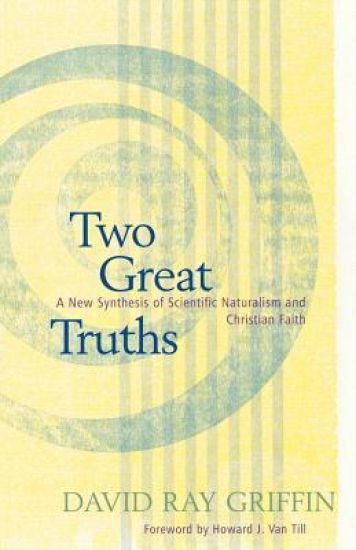
Two Great Truths

Two Great Truths

David Ray Griffin

Westminster/John Knox Press,U.S.
2004
nidottu
Furthering his contribution to the science and religion debate, David Ray Griffin draws upon the cosmology of Alfred North Whitehead and proposes a radical synthesis between two worldviews sometimes thought wholly incompatible. He argues that the traditions designated by the names "scientific naturalism" and "Christian faith" both embody a great truth--a truth of universal validity and importance--but that both of these truths have been distorted, fueling the conflict between the visions of the scientific and Christian communities. Griffin contends, however, that there is no inherent conflict between science, or even the kind of naturalism that it properly presupposes, and the Christian faith, understood in terms of the primary doctrines of the Christian good news.
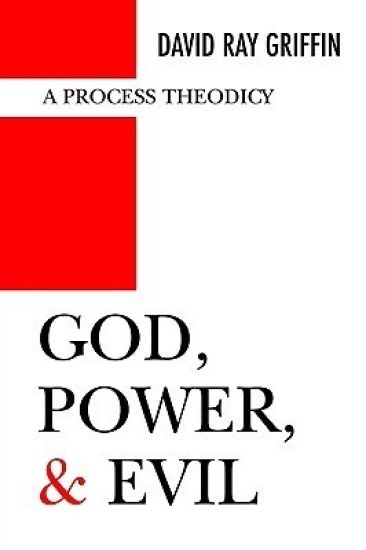
God, Power, and Evil

God, Power, and Evil

David Ray Griffin

Westminster/John Knox Press,U.S.
2004
nidottu
The baffling age-old question, if there is a good God, why is there evil in the world? has troubled ordinary people and great thinkers for centuries. God, Power, and Evil illuminates the issues by providing both a critical historical survey of theodicy as presented in the works of major Western philosophers and theologians--Plato, Aristotle, Plotinus, Augustine, Aquinas, Spinoza, Luther, Calvin, Leibniz, Barth, John Hick, James Ross, Fackenheim, Brunner, Berkeley, Albert Knudson, E. S. Brighton, and others--and a brilliant constructive statement of an understanding of theodicy written from the perspective of the process philosophical and theological thought inspired primarily by Alfred North Whitehead and Charles Hartshorne.
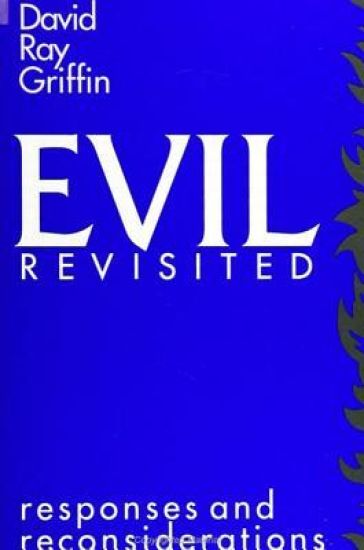
Evil Revisited

Evil Revisited

David Ray Griffin

State University of New York Press
1991
pokkari
Griffin responds to critiques of his earlier work God, Power, and Evil: A Process Theodicy. In this book Griffin responds to critiques of his earlier work-God, Power, and Evil: A Process Theodicy-and discusses ways in which his position has changed in the intervening years. In so doing, he examines the problem of evil, theodicy, and philosophical theology, and contrasts traditional theism and process theism with regard to the question of omnipotence.
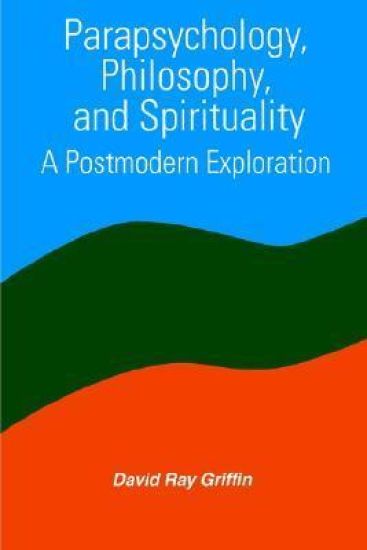
Parapsychology, Philosophy, and Spirituality

Parapsychology, Philosophy, and Spirituality

David Ray Griffin

State University of New York Press
1997
pokkari
Examines why parapsychology has been held in disdain by scientists, philosophers, and theologians, explores the evidence for ESP, psychokinesis, and life after death, and suggests that these phenomena provide support for a meaningful postmodern spirituality.In this book, David Ray Griffin, best known for his work on the problem of evil, turns his attention to the even more controversial topic of parapsychology. Griffin examines why scientists, philosophers, and theologians have held parapsychology in disdain and argues that neither a priori philosophical attacks nor wholesale rejection of the evidence can withstand scrutiny.After articulating a constructive postmodern philosophy that allows the parapsychological evidence to be taken seriously, Griffin examines this evidence extensively. He identifies four types of repeatable phenomena that suggest the reality of extrasensory perception and psychokinesis. Then, on the basis of a nondualistic distinction between mind and brain, which makes the idea of life after death conceivable, he examines five types of evidence for the reality of life after death: messages from mediums; apparitions; cases of the possession type; cases of the reincarnation type; and out-of-body experiences. His philosophical and empirical examinations of these phenomena suggest that they provide support for a postmodern spirituality that overcomes the thinness of modern religion without returning to supernaturalism.
Religion and Scientific Naturalism

Religion and Scientific Naturalism

David Ray Griffin

State University of New York Press
2000
pokkari
Articulates a metaphysical position capable of rendering both science and religious experience simultaneously and mutually intelligible.Winner of the 2000 Scientific and Medical Network Book Prize In this book, David Ray Griffin argues that the perceived conflict between science and religion is based upon a double mistake-the assumption that religion requires supernaturalism and that scientific naturalism requires atheism and materialism.
Whitehead's Radically Different Postmodern Philosophy

Whitehead's Radically Different Postmodern Philosophy

David Ray Griffin

State University of New York Press
2007
sidottu
Examines the postmodern implications of Whitehead's metaphysical system.Postmodern philosophy is often dismissed as unintelligible, self-contradictory, and as a passing fad with no contribution to make to the problems faced by philosophers in our time. While this characterization may be true of the type of philosophy labeled postmodern in the 1980s and 1990s, David Ray Griffin argues that Alfred North Whitehead had formulated a radically different type of postmodern philosophy to which these criticisms do not apply. Griffin shows the power of Whitehead's philosophy in dealing with a range of contemporary issues-the mind-body relation, ecological ethics, truth as correspondence, the relation of time in physics to the (irreversible) time of our lives, and the reality of moral norms. He also defends a distinctive dimension of Whitehead's postmodernism, his theism, against various criticisms, including the charge that it is incompatible with relativity theory.
Whitehead's Radically Different Postmodern Philosophy

Whitehead's Radically Different Postmodern Philosophy

David Ray Griffin

State University of New York Press
2008
pokkari
Examines the postmodern implications of Whitehead's metaphysical system.Postmodern philosophy is often dismissed as unintelligible, self-contradictory, and as a passing fad with no contribution to make to the problems faced by philosophers in our time. While this characterization may be true of the type of philosophy labeled postmodern in the 1980s and 1990s, David Ray Griffin argues that Alfred North Whitehead had formulated a radically different type of postmodern philosophy to which these criticisms do not apply. Griffin shows the power of Whitehead's philosophy in dealing with a range of contemporary issues-the mind-body relation, ecological ethics, truth as correspondence, the relation of time in physics to the (irreversible) time of our lives, and the reality of moral norms. He also defends a distinctive dimension of Whitehead's postmodernism, his theism, against various criticisms, including the charge that it is incompatible with relativity theory.
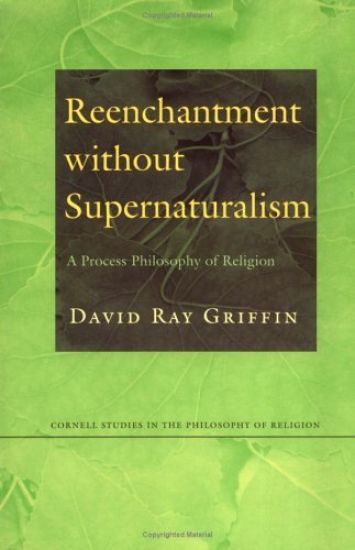
Reenchantment without Supernaturalism

Reenchantment without Supernaturalism

David Ray Griffin

CORNELL UNIVERSITY PRESS
2000
sidottu
The process philosophy of Alfred North Whitehead and Charles Hartshorne has made many distinctive contributions to the philosophy of religion. David Ray Griffin now offers the first full-scale philosophy of religion written from this perspective, discussing such topics as the relationship between science and religion, the validity of religious experience, the nature and existence of God, religious pluralism, creation and evolution, and the problem of evil. Griffin's clear and comprehensive book also serves as a valuable introduction to process philosophy itself.In his vigorous defense of a worldview that is fully naturalistic and fully religious, Griffin shows not only how this position reconciles naturalism with freedom, genuine religious experience, and even life after death, but also how its naturalistic theism "reenchants" the world in the sense of providing cosmic support for moral values.Highly original and sometimes controversial, Griffin's book develops its stance in conversation with influential proponents of other philosophical positions, including William P. Alston, Jürgen Habermas, John Hick, Colin McGinn, Alvin Plantinga, Hilary Putnam, Willard Quine, Ninian Smart, Jeffrey Stout, and Bernard Williams.
Reenchantment Without Supernaturalism

Reenchantment Without Supernaturalism

David Ray Griffin

Cornell University Press
2000
pokkari
Occasionally, a book comes along that is definitive for its field of study, a book that marks a milestone in thought.... Griffin has written just such a book-a book that, by all rights, should mark a watershed in the academic study of religion.... Griffin makes about as strong a case as one can in a single volume for a genuine and viable alternative. - The Journal of Religion The process philosophy of Alfred North Whitehead and Charles Hartshorne has made many distinctive contributions to the philosophy of religion. David Ray Griffin now offers the first full-scale philosophy of religion written from this perspective, discussing such topics as the relationship between science and religion, the validity of religious experience, the nature and existence of God, religious pluralism, creation and evolution, and the problem of evil. Griffin's clear and comprehensive book also serves as a valuable introduction to process philosophy itself. In his vigorous defense of a worldview that is fully naturalistic and fully religious, Griffin shows not only how this position reconciles naturalism with freedom, genuine religious experience, and even life after death, but also how its naturalistic theism "reenchants" the world in the sense of providing cosmic support for moral values. Highly original and sometimes controversial, Griffin's book develops its stance in conversation with influential proponents of other philosophical positions, including William P. Alston, JÜrgen Habermas, John Hick, Colin McGinn, Alvin Plantinga, Hilary Putnam, Willard Quine, Ninian Smart, Jeffrey Stout, and Bernard Williams.
Archetypal Process

Archetypal Process

David Ray Griffin

Northwestern University Press
1990
sidottu
Archetypal Process is a pioneering study linking the ideas of process philosophy, as developed by Alfred North Whitehead and Charles Hartshorne, with the archetypal psychology of C. G. Jung and James Hillman. This is the first work to examine the interconnections of these two modes of thought.
A Process Christology

A Process Christology

David Ray Griffin

University Press of America
1990
nidottu
This book, originally published by The Westminster Press in 1973, was the first full-scale Christology based upon process thought. Its thesis: Whitehead's process philosophy provides a basis for explicating the idea that Jesus of Nazareth is God's decisive self-revelation, in a manner that is consistent with both modern thought and Christian faith. A Process Christology brings together three dimensions of recent theology: the new quest for the historical Jesus, the new-orthodox emphasis on God's self-revealing activity in history, and the theology based primarily on the process philosophy of Alfred North Whitehead and Charles Hartshorne. This edition contains a new Preface.
God and Religion in the Postmodern World

God and Religion in the Postmodern World

David Ray Griffin

State University of New York Press
1988
pokkari
Addressed to readers who have found liberal theology empty or who believe that one cannot be religious and fully rational and empirical at the same time.The naturalistic theism presented in this book is addressed to readers who have found liberal theology empty or who believe that one cannot be religious and fully rational and empirical at the same time. Griffin shows that the postmodern view is more empirical and rational than that of late modern materialism.This is not a return to early modern dualistic supernaturalism. The mechanism and sensationalism of Descartes and Newton precluded a real union of religion and science. Griffin's postmodernism offers a deeply religious and fully scientific theology, providing a new basis for spiritual discipline and for a pacific mortality that could reverse the militarism of modernity.Griffin proposes a revisionary, constructive postmodern theology challenging the deconstructive philosophy that calls itself postmodern and leads to relativism and nihilism.
The American Trajectory

The American Trajectory

David Ray Griffin

Clarity Press
2018
nidottu
In The American Trajectory: Divine or Demonic? David Ray Griffin traces the trajectory of the American Empire from its founding through to the end of the 20th century. A prequel to Griffin's Bush and Cheney, this book demonstrates with many examples the falsity of the claim for American exceptionalism, a secular version of the old idea that America has been divinely founded and guided. The Introduction illustrates the claims for divine providence and American exceptionalism from George Washington to the book Exceptional by Dick and Liz Cheney. It then, after pointing out that the idea that America is an empire is no longer controversial, contrasts those who consider it benign with those who consider it malign. The remainder of the book supports the latter point of view. The American Trajectory contains many episodes that many readers will find surprising: The sinking of the Lusitania was anticipated, both by Churchill and Wilson, as a means of inducing America's entry into World War; The attack on Pearl Harbour was neither unprovoked nor a surprise; that during the Good War, the US government plotted and played politics with a view to becoming the dominant empire; There was no need to drop atomic bombs on Japan either to win the war or to save American lives; US decisions were central to the inability of the League of Nations and the United Nations to prevent war; The United States was more responsible than the Soviet Union for the Cold War; The Vietnam War was far from the only US military adventure during the Cold War that killed great numbers of civilians; The US government organized false flag attacks that deliberately killed Europeans; and America's military interventions after the dissolution of the Soviet Union taught some conservatives (such as Andrew Bacevich and Chalmers Johnson) that the US interventions during the Cold War were not primarily defensive. The conclusion deals with the question of how knowledge by citizens of how the American Empire has behaved could make America better and how America, which had long thought of itself as the Redeemer Nation, might redeem itself.
Unsnarling the World-Knot

Unsnarling the World-Knot

David Ray Griffin

Wipf Stock Publishers
2008
pokkari
The mind-body problem, which Schopenhauer called the ""world-knot,"" has been a central problem for philosophy since the time of Descartes. Among realists--those who accept the reality of the physical world--the two dominant approaches have been dualism and materialism, but there is a growing consensus that, if we are ever to understand how mind and body are related, a radically new approach is required. David Ray Griffin develops a third form of realism, one that resolves the basic problem (common to dualism and materialism) of the continued acceptance of the Cartesian view of matter. In dialogue with various philosophers, including Dennett, Kim, McGinn, Nagel, Seager, Searle, and Strawson, Griffin shows that materialist physicalism is even more problematic than dualism. He proposes instead a panexperientialist physicalism grounded in the process philosophy of Alfred North Whitehead. Answering those who have rejected ""panpsychism"" as obviously absurd, Griffin argues compellingly that panexperientialism, by taking experience and spontaneity as fully natural, can finally provide a naturalistic account of the emergence of consciousness--an account that also does justice to the freedom we all suppose in practice. ""The panexperientialist approach is an important possible position on the mind-body problem, and Griffin does a great service in accessibly presenting its distinctive 'slant' on that problem. . . . This will remind the mainstream that there are alternatives, radical alternatives, that can present a reasoned case for themselves."" --William Seager, author of Metaphysics of Consciousness ""A major philosophical study relating Whitehead's philosophical position to one of the primary unresolved issues at the hear of the analytic agenda, the mind-body problem, this book has the potential to begin serious discourse across philosophical division on a topic central to philosophy."" --Donald W. Sherburne, editor of A Key to Whitehead's Process and Reality David Ray Griffin is codirector of the Center for Process Studies and Professor Emeritus of Philosophy of Religion at Claremont School of Theology and Claremont Graduate University. His previous books include Physics and the Ultimate Significance of Time (1986), The Reenchantment of Science (1988), and Founders of Constructive Postmodern Philosophy (1992).
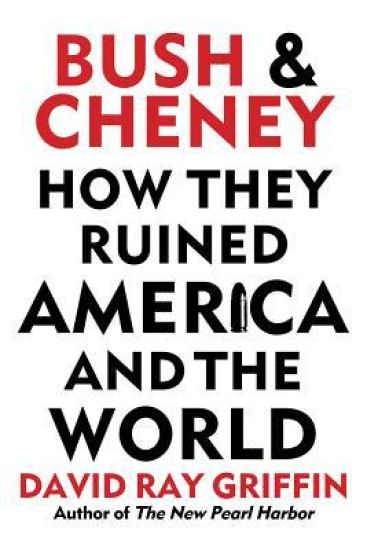
Bush and Cheney

Bush and Cheney

David Ray Griffin

Olive Branch Press
2016
nidottu
Was America’s response to the 9/11 attacks at the root of today’s instability and terror? The events of September 11, 2001, set off a chain of global crises and civil perils that have normalised a climate of fear and conflict. These include the disastrous effects of regime-change operations in Afghanistan, Iraq and Libya, the war on terror, the rise of ISIS, and the growing existential threats of ecological and nuclear holocaust. Looking back, it is clear that the story of 9/11 has been used to legitimise and manufacture support for disastrous policies. In Bush and Cheney, Griffin argues that ripple effects of 9/11 have become so destructive and dangerous that a national reckoning has become essential, in the words of William Rivers Pitt, to stop ‘the dominoes of September’ from continuing to fall.
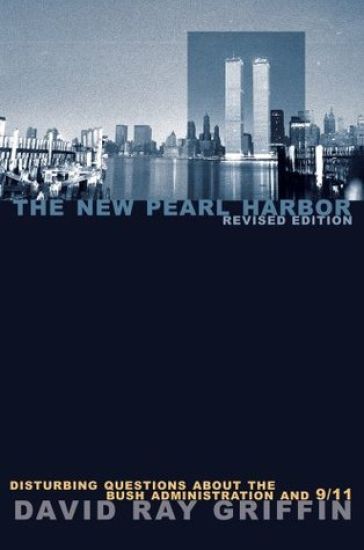
The New Pearl Harbor

The New Pearl Harbor

David Ray Griffin

INTERLINK PUBLISHING GROUP, INC
2020
nidottu
Disturbing questions about the Bush administrtion and 9/11. David Ray Griffin gathers stories from the mainstream press, reports from other countries, the work of researchers, and the contradictory words of members of the Bush administration themselves to present a case that there was official complicity in the attacks of 9/11.
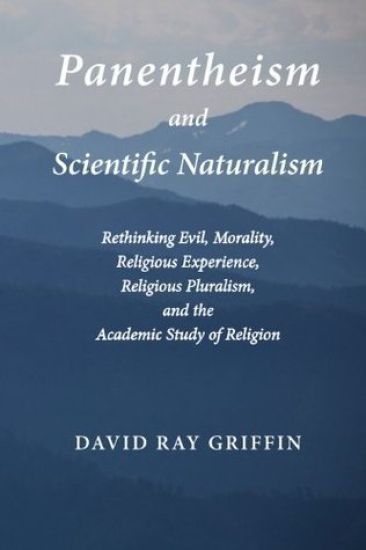
Panentheism and Scientific Naturalism: Rethinking Evil, Morality, Religious Experience, Religious Pluralism, and the Academic Study of Religion
Can scientific naturalism, according to which there are no interruptions of the normal cause-effect relations, be compatible with divine activity, religious experience, and moral realism? Leading process philosopher of religion David Ray Griffin argues that panentheism provides the conceptual framework to overcome the perennial conflicts between these views, with important implications for religious pluralism, the problem of evil, and the academic study of religion. Panentheism-God as the soul of the world-explains how theism can be fully natural while still portraying God as distinct from and more than the world. Griffin's Panentheism and Scientific Naturalism is an essential source for philosophers of religion and others seeking to reconcile faith with science and Christianity with other religions.
Protecting Our Common, Sacred Home: Pope Francis and Process Thought
As the world increasingly grapples with the consequences of global warming and its resulting climate changes, the urgency of the crisis has become inescapable, despite continuing corporate-led efforts at fomenting doubt and denial. Then in June 2015 there occurred a powerful intervention into the discussion by Pope Francis. His encyclical, Laudato Si' On the Care for Our Common Home, called for swift action on climate change. Almost simultaneously with the official publication of this encyclical, there was the biggest-ever conference of the movement known as process thought, based primarily on the philosophy of Alfred North Whitehead. This conference discussed various ways in which process thought could be helpful with respect to the global environmental crisis, especially climate change.In this book, David Ray Griffin undertakes to show why process thought--meaning process philosophy, theology, and social/economic thought--provides a natural and helpful context in which to expound and defend the ecological message in the pope's encyclical. In concise arguments, Griffin shows that the position of Whitehead-based process thought on climate change and related matters is remarkably similar to that of Pope Francis in the encyclical. This similarity is important for two reasons. First, as process thought and the pope's encyclical come out of very different traditions, the similarity allows each to add credibility to the other. Second, process thought, which embodies a long-standing type of philosophical theology that is consistent with today's best science and has been growing in influence, can be used to support dimensions of the pope's encyclical that might be rejected by secular minds.