
Kirjahaku
Etsi kirjoja tekijän nimen, kirjan nimen tai ISBN:n perusteella.
68 kirjaa tekijältä David Reisman
A survey of the political economy of James Buchanan seeking to explain his theories in detail and evaluate them in depth, covering topics such as the constitution and its failure, democracy, operational rules for the constitution and economics.

In 2013 an American Jewish family innocently visited Muslim Holy Sites in Jerusalem and accidentally fell into a long-standing local conflict. This is a story of how the Imam of Al Aqsa Mosque responded to an upset boy who could not understand why he could not see the Dome of the Rock. The words in this book are from 10-year old David. It is his view of a small, true story about confusion, conviction, hospitality, and humanity.
First published in 1986, 1987 and 1990, this three volume reissue covers the life and times of leading economic theorist, Alfred Marshall - one of the founders of neoclassical economics. David Reisman's incisive and comprehensive study divides Marshall's work into three key areas: economics, progress and politics, and moral principles. The author deals with everything from Marshall's magnum opus Principles of Economics through to his contribution to the progressive evolution in Victorian politics; and finally the way in which his background and upbringing influenced his highly moral approach to economic theory.
First published in 1986, The Economics of Alfred Marshall is concerned with the theories of demand, supply, market structure and income distribution which the celebrated author of the Principles of Economics developed while standing on the shoulders of giants. It is thus concerned with hidden assumptions, institutional constraints, tentative conclusions and blurred distinctions; for these are an integral part of the contribution of an economist who warned against spurious over-simplification of that which is inherently complex.The economics of Alfred Marshall appears easy when in fact it is fraught with difficulties. The Economics of Alfred Marshall seeks to explain Marshall’s theories in detail and to evaluate them in depth. The book attempts in that way to help the reader to gain a deeper understanding of an influential thinker whose insights, however difficult, continue to shed a great deal of light on the nature and workings of the economic system.
First published in 1987, Alfred Marshall: Progress and Politics provides an enlightening insight into Marshall's thoughts on social improvement, adaptive upgrading, policy and polity. He planned books on these subjects which he never subsequently wrote, but the thesis of this work is that a close study of such writings as Marshall did complete makes possible a very detailed reconstruction of the important contribution which Marshall was capable of making to Victorian evolutionary thought (much in the shadow of Darwin and Spencer). In the ongoing debate on the political element in political economy, he reveals himself to have been as much an eclectic as was Adam Smith and as much a man of commitment as was T. H. Green.
Alfred Marshall was anxious to do good. Intended by an Evangelical father for the vocation of clergyman, the author of the mould-shaping Principles of Economics remained to the end of his days a great preacher deeply committed to raising the tone of life. First published in 1990, Alfred Marshall’s Mission explains how this most moral of political economists sought to blend the downward sloping utility function of Jevons and Menger with the organic evolutionism of Darwin and Spencer, how this celebrated theorist of social alongside economic growth sought to combine the mathematical marginalism of Cournot. Thunen and Edgeworth with the ethical uplift of Green, Jowett and Toynbee. The conclusion reached is that perhaps Marshall was, after all, too anxious to do good. Far more economists, however, have been not anxious enough; and that in itself gives this study of Marshall’s life and times a present day relevance which would, no doubt, have appealed strongly to the shy Cambridge professor who is its subject.

First published in 1986, The Economics of Alfred Marshall is concerned with the theories of demand, supply, market structure and income distribution which the celebrated author of the Principles of Economics developed while standing on the shoulders of giants. It is thus concerned with hidden assumptions, institutional constraints, tentative conclusions and blurred distinctions; for these are an integral part of the contribution of an economist who warned against spurious over-simplification of that which is inherently complex.The economics of Alfred Marshall appears easy when in fact it is fraught with difficulties. The Economics of Alfred Marshall seeks to explain Marshall’s theories in detail and to evaluate them in depth. The book attempts in that way to help the reader to gain a deeper understanding of an influential thinker whose insights, however difficult, continue to shed a great deal of light on the nature and workings of the economic system.
First published in 1987, Alfred Marshall: Progress and Politics provides an enlightening insight into Marshall's thoughts on social improvement, adaptive upgrading, policy and polity. He planned books on these subjects which he never subsequently wrote, but the thesis of this work is that a close study of such writings as Marshall did complete makes possible a very detailed reconstruction of the important contribution which Marshall was capable of making to Victorian evolutionary thought (much in the shadow of Darwin and Spencer). In the ongoing debate on the political element in political economy, he reveals himself to have been as much an eclectic as was Adam Smith and as much a man of commitment as was T. H. Green.

Alfred Marshall was anxious to do good. Intended by an Evangelical father for the vocation of clergyman, the author of the mould-shaping Principles of Economics remained to the end of his days a great preacher deeply committed to raising the tone of life. First published in 1990, Alfred Marshall’s Mission explains how this most moral of political economists sought to blend the downward sloping utility function of Jevons and Menger with the organic evolutionism of Darwin and Spencer, how this celebrated theorist of social alongside economic growth sought to combine the mathematical marginalism of Cournot. Thunen and Edgeworth with the ethical uplift of Green, Jowett and Toynbee. The conclusion reached is that perhaps Marshall was, after all, too anxious to do good. Far more economists, however, have been not anxious enough; and that in itself gives this study of Marshall’s life and times a present day relevance which would, no doubt, have appealed strongly to the shy Cambridge professor who is its subject.
People live by ideas which help them to make sense of their experiences. Yet different people live by different ideas. Without an attempt to communicate and comprehend, they would at best be unable to share, at worst be obliged to fight. This book is concerned with communicating and comprehending. It takes the view that ideas matter and that a dialogue with alternative worldviews is a civilised exercise in tolerance. Economic Thought and Political Theory, concentrates on the ideas of Plato, Steuart, Mill, Schumpeter, Hayek, Buchanan, the Catholic social economists and the property-rights tradition. The focus is dual: the market and the State. As interdisciplinary as the modern mixed economy, as contemporary as the search for middle way, Economic Thought and Political Theory will be of interest to all thinkers determined to find a good balance between individuals' autonomy and governmental leadership.
In Being and Nothingness Sartre picks up diverging threads in the phenomenological tradition, weaves them together with ideas from Gestalt and behaviourist psychology, and asks: What is consciousness? What is its relationship to the body, to the external world, and to other minds? Sartre believes that the mind and its states are by-products of introspection, created in the act that purports to discover them. How does this happen? And how are we able to perceive ourselves as persons - physical objects with mental states? Sartre's Phenomenology reconstructs Sartre's answers to these crucial questions. On Sartre's view, consciousness originally apprehends itself in terms of what it is consciousness of, that is, as an activity of apprehending the world. David Reisman traces the path from this minimal form of self-consciousness to the perception of oneself as a full-blown person. Similar considerations apply to the perception of others. Reisman describes Sartre's account of the transition from one's original apprehension of another consciousness to the perception of other persons. An understanding of the various levels of self-apprehension and of the apprehension of others allows Reisman to penetrate the key ideas in Being and Nothingness, and to compare Sartre to analytic philosophers on fundamental questions in the philosophy of mind.
Thorstein Veblen was a multidisciplinary social scientist whose original insights continue to inspire debate. Rather than focusing on allocation, markets and scarcity, his perspective on economics was rather one of Darwinian evolution and perpetual development, unfolding conventions and interpersonal constraints. This interdisciplinary and comprehensive book determines that Veblen's disparate theories of conspicuous consumption, imperial Germany, the giant corporation and the speculation-led cycle all add up to a consistent and coherent world-view. Veblen was a fascinating author who deserves to be read for himself. This penetrating new interpretation demonstrates that he also identified a serious threat to property and peace in the form of irresponsible finance and frustrated workmanship. He believed corporate capitalism was at risk from its internal contradictions. This lucid book assesses the logic behind Veblen's stark and apocalyptic vision. The Social Economics of Thorstein Veblen examines all of Veblen's books and articles, revealing that they are closely integrated to form an organic whole. It will prove valuable for scholars and students interested in sociological theory, politics and political economy, history and institutional economics.
Politicized Economies illuminates the high tide of mercantilism in England and the entrenchment of controls in the French and Spanish economies between 1540 and 1640. Ekelund and Tollison subject mercantilist foreign trade to neoclassical-neoinstitutional analysis, examining the general economic organization of the mercantile companies and focusing on the economic inner workings of the East India Company. The authors probe for the origins of the modern corporation in the early joint stock companies of England and analyze the effects of regulatory forms on the business organizations that emerged to engage in foreign trade.
In his updated second edition, David Reisman examines the ideological and material underpinnings of the global mixed economy. Drawing upon current research in economics and international relations, Global Political Economy is an impartial and comprehensive analysis of the world order in an age of reappraisal and doubt.
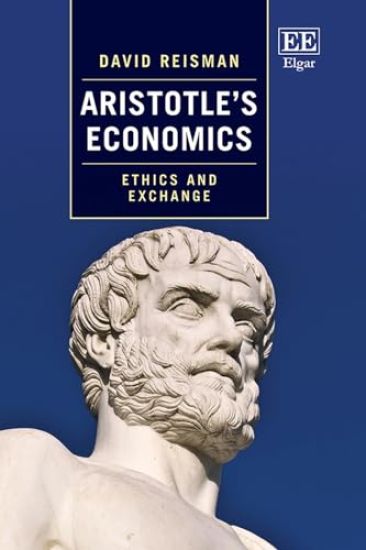
Aristotle’s Economics is a thoughtful and comprehensive account of Aristotle's intellectual system. Drawing upon all of his surviving writings, this book deftly illustrates how Aristotle considered economics to be just one of many areas which make up the social and political whole.David Reisman offers an in-depth and accessible analysis of Aristotle’s theories, adeptly comparing them to the work of his contemporaries. Adopting an interdisciplinary approach, this book demonstrates how Aristotle embedded his economics in a wider synthesis that extends from scientific method to ethics, law and the spectrum of constitutions. Aristotle’s economics cannot be separated from his ideas on the good society, the pragmatic state and the sensible guidance of far-sighted intellectuals. Aristotle’s Economics shows that Aristotle put morals before things. His lasting message was that material goods should only be seen as the means to a fruitful and varied life rather than as life’s end and goal.This thought-provoking study will be of interest to students, academics and researchers in economic thought and political economy. Aristotle linked his economics to political and social theory. This book will appeal to readers who believe that the answers to many of our present-day problems lie in the history of ideas and the work of Plato’s most distinguished disciple.
This insightful book sheds light on three competing ideological windows on the world: conservatism, liberalism and socialism. David Reisman explores the importance of these perspectives not only to generating public policy, but also in our capacity to explain the very nature of reality.Surveying the diversity of beliefs that govern and guide contemporary society, Reisman illustrates the pre-eminence of three all-encompassing meta-ideologies that capture heterogenous philosophies. The book traces the history of these meta-ideologies through key figures and moments in their development, illuminating the paradox at the heart of political beings: the conceptual wedding of independence and integration. Refusing a partisan perspective, Reisman argues in favour of a tolerant vision of society that promotes understanding as an avenue by which to achieve the peaceable coexistence of plurality and diversity. Offering a clear, intellectual and unbiased presentation of contemporary political philosophy, this book is crucial reading for researchers and students of social and political thought, particularly those focusing on ideology and the history of philosophy.
The texts in this collection demonstrate both the diversity and continuity in British theories of democratic socialism. The selection encompasses the Ricardian socialists, the Christian socialists, and the Fabian socialists.
The texts in this collection demonstrate both the diversity and continuity in British theories of democratic socialism. The selection encompasses the Ricardian socialists, the Christian socialists, and the Fabian socialists.
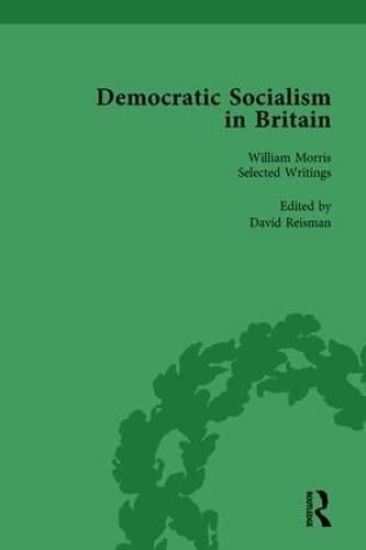
The texts in this collection demonstrate both the diversity and continuity in British theories of democratic socialism. The selection encompasses the Ricardian socialists, the Christian socialists, and the Fabian socialists.