Kirjojen hintavertailu. Mukana 11 699 474 kirjaa ja 12 kauppaa.

Kirjahaku

Etsi kirjoja tekijän nimen, kirjan nimen tai ISBN:n perusteella.

40 kirjaa tekijältä David Reynolds
Island Stories

Island Stories

David Reynolds

HARPERCOLLINS PUBLISHERS
2020
pokkari
â??Concise, elegant and lucid â?¦ A very useful primer on the delusions of an English mentalityâ?? Guardian What do we get wrong about Britainâ??s history and its place in the world?
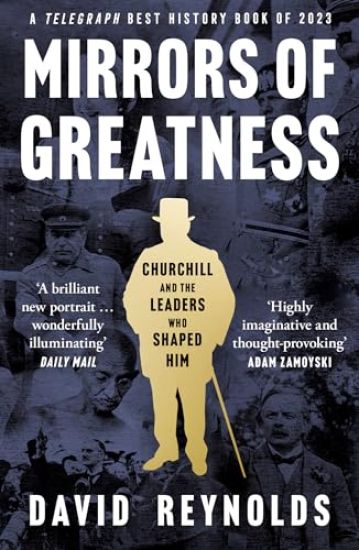
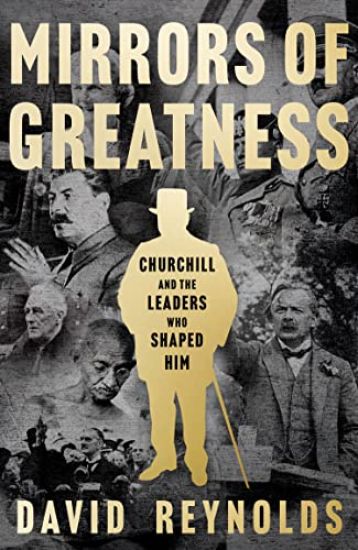
Mirrors of Greatness

Mirrors of Greatness

David Reynolds

HARPERCOLLINS PUBLISHERS
2023
sidottu
A TELEGRAPH BEST HISTORY BOOK OF 2023 ‘A highly imaginative and thought-provoking way of exploring the personality of a man who, like him or loathe him, left an indelible mark on our age’ ADAM ZAMOYSKI Winston Churchill followed his own star. He yearned to be ‘great’, to gain historical immortality. And he did so through deeds and words: his actions as a soldier and politician, gilded by his writings as a journalist and historian. But Churchill’s path to greatness was also defined by the leaders he encountered along the way – friends and foes, at home and abroad. Men of power such as Hitler and Mussolini, Roosevelt and Stalin, David Lloyd George, Neville Chamberlain and Charles de Gaulle. And the haunting presence of the adored father who had seen nothing of merit in his troublesome son. In these men Churchill discerned greatness, or its absence, in ways that influenced his own career. This book includes some whom Churchill would not have deemed ‘great’, but who – in our own day – offer alternative mirrors of what that word might mean. Mahatma Gandhi, who infuriated Churchill by exploiting the power of powerlessness. Clement Attlee, whose heretical vision of ‘Great Britain’ was socialist and post-imperial. And his darling Clementine, channelling her ‘pinko’ sentiments to become Winston’s essential helpmate and most devoted critic. Mirrors of Greatness offers vivid new perspectives on Churchill’s life and work, showing how this unique man – with dazzling gifts and jagged flaws – learned from his ‘great contemporaries’ and what they saw in him.
Mirrors of Greatness

Mirrors of Greatness

David Reynolds

HARPERCOLLINS PUBLISHERS
2024
nidottu
A TELEGRAPH BEST HISTORY BOOK OF 2023 ‘A highly imaginative and thought-provoking way of exploring the personality of a man who, like him or loathe him, left an indelible mark on our age’ ADAM ZAMOYSKI Winston Churchill followed his own star. He yearned to be ‘great’, to gain historical immortality. And he did so through deeds and words: his actions as a soldier and politician, gilded by his writings as a journalist and historian. But Churchill’s path to greatness was also defined by the leaders he encountered along the way – friends and foes, at home and abroad. Men of power such as Hitler and Mussolini, Roosevelt and Stalin, David Lloyd George, Neville Chamberlain and Charles de Gaulle. And the haunting presence of the adored father who had seen nothing of merit in his troublesome son. In these men Churchill discerned greatness, or its absence, in ways that influenced his own career. This book includes some whom Churchill would not have deemed ‘great’, but who – in our own day – offer alternative mirrors of what that word might mean. Mahatma Gandhi, who infuriated Churchill by exploiting the power of powerlessness. Clement Attlee, whose heretical vision of ‘Great Britain’ was socialist and post-imperial. And his darling Clementine, channelling her ‘pinko’ sentiments to become Winston’s essential helpmate and most devoted critic. Mirrors of Greatness offers vivid new perspectives on Churchill’s life and work, showing how this unique man – with dazzling gifts and jagged flaws – learned from his ‘great contemporaries’ and what they saw in him.
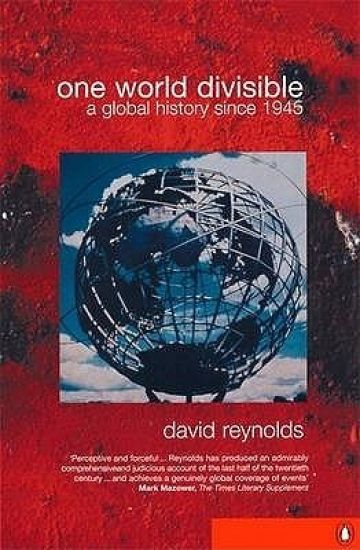
One World Divisible

One World Divisible

David Reynolds

Penguin Books Ltd
2001
pokkari
The second half of the twentieth century was dominated by the unfolding drama of the Cold War, from the Berlin blockade to the fall of the Berlin Wall. A booming global economy has had its sinister shadow in the apparently insoluble crises that havebeset much of the Third World. Above all, peace in the West has been offset by wars of unbelievable murderousness elsewhere. Reynolds' account is both an overview of the trends underlying this spectacular and awful variety, and an insight into the lives led in its midst.
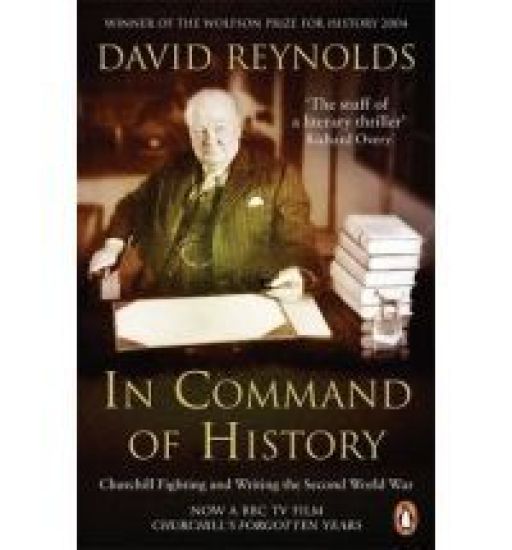
In Command of History

In Command of History

David Reynolds

Penguin Books Ltd
2005
pokkari
Churchill fought the war twice over - as Prime Minister and again as its premier historian. In 1948-54 he published six volumes of memoirs which secured his reputation and shaped our understanding of the conflict to this day. Using the drafts and correspondence for The Second World War, David Reynolds opens our eyes to Churchill the author and to the research 'syndicate' on whom he depended. We see how the memoirs were censored by Whitehall to conceal secrets such as the codebreakers at Bletchley Park, and how Churchill himself censored them to avoid offending current world leaders. This book forces us to reconsider much received wisdom about the war and illuminates an unjustly neglected period of his life - the Second Wilderness Years of 1945-51, when Churchill, now over seventy, wrote himself into history, politicked himself back into Downing Street and delivered some of the most important speeches of his career.
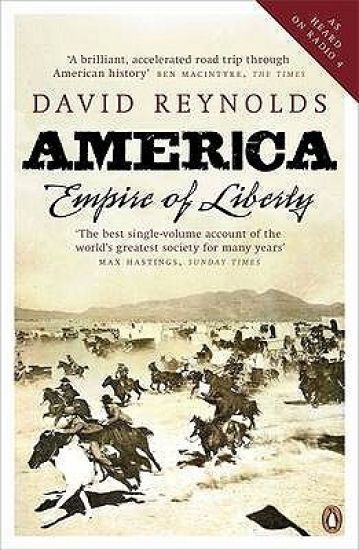
America, Empire of Liberty

America, Empire of Liberty

David Reynolds

Penguin Books Ltd
2010
pokkari
It was Thomas Jefferson who envisioned the United States as a great 'empire of liberty.' In the first new one-volume history in two decades, David Reynolds takes Jefferson's phrase as a key to the saga of America - helping unlock both its grandeur and its paradoxes. He examines how the anti-empire of 1776 became the greatest superpower the world has seen, how the country that offered liberty and opportunity on a scale unmatched in Europe nevertheless founded its prosperity on the labour of black slaves and the dispossession of the Native Americans. He explains how these tensions between empire and liberty have often been resolved by faith - both the evangelical Protestantism that has energized U.S. politics since the foundation of the nation and the larger faith in American righteousness that has impelled the country's expansion. Reynolds' account is driven by a compelling argument which illuminates our contemporary world.
From World War to Cold War

From World War to Cold War

David Reynolds

Oxford University Press
2007
nidottu
The 1940s was probably the most dramatic and decisive decade of the 20th century. This volume explores the Second World War and the origins of the Cold War from the vantage point of two of the great powers of that era, Britain and the USA, and of their wartime leaders, Churchill and Roosevelt. It also looks at their chequered relations with Stalin and at how the Grand Alliance crumbled into an undesired Cold War. But this is not simply a story of top-level diplomacy. David Reynolds explores the social and cultural implications of the wartime Anglo-American alliance, particularly the impact of nearly three million GIs on British life, and reflects more generally on the importance of cultural issues in the study of international history.This book persistently challenges popular stereotypes - for instance on Churchill in 1940 or his Iron Curtain speech. It probes cliches such as 'the special relationship' and even 'the Second World War'. And it offers new views of the familiar, such as the Fall of France in 1940 or Franklin Roosevelt as 'the wheelchair president'. Incisive and readable, written by a leading international historian, these essays encourage us to rethink our understanding of this momentous period in world history.
From World War to Cold War

From World War to Cold War

David Reynolds

Oxford University Press
2006
sidottu
The 1940s was probably the most dramatic and decisive decade of the 20th century. This volume explores the Second World War and the origins of the Cold War from the vantage point of two of the great powers of that era, Britain and the USA, and of their wartime leaders, Churchill and Roosevelt. It also looks at their chequered relations with Stalin and at how the Grand Alliance crumbled into an undesired Cold War. But this is not simply a story of top-level diplomacy. David Reynolds explores the social and cultural implications of the wartime Anglo-American alliance, particularly the impact of nearly three million GIs on British life, and reflects more generally on the importance of cultural issues in the study of international history. This book persistently challenges popular stereotypes - for instance on Churchill in 1940 or his Iron Curtain speech. It probes cliches such as 'the special relationship' and even 'the Second World War'. And it offers new views of the familiar, such as the Fall of France in 1940 or Franklin Roosevelt as 'the wheelchair president'. Incisive and readable, written by a leading international historian, these essays encourage us to rethink our understanding of this momentous period in world history.
School Effectiveness

School Effectiveness

David Reynolds

Continuum International Publishing Group Ltd.
1992
nidottu
This volume reviews the reseach in the field of school effectiveness and improvement. Many key questions are examined, such as different methods for assessing school effectiveness and variations in examination attainment in schools. It draws together the funding of the programmes of improvement being implemented in schools and provides practical discussion of effective school practice and its direct implications in schools. It is aimed at teachers, student teachers, administrators and advisors. The contributors are: Bill Badger, Louise S. Balkey, Bert P.M. Creemers, Carol T. Fitz-Gibbon, Anthony F. Heath, Daniel V. Levine, Peter Mortimore, Joseph Murphy.
One World Divisible

One World Divisible

David Reynolds

W. W. Norton Company
2001
nidottu
Global change has accelerated at an unprecedented pace in the last half-century. The trajectory of change points in different directions, with the world growing at once more interconnected and more fragmented. Commerce and migrations, television and the World Wide Web suggest a story of growing interconnection, while at the same time the proliferation of nation-states and the divisions rooted in religion, race, and material inequality tell of separation and conflict. David Reynolds's brilliant history captures both themes and grounds them vividly in the people and events of the last fifty years. Reynolds captures the great political events: the Cold War, the Chinese revolution, independence movements, Vietnam, and the fall of the Soviet Union, and broader developments: economic and population growth, the spread of cities, vast technological change, genetic manipulation, and the creation of a digital world. Carefully avoiding an encyclopedic approach, Reynolds integrates these themes into a narrative with authority, vision, and style. A volume in the Global Century series, books by outstanding scholars on the history of the world in the twentieth century--general editor, Paul Kennedy.
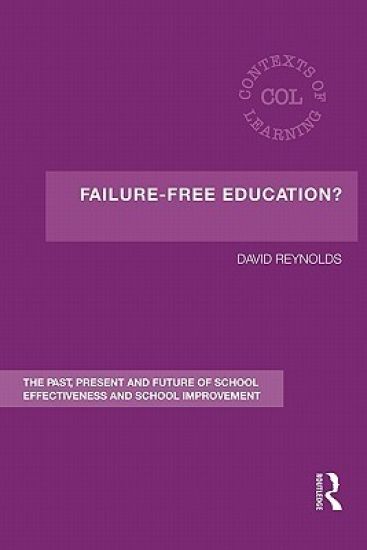
Failure-Free Education?

Failure-Free Education?

David Reynolds

Routledge
2010
sidottu
David Reynolds is recognised internationally as one of the leaders of the school effectiveness and school improvement movement, and Failure Free Education? brings together for the first time many of his most influential and provocative pieces. Drawing on the author’s work from over three decades, these extracts from his seminal books, chapters, papers and articles combine to give a unique overview of how the movement developed, the problems involved in the application of the knowledge and the disciplines’ potentially glittering future now.The book also covers the issues raised by, and lessons learned from, his close involvement with English government educational policymaking from the mid 1990s to date.This book is essential reading for those who seek to understand how we can make every school a good school, and what the obstacles may be to achieving that goal.
Failure-Free Education?

Failure-Free Education?

David Reynolds

Routledge
2011
nidottu
David Reynolds is recognised internationally as one of the leaders of the school effectiveness and school improvement movement, and Failure Free Education? brings together for the first time many of his most influential and provocative pieces. Drawing on the author’s work from over three decades, these extracts from his seminal books, chapters, papers and articles combine to give a unique overview of how the movement developed, the problems involved in the application of the knowledge and the disciplines’ potentially glittering future now.The book also covers the issues raised by, and lessons learned from, his close involvement with English government educational policymaking from the mid 1990s to date.This book is essential reading for those who seek to understand how we can make every school a good school, and what the obstacles may be to achieving that goal.
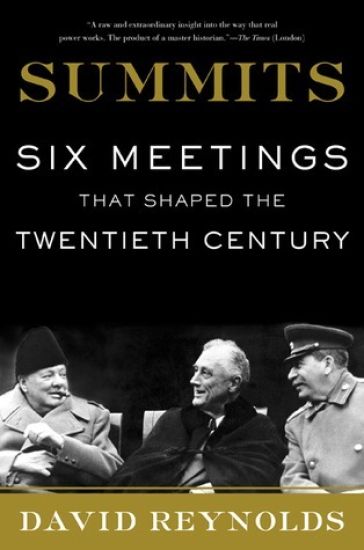
Summits

Summits

David Reynolds

Basic Books
2009
nidottu
The Cold War dominated world history for nearly half a century, locking two superpowers in a global rivalry that only ended with the Soviet collapse. The most decisive moments of twentieth-century diplomacy occurred when world leaders met face to face--from the mishandled summit in Munich, 1938, which brought on the Second World War, to Ronald Reagan's remarkable chemistry with Mikhail Gorbachev at Geneva in 1985. In Summits, eminent diplomatic historian David Reynolds takes us alongside the statesmen who stood, if only briefly, on top of the world, offering valuable lessons as we find ourselves confronting once again a war without end.
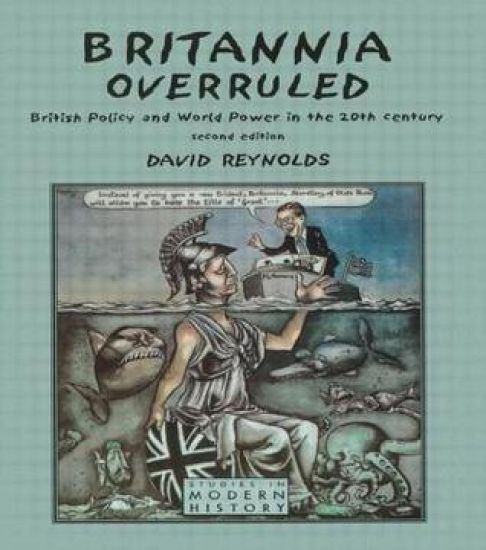
Britannia Overruled

Britannia Overruled

David Reynolds

Routledge
2000
nidottu
This book brings together the often separated histories of diplomacy, defence, economics and empire in a provocative reinterpretation of British 'decline'. It also offers a broader reflection on the nature of international power and the mechanisms of policymaking. For this Second Edition, David Reynolds has added a new chapters and extends his lively and incisive analysis to the beginning of the new millennium.
School Effectiveness, School Improvement

School Effectiveness, School Improvement

David Reynolds

Continuum International Publishing Group Ltd.
2004
nidottu
The pressure on schools to improve and to raise achievement continues to be a dominant issue in both school and government policies. School Effectiveness and School Improvement seeks to develop the debate further, providing academics and practitioners alike with • a summary and discussion of research on school effectiveness and school improvement up to the present;• new perspectives on these fields, developed from other traditions of thinking and research;• a consideration of the role of organization theory;• an integrated view of these current perspectives; and• clear, practical implications for policy and practice.