

Kirjahaku
Etsi kirjoja tekijän nimen, kirjan nimen tai ISBN:n perusteella.
112 kirjaa tekijältä David Roberts


The Life of David Roberts: Compiled from His Journals and Other Sources (1866)
David Roberts
Literary Licensing, LLC
2014
nidottu

From the Nile to the Jordan. Monuments of the Exodus of the Israelites. Illustrated by ... Views After D. Roberts.
David Roberts
British Library, Historical Print Editions
2011
pokkari
Title: From the Nile to the Jordan. Monuments of the Exodus of the Israelites. Illustrated by ... views after D. Roberts.Publisher: British Library, Historical Print EditionsThe British Library is the national library of the United Kingdom. It is one of the world's largest research libraries holding over 150 million items in all known languages and formats: books, journals, newspapers, sound recordings, patents, maps, stamps, prints and much more. Its collections include around 14 million books, along with substantial additional collections of manuscripts and historical items dating back as far as 300 BC.The HISTORY OF TRAVEL collection includes books from the British Library digitised by Microsoft. This collection contains personal narratives, travel guides and documentary accounts by Victorian travelers, male and female. Also included are pamphlets, travel guides, and personal narratives of trips to and around the Americas, the Indies, Europe, Africa and the Middle East. ++++The below data was compiled from various identification fields in the bibliographic record of this title. This data is provided as an additional tool in helping to insure edition identification: ++++ British Library Anonymous; Roberts, David; 1873. 4 . 10076.ee.21.

The Last of His Kind: The Life and Adventures of Bradford Washburn, America's Boldest Mountaineer
David Roberts
William Morrow Company
2010
nidottu
"Stunning and stirring."--Boston Globe In The Last of His Kind, renowned adventure writer David Roberts gives readers a spellbinding history of mountain climbing in the twentieth century as told through the biography of Brad Washburn, legendary mountaineering pioneer and photographer. Jon Krakauer, author of Into Thin Air, has praised David Roberts, saying, "Nobody alive writes better about mountaineering"--and nowhere is that truth more evident than in this breathtaking account of the life and exploits of America's greatest mountain climber.

Jean Stafford burst on the literary scene in 1944, when, at the age of twenty-nine, she published her bestselling novel, Boston Adventure. Three years later, Life magazine hailed her as the "most brilliant of the new fiction writers." Bafflingly, for the rest of her life, Stafford would struggle--and fail--to capitalize on that early promise. David Roberts' compelling biography examines Stafford's disastrous marriages, including her first marriage to the volatile poet Robert Lowell, which culminated for her in a lengthy stay in a psychiatric hospital. Beautiful and gifted, Stafford squandered her health as well as her talent, ending her life embittered and alone.

This book explores the demise of the grand narrative of European modernity. That once commanding narrative located the meaning of the past in the present and the meaning of the present in an ever-receding future. Today, instead, the present defines both the past and the future. The ‘contemporary’ has replaced ‘modern’ and ‘post-modern’ self-understandings. The times of the past and the future have been transformed into versions of ‘now’ while the present has acquired its own history. History of the Present describes the emergence of this ‘contemporary’ historical consciousness across a wide spectrum of cultural phenomena ranging from historiography to heritage and museum studies, and from the globalization of the novel to the rise of science fiction. The culture of the ‘contemporary’ appears particularly clearly in the merging of high and low culture along with art and fashion. This book will appeal to scholars of sociology, cultural and social theory, museum and heritage studies, and literary history and criticism.

This book explores the demise of the grand narrative of European modernity. That once commanding narrative located the meaning of the past in the present and the meaning of the present in an ever-receding future. Today, instead, the present defines both the past and the future. The ‘contemporary’ has replaced ‘modern’ and ‘post-modern’ self-understandings. The times of the past and the future have been transformed into versions of ‘now’ while the present has acquired its own history. History of the Present describes the emergence of this ‘contemporary’ historical consciousness across a wide spectrum of cultural phenomena ranging from historiography to heritage and museum studies, and from the globalization of the novel to the rise of science fiction. The culture of the ‘contemporary’ appears particularly clearly in the merging of high and low culture along with art and fashion. This book will appeal to scholars of sociology, cultural and social theory, museum and heritage studies, and literary history and criticism.

On January 17, 1913, alone and near starvation, Douglas Mawson, leader of the Australasian Antarctic Expedition, was hauling a sledge to get back to base camp. The dogs were gone. Now Mawson himself plunged through a snow bridge, dangling over an abyss by the sledge harness. A line of poetry gave him the will to haul himself back to the surface. Mawson was sometimes reduced to crawling, and one night he discovered that the soles of his feet had completely detached from the flesh beneath. On February 8, when he staggered back to base, his features unrecognizably skeletal, the first teammate to reach him blurted out, "Which one are you?" This thrilling and almost unbelievable account establishes Mawson in his rightful place as one of the greatest polar explorers and expedition leaders. It is illustrated by a trove of Frank Hurley's famous Antarctic photographs, many never before published in the United States.
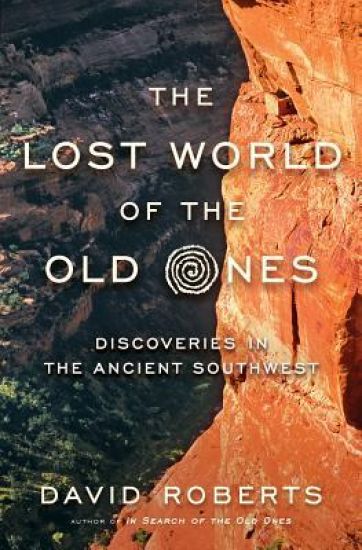
For more than 5,000 years the Ancestral Puebloans—Native Americans who flourished long before the first contact with Europeans—occupied the Four Corners region of the southwestern United States. Just before AD 1300, they abandoned their homeland in a migration that remains one of prehistory's greatest puzzles. Northern and southern neighbors of the Ancestral Puebloans, the Fremont and Mogollon likewise flourished for millennia before migrating or disappearing. Fortunately, the Old Ones, as some of their present-day descendants call them, left behind awe-inspiring ruins, dazzling rock art, and sophisticated artifacts ranging from painted pots to woven baskets. Some of their sites and relics had been seen by no one during the 700 years before David Roberts and his companions rediscovered them. In The Lost World of the Old Ones, Roberts continues the hunt for answers begun in his classic book, In Search of the Old Ones. His new findings paint a different, fuller portrait of these enigmatic ancients—thanks to the breakthroughs of recent archaeologists. Roberts also recounts his last twenty years of far-flung exploits in the backcountry with the verve of a seasoned travel writer. His adventures range across Utah, Arizona, New Mexico, and southwestern Colorado, illuminating the mysteries of the Old Ones as well as of the more recent Navajo and Comanche. Roberts calls on his climbing and exploratory expertise to reach remote sanctuaries of the ancients hidden within nearly vertical cliffs, many of which are unknown to archaeologists and park rangers. This ongoing quest combines the shock of new discovery with a deeply felt connection to the landscape, and it will change the way readers experience, and imagine, the American Southwest.

On January 17, 1913, alone and near starvation, Douglas Mawson, leader of the Australasian Antarctic Expedition, was hauling a sledge to get back to base camp. The dogs were gone. Now Mawson himself plunged through a snow bridge, dangling over an abyss by the sledge harness. A line of poetry gave him the will to haul himself back to the surface. Mawson was sometimes reduced to crawling, and one night he discovered that the soles of his feet had completely detached from the flesh beneath. On February 8, when he staggered back to base, his features unrecognizably skeletal, the first teammate to reach him blurted out, "Which one are you?" This thrilling and almost unbelievable account establishes Mawson in his rightful place as one of the greatest polar explorers and expedition leaders. It is illustrated by a trove of Frank Hurley’s famous Antarctic photographs, many never before published in the United States.

In this thrilling story of intellectual and archaeological discovery, David Roberts recounts his last twenty years of far-flung exploits in search of spectacular prehistoric ruins and rock art panels known to very few modern travelers. His adventures range across Utah, Arizona, New Mexico, and southwestern Colorado, and illuminate the mysteries of the Ancestral Puebloans and their contemporary neighbors the Mogollon and Fremont, as well as of the more recent Navajo and Comanche.

In a book that is part memoir and part history, David Roberts looks back at his personal relationship to extreme risk and tries to make sense of why so many have committed their lives to the desperate pursuit of adventure. In the wake of his diagnosis with throat cancer, Roberts seeks the answer with sharp new urgency. He explores his own lifelong commitment to adventuring, as well as the cultural contributions of explorers throughout history. He looks at what it meant in 1911 for Amundsen to reach the South Pole or in 1953 for Hillary and Norgay to summit the highest point on earth. And he asks what the future of adventure is in a world we have mapped and trodden all the way to the most remote corners of the wilderness.
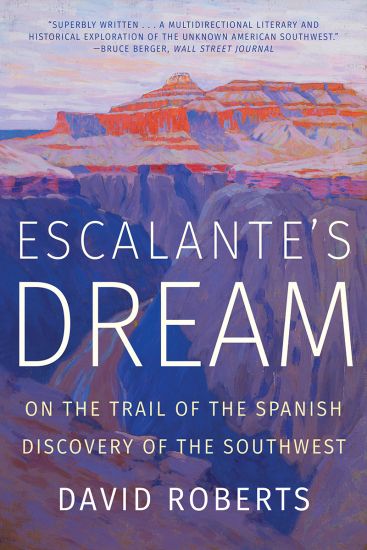
In July 1776, Franciscan friars Francisco Atanasio Domínguez and Silvestre Vélez de Escalante set out from Santa Fe to blaze a pathway to the new Spanish missions in California, across the huge expanse of what would become the American Southwest. In October, in western Utah, ravaged by hunger and cold, the twelve-man team had to turn back. Stymied by the raging Colorado River, killing their horses for food, the men saw an exploring expedition transformed into a fight for survival. In this chronicle of adventure and history, David Roberts retraces the Spaniards’ forgotten route, using Escalante’s diary as his guide. Blending personal narrative with critical analysis, Roberts relives the glories, catastrophes, and courage of this desperate journey.

In late July 1776, fathers Francisco Atanasio Domínguez and Francisco Vélez de Escalante set out from Santa Fe to chart a route to the new Spanish missions in California. The Fransiscans planned to scout the country for mineral wealth and locate the Ute and Navajo tribes for conversion. In present-day Utah, however, the dangers of starvation and hypothermia forced them to turn back. By November the friars were reduced to survival mode: stymied by the raging Colorado River, they had to kill their horses for food. In this adventure-history, David Roberts travels the Spaniards’ forgotten route, using Escalante’s first-person report as his guide. Blending personal and historical narrative, he relives the glories, catastrophes and courage of this desperate journey.
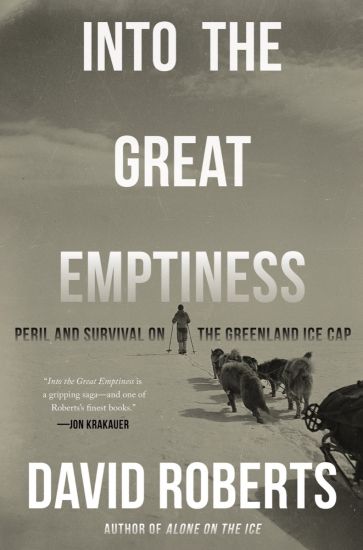
By 1930, no place in the world was less well explored than Greenland. The native Inuit had occupied the relatively accessible west coast for centuries. The east coast, however, was another story. In August 1930, Henry George Watkins (nicknamed Gino), a 23-year-old explorer, led thirteen scientists and explorers on an ambitious journey to the east coast of Greenland and its vast and forbidding interior. Their mission: chart and survey the region and establish a permanent meteorological base 8,000 feet high on the ice cap. That plan turned into an epic survival ordeal when August Courtauld, manning the station solo through the winter, became entombed by drifting snow. David Roberts, “veteran mountain climber and chronicler of adventures” (Washington Post), draws on firsthand accounts and rich archival materials to tell the story of this daring expedition and of the ingenious young explorer at its helm.

By developing a long-term supranational perspective, this ambitious, multi-faceted work provides a new understanding of ‘totalitarianism’, the troubling common element linking Soviet communism, Italian fascism and German Nazism. The book’s original analysis of antecedent ideas on the subject sheds light on the common origins and practices of the regimes.Through this fresh appreciation of their initial frame of mind, Roberts demonstrates how the three political experiments yielded unprecedented collective mobilization but also a characteristic combination of radicalization, myth-making, and failure. Providing deep historical analysis, the book proves that 'totalitarianism' best characterizes the common features in the originating aspirations, the mode of action and even the outcomes of Soviet communism, Italian fascism and German Nazism.By enhancing our knowledge of what ‘totalitarianism’ was and where it came from, Roberts affords important lessons about the ongoing challenges, possibilities, and dangers of the modern political experiment.

By developing a long-term supranational perspective, this ambitious, multi-faceted work provides a new understanding of ‘totalitarianism’, the troubling common element linking Soviet communism, Italian fascism and German Nazism. The book’s original analysis of antecedent ideas on the subject sheds light on the common origins and practices of the regimes.Through this fresh appreciation of their initial frame of mind, Roberts demonstrates how the three political experiments yielded unprecedented collective mobilization but also a characteristic combination of radicalization, myth-making, and failure. Providing deep historical analysis, the book proves that 'totalitarianism' best characterizes the common features in the originating aspirations, the mode of action and even the outcomes of Soviet communism, Italian fascism and German Nazism.By enhancing our knowledge of what ‘totalitarianism’ was and where it came from, Roberts affords important lessons about the ongoing challenges, possibilities, and dangers of the modern political experiment.

This book examines the limits to cosmopolitan liberal peacebuilding caused by its preoccupation with the values and assumptions of neoliberal global governance. The peace people experience is determined by the processes privileged in peacebuilding. This book is about four things that shape the processes involved. First, it is a critique of orthodox postconflict peacebuilding. It takes the position that the present approach, although seemingly hegemonic, is routinely ignored or manipulated by elites and society and converted into a miasma that to some degree wastes the energies and opportunities involved. Second, it is about alternatives which invoke the kind of peace people might seek in postconflict places if they had more control over the process of peacebuilding, a notion referred to here as ‘popular peace’. It is thus not the kind of critical work that some describe as ‘reflexive anti-liberalism’. Rather, it seeks alternatives that are grounded in the lives of people in postconflict spaces and which also reflect some of the essential values of Liberalism. Third, it is about the role of both informal and formal actors, institutions and practices in the creation of such a peace. For instance, it is concerned with the legitimacy of informal practices that lie beyond Liberal tolerance and which are vital in the pursuit of everyday peace. Fourth, it is about a ‘transversal’ (rather than vertical or hierarchical) relationship of global and local governance in securing a peace that reflects the needs and values of both. In short, this work is a response to the substantial inconsistencies that appear between peacebuilding rhetoric and everyday outcomes in postconflict places.This book will be of much interest to students of peacebuilding, post-conflict statebuilding, conflict studies, global governance and International Relations in general.

This book examines the limits to cosmopolitan liberal peacebuilding caused by its preoccupation with the values and assumptions of neoliberal global governance. The peace people experience is determined by the processes privileged in peacebuilding. This book is about four things that shape the processes involved. First, it is a critique of orthodox postconflict peacebuilding. It takes the position that the present approach, although seemingly hegemonic, is routinely ignored or manipulated by elites and society and converted into a miasma that to some degree wastes the energies and opportunities involved. Second, it is about alternatives which invoke the kind of peace people might seek in postconflict places if they had more control over the process of peacebuilding, a notion referred to here as ‘popular peace’. It is thus not the kind of critical work that some describe as ‘reflexive anti-liberalism’. Rather, it seeks alternatives that are grounded in the lives of people in postconflict spaces and which also reflect some of the essential values of Liberalism. Third, it is about the role of both informal and formal actors, institutions and practices in the creation of such a peace. For instance, it is concerned with the legitimacy of informal practices that lie beyond Liberal tolerance and which are vital in the pursuit of everyday peace. Fourth, it is about a ‘transversal’ (rather than vertical or hierarchical) relationship of global and local governance in securing a peace that reflects the needs and values of both. In short, this work is a response to the substantial inconsistencies that appear between peacebuilding rhetoric and everyday outcomes in postconflict places.This book will be of much interest to students of peacebuilding, post-conflict statebuilding, conflict studies, global governance and International Relations in general.