Kirjahaku
Etsi kirjoja tekijän nimen, kirjan nimen tai ISBN:n perusteella.
18 kirjaa tekijältä David Roche
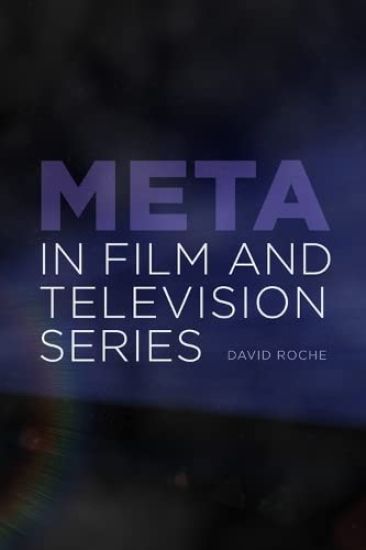
"That's so meta!" The emergence of the prefix-turned-adjective "meta" to describe media productions is, no doubt, symptomatic of an increasingly media-savvy audience; it has also drawn attention to the lack of scholarship on meta-phenomena in film and television studies. Meta in Film and Television Series aims to make up for this. Meta is defined as an intense form of reflexivity, that is characterized by its aboutness; meta-phenomena are not just an arsenal of devices but suppose an interpretive act and an active audience. Meta creates a framework with which to interrogate a work's relationship to its production, reception, medium, forms, and the world, and to explore its potentials and limitations. Meta supports the intuition latent in the popular usage that meta-phenomena are deeply entangled, while demonstrating that analysis stills requires such concepts to make sense of them.
"That's so meta! The emergence of the prefix-turned-adjective meta to describe media productions is, no doubt, symptomatic of an increasingly media-savvy audience; it has also drawn attention to the lack of scholarship on meta-phenomena in film and television studies. Meta in Film and Television Series aims to make up for this. Meta is defined as an intense form of reflexivity, that is characterized by its aboutness; meta-phenomena are not just an arsenal of devices but suppose an interpretive act and an active audience. Meta creates a framework with which to interrogate a work's relationship to its production, reception, medium, forms, and the world, and to explore its potentials and limitations. Meta supports the intuition latent in the popular usage that meta-phenomena are deeply entangled, while demonstrating that analysis stills requires such concepts to make sense of them.
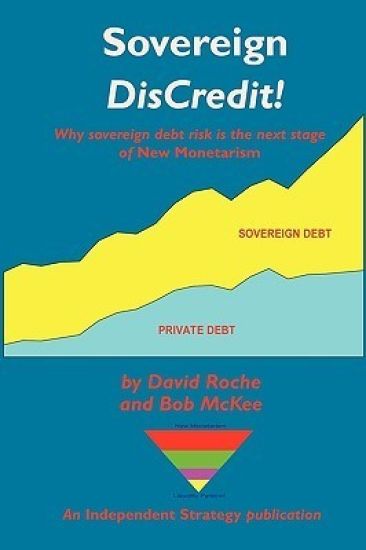
We've had the credit crunch and afterwards a deep economic recession. Now get ready for a sovereign debt crisis after the biggest rise in government debt globally since world war two.
In the year 2058, Victor Kingsley is thrust into a world of temporal espionage, armed with the extraordinary gift of time travel bestowed upon him by the mysterious Guardians. Tasked with a daring mission, he becomes the guiding force behind Britain's new clandestine agency, The Shadow Directorate, committed to preventing the imminent apocalypse threatening Earth's existence in the year 2086. Prepare for an epic odyssey spanning centuries, from the pivotal signing of the Magna Carta in 1215 to the lavish streets of 1913 Vienna, and onward to a future ravaged by the relentless onslaught of climate upheaval. Alongside his remarkable comrades, Victor hurtles through time, racing against the clock to thwart the malevolent exploitation of advanced technology poised to unravel the very essence of our world. With twists lurking around every corner and pulse-pounding action at every turn, The Shadow Directorate promises an exhilarating voyage that will grip you from start to finish. Will the shadows of time engulf us all, or can Victor and his allies rewrite destiny before it's too late?
"The being had no destination in mind, no purpose other than the primal urge to seek out sustenance and sustenance alone. And as it rode the cosmic waves, it felt an irresistible pull, a beckoning from a nearby source, promising nourishment and entertainment beyond its wildest dreams. It did not know where this call originated, only that it was too tantalising to resist. And so it rode on, drawn ever closer to the source of this irresistible siren song." Though a work of fiction, 'Disdain' firmly roots its narrative in reality, drawing from authentic settings. The chilling account of the horrors at Bergen-Belsen is etched into the very fabric of this tale. This novel skilfully melds elements of science fiction, horror, and historical events, crafting a narrative focused on a malevolent entity. At its heart, it explores the lives of the British Army stationed in 1980s Germany and the courageous individuals who bravely stood up to face the looming danger.
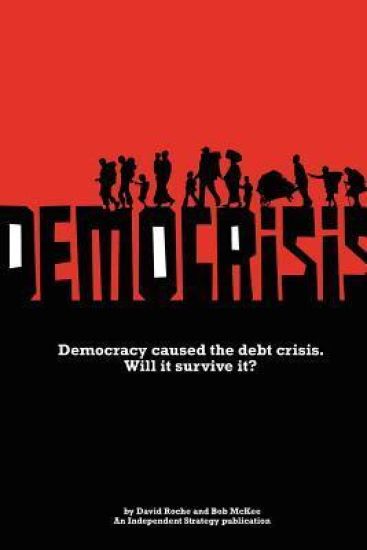
Democracy caused the debt crisis. Will it survive it? The question is whether new global leaders will stimulate the democratic model
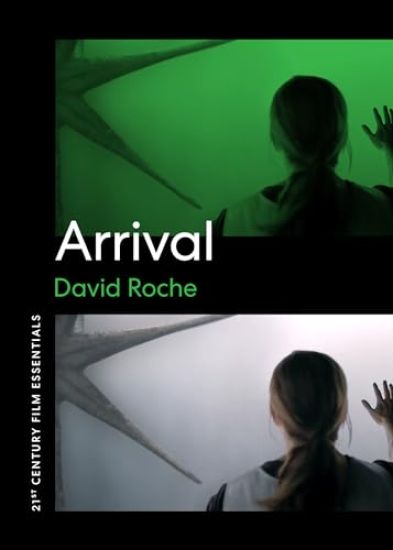
A study of Denis Villeneuve’s genre-transcendent film. In Denis Villeneuve’s Arrival (2016), scientists must decipher the language of and peacefully communicate with aliens who have landed on Earth before the world’s military attacks. In this first book-length study of the film, scholar David Roche argues that it is one of the most important films of this century, and the most brilliant science fiction film since Blade Runner. Roche posits Arrival as a blockbuster with artistic ambitions-an argument supported by the film’s several Academy Award nominations-and looks closely at how the film engages with theoretical questions posed by contemporary film studies and philosophy alike. Each section explores a central aspect of the film: its status as an auteur adaptation; its relation to the science fiction genre; its themes of communication on narrative and meta-narrative levels; its aesthetics of time and space; and the political and ethical questions it raises. Ultimately, Roche declares Arrival a unique, multifaceted experience in the world of hard science fiction films, placing it in context with works like 2001: A Space Odyssey, Close Encounters of the Third Kind, and Contact while also examining how it bridges the gap between genre and art house cinema.
A study of Denis Villeneuve’s genre-transcendent film. In Denis Villeneuve’s Arrival (2016), scientists must decipher the language of and peacefully communicate with aliens who have landed on Earth before the world’s military attacks. In this first book-length study of the film, scholar David Roche argues that it is one of the most important films of this century, and the most brilliant science fiction film since Blade Runner. Roche posits Arrival as a blockbuster with artistic ambitions-an argument supported by the film’s several Academy Award nominations-and looks closely at how the film engages with theoretical questions posed by contemporary film studies and philosophy alike. Each section explores a central aspect of the film: its status as an auteur adaptation; its relation to the science fiction genre; its themes of communication on narrative and meta-narrative levels; its aesthetics of time and space; and the political and ethical questions it raises. Ultimately, Roche declares Arrival a unique, multifaceted experience in the world of hard science fiction films, placing it in context with works like 2001: A Space Odyssey, Close Encounters of the Third Kind, and Contact while also examining how it bridges the gap between genre and art house cinema.
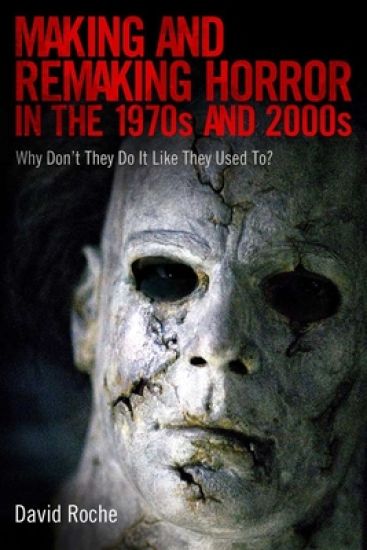
Making and Remaking Horror in the 1970s and 2000s
David Roche
University Press of Mississippi
2015
nidottu
In Making and Remaking Horror in the 1970s and 2000s author David Roche takes up the assumption shared by many fans and scholars that original horror movies are more ""disturbing,"" and thus better than the remakes. He assesses the qualities of movies, old and recast, according to criteria that include subtext, originality, and cohesion. With a methodology that combines a formalist and cultural studies approach, Roche sifts aspects of the American horror movie that have been widely addressed (class, the patriarchal family, gender, and the opposition between terror and horror) and those that have been somewhat neglected (race, the Gothic, style, and verisimilitude). Containing seventy-eight black and white illustrations, the book is grounded in a close comparative analysis of the politics and aesthetics of four of the most significant independent American horror movies of the 1970s--The Texas Chain Saw Massacre, The Hills Have Eyes, Dawn of the Dead, and Halloween--and their twenty-first-century remakes. To what extent can the politics of these films be described as ""disturbing"" insomuch as they promote subversive subtexts that undermine essentialist perspectives? Do the politics of the film lie on the surface or are they wedded to the film's aesthetics? Early in the book, Roche explores historical contexts, aspects of identity (race, ethnicity, and class), and the structuring role played by the motif of the American nuclear family. He then asks to what extent these films disrupt genre expectations and attempt to provoke emotions of dread, terror, and horror through their representations of the monstrous and the formal strategies employed? In this inquiry, he examines definitions of the genre and its metafictional nature. Roche ends with a meditation on the extent to which the technical limitations of the horror films of the 1970s actually contribute to this ""disturbing"" quality. Moving far beyond the genre itself, Making and Remaking Horror studies the redux as a form of adaptation and enables a more complete discussion of the evolution of horror in contemporary American cinema.
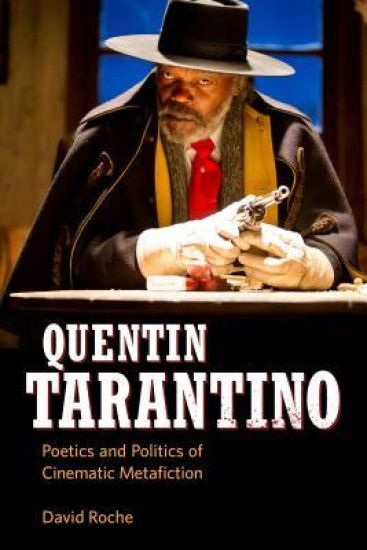
Quentin Tarantino's films beg to be considered metafiction: metacommentaries that engage with the history of cultural representations and exalt the aesthetic, ethical, and political potential of creation as re-re-creation and resignification. Covering all eight of Quentin Tarantino's films according to certain themes, David Roche combines cultural studies and neoformalist approaches to highlight how closely the films' poetics and politics are intertwined. Each in-depth chapter focuses on a salient feature, some which have drawn much attention (history, race, gender, violence), others less so (narrative structure, style, music, theatricality).Roche sets Tarantino's films firmly in the legacy of Howard Hawks, Jean-Luc Godard, Sergio Leone, and the New Hollywood, revising the image of a cool pop-culture purveyor that the American director cultivated at the beginning of his career. Roche emphasizes the breadth and depth of his films' engagement with culture, highbrow and lowbrow, screen and print, American, East Asian, and European.
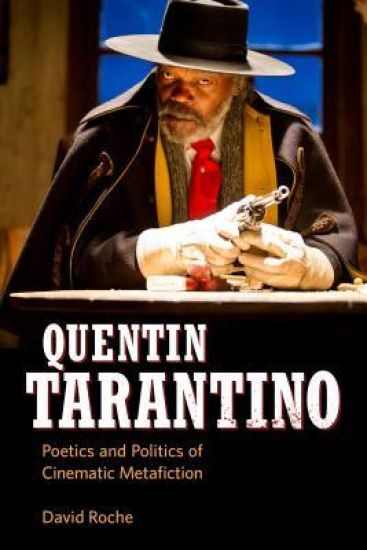
Quentin Tarantino's films beg to be considered metafiction: metacommentaries that engage with the history of cultural representations and exalt the aesthetic, ethical, and political potential of creation as re-re-creation and resignification. Covering all eight of Quentin Tarantino's films according to certain themes, David Roche combines cultural studies and neoformalist approaches to highlight how closely the films' poetics and politics are intertwined. Each in-depth chapter focuses on a salient feature, some which have drawn much attention (history, race, gender, violence), others less so (narrative structure, style, music, theatricality).Roche sets Tarantino's films firmly in the legacy of Howard Hawks, Jean-Luc Godard, Sergio Leone, and the New Hollywood, revising the image of a cool pop-culture purveyor that the American director cultivated at the beginning of his career. Roche emphasizes the breadth and depth of his films' engagement with culture, highbrow and lowbrow, screen and print, American, East Asian, and European.
Making and Remaking Horror in the 1970s and 2000s
David Roche
University Press of Mississippi
2014
sidottu
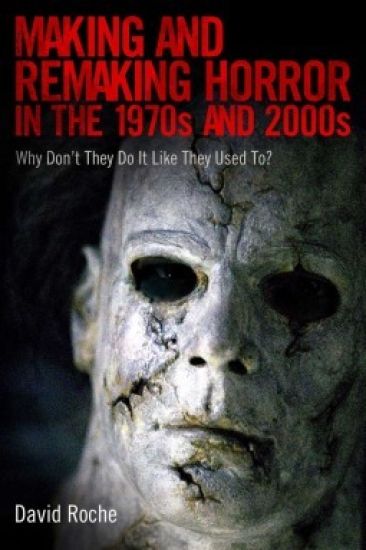
In Making and Remaking Horror in the 1970s and 2000s author David Roche takes up the assumption shared by many fans and scholars that original horror movies are more ""disturbing,"" and thus better than the remakes. He assesses the qualities of movies, old and recast, according to criteria that include subtext, originality, and cohesion. With a methodology that combines a formalist and cultural studies approach, Roche sifts aspects of the American horror movie that have been widely addressed (class, the patriarchal family, gender, and the opposition between terror and horror) and those that have been somewhat neglected (race, the Gothic, style, and verisimilitude). Containing seventy-eight black and white illustrations, the book is grounded in a close comparative analysis of the politics and aesthetics of four of the most significant independent American horror movies of the 1970s--The Texas Chain Saw Massacre, The Hills Have Eyes, Dawn of the Dead, and Halloween--and their twenty-first-century remakes. To what extent can the politics of these films be described as ""disturbing"" insomuch as they promote subversive subtexts that undermine essentialist perspectives? Do the politics of the film lie on the surface or are they wedded to the film's aesthetics? Early in the book, Roche explores historical contexts, aspects of identity (race, ethnicity, and class), and the structuring role played by the motif of the American nuclear family. He then asks to what extent these films disrupt genre expectations and attempt to provoke emotions of dread, terror, and horror through their representations of the monstrous and the formal strategies employed? In this inquiry, he examines definitions of the genre and its metafictional nature. Roche ends with a meditation on the extent to which the technical limitations of the horror films of the 1970s actually contribute to this ""disturbing"" quality. Moving far beyond the genre itself, Making and Remaking Horror studies the redux as a form of adaptation and enables a more complete discussion of the evolution of horror in contemporary American cinema.
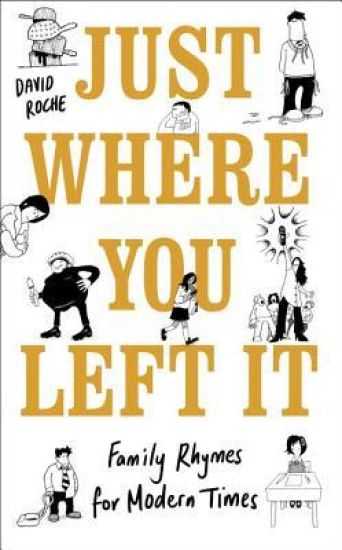
Just Where You Left It... and other Poems is a collection of humorous poetry about how to survive school, parents and everything else that's unfair in life. From David Roche come these simple and charming rhymes designed to make parents and children alike fall in love with poetry again... or maybe for the first time. It all started with a poem about the agony of poetry recitation, written by David for his son.In fact, all of these poems were written for his three sons, touching on everything they might encounter growing up: exams, school meals, bullying, sports days, embarrassing Dads and nagging and know-it-all Mums were fair game. These are poems for parents, poems for children and poems for parents to read to their children, offering a witty and charming take on life for every stage of growing up. If you grew up in a world of Ogden Nash and Shel Silverstein, then this is the book for you.