Kirjojen hintavertailu. Mukana 11 244 527 kirjaa ja 12 kauppaa.

Kirjahaku

Etsi kirjoja tekijän nimen, kirjan nimen tai ISBN:n perusteella.

4 kirjaa tekijältä David Roediger

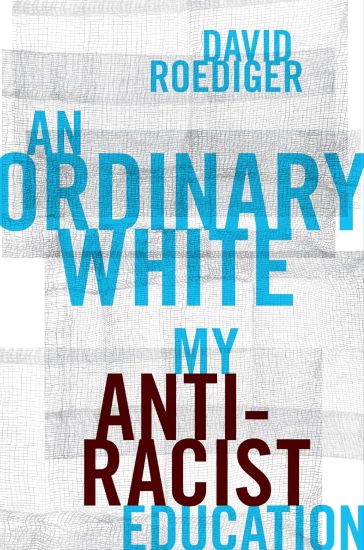
An Ordinary White

An Ordinary White

David Roediger

FORDHAM UNIVERSITY PRESS
2025
sidottu
A prize-winning historian details his intellectual and political evolution Written by the author of the landmark book The Wages of Whiteness and one of the key figures in the critical study of race and racism in America, An Ordinary White is the life story of the historian and radical American writer, David Roediger. With wry wit and keen observation, Roediger chronicles his intellectual and political evolution from growing up in his southern Midwest sundown town to becoming a leading figure in working-class history and Whiteness studies. A latecomer to the New Left, a longtime figure in the Chicago Surrealist Group, and part of the collective reviving of the Charles Kerr Company—the world's oldest socialist publisher—Roediger captures events and characters absent from standard histories of the left as well as such icons of resistance as Studs Terkel, Noel Ignatiev, Angela Davis, Toni Morrison, and C. L. R. James. A direct response to the venom, effectiveness, and durability of white nationalist attacks on Critical Race Theory, this memoir describes Roediger's youth as "ordinary," both in its unfolding in a lower-middle-class family of southern Illinois workers and in the depth of white racism he was taught. He considers himself "saved" by social movements of his time, including those of labor, against empire, and, above all, the Black Freedom struggle. Public education, dissenting currents in Catholicism, knowledge of the importance of good union jobs, and generative impulses in sports and music helped make his salvation stick. Roediger's knowledge of white advantage came from his personal everyday experiences, but among people ordinary enough to guard against the mistaken notion that poor and working-class whites are uniquely the culprits of white nationalism. Importantly he argues against the characterization of them as intractably racist or incapable of understanding the advantages of whiteness. A teacher in state universities for forty years, Roediger has tirelessly fought against their being hollowed out by corporate values and austerity. In An Ordinary White, he writes movingly of these experiences and what we have lost in our institutions whose soaring rhetoric outstrips any ability to defend education or racial justice.
Working Toward Whiteness

Working Toward Whiteness

David Roediger

Basic Books
2018
pokkari
David R. Roediger has been in the vanguard of the study of race and labor in American history for decades. He first came to prominence as the author of The Wages of Whiteness, a classic study of racism in the development of a white working class in nineteenth-century America. In Working Toward Whiteness, Roediger continues that history into the twentieth century. He recounts how ethnic groups considered white today-including Jewish-, Italian-, and Polish-Americans-were once viewed as undesirables by the WASP establishment in the United States. They eventually became part of white America, through the nascent labor movement, New Deal reforms, and a rise in home-buying. Once assimilated as fully white, many of them adopted the racism of those whites who formerly looked down on them as inferior. From ethnic slurs to racially restrictive covenants-the real estate agreements that ensured all-white neighborhoods-Roediger explores the mechanisms by which immigrants came to enjoy the privileges of being white in America. A disturbing, necessary, masterful history, Working Toward Whiteness uses the past to illuminate the present. In an Introduction to the 2018 edition, Roediger considers the resonance of the book in the age of Trump, showing how Working Toward Whiteness remains as relevant as ever even though most migrants today are not from Europe.
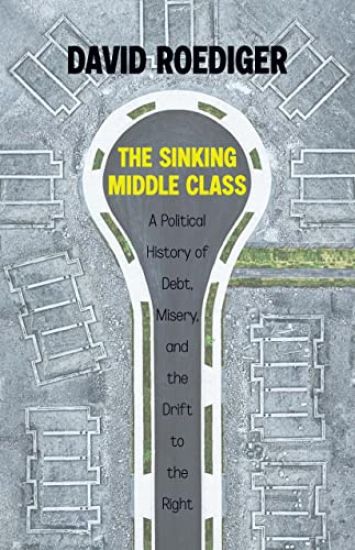
Sinking Middle Class

Sinking Middle Class

David Roediger

Haymarket Books
2022
pokkari
The Sinking Middle Class challenges the “save the middle class” rhetoric that dominates our political imagination. The slogan misleads us regarding class, nation, and race. Talk of middle class salvation reinforces myths holding that the US is a providentially middle class nation. Implicitly white, the middle class becomes viewed as unheard amidst supposed concerns for racial justice and for the poor. Roediger shows how little the US has been a middle class nation. The term seldom appeared in US writing before 1900. Many white Americans were self-employed, but this social experience separated them from the contemporary middle class of today, overwhelmingly employed and surveilled. Today’s highly unequal US hardly qualifies as sustaining the middle class. The idea of the US as a middle class place required nurturing. Those doing that ideological work—from the business press, to pollsters, to intellectuals celebrating the results of free enterprise—gained little traction until the Depression and Cold War expanded the middle class brand. Much later, the book’s sections on liberal strategist Stanley Greenberg detail, “saving the middle class” entered presidential politics. Both parties soon defined the middle class to include over 90% of the population, precluding intelligent attention to the poor and the very rich. Resurrecting radical historical critiques of the middle class, Roediger argues that middle class identities have so long been shaped by debt, anxiety about falling, and having to sell one’s personality at work that misery defines a middle class existence as much as fulfillment.
Sinking Middle Class

Sinking Middle Class

David Roediger

Haymarket Books
2022
sidottu
The Sinking Middle Class challenges the “save the middle class” rhetoric that dominates our political imagination. The slogan misleads us regarding class, nation, and race. Talk of middle class salvation reinforces myths holding that the US is a providentially middle class nation. Implicitly white, the middle class becomes viewed as unheard amidst supposed concerns for racial justice and for the poor. Roediger shows how little the US has been a middle class nation. The term seldom appeared in US writing before 1900. Many white Americans were self-employed, but this social experience separated them from the contemporary middle class of today, overwhelmingly employed and surveilled.Today’s highly unequal US hardly qualifies as sustaining the middle class. The idea of the US as a middle class place required nurturing. Those doing that ideological work—from the business press, to pollsters, to intellectuals celebrating the results of free enterprise—gained little traction until the Depression and Cold War expanded the middle class brand.Much later, the book’s sections on liberal strategist Stanley Greenberg detail, “saving the middle class” entered presidential politics. Both parties soon defined the middle class to include over 90% of the population, precluding intelligent attention to the poor and the very rich. Resurrecting radical historical critiques of the middle class, Roediger argues that middle class identities have so long been shaped by debt, anxiety about falling, and having to sell one’s personality at work that misery defines a middle class existence as much as fulfillment.