Kirjojen hintavertailu. Mukana 11 699 587 kirjaa ja 12 kauppaa.

Kirjahaku

Etsi kirjoja tekijän nimen, kirjan nimen tai ISBN:n perusteella.

42 kirjaa tekijältä David Rogers

You Were Never Here: Brevet First Lieutenant David A. Hocroft, U.S. Army, Company A, 4th Artillery Regiment, December 1880-September 1884-B
The main fictional character, Lolotea, is based on Lozen, a historical Chihenne Chiricahua Apache skilled warrior and prophet, and younger sister of Victorio. Lozen and Lolotea team together using Lozen's documented mental ability to locate the enemy, the U.S. and Mexican Armies, destroying their homeland and cultures. Lolotea uses her incredible cunning in strategy, ruthless bravery, and fluency in English, French, Spanish and Apache with an acquired skill of Morse Code to act as an interpreter and scout for the U.S. Army while a secret agent for Geronimo and the rebellious Chiricahua. A chance encounter with Sergeant David A. Howcroft, an artillery battery commander changes her life, as well as his, forever as they become entangled in a tragic love story caught in the conflicting web of Native Americans protecting their families, property and customs against the "noble" directive of a young nation, "Manifest Destiny". The reader will experience historical battles that have been verified on the ground with descriptive clarity bringing surrealism to the years the Chiricahua evaded capture. Historical characters and events are juxtaposed with fictional ones in an intriguing manner that is graphically poignant and though provoking.
The Digital Transformation Playbook

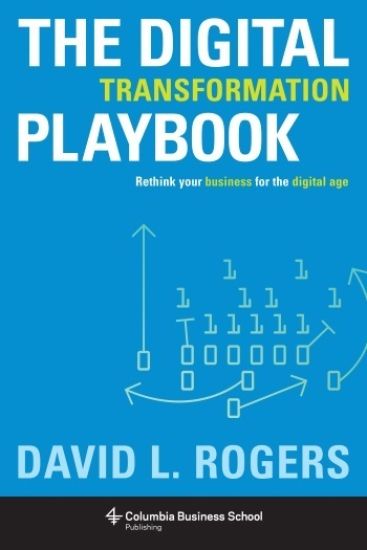
The Digital Transformation Playbook

David Rogers

Columbia University Press
2016
sidottu
Rethink your business for the digital age. Every business begun before the Internet now faces the same challenge: How to transform to compete in a digital economy? Globally recognized digital expert David L. Rogers argues that digital transformation is not about updating your technology but about upgrading your strategic thinking. Based on Rogers's decade of research and teaching at Columbia Business School, and his consulting for businesses around the world, The Digital Transformation Playbook shows how pre-digital-era companies can reinvigorate their game plans and capture the new opportunities of the digital world. Rogers shows why traditional businesses need to rethink their underlying assumptions in five domains of strategy-customers, competition, data, innovation, and value. He reveals how to harness customer networks, platforms, big data, rapid experimentation, and disruptive business models-and how to integrate these into your existing business and organization. Rogers illustrates every strategy in this playbook with real-world case studies, from Google to GE, from Airbnb to the New York Times. With practical frameworks and nine step-by-step planning tools, he distills the lessons of today's greatest digital innovators and makes them usable for businesses at any stage. Many books offer advice for digital start-ups, but The Digital Transformation Playbook is the first complete treatment of how legacy businesses can transform to thrive in the digital age. It is an indispensable guide for executives looking to take their firms to the next stage of profitable growth.
The Digital Transformation Roadmap

The Digital Transformation Roadmap

David Rogers

Columbia University Press
2023
sidottu
Shortlist, 2024 Best in Business Book Awards, Society for Advancing Business Editing and WritingToday, every business is talking about digital transformation. With the acceleration of new technologies, every organization knows it must adapt to survive. But by their own admission, 70 percent of businesses are failing to transform. Across industries, established companies are held back by bureaucracy, inertia, and old ways of working. How can businesses break through to drive real change?The Digital Transformation Roadmap provides every leader with the answer. Acclaimed author and C-suite advisor David L. Rogers argues that businesses must transform not just products and business models—they must transform the organization itself. Based on two decades of research and advising companies around the world, Rogers identifies the five biggest barriers to digital transformation: vision, priorities, experimentation, governance, and capabilities. He then shows how any business can evolve by heeding the lessons of companies such as Disney, Walmart, Mastercard, Air Liquide, and the New York Times Company.The Digital Transformation Roadmap provides a practical blueprint for organizational change, illustrated with real-world case studies and step-by-step planning tools. Rogers shows every leader how to think beyond the churn of new technologies and rebuild their organization for a world of constant change.
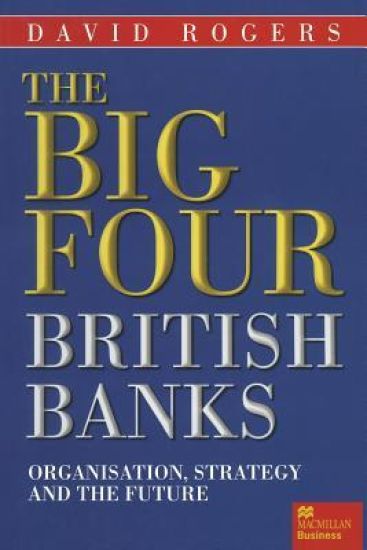
The Big Four British Banks

The Big Four British Banks

David Rogers

Palgrave Macmillan
1999
sidottu
This book is a cutting-edge exploration of the UK commercial banking industry, as reflected primarily in the experience of the four main clearing banks: Barclays, Lloyds, Midland and NatWest. What will the industry look like in the future? What strategies, cultures and organisational forms will distinguish the survivors from the non-survivors? Will the dominant form be the highly diversified, global, financial supermarket, the so-called universal bank, the more focused niche player, both, or some other type? To answer these questions, David Rogers draws upon very high level access to the leading players in this evolving industry.
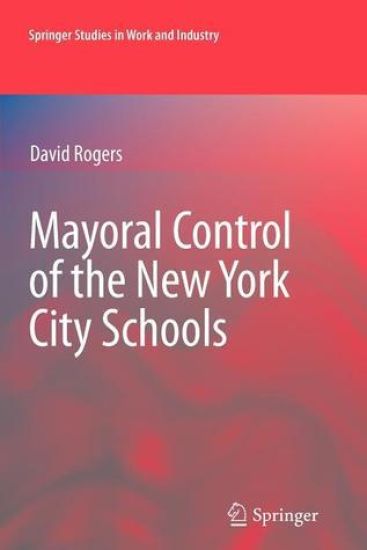
Mayoral Control of the New York City Schools

Mayoral Control of the New York City Schools

David Rogers

Springer-Verlag New York Inc.
2008
sidottu
This is a book about the ambitious reform strategy known as mayoral control ini- ated to transform the dysfunctional system of urban education in the United States. I use the term dysfunctional to refer to the inability of urban school districts over the past 50 years to reduce the learning gap between poor students and their middle class peers, despite a host of reform efforts including desegregation, compensatory programs, and decentralization. Since the mid-1990s, the idea of mayoral control has generated considerable interest. Several large cities have introduced it such as Boston, Chicago, Cleveland, Detroit, Baltimore, and Washington (Henig and Rich 2004; Wong et al. 2007). Although the latter have completed a quantitative study of mayoral control’s impact on student performance in over 100 cities, a case study of the New York experience nevertheless illuminates the capacity of this tool for transforming urban education. Because of the size of the NYC system – roughly 1.2 million students – and its economic, social, and ethnic diversity, it faces the myriad problems of urban edu- tion writ large that impede efforts to implement change in these schools.
110 Livingston Street

110 Livingston Street

David Rogers

Eliot Werner Publications Inc
2006
nidottu
David Rogers uses competing sociological models of mass society to analyze the New York City school system, which he describes as a “sick bureaucracy.” In his new prologue, the author discusses the divisive school decentralization crisis of the late 1960s and early 1970s as well as efforts by subsequent mayors to reform the system, including recent changes implemented by the Bloomberg administration. Originally published by Random House in 1968.
Medicate Them Into Submission
A Collection of Song Lyrics by David Rogers "The following lyrics are not so much proper poetry as words to music. They are mostly from personal experiences both awake and asleep. Also ideas from books and films seen. People and places are mostly fictional but not always. Any plagiarized line is unintentional."
Mobile Security: A Guide for Users
Mobile device security is something that affects nearly every person in the world. Users are still however, crying out for good information on what they should do to prevent theft, protect their smartphone from attack and for advice that they can use practically to help themselves. This short book sets out to address that. Originally written as a whitepaper for the Police in the UK, it gives some of the history of mobile security and explains the efforts that have gone on behind the scenes in the mobile industry to help secure users. It also provides guidance for users to help protect themselves. The technology in mobile phones is constantly evolving and new threats and attacks emerge on a daily basis. Educating users is one of the most important and valuable things that can be done to help prevent harm. The author brings his extensive experience of the mobile industry and security development for devices to this book in order to help make users safer and more secure.
The Big Four British Banks

The Big Four British Banks

David Rogers

Palgrave Macmillan
1999
nidottu
This book is a cutting-edge exploration of the UK commercial banking industry, as reflected primarily in the experience of the four main clearing banks: Barclays, Lloyds, Midland and NatWest. What will the industry look like in the future? What strategies, cultures and organisational forms will distinguish the survivors from the non-survivors? Will the dominant form be the highly diversified, global, financial supermarket, the so-called universal bank, the more focused niche player, both, or some other type? To answer these questions, David Rogers draws upon very high level access to the leading players in this evolving industry.
The Crystals Of Astradan

The Crystals Of Astradan

David Rogers

Lulu.com
2008
pokkari
THE CRYSTALS OF ASTRADAN is the first book in the LUCY MCTAVISH ADVENTURES series. Twelve year old schoolgirl Lucy McTavish leads a normal life until she goes to sleep at night, and awakes in the Kingdom of Astradan. Lucy must help her friends prevent Astradan from being plunged into a dark ice age that no man or animal could survive. The stakes are high and only bravery and courage can save the day
The Future of Lean Sigma Thinking in a Changing Business Environment
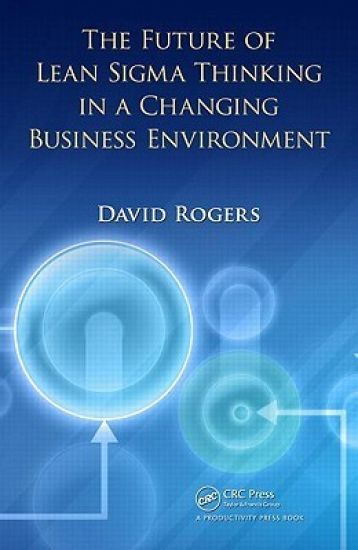
Of the 100 companies named to Fortune magazine’s list of the world’s largest companies in 1956, only 29 of those companies remain on that list. Many lost their way because they failed to recognize the changes taking place, or were too big to react quickly enough to shifting market conditions. Supplying Lean practitioners with a formal process for keeping up with technological advancements and shifting business requirements, The Future of Lean Sigma Thinking in a Changing Business Environment provides the tools to survive and prosper through the current business environment. It introduces cutting-edge business solutions from the fields of chemical engineering, aircraft production, and business psychology, and explains how to integrate these concepts with proven Lean principles. The book begins by providing a foundation in essential Lean concepts, including Deming and Juran, Six Sigma, Total Quality Management, the Toyota Production System, and New Six Sigma. Next, it reports on the latest advances in process understanding. By analyzing changing attitudes within the system, it illustrates how new products are being developed using updated Lean thinking. In addition, it provides examples that demonstrate the impact of e-commerce on Lean production systems. Incorporating the green agenda to Lean thinking, the text supplies the insight to safely navigate your company through a shifting business landscape while reducing your impact on raw materials and the environment. By following the principles discussed in this book, you will not only increase your company’s chances of achieving long-term survival but will position your organization to capitalize on the economic upturn on the horizon.
Mayoral Control of the New York City Schools

Mayoral Control of the New York City Schools

David Rogers

Springer-Verlag New York Inc.
2010
nidottu
This is a book about the ambitious reform strategy known as mayoral control ini- ated to transform the dysfunctional system of urban education in the United States. I use the term dysfunctional to refer to the inability of urban school districts over the past 50 years to reduce the learning gap between poor students and their middle class peers, despite a host of reform efforts including desegregation, compensatory programs, and decentralization. Since the mid-1990s, the idea of mayoral control has generated considerable interest. Several large cities have introduced it such as Boston, Chicago, Cleveland, Detroit, Baltimore, and Washington (Henig and Rich 2004; Wong et al. 2007). Although the latter have completed a quantitative study of mayoral control’s impact on student performance in over 100 cities, a case study of the New York experience nevertheless illuminates the capacity of this tool for transforming urban education. Because of the size of the NYC system – roughly 1.2 million students – and its economic, social, and ethnic diversity, it faces the myriad problems of urban edu- tion writ large that impede efforts to implement change in these schools.