Kirjojen hintavertailu. Mukana 12 390 323 kirjaa ja 12 kauppaa.

Kirjahaku

Etsi kirjoja tekijän nimen, kirjan nimen tai ISBN:n perusteella.

35 kirjaa tekijältä David Rosenberg

Israel

Israel

David Rosenberg

Palgrave Macmillan
2017
sidottu
Under very adverse conditions, Israel has become one of the world's leading knowledge economies. At a time when high technology, science, energy conservation, and medical research have become the hottest economic sector, these very things have emerged as the country's leading industry. Thus Israel's economy is uniquely based purely on technology and innovation. But the phenomenon has created two problems. The first is the sustainability of the model and the second is the social costs it has entailed in the form of income inequality and poverty. This book examines the rise of the country's knowledge economy and its consequences using macroeconomic data, interviews with industry players, academic studies, and media reports.
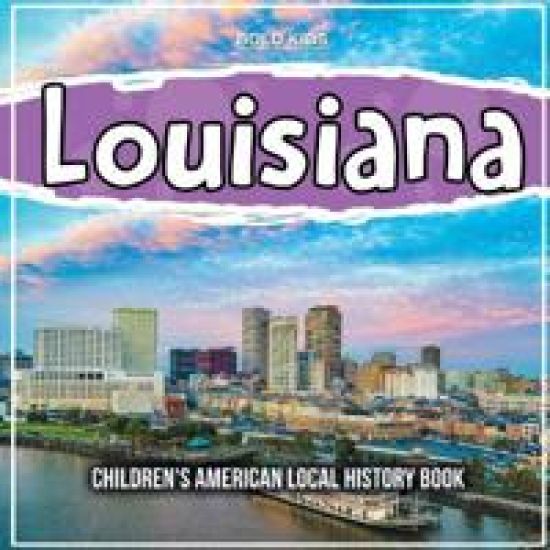
Louisiana

Louisiana

David Rosenberg

Bold Kids
2022
pokkari
You may be wondering where to go in Louisiana. This book will give you some Louisiana Facts you may not know. In addition to the beautiful scenery, this state is home to some of the best restaurants in the United States. Discover some of the city's most popular restaurants and discover what makes them unique. Learn more about New Orleans and its history. You may be surprised to learn that there are several other interesting cities and landmarks in Louisiana. Listed below are some of the best. Before the Civil War, Louisiana was mostly under Confederate control, but the Union quickly reclaimed it. The defeat of the Confederacy in the Civil War led to the end of slavery in the state. However, the large numbers of Blacks who had fled Louisiana soon began to fight discrimination. In fact, the first law promoting equality between races was passed in Louisiana in 1964. Louisiana Facts about race and ethnicity include the number of Native American tribes and the state's ties to the United States. This southern state is located in the southeastern part of the US and is bordered by Texas, Mississippi, and Arkansas. The state is divided into two main regions: the Mississippi River flood plain and the coastal plain of the Gulf of Mexico. The state is also the only one of the United States that is governed by the Napoleonic Code. Before European settlement, the Caddo and Choctow were native Americans. In the 1600s, French explorer La Salle descended the Mississippi River and claimed the entire basin of the river for France.
Venus

Venus

David Rosenberg

Bold Kids
2022
pokkari
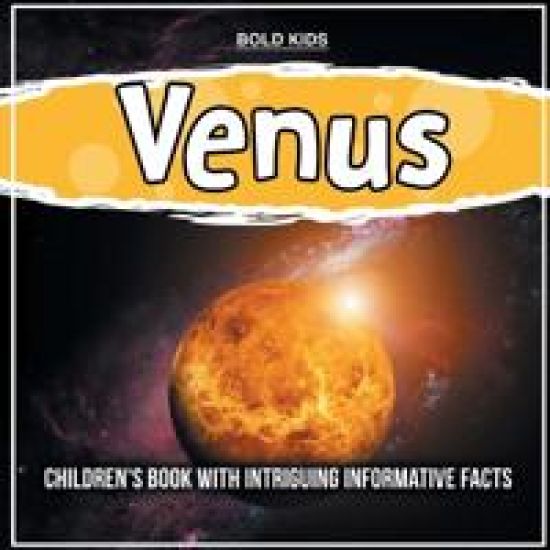
What do you know about Venus? Venus is the second planet from the Sun. It was named for the Roman goddess of love. It is the brightest natural object in Earth's night sky. In addition, Venus is so bright that it can cast shadows. In daylight, you can also see Venus with the naked eye. So, you may already be familiar with Venus. But, if you're new to the world of space, here are some Venus Facts you might not know. It has several times as many volcanoes as Earth does. In fact, Venus has more than 1,000 known volcanic structures. While most of these have long been extinct, some scientists believe Venus is still volcanically active. Listed below are some other interesting facts about Venus. But don't be fooled by its beautiful surface. It's far from being as pretty as you'd imagine. So, get out there and explore these facts In addition to its long year, Venus has a very slow rotation. It takes Venus 243 days to complete one trip around the Sun. Venus spins on its axis very slowly. It is the slowest planet in our solar system. Its speed is only 4.05 miles per hour, or 6.52 kilometers per second. By comparison, Earth spins at a rate of 1,040.4 miles per second. So, while Venus may be slow, we still have some fascinating facts about the planet.
Praying with the Heart of the Church: Lectionary-Based Lectio Divina
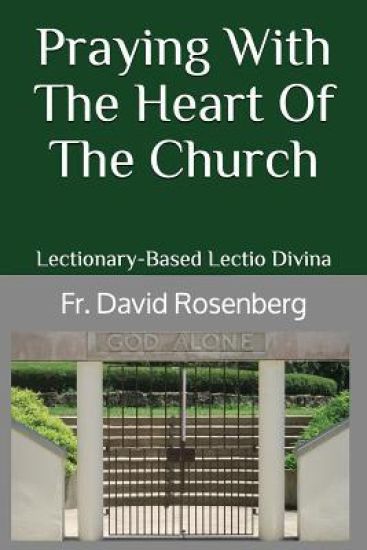
With the Practice of Lectio Divina we seek to deepen our interpersonal relationship with God through reflection, prayer and contemplation. We are called regularly to an "experience of desert" to seek silence and solitude, as our Desert Fathers did in the Early Church. It is here that we come to recognize more clearly and truly who God is, who we are, who others are, what the world is, and the reality of grace versus evil. We try to clarify God's view of us - creatures with such a special destiny. We come to more perfectly view ourselves as persons made in the image of God. Through this discovery, we come to appreciate the extent to which the likeness has been lost, but can be recovered in Jesus Christ. We are ultimately called to respond in action to what has been gained through our practice of Lectio Divina.
An Educated Man

An Educated Man

David Rosenberg

Counterpoint
2010
sidottu
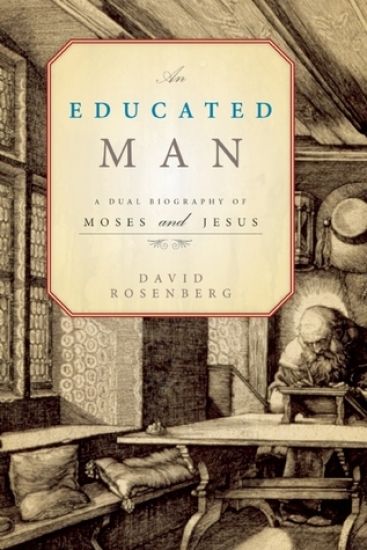
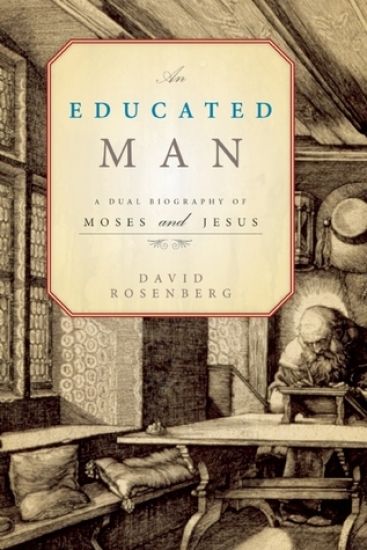
From this best-selling author comes a magisterial new project: a dual biography of the preeminent figures of Judeo-Christian civilization overturning conventional views of Moses and Jesus as humble men of faith. By reanimating the biographies of Moses and Jesus in their historical context, Rosenberg reads their narrative as a cultural rather than religious endeavor. He charges that Moses and Jesus were "educated" men, steeped in the literature and scholarship of their day. There were no old or new testaments for them, only a long history of writing and writers. When scholars and clergy quote Moses and Jesus, they routinely neglect to inform us that Jesus is quoting the Hebrew Bible, often in the manner that Moses quoted Egyptian medical texts. The remarkable ability of both men to recall and transform a wide range of sources is overlooked. Where did they get these profound educations? Part biography, part critical analysis, An Educated Man challenges us to envision what defines "an educated man or woman" today and how understanding religious history is crucial to it. Rosenberg offers a sympathetic approach to why we need Judeo-Christianity and ultimately convinces us that the life of Jesus is unthinkable without the model of Moses before him.
A Literary Bible

A Literary Bible

David Rosenberg

Counterpoint
2010
nidottu
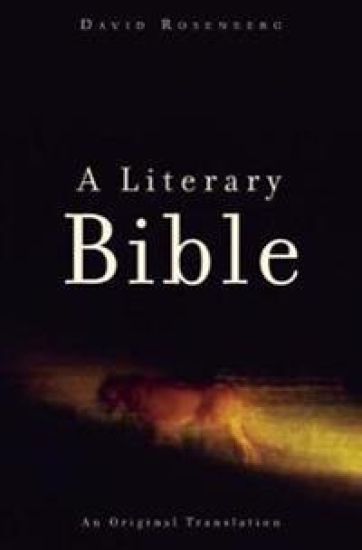
Whether rendering the Bible as wondrous or as strangely familiar, David Rosenberg's magisterial translation forces us to ask again and at last in literary terms why the Bible remains a crucial foundation of our culture.Until today, translators have presented a homogeneous Bible in uniform style even as the various books within it were written by different authors, in diverse genres and periods, stretching over many centuries. Now, Rosenberg's artful translation restores what has been left aside: the essence of imaginative creation in the Bible.In A Literary Bible, Rosenberg presents for the first time a synthesis of the literary aspects of the Hebrew Bible restoring a sense of the original authors and providing a literary revelation for the contemporary reader.Rosenberg himself brings a finely tuned ear to the original text. His penetrating scholarship allows the reader to encounter inspired biblical prose and verse, and to experience each book as if it were written for our time.
An Educated Man

An Educated Man

David Rosenberg

Counterpoint
2011
nidottu
From this prize-winning and best-selling author comes a magisterial new project: a dual biography, weaving together the preeminent figures of Judeo-Christian civilization and overturning the conventional view of Moses and Jesus as humble men of faith. Rooting the biographies of Moses and Jesus in their historical contexts, Rosenberg reads their narratives as cultural rather than religious endeavors. He charges that both Moses and Jesus were  educated" men, steeped in the literature and scholarship of their day. There were no old or new testaments for them, but rather a long history of writing and writers. When professors quote Moses in university courses, or pastors quote Jesus in sermons, they routinely neglect to inform us that Jesus himself is quoting the Hebrew Bible, often in the manner that Moses once quoted Egyptian medical texts. The remarkable ability of both men to recall and transform a wide range of sources is overlooked. Where did they get these profound educations? Part biography, part critical analysis, An Educated Man further challenges us to envision what defines  an educated man or woman" today and how an understanding of our religious history is crucial to it.
Biblical Genesis vs. Science's Big Bang: Why the Bible Is Correct
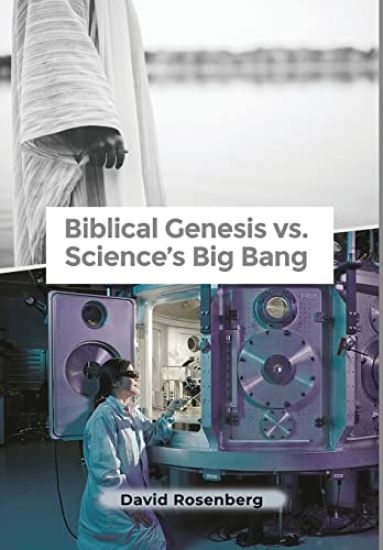
In this book on the big bang and black holes, you will find much evidence that the Hebrew Bible is most accurate in describing creation of the Universe. Since virtually all physical scientists are taught and believe in singularities, they have become stuck in black hole gravity and can't explain the big bang. The Biblical solution overthrows more than 60 years of cosmology and nuclear physics work with singularities. Scientists today still have no solution to the big bang and if you read this book, you will find out why. Dr. Rosenberg has tried to make this book mostly without equations and has saved the rigorous equations for the scientific paper at the end, which is available on the Internet Astrophysics Archives, arXiv.org. About the AuthorDavid Rosenberg holds a bachelor's degree in chemical engineering from New York Polytechnical Institute, a master's in chemical engineering from New Jersey Institute of Technology, and a doctorate degree from SUNY Brooklyn. He has worked for Naugatuck Chemical on polymerization models and for combustion engineering on large chemical plants and nuclear models. After taking advanced physics courses at NJIT and Princeton, he worked with Edward (Rocky) Kalb on nucleosynthesis of the big bang. He used a big bang model based on the Bible to post a number of papers on the internet astrophysics archives. While in the LSU Relativity Group Loni Hyrel 17, he worked on black hole formation models on the computer. At the same time, he preferred a biblically based model that explains dark matter, dark energy, missing antimatter, and everything else.
A Life in a Poem

A Life in a Poem

David Rosenberg

Shearsman Books
2019
nidottu
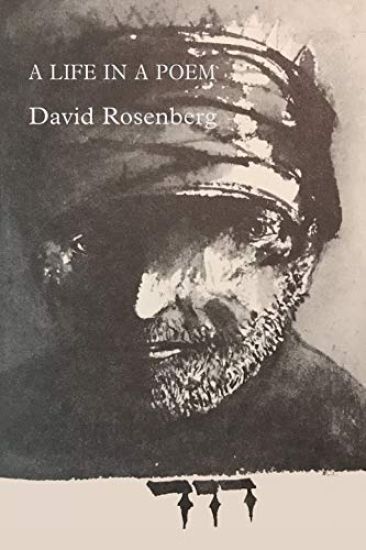
In 1990, the international bestseller, The Book of J (1990), co-authored by David Rosenberg and Harold Bloom (Grove; Faber in the U.K.) was followed by several books of poetry and prose (A Poet's Bible is the first biblical translation to win a major literary award), and then, in 2013, A Life in a Poem began as a Guggenheim Fellowship project. Now, in this trailblazing narrative about where we are going as a species, Rosenberg shows us how he became a writer both ancient and contemporary. The crucial Jewish poet of his time, rooted in the Hebrew of the Bible and the existential sublime of the New York School, Rosenberg has been read so far, by Jews and non-Jews, mainly for his experimental vision. Donald Hall described him as "an ancient Hebrew biblical poet as if writing today in the rhythms of the United States". Among critics, Harold Bloom states that "the play of languages emerges in Rosenberg as it does not in King James," while Frank Kermode wrote in the New York Times Book Review, "he must somehow be modern as well as faithful to the past, reproducing an ancient, strange, uncanny vigor, bearing in mind American poetry's struggle with natural speech". More recently, Adam Kirsch writes that Rosenberg is "replacing the doubtful miracle of divine inspiration with the genuine miracle of poetic inspiration", and Oxford's John Barton describes his work in the New York Review of Books as "neither epic nor romance nor tragedy nor comedy yet all these at once". These words may now apply as well to Rosenberg's innovative new memoir, A Life in a Poem.
A Sense of Place

A Sense of Place

David Rosenberg

Daylight Books
2020
sidottu
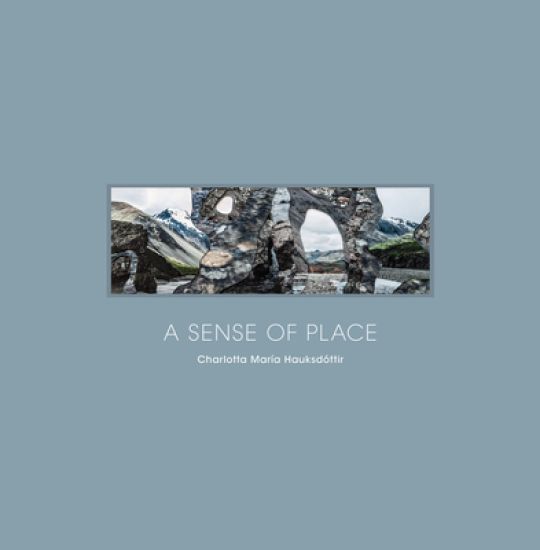
These composite landscapes are recreated places from an estranged homeland. Visible and obscured parts of the landscape suggest the interplay of effects between man and nature, as well as the imperfections of memory. The discontinuity induces the viewer to draw on their own experiences to complete the work. The textures of human fingerprints in the work evokes the uniqueness of our connection with nature and our impressions upon it.
Israel's Technology Economy

Israel's Technology Economy

David Rosenberg

Springer Nature Switzerland AG
2019
nidottu
This book documents how Israel emerged as one of the world's leading centers of high technology over the last three decades and the impact that it has had, or failed to have, on the wider economy and politics. Based on the study of start-up companies, the project attributes the rise of Israel's tech economy to its unique history, political system, and culture, and shows how those same factors have failed it in the quest to diversify its economy to make it more inclusive and equitable. This work will interest economists, political scientists, Israeli studies academics, investors, policy makers, journalists, and business readers.
Israel's Technology Economy

Israel's Technology Economy

David Rosenberg

Springer International Publishing AG
2018
sidottu
This book documents how Israel emerged as one of the world's leading centers of high technology over the last three decades and the impact that it has had, or failed to have, on the wider economy and politics. Based on the study of start-up companies, the project attributes the rise of Israel's tech economy to its unique history, political system, and culture, and shows how those same factors have failed it in the quest to diversify its economy to make it more inclusive and equitable. This work will interest economists, political scientists, Israeli studies academics, investors, policy makers, journalists, and business readers.
once upon a time...

once upon a time...

David Rosenberg

Skira
2014
sidottu
This volume is dedicated to the international artist Kata Legrady’s graphic work, through a selection of drawings, sketches and preparatory studies published on the occasion of the exhibition at Fondazione Mudima in Milan. Through the graphic work gathered in this volume, we discover her creative praxis which, according to Arturo Schwarz, “is determined, to a great extent, by her unconscious; the work has a playful dimension; she observes the world with a gaze that has conserved the innocence, curiosity and inventiveness of childhood”. Finally, an essay by Bazon Brock brings a deep insight on the importance of drawing in the practice of contemporary art.
Rebel Footprints

Rebel Footprints

David Rosenberg; Ash Sarkar

Pluto Press
2019
pokkari
The radical response to conservative heritage tours and banal day-tripper guides, Rebel Footprints brings to life the history of social movements in the capital. Transporting readers from well-known landmarks to history-making hidden corners, David Rosenberg tells the story of protest and struggle in London from the early nineteenth to the mid-twentieth century. From the suffragettes to the socialists, from the Chartists to the trade unionists, the book invites us to step into the footprints of a diverse cast of dedicated fighters for social justice. Self-directed walks pair with narratives that seamlessly blend history, politics and geography, and beautifully illustrated maps immerse the reader in the story of the city. Whether you are visiting it for the first time, or born and raised in it, Rosenberg invites you to see London as you never have before: the nation’s capital as its radical centre.
Rebel Footprints

Rebel Footprints

David Rosenberg; Ash Sarkar

Pluto Press
2019
sidottu
The radical response to conservative heritage tours and banal day-tripper guides, Rebel Footprints brings to life the history of social movements in the capital. Transporting readers from well-known landmarks to history-making hidden corners, David Rosenberg tells the story of protest and struggle in London from the early nineteenth to the mid-twentieth century. From the suffragettes to the socialists, from the Chartists to the trade unionists, the book invites us to step into the footprints of a diverse cast of dedicated fighters for social justice. Self-directed walks pair with narratives that seamlessly blend history, politics and geography, and beautifully illustrated maps immerse the reader in the story of the city. Whether you are visiting it for the first time, or born and raised in it, Rosenberg invites you to see London as you never have before: the nation’s capital as its radical centre.