
Kirjahaku
Etsi kirjoja tekijän nimen, kirjan nimen tai ISBN:n perusteella.
87 kirjaa tekijältä David Ross

"The Right and the Good" is now presented with an introduction by Philip Stratton-Lake. David Ross's book examines ethical intuitionism, which was the dominant moral theory in British philosophy for much of the 19th and early 20th century. Intuitionism is now enjoying a considerable revival, and Stratton-Lake provides the context for an understanding of Ross's work today.
This text examines ethical intuitionism, which was the dominant moral theory in British philosophy for much of the 19th and early 20th century. Intuitionism is now enjoying a considerable revival, and Stratton-Lake provides the context for an understanding of Ross's work today.
Sir David Ross was one of the most distinguished and influential Aristotelians of this century; his study has long been established as an authoritative survey of the life, work and philosophy of Aristotle.This clear and lucid account contains useful summaries of theories and arguments, with brief, suggestive critical comments. Aristotle's work encompassed all the branches of science and learning which were central to the intellectual life of the ancient world: logic, the philosophy of nature, biology, psychology, metaphysics, ethics, politics, rhetoric and poetics. Aristotle's borrowings from his predecessors, and his own fundamental influence on later philosophy, are also examined. Important Greek terms in Aristotle's work are explained and discussed.Aristotle is now re-issued with a new introduction by John L. Ackrill, which reviews developments in Aristotelian studies since Sir David Ross originally wrote his classic study. The bibliography has been supplemented by references to recent works. Both students of philosophy and general rea ders will find the volume an indispensable guide to Aristotle's thought.

'Painstaking preparation means that luck will run your way'. Advocacy explains how to win cases in court. Focusing on the techniques and methods of successful advocates, David Ross QC shows how to prepare a case for court. Written in simple, clear language he gives the benefit of his many years of local and international experience as he describes • how to hold a court's attention • how to start and stop a witness • how to cross-examine all types of people, from liars to experts • the methods of taking objections to questions • how to address a jury • how to follow etiquette and behave ethically • how to win impossible cases. All the principles of advocacy are explained, from the striking start to knowledge of human affairs, and Advocacy is rich with examples taken from real cases.
Advocacy, first published in 2007, explains how to win cases in court. Focusing on the techniques and methods of successful advocates, David Ross QC shows how to prepare a case for court. Writing in simple, clear language he gives the benefit of his many years of local and international experience. This second edition features new advice about how to prepare for, and run, an appeal, as well as how to write effective submissions to court. It also describes: • how to hold a court's attention • how to start and stop a witness • how to cross-examine all types of people, from liars to experts • the methods of taking objections to questions • how to address a jury • how to follow etiquette and behave ethically • how to win impossible cases All the principles of advocacy are explained, from the striking start to knowledge of human affairs, and Advocacy is rich with examples taken from real cases.

State Of Illinois Labor Legislation Enacted By The Forty-Seventh General Assembly, 1911
David Ross
Kessinger Pub
2008
pokkari
Creative Thought and how to Make It Happen. From a creative thinker who's been doing it for more than thirty years.


From poverty to immense wealth, from humble beginnings to international celebrity, George and Robert Stephenson’s was an extraordinary joint career. Together they overshadow all other engineers, except perhaps Robert’s friend Isambard Kingdom Brunel, for one vital reason: they were winners. For them it was not enough to follow the progress made by others. They had to be the best. Colossal in confidence, ability, energy and ambition, George Stephenson was also a man of huge rages and jealousies, determined to create his own legend. Brought up from infancy by his father, Robert was a very different person. Driven by the need to be the super-successful son his father wanted, he struggled with self-distrust and morbid depression. More than once his career and reputation teetered on the edge of disaster. But, by being flawed, he emerges as a far more interesting and sympathetic figure than the conventional picture of the ‘eminent engineer.’ David Ross’s biography of George and Robert Stephenson sheds much new light on this remarkable father and son. Authoritative and containing many new discoveries, it is a highly readable account of how these two men set the modern industrial world in motion.

The railway locomotive was invented by a Cornishman called Richard Trevithick in February 1804.David Ross tells not just the story of the steam engine but also of its effects on man.

The first complete history of the Highland railway since the 1960s, the line which opened the Highlands to mass tourism.
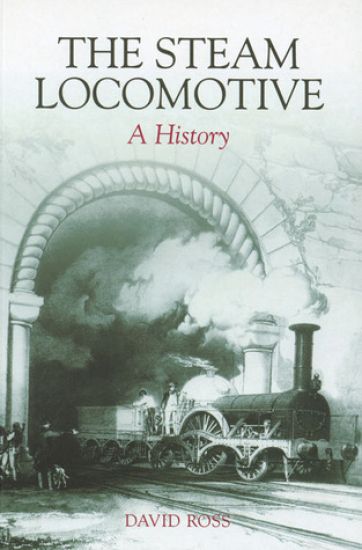
This steam locomotive has been steaming ahead for two centuries. The railway locomotive was invented by a Cornishman called Richard Trevithick in February 1804. No longer was man dependent on moving at his own speed or that of a horse. With smoke belching from its chimney, the steam locomotive could carry freight and passengers at unheard of speeds. It was even thought that men would die of asphyxiation at speeds greater than 30mph! From small beginnings the railway locomotive was responsible for the speed of industrialisation in many countries, for commuting, for tourism, for industrial progress in all fields and for making the people of the world a transient workforce. Without it, the world would be a different place.
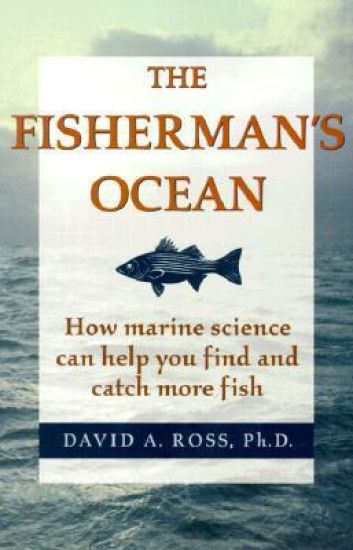
Here at last, in layman's terms, is a fisherman's guide to the habitat and behaviour of saltwater fish. The author, an oceanographer and avid fly fisherman, explains the marine environment and the factors that affect where game fish congregate, how they move with tides and currents, what they see, smell, taste, and hear. The copiously illustrated text covers inshore and offshore habitat and will prove invaluable to anyone who fishes in saltwater, whether in the surf, on the flats, or out at sea. The ocean is vast. It pays to be educated.
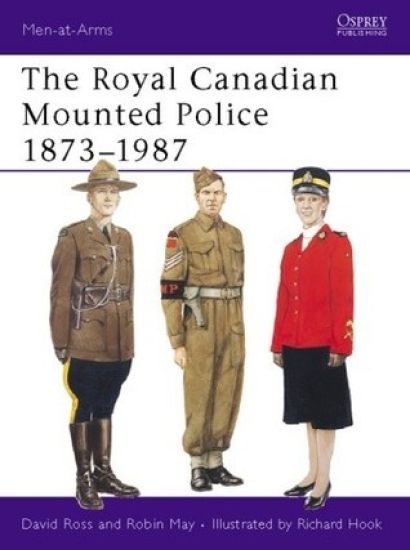
In 1870, after completing a 1000-mile trek across Canada, Lt. W.F. Butler, an officer of the British Army, recommended the establishment of a 'well-equipped force from 100 to 150 men, one-third to be mounted' for the purpose of policing the North West; three years later, the North West Mounted Police was established. By the late 1980s, this force, now the Royal Canadian Mounted Police (RCMP), had grown to include 18,000 members, with a budget of more than $1 billion. This book outlines the origins and evolution of the RCMP, detailing its formation, tasks, uniforms and insignia.

Choosing For Two - Scholarly Edition: An Examination of Abortion Decision Making and Its Implications for Crisis Counseling
David Ross
Mw Media, LLC
2017
nidottu
Sketch Of The History Of The House Of Russell (1848)
David Ross
KESSINGER PUBLISHING, LLC
2009
pokkari

Account Of Botanical Rambles In The Pyrenees, In August 1862 (1863)
David Ross
KESSINGER PUBLISHING, LLC
2010
sidottu