
Kirjahaku
Etsi kirjoja tekijän nimen, kirjan nimen tai ISBN:n perusteella.
25 kirjaa tekijältä David Russell

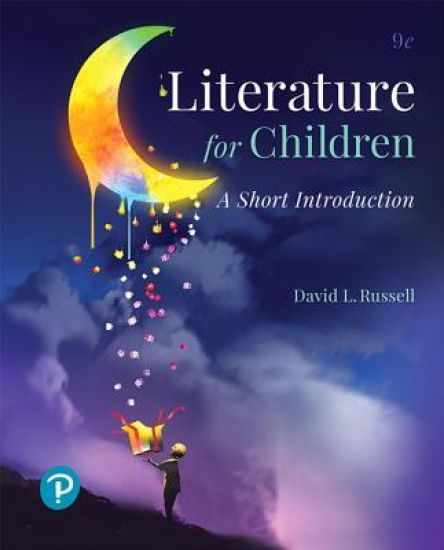
For courses in children’s literature. An accessible, concise, and engaging text on children’s literature with full-color illustrations Inviting and brief, Literature for Children: A Short Introduction, 9th Edition provides a solid understanding of the foundations of children’s literature across genres, from picture books to folk literature. In his usual engaging style, author David Russell stresses that teachers need to first appreciate literature in order to teach it effectively. The text’s user-friendly format includes a wealth of real examples and its thoughtful presentation allows students to spend more time reading actual children’s books. Substantially revised with full-color illustrations and a new organization, the 9th Edition incorporates a variety of updates, providing a more streamlined introduction to the elements, genres, and themes in children’s literature.

This is a book about reading, drawing, and getting better--and what they have to do with one another. The British essayist, artist, and psychoanalyst Marion Milner (1900-1996) thought deeply about how reading, drawing, and getting better related to each other. The guiding question of Milner's life was of how people come to feel alive in, and feel creatively responsive to, their own lives. In pursuit of this, Milner explored fields as diverse as anthropology, folklore, education, literature, art, philosophy, mysticism, and psychology. She became one of the twentieth century's most extraordinary thinkers about creativity. David Russell shows that there is no writer quite like Milner and the rewards of reading her are immense. Key to all her writing is her search for creative practices of attention--of how we pay attention in the life we have. She helped to develop a kind of psychoanalysis in Britain that focussed on the ways people relate to their own lives and the lives of others. Milner was literary and artistic; she took herself as her subject. Her writing performs ways of responding associatively to the words and images she encountered. In the process, she found she was a quite different person than she had first thought. In the 1930s Milner invented a form for writing about reading: an original kind of diary book, which is structured by the experience of going back to, and rereading, past diaries. In her interplay of past and present selves, she finds new ways of looking at, and experiencing, the world.
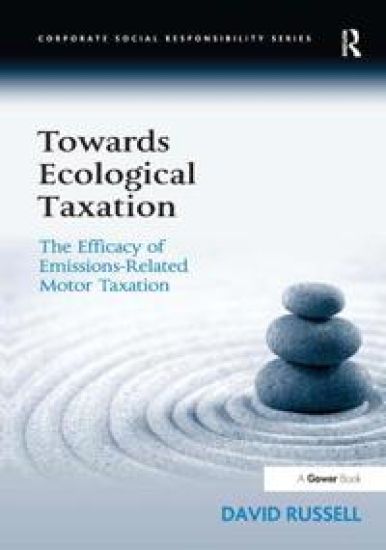
Governments around the world are struggling to meet their commitments to achieve targets relating to reductions in greenhouse gases. Many writers advocating ways to achieve these targets offer radical but often impractical approaches that do not offer a way forward within the existing economic model. In contrast, Towards Ecological Taxation is a pragmatic consideration of realistic possibilities by an author from the world of accounting. Based on his research into the implications of changes in the UK motor taxation regime for company cars, David Russell considers the broader efficacy of taxation policy as a mechanism for reducing demand for fossil fuels and encouraging a shift towards carbon-neutral energy production. He incorporates the findings of a number of studies into his analysis, along with a wider consideration of tax regimes. Dr Russell suggests a way forward that will attract the interest of researchers, policy makers and decision makers wanting a better understanding of how taxation could be used innovatively, but within the existing economic status quo, to deliver specific and measurable reductions in CO2. Such a distinctive approach makes this book a valuable addition to the literature on environmental issues and the always thought provoking titles in the Corporate Social Responsibility Series.

The social practice of tact was an invention of the nineteenth century, a period when Britain was witnessing unprecedented urbanization, industrialization, and population growth. In an era when more and more people lived more closely than ever before with people they knew less and less about, tact was a new mode of feeling one's way with others in complex modern conditions. In this book, David Russell traces how the essay genre came to exemplify this sensuous new ethic and aesthetic. Russell argues that the essay form provided the resources for the performance of tact in this period and analyzes its techniques in the writings of Charles Lamb, John Stuart Mill, Matthew Arnold, George Eliot, and Walter Pater. He shows how their essays offer grounds for a claim about the relationship among art, education, and human freedom--an "aesthetic liberalism"--not encompassed by traditional political philosophy or in literary criticism. For these writers, tact is not about codes of politeness but about making an art of ordinary encounters with people and objects and evoking the fullest potential in each new encounter. Russell demonstrates how their essays serve as a model for a critical handling of the world that is open to surprises, and from which egalitarian demands for new relationships are made. Offering fresh approaches to thinking about criticism, sociability, politics, and art, Tact concludes by following a legacy of essayistic tact to the practice of British psychoanalysts like D. W. Winnicott and Marion Milner.
The social practice of tact was an invention of the nineteenth century, a period when Britain was witnessing unprecedented urbanization, industrialization, and population growth. In an era when more and more people lived more closely than ever before with people they knew less and less about, tact was a new mode of feeling one’s way with others in complex modern conditions. In this book, David Russell traces how the essay genre came to exemplify this sensuous new ethic and aesthetic.Russell argues that the essay form provided the resources for the performance of tact in this period and analyzes its techniques in the writings of Charles Lamb, John Stuart Mill, Matthew Arnold, George Eliot, and Walter Pater. He shows how their essays offer grounds for a claim about the relationship among art, education, and human freedom—an “aesthetic liberalism”—not encompassed by traditional political philosophy or in literary criticism. For these writers, tact is not about codes of politeness but about making an art of ordinary encounters with people and objects and evoking the fullest potential in each new encounter. Russell demonstrates how their essays serve as a model for a critical handling of the world that is open to surprises, and from which egalitarian demands for new relationships are made.Offering fresh approaches to thinking about criticism, sociability, politics, and art, Tact concludes by following a legacy of essayistic tact to the practice of British psychoanalysts like D. W. Winnicott and Marion Milner.
Investigating areas as diverse as travel literature, fiction, dialect, the stage, radio, and television, feature film, music and sport, this fascinating book assesses the attitudes and portrayal of the North of England within the national culture and how this has impacted upon attitudes to the region and its place within notions of ‘Englishness’.

The only in-depth study of the wider field of popular music in this period. Scholarly, but accessible. This is an Open University Set Text.
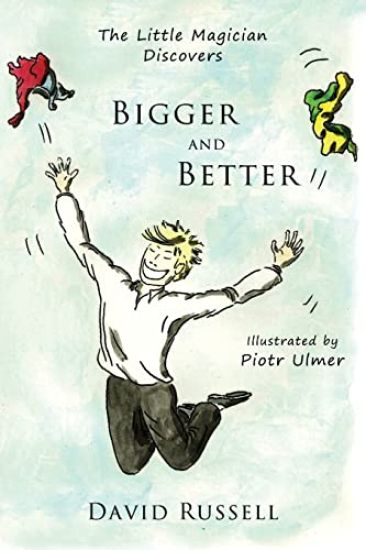
Are you searching for happiness? Follow the Little Magician as he tries to become happy. Surely, he thinks, if he could just use a bigger wand he would be happy But the Little Magician discovers the true source of happiness somewhere else. A delightful, colorful story with lessons about faith, peace and true happiness for both children and adults. Full color illustrations on each page. Discover the source of happiness and peace with the Little Magician.
Governments around the world are struggling to meet their commitments to achieve targets relating to reductions in greenhouse gases. Many writers advocating ways to achieve these targets offer radical but often impractical approaches that do not offer a way forward within the existing economic model. In contrast, Towards Ecological Taxation is a pragmatic consideration of realistic possibilities by an author from the world of accounting. Based on his research into the implications of changes in the UK motor taxation regime for company cars, David Russell considers the broader efficacy of taxation policy as a mechanism for reducing demand for fossil fuels and encouraging a shift towards carbon-neutral energy production. He incorporates the findings of a number of studies into his analysis, along with a wider consideration of tax regimes. Dr Russell suggests a way forward that will attract the interest of researchers, policy makers and decision makers wanting a better understanding of how taxation could be used innovatively, but within the existing economic status quo, to deliver specific and measurable reductions in CO2. Such a distinctive approach makes this book a valuable addition to the literature on environmental issues and the always thought provoking titles in the Corporate Social Responsibility Series.



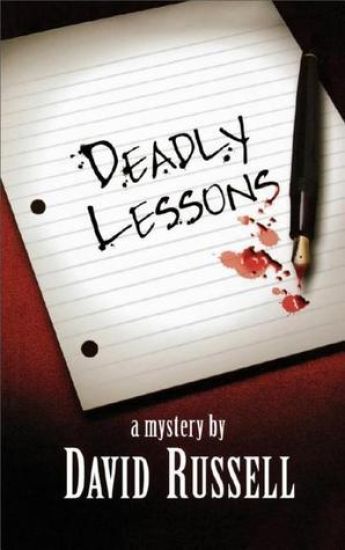
Winston Patrick, a successful lawyer but dissatisfied with his career defending the downtrodden of Vancouver's criminal world, trades in the courtroom for the high school classroom. Soon Winston's past life meets his present when a student accuses a fellow colleague of a teacher-student love affair. Reluctantly, Winston agrees to provide legal defence, but the case takes an even uglier turn: the student is murdered, making her alleged lover the prime suspect. And this is no ordinary student. With her family connections reaching as high as the Prime Minister's office, Winston and his friend Detective Andrea Pearson find themselves immersed in a murder investigation that could cause an international incident, if it doesn't cost Winston his own life first.
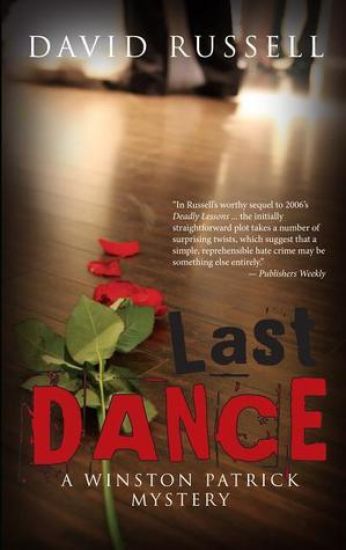
Winston Patrick was a successful lawyer who defended the downtrodden of Vancouver's criminal world. Dissatisfied with his career, he traded in the courtroom for the high school classroom. Winston is barely surviving his first year at a Vancouver high school when his students present a human rights issue. A student wants to bring his same-sex partner to the high school prom, but the school won't let him.Winston reluctantly leads his proteges on their first legal quest: suing the school. He never thought that fighting for a student's rights could have deadly consequences, but as the issue gains publicity, Winston discovers that their opponents will stop at nothing to make their point not even murder.David Russell's first Winston Patrick novel, Deadly Lessons, was shortlisted for an Arthur Ellis Award for best first crime novel.
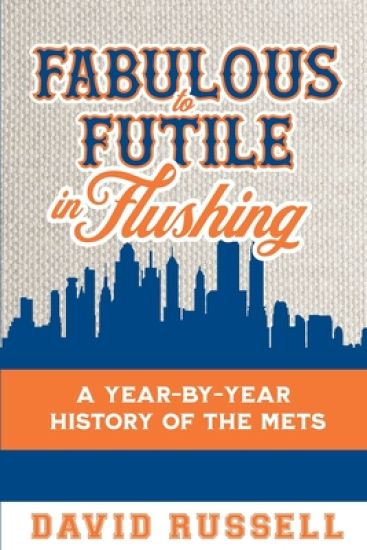
The Mets have had one of the most roller-coaster histories of any major league franchise. From loveable losers to miracle champions; the frustrating 1970s followed by the glorious 1980s; surprise challengers to infuriating underachievers; phenomenal prospects to horrendous free agents. The one thing you can always count on with the Mets is-they are never boring But with the franchise about to turn 60, it's hard for even the most diehard of Mets fans to keep track of it all. That's where Fabulous to Futile in Flushing, by New York journalist David Russell, comes in. Part reference, part narrative, part tip sheet, Fabulous to Futile in Flushing condenses each of the Amazins' 58 seasons into 5 or 6 pages of all the essentials: off-season deals and planning; a month-by-month recap; the big wins, big losses, and big moments; player stats, hot streaks, and cold streaks; pennant races and postseason recaps, though not that many of those The text is also full of numerous great quotes from players, management, and media.More than anything, the annual recaps are full of fun, because with the Mets, well, how else could it be? The story of each season also features entertaining sidebars that make it great to just flip to any time in their history for a good laugh, a frustrated shake of the head, or to declare, "Wow, oh yeah, I forgot about that." There are entries on each year's Opening Day lineup, the Top 5 Moments, team MFaP and MFuP (most fabulous and most futile player), Final Resting Ground (for the many who hung 'em with the Mets), and He Was a Met? Also included are 7 challenging trivia quizzes (one for each decade) that will send you on a fun journey to the deep recesses of your Mets memories.So come on and meet the Mets. Step right up and greet the Mets. You're guaranteed to have the time of your life even just reading about the fabulous and futile Mets.