Kirjojen hintavertailu. Mukana 11 342 296 kirjaa ja 12 kauppaa.

Kirjahaku

Etsi kirjoja tekijän nimen, kirjan nimen tai ISBN:n perusteella.

7 kirjaa tekijältä David Schulenberg

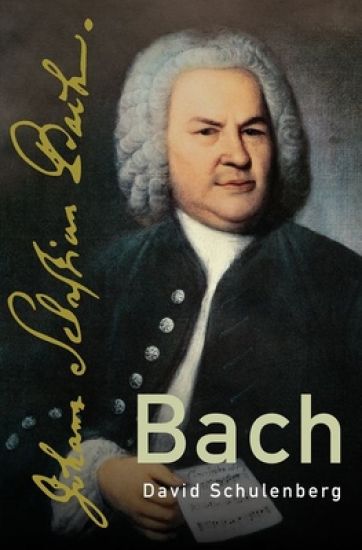
Bach

Bach

David Schulenberg

Oxford University Press Inc
2020
sidottu
Bach has remained a figure of continuous fascination and interest to scholars and readers since the original Master Musicians Bach volume's publication in 1983 - even since its revision in 2000, understanding of Bach and his music's historical and cultural context has shifted substantially. Reflecting new biographical information that has only emerged in recent decades, author David Schulenberg contributes to an ongoing scholarly conversation about Bach with clarity and concision. Bach traces the man's emergence as a startlingly original organist and composer, describing his creative evolution, professional career, and family life from contemporary societal and cultural perspectives in early modern Europe. His experiences as student, music director, and teacher are examined alongside the music he produced in each of these roles, including early compositions for keyboard instruments, the great organ and harpsichord works of later years, vocal music, and other famous instrumental works, including the Brandenburg Concertos. Schulenberg also illuminates how Bach incorporated his contemporary environment into his work: he responded to music by other composers, to his audiences and employment conditions, and to developments in poetry, theology, and even the sciences. The author focuses on Bach's evolution as a composer by ultimately recognizing "Bach's world" in the specific cities, courts, and environments within and for which he composed. Dispensing with biographical minutiae and more closely examining the interplay between his life and his music, Bach presents a unique, grounded, and refreshing new framing of a brilliant composer.
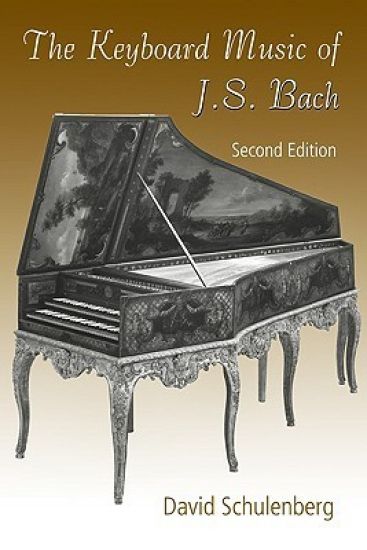
The Keyboard Music of J.S. Bach

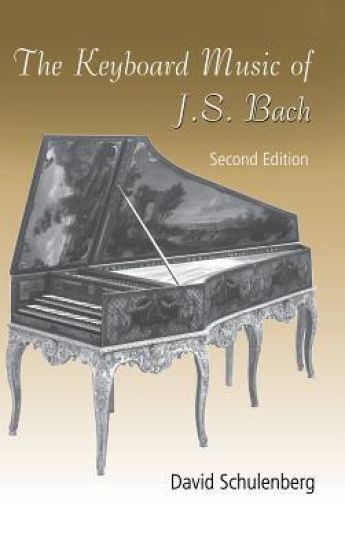
The Keyboard Music of J.S. Bach

David Schulenberg

Routledge
2006
sidottu
The Keyboard Music of J.S. Bach provides an introduction to and comprehensive discussion of all the music for harpsichord and other stringed keyboard instruments by Johann Sebastian Bach (1685-1750). Often played today on the modern piano, these works are central not only to the Western concert repertory but to musical pedagogy and study throughout the world.Intended as both a practical guide and an interpretive study, the book consists of three introductory chapters on general matters of historical context, style, and performance practice, followed by fifteen chapters on the individual works, treated in roughly chronological order. The works discussed include all of Bach's individual keyboard compositions as well as those comprising his famous collections, such as the Well-Tempered Clavier, the English and French Suites, and the Art of Fugue.
The Keyboard Music of J.S. Bach

The Keyboard Music of J.S. Bach

David Schulenberg

Routledge
2006
nidottu
The Keyboard Music of J.S. Bach provides an introduction to and comprehensive discussion of all the music for harpsichord and other stringed keyboard instruments by Johann Sebastian Bach (1685-1750). Often played today on the modern piano, these works are central not only to the Western concert repertory but to musical pedagogy and study throughout the world.Intended as both a practical guide and an interpretive study, the book consists of three introductory chapters on general matters of historical context, style, and performance practice, followed by fifteen chapters on the individual works, treated in roughly chronological order. The works discussed include all of Bach's individual keyboard compositions as well as those comprising his famous collections, such as the Well-Tempered Clavier, the English and French Suites, and the Art of Fugue.
C.P.E. Bach

C.P.E. Bach

David Schulenberg

Routledge
2015
sidottu
The second son of Johann Sebastian Bach, C.P.E. Bach was an important composer in his own right, as well as a writer and performer on keyboard instruments. He composed roughly a thousand works in all the leading genres of the period, with the exception of opera, and Haydn, Mozart and Beethoven all acknowledged his influence. He was also the author of a two-volume encyclopedic book about performance on keyboard instrument. C.P.E. Bach and his music have always been the subject of significant scholarship and publication but interest has sharply increased over the past two or three decades from performers as well as music historians. This volume incorporates important writings not only on the composer and his chief works but also on theoretical issues and performance questions. The focus throughout is on relatively recent scholarship otherwise available only in hard-to-access sources.
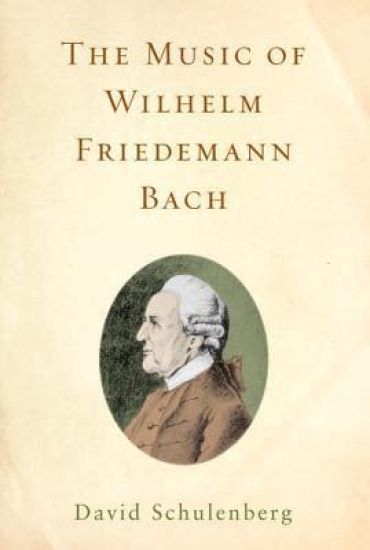
The Music of Wilhelm Friedemann Bach

The Music of Wilhelm Friedemann Bach

David Schulenberg

University of Rochester Press
2010
sidottu
The first book in nearly a century dedicated to a close examination of the musical works of Wilhelm Friedemann Bach, first son of Johann Sebastian Bach. The first-born of the four composer sons of Johann Sebastian Bach, Wilhelm Friedemann was often considered the most brilliant. Yet he left relatively few works and died in obscurity. This monograph, the first on the composer in nearly a century, identifies the unique features of Friedemann's music that make it worth studying and performing. It considers how Friedemann's training and upbringing differed from those of his brothers, leading to a style that diverged from that of his contemporaries. Central to the book are detailed discussions of all Friedemann's extant works: the virtuoso sonatas and concertos for keyboard instruments, the extraordinary chamber compositions (especially for flute), and the hitherto-neglected vocal music, including sacred cantatas and a remarkable work in honor of King Frederick the Great of Prussia. Special sections consider performance questions unique to Friedemann's music and provide a handy list of his works and their sources. Numerous musical examples provide glimpses of many little-known compositions, including a concerto ignored by previous students of Friedemann's music, here restored to hislist of works. David Schulenberg, Professor of Music at Wagner College in New York City, has performed much of W. F. Bach's output on harpsichord, clavichord, and fortepiano. His previous writings include The Keyboard Music of J. S. Bach and The Instrumental Music of C. P. E. Bach.
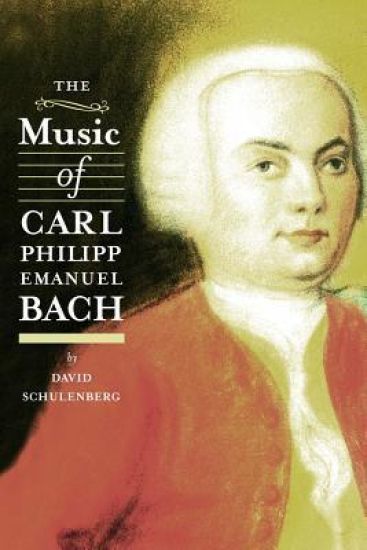
The Music of Carl Philipp Emanuel Bach

The Music of Carl Philipp Emanuel Bach

David Schulenberg

University of Rochester Press
2014
sidottu
In this first comprehensive examination of the music of the most prolific Bach son, David Schulenberg offers new perspectives on the career, style, and originality of Carl Philipp Emanuel Bach. Of Bach's four sons who became composers, Carl Philipp Emanuel Bach (1714-88) was the most prolific, the most original, and the most influential both during and after his lifetime. This is the first comprehensive study of his music, examining not only the famous keyboard sonatas and concertos but also the songs, the chamber music, and the sacred works, many of which resurfaced only recently and have not previously been evaluated. A compositional biography,the book surveys C. P. E. Bach's extensive output of nearly a thousand works while tracing his musical development-from his student days at Leipzig and Frankfurt (Oder), through his nearly three decades as court musician to Prussian King Frederick "the Great," to his final twenty years as cantor and music director at Hamburg. David Schulenberg, author of important books on the music of J. S. Bach and his first son, W. F. Bach, here considers the legacy of the second son from a compelling new perspective. Focusing on C. P. E. Bach's compositional choices within his social and historical context, Schulenberg shows how C. P. E. Bach deliberately avoided his father's style whileborrowing from the manner of his Berlin colleagues, who were themselves inspired by Italian opera. Schulenberg also shows how C. P. E. Bach, now best known for his virtuoso keyboard works, responded to changing cultural and aesthetic trends by refashioning himself as a writer of vocal music and popular chamber compositions. Audio versions of the book's musical examples, as well as further examples and supplementary tables and texts, are available on a companion website. David Schulenberg is professor of music at Wagner College and teaches historical performance at the Juilliard School. He is the author of The Music of Wilhelm Friedemann Bach (University of Rochester Press, 2010).
Historical Performance in Baroque Music

Historical Performance in Baroque Music

David Schulenberg

BOYDELL BREWER LTD
2026
sidottu
A practical and scholarly guide to performing Baroque music with historical insight and artistic confidence. This is an in-depth guide to the performance of Baroque music for musicians, listeners, undergraduate and graduate music students, and conservatory and university instructors. Rigorously scholarly, yet readable by non-specialists, it is designed to serve not only as an introduction to historical performance for those new to the subject, but also as a reference book for those experienced in the field, and as a course book in early music performance practice. Part 1 covers essential topics such as historical voices and instruments, articulation, and ornamentation and improvisation. Part 2 turns to particular performance issues in selections ranging from vocal chamber music by Strozzi, Handel, Jacquet, and Bach to instrumental compositions by Castello, Corelli, Couperin, and (again) Bach. The book draws on the author's broad experience as a performer, teacher and writer on Baroque music. It can serve as a general handbook on historical performance practice that also addresses specific questions raised by commonly performed recital and concert repertoire.