Kirjojen hintavertailu. Mukana 11 342 296 kirjaa ja 12 kauppaa.

Kirjahaku

Etsi kirjoja tekijän nimen, kirjan nimen tai ISBN:n perusteella.

119 kirjaa tekijältä David Scott

Leviathan

Leviathan

David Scott

Harpercollins Publishers
2014
pokkari
In this paperback of his acclaimed and wide-ranging study, David Scott challenges traditional assumptions about how Britain achieved her global might.
Butcherbirds Cry at Midnight

Butcherbirds Cry at Midnight

David Scott

Tellwell Talent
2022
pokkari
A family running a vineyard in the post-World War II era are in crisis. But why, when the prosperous winery is world-renowned for its award-winning wine? The Algie family are held in high esteem within the small Murray Valley town, Howard and Elizabeth being pillars of society.Yet all is not what it seems. Mother and daughter have a strained relationship; father and one of the sons are antagonistic to each other, to the point of murderous intent; and the youngest child is introverted. What dark family secret lurks beneath the happy facade that is so carefully nurtured by Howard and Elizabeth? A secret so soul-destroying that hatred threatens to turn to murder-and madness.It is a story that lurks in many towns and cities, mostly hidden from prying eyes. It is a tale of truth, denial, and shame, one where exposure affects every member of the family, shattered lives that only time might mend.It is a story of power and loss, of stubborn disbelief at the expense of broken loyalties that leave victims without hope or trust, at the edge of sanity.The author's stage-play drama of the story was so confrontational that sections of audiences remained seated at the end to compose themselves.
Butcherbirds Cry at Midnight

Butcherbirds Cry at Midnight

David Scott

Tellwell Talent
2022
sidottu
A family running a vineyard in the post-World War II era are in crisis. But why, when the prosperous winery is world-renowned for its award-winning wine? The Algie family are held in high esteem within the small Murray Valley town, Howard and Elizabeth being pillars of society.Yet all is not what it seems. Mother and daughter have a strained relationship; father and one of the sons are antagonistic to each other, to the point of murderous intent; and the youngest child is introverted. What dark family secret lurks beneath the happy facade that is so carefully nurtured by Howard and Elizabeth? A secret so soul-destroying that hatred threatens to turn to murder-and madness.It is a story that lurks in many towns and cities, mostly hidden from prying eyes. It is a tale of truth, denial, and shame, one where exposure affects every member of the family, shattered lives that only time might mend.It is a story of power and loss, of stubborn disbelief at the expense of broken loyalties that leave victims without hope or trust, at the edge of sanity.The author's stage-play drama of the story was so confrontational that sections of audiences remained seated at the end to compose themselves.
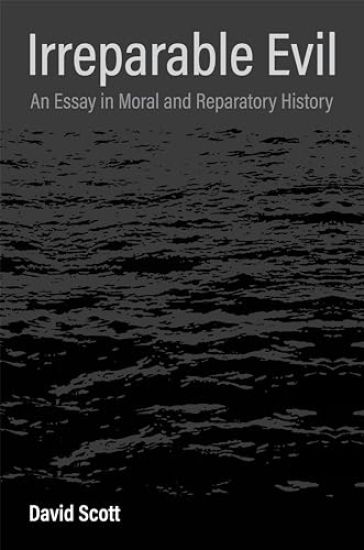
Irreparable Evil

Irreparable Evil

David Scott

Columbia University Press
2024
sidottu
What was distinctive about the evil of the transatlantic slave trade and New World slavery? In what ways can the present seek to rectify such historical wrongs, even while recognizing that they lie beyond repair? Irreparable Evil explores the legacy of slavery and its moral and political implications, offering a nuanced intervention into debates over reparations.David Scott reconsiders the story of New World slavery in a series of interconnected essays that focus on Jamaica and the Anglophone Caribbean. Slavery, he emphasizes, involved not only scarcely imaginable brutality on a mass scale but also the irreversible devastation of the ways of life and cultural worlds from which enslaved people were uprooted. Colonial extraction shaped modern capitalism; plantation slavery enriched colonial metropoles and simultaneously impoverished their peripheries. To account for this atrocity, Scott examines moral and reparatory modes of history and criticism, probing different conceptions of evil. He reflects on the paradoxes of seeking redress for the specific moral evil of slavery, criticizing the limitations of liberal rights-based arguments for reparations that pursue reconciliation with the past. Instead, this book argues, in making the urgent demand for reparations, we must acknowledge the fundamental irreparability of a wrong of such magnitude.
Irreparable Evil

Irreparable Evil

David Scott

Columbia University Press
2024
pokkari
What was distinctive about the evil of the transatlantic slave trade and New World slavery? In what ways can the present seek to rectify such historical wrongs, even while recognizing that they lie beyond repair? Irreparable Evil explores the legacy of slavery and its moral and political implications, offering a nuanced intervention into debates over reparations.David Scott reconsiders the story of New World slavery in a series of interconnected essays that focus on Jamaica and the Anglophone Caribbean. Slavery, he emphasizes, involved not only scarcely imaginable brutality on a mass scale but also the irreversible devastation of the ways of life and cultural worlds from which enslaved people were uprooted. Colonial extraction shaped modern capitalism; plantation slavery enriched colonial metropoles and simultaneously impoverished their peripheries. To account for this atrocity, Scott examines moral and reparatory modes of history and criticism, probing different conceptions of evil. He reflects on the paradoxes of seeking redress for the specific moral evil of slavery, criticizing the limitations of liberal rights-based arguments for reparations that pursue reconciliation with the past. Instead, this book argues, in making the urgent demand for reparations, we must acknowledge the fundamental irreparability of a wrong of such magnitude.
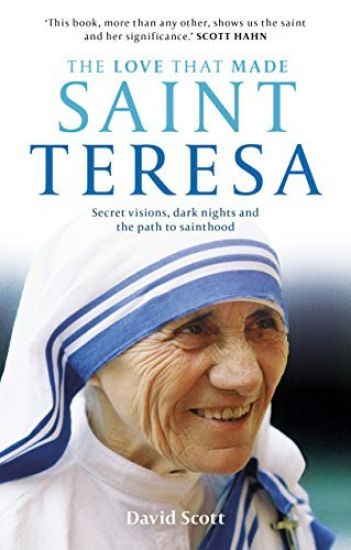
The Love that Made Saint Teresa

The Love that Made Saint Teresa

David Scott

SPCK Publishing
2016
nidottu
Part biography, part spiritual reading, this beautifully written book brings to light little-known stories from the extraordinary life of Saint Teresa of Calcutta. Here you will meet the woman who challenged the ancient Goddess of Death to become the first saint of our global village. You will learn of the remarkable mystical visions that led her to start the Missionaries of Charity. You will read, in lines drawn from her secret letters, about her long dark night of the soul. And you will discover the infinite love that enabled her to shine through the clouds of despair and suffering that she encountered as she gave herself to God’s work. Let Saint Teresa be your guide, as through this book she shows how you too can receive and radiate the love of Christ in the ordinary events of your life.
Politics and War in the Three Stuart Kingdoms, 1637-49
The 1640s were one of the most exciting and bloody decades in British and Irish history. This book interweaves the narrative threads in each theatre of conflict to provide an holistic account and analysis of the wars in and between England, Scotland and Ireland, from the Covenanter Rebellion to the execution of Charles I.Politics and War in the Three Stuart Kingdoms, 1637-49- stresses the need to examine the English Civil War within the context of the other conflicts in Scotland and Ireland, and vice versa- explores key themes, such as the relationship between armies and elites- assesses the extent to which the wars in and between the kingdoms were the product of religious and ethnic hatredUsing a wide range of original and secondary sources, and incorporating the latest research, David Scott offers a challenging new interpretation of political structure and dynamics in the warring Stuart realms.
Politics and War in the Three Stuart Kingdoms, 1637-49
The 1640s were one of the most exciting and bloody decades in British and Irish history. This book interweaves the narrative threads in each theatre of conflict to provide an holistic account and analysis of the wars in and between England, Scotland and Ireland, from the Covenanter Rebellion to the execution of Charles I.Politics and War in the Three Stuart Kingdoms, 1637-49- stresses the need to examine the English Civil War within the context of the other conflicts in Scotland and Ireland, and vice versa- explores key themes, such as the relationship between armies and elites- assesses the extent to which the wars in and between the kingdoms were the product of religious and ethnic hatredUsing a wide range of original and secondary sources, and incorporating the latest research, David Scott offers a challenging new interpretation of political structure and dynamics in the warring Stuart realms.
Critical Essays on Major Curriculum Theorists
This book is a critical appreciation of the work of sixteen leading curriculum theorists, taking account of the writings of a balance of established thinkers and curriculum analysts from the fields of education, philosophy, sociology and psychology. Together these commentators offer a broad perspective with views from the UK, the US and Europe, and from a range of political stances ranging from radical conservatism through liberalism to socialism and libertarianism. The theorists include major names such as Lev Vygotsky, Jerome Bruner, Maxine Greene, Basil Bernstein, Micheal Foucault, Elliott Eisner, John White, Michael Apple and more. Ideal for students on all teacher training courses looking for an introduction to some of the key educational thinkers of our time, this key text can also be used as a companion volume to the Routledge four-volume set on curriculum theory.
Critical Essays on Major Curriculum Theorists
This book is a critical appreciation of the work of sixteen leading curriculum theorists, taking account of the writings of a balance of established thinkers and curriculum analysts from the fields of education, philosophy, sociology and psychology. Together these commentators offer a broad perspective with views from the UK, the US and Europe, and from a range of political stances ranging from radical conservatism through liberalism to socialism and libertarianism. The theorists include major names such as Lev Vygotsky, Jerome Bruner, Maxine Greene, Basil Bernstein, Micheal Foucault, Elliott Eisner, John White, Michael Apple and more. Ideal for students on all teacher training courses looking for an introduction to some of the key educational thinkers of our time, this key text can also be used as a companion volume to the Routledge four-volume set on curriculum theory.
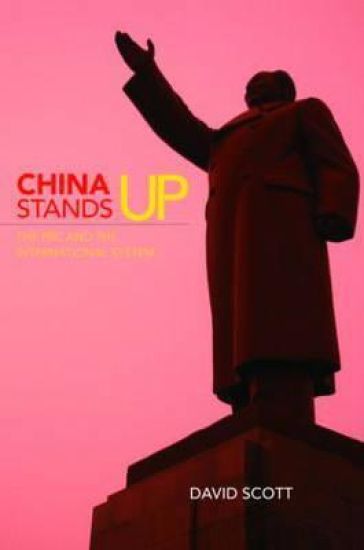
China Stands Up

China Stands Up

David Scott

Routledge
2007
sidottu
In 1949 Mao Zedong made the historic proclamation that "the Chinese people have stood up". This statement was significant, undoubtedly reflecting the changing nature not only of China’s self-perception, but also of its relationship with the rest of the world. In terms of reducing the imperialist presence of the West and Japan within China, and reasserting China’s territorial integrity and legal sovereignty to the outside world, Mao and China can indeed be seen to have successfully ‘stood up’. However, the development of China’s position in the hitherto Western-dominated international system has been more ambiguous. In China Stands Up David Scott examines the PRC’s presence in the international system, from 1949 to the present, and also looks forward to the future, asking:How do we define the rise of China?How does China see its role in the world?What shapes China’s role?How do international actors view China’s role in the international community?Has China risen in any real sense?Engaging with a rich tapestry of sources and imagery, ranging from governmental, media, academic and popular settings, and bridging the divide between history and international relations, this book will appeal to students and scholars of both these fields, as well as those interested in Chinese politics and foreign policy.
China Stands Up

China Stands Up

David Scott

Routledge
2007
nidottu
In 1949 Mao Zedong made the historic proclamation that "the Chinese people have stood up". This statement was significant, undoubtedly reflecting the changing nature not only of China’s self-perception, but also of its relationship with the rest of the world. In terms of reducing the imperialist presence of the West and Japan within China, and reasserting China’s territorial integrity and legal sovereignty to the outside world, Mao and China can indeed be seen to have successfully ‘stood up’. However, the development of China’s position in the hitherto Western-dominated international system has been more ambiguous. In China Stands Up David Scott examines the PRC’s presence in the international system, from 1949 to the present, and also looks forward to the future, asking:How do we define the rise of China?How does China see its role in the world?What shapes China’s role?How do international actors view China’s role in the international community?Has China risen in any real sense?Engaging with a rich tapestry of sources and imagery, ranging from governmental, media, academic and popular settings, and bridging the divide between history and international relations, this book will appeal to students and scholars of both these fields, as well as those interested in Chinese politics and foreign policy.
Education, Epistemology and Critical Realism
This book addresses fundamental questions in relation to education and its epistemology. The position taken by the author is critical realist; and thus throughout the relationship between education and critical realism is foregrounded. Themes and issues that surface at different times in the book are: a critical realist view of education research; a resolution of the quantitative/qualitative divide; criteria for judging the worth of educational texts and practices; differences between scientific and critical realisms; empirical research methods in education; structure-agency relationships; pragmatist views of educational research; foundations and paradigmatic differences; and educational critique and transformation.
Education, Epistemology and Critical Realism
This book addresses fundamental questions in relation to education and its epistemology. The position taken by the author is critical realist; and thus throughout the relationship between education and critical realism is foregrounded. Themes and issues that surface at different times in the book are: a critical realist view of education research; a resolution of the quantitative/qualitative divide; criteria for judging the worth of educational texts and practices; differences between scientific and critical realisms; empirical research methods in education; structure-agency relationships; pragmatist views of educational research; foundations and paradigmatic differences; and educational critique and transformation.
Semiologies of Travel

Semiologies of Travel

David Scott

Cambridge University Press
2004
sidottu
Semiologies of Travel is the first book to explore comprehensively the role of semiology and signs in the encounter with foreign cultures as it is expressed in French travel writing. David Scott focuses on major writers of the last two hundred years, including Théophile Gautier, André Gide, Henri Michaux, Michel Leiris, Claude Lévi-Strauss, Roland Barthes and Jean Baudrillard, to show how ethnology, politics, sociology and semiotics, as well as literature, are deeply bound up in travel experience and the writing that emerges from it. Scott also shows how the concerns of Romantic writers and theorists are still relevant to reflections on travel in today's post-modern world. The book follows an itinerary through jungle, desert and Utopia, as well as through Disneyland and Chinese restaurants, and will be of interest to specialists in French studies and cultural studies as well as to readers of travel writing.
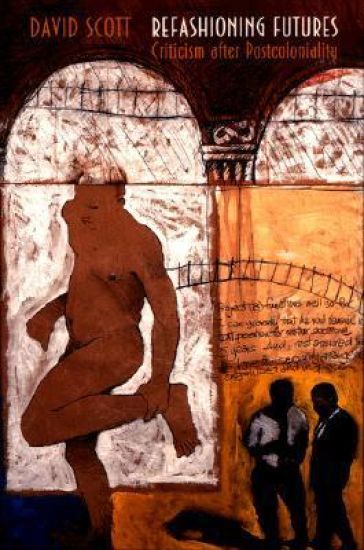
Refashioning Futures

Refashioning Futures

David Scott

Princeton University Press
1999
pokkari
How can we best forge a theoretical practice that directly addresses the struggles of once-colonized countries, many of which face the collapse of both state and society in today's era of economic reform? David Scott argues that recent cultural theories aimed at "deconstructing" Western representations of the non-West have been successful to a point, but that changing realities in these countries require a new approach. In Refashioning Futures, he proposes a strategic practice of criticism that brings the political more clearly into view in areas of the world where the very coherence of a secular-modern project can no longer be taken for granted. Through a series of linked essays on culture and politics in his native Jamaica and in Sri Lanka, the site of his long scholarly involvement, Scott examines the ways in which modernity inserted itself into and altered the lives of the colonized. The institutional procedures encoded in these modern postcolonial states and their legal systems come under scrutiny, as do our contemporary languages of the political. Scott demonstrates that modern concepts of political representation, community, rights, justice, obligation, and the common good do not apply universally and require reconsideration. His ultimate goal is to describe the modern colonial past in a way that enables us to appreciate more deeply the contours of our historical present and that enlarges the possibility of reshaping it.