Kirjojen hintavertailu. Mukana 11 244 527 kirjaa ja 12 kauppaa.

Kirjahaku

Etsi kirjoja tekijän nimen, kirjan nimen tai ISBN:n perusteella.

13 kirjaa tekijältä David Seed

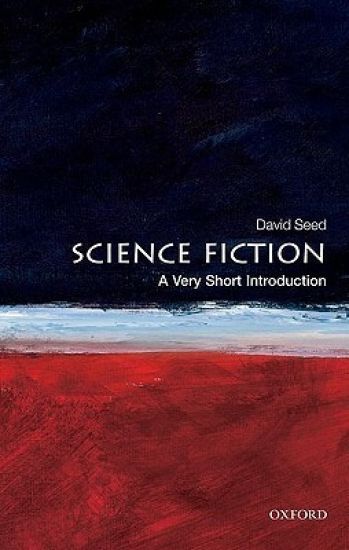
Science Fiction

Science Fiction

David Seed

Oxford University Press
2011
nidottu
Science Fiction has proved notoriously difficult to define. It has been explained as a combination of romance, science and prophecy; as a genre based on an imagined alternative to the reader's environment; and as a form of fantastic fiction and historical literature. It has also been argued that science fiction narratives are the most engaged, socially relevant, and responsive to the modern technological environment. This Very Short Introduction doesn't offer a history of science fiction, but instead ties examples of science fiction to different historical moments, in order to demonstrate how science fiction has evolved over time. David Seed looks not only at literature, but also at drama and poetry, as well as film. Examining recurrent themes in science fiction he looks at voyages into space, the concept of the alien and alternative social identities, the role of technology in science fiction, and its relation to time - in the past, present, and future. ABOUT THE SERIES: The Very Short Introductions series from Oxford University Press contains hundreds of titles in almost every subject area. These pocket-sized books are the perfect way to get ahead in a new subject quickly. Our expert authors combine facts, analysis, perspective, new ideas, and enthusiasm to make interesting and challenging topics highly readable.

Ray Bradbury

Ray Bradbury

David Seed

University of Illinois Press
2015
sidottu
As much as any individual, Ray Bradbury brought science fiction's ideas into the mainstream. Yet he transcended the genre in both form and popularity, using its trappings to explore timely social concerns and the kaleidoscope of human experience while in the process becoming one of America's most beloved authors. David Seed follows Bradbury's long career from the early short story masterpieces through his work in a wide variety of broadcast and film genres to the influential cultural commentary he spread via essays, speeches, and interviews. Mining Bradbury's classics and hard-to-find archival, literary, and cultural materials, Seed analyzes how the author's views on technology, authoritarianism, and censorship affected his art; how his Midwest of dream and dread brought his work to life; and the ways film and television influenced his creative process and visually-oriented prose style. The result is a passionate statement on Bradbury's status as an essential literary writer deserving of a place in the cultural history of his time.
Ray Bradbury

Ray Bradbury

David Seed

University of Illinois Press
2015
nidottu
As much as any individual, Ray Bradbury brought science fiction's ideas into the mainstream. Yet he transcended the genre in both form and popularity, using its trappings to explore timely social concerns and the kaleidoscope of human experience while in the process becoming one of America's most beloved authors. David Seed follows Bradbury's long career from the early short story masterpieces through his work in a wide variety of broadcast and film genres to the influential cultural commentary he spread via essays, speeches, and interviews. Mining Bradbury's classics and hard-to-find archival, literary, and cultural materials, Seed analyzes how the author's views on technology, authoritarianism, and censorship affected his art; how his Midwest of dream and dread brought his work to life; and the ways film and television influenced his creative process and visually-oriented prose style. The result is a passionate statement on Bradbury's status as an essential literary writer deserving of a place in the cultural history of his time.
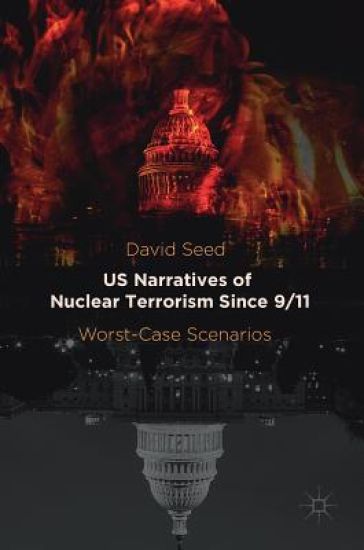
US Narratives of Nuclear Terrorism Since 9/11
This study examines the US fiction and related films which makes a series of interventions in the cultural debate over the threat of nuclear terrorism. It traces the beginnings of this anxiety from the 1970s, which increased during the 1990s after the collapse of the Soviet Union. The traumatic events of 9/11 became a major reference point for this fiction, which expressed the fear that of a second and worse 9/11. The study examines narratives of conspiracies which are detected and forestalled, and of others which lead to the worst of all outcomes – nuclear detonations, sometimes delivered by suitcase nukes. In some of these narratives the very fate of the nation hangs in the balance in the face of nuclear apocalypse. The discussion considers cases of attacks by electromagnetic pulse (EMP), cyberterrorism and even bioterrorism. Some of the authors examined are present or former politicians, members of the CIA, and former president, Bill Clinton.
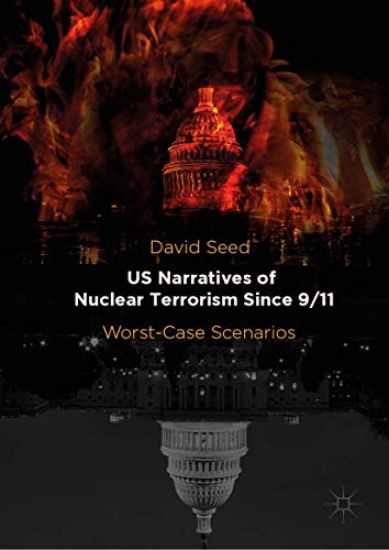
US Narratives of Nuclear Terrorism Since 9/11
This study examines the US fiction and related films which makes a series of interventions in the cultural debate over the threat of nuclear terrorism. It traces the beginnings of this anxiety from the 1970s, which increased during the 1990s after the collapse of the Soviet Union. The traumatic events of 9/11 became a major reference point for this fiction, which expressed the fear that of a second and worse 9/11. The study examines narratives of conspiracies which are detected and forestalled, and of others which lead to the worst of all outcomes – nuclear detonations, sometimes delivered by suitcase nukes. In some of these narratives the very fate of the nation hangs in the balance in the face of nuclear apocalypse. The discussion considers cases of attacks by electromagnetic pulse (EMP), cyberterrorism and even bioterrorism. Some of the authors examined are present or former politicians, members of the CIA, and former president, Bill Clinton.
A Companion to Twentieth-Century United States Fiction

A Companion to Twentieth-Century United States Fiction

David Seed

Wiley-Blackwell (an imprint of John Wiley Sons Ltd)
2007
muu
Through a wide-ranging series of essays and readings, A Companion to Twentieth-Century U.S. Fiction presents an overview of fiction published in the United States since the conclusion of the First World War. These thought-provoking essays cover a diverse cross-section of novelists from the period; from canonical literary figures such as Hemingway and Faulkner to popular contemporary fiction writers such as Amy Tan and Alice Walker, as well as critical overviews of various literary genres, such as crime and 'hard-boiled' fiction, along with coverage of the ethnic and cultural traditions that continue to permeate U.S. fiction. A Companion to Twentieth-Century U.S. Fiction is an accessible and invaluable entree into the fertile period that cemented America's literary reputation throughout the world.
Under the Shadow

Under the Shadow

David Seed

Kent State University Press
2012
sidottu
In Pat Frank’s 1959 novel Alas, Babylon, the character Helen says of her children: “All their lives, ever since they’ve known anything, they’ve lived under the shadow of war—atomic war. For them the abnormal has become normal.” The threat of nuclear annihilation was a constant source of dread during the Cold War, and in Under the Shadow, author David Seed examines how authors and filmmakers made repeated efforts in their work to imagine the unimaginable.Seed discusses classics of the period like Nevil Shute’s On the Beach, but he also argues for recognition of less-known works such as Walter M. Miller’s depiction of historical cycles in A Canticle for Leibowitz, Bernard Wolfe’s black comedy of aggression in Limbo, or Mordecai Roshwald’s satirical depiction of technology running out of human control in Level 7. Seed relates these literary works to their historical contexts and to their adaptations in film. Two prime examples of this interaction between media are the motion pictures Fail-Safeand Dr. Strangelove, which dramatise the threat posed by the arms race to rationality and ultimate human survival.Seed addresses the attempts made by characters to remap America as a central part of their efforts to understand the horrors of the war. A particular subset of future histories is also examined: accounts of a Third World War, which draw on the conventions of military history and reportage to depict probable war scenarios. Under the Shadow concludes with a discussion of the recent fiction of nuclear terrorism.
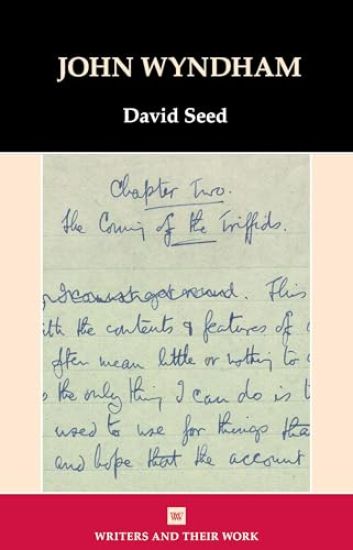
John Wyndham

John Wyndham

David Seed

LIVERPOOL UNIVERSITY PRESS
2025
sidottu
This is the first critical study of the work of John Wyndham, a formative figure in postwar British science fiction. It explores his beginnings in the 1930s and then offers a novel-by-novel examination of his key works, including his short stories. This is complemented by a discussion of his evolving view of science fiction, as revealed through his essays and reviews. In addition, the book reprints for the first time one of Wyndham’s key essays on the genre, 'Science-Fiction: Space-Opera', written in 1955.
John Wyndham

John Wyndham

David Seed

LIVERPOOL UNIVERSITY PRESS
2025
nidottu
This is the first critical study of the work of John Wyndham, a formative figure in postwar British science fiction. It explores his beginnings in the 1930s and then offers a novel-by-novel examination of his key works, including his short stories. This is complemented by a discussion of his evolving view of science fiction, as revealed through his essays and reviews. In addition, the book reprints for the first time one of Wyndham’s key essays on the genre, 'Science-Fiction: Space-Opera', written in 1955.
Cinematic Fictions

Cinematic Fictions

David Seed

Liverpool University Press
2012
nidottu
The phrase ‘cinematic fiction’ has now been generally accepted into critical discourse, but is usually applied to post-war novels. This book asks a simple question: given their fascination with the new medium of film, did American novelists attempt to apply cinematic methods in their own writings? From its very beginnings the cinema has played a special role in defining American culture. Covering the period from the 1910s up to the Second World War, Cinematic Fictions offers new insights into classics like The Great Gatsby and The Grapes of Wrath discussing major writers’ critical writings on film and active participation in film-making. Cinematic Fictions is also careful not to portray ‘cinema’ as a single or stable entity. Some novelists drew on silent film; others looked to the Russian theorists for inspiration; and yet others turned to continental film-makers rather than to Hollywood. Film itself was constantly evolving during the first decades of the twentieth century and the writers discussed here engaged in a kind of dialogue with the new medium, selectively pursuing strategies of montage, limited point of view and scenic composition towards their different ends. Contrasting a diverse range of cinematic and literary movements, this will be compulsory reading for scholars of American literature and film.
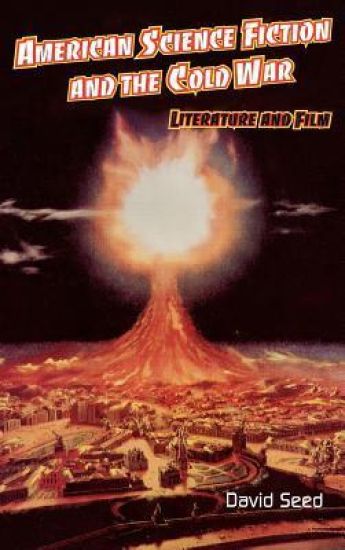
American Science Fiction and the Cold War

American Science Fiction and the Cold War

David Seed

Keele University Press
1999
nidottu
American science fiction, both literature and film, has played a key role in the portrayal of the fears inherent in the Cold War. Working through key texts, this work investigates the political inflexions put on American narratives in the post-war decades by Cold War cultural circumstances.