Kirjojen hintavertailu. Mukana 11 697 572 kirjaa ja 12 kauppaa.

Kirjahaku

Etsi kirjoja tekijän nimen, kirjan nimen tai ISBN:n perusteella.

5 kirjaa tekijältä David Sneath

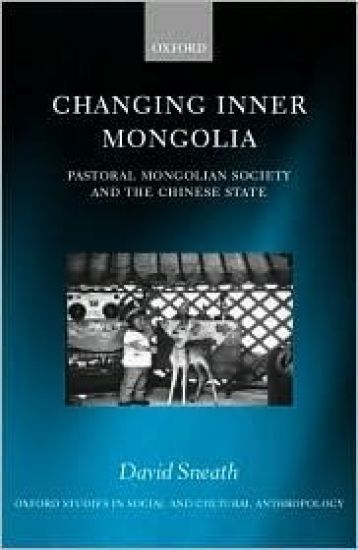
Changing Inner Mongolia

Changing Inner Mongolia

David Sneath

Oxford University Press
2000
sidottu
Since the Chinese Communists took control of Inner Mongolia, very little has been written about the region. This book is an attempt to redress the balance. It is a study of the effect of decades of social engineering on a Minority Nationality in China. David Sneath charts the recent history of the pastoral Mongolians of Inner Mongolia since they became the subjects of the Chinese Communist state, and examines the society that has emerged since the abolition of the Communes in the 1980s. He explores the history of local economic and political forms to illuminate the transformations and continuities of life in pastoral Mongolian society, and offers an account that includes both the swings of national and regional government policy and the experiences of individuals subject to those changes. By taking a historical perspective his study reveals underlying modes of symbolism, and notions of domestic organization and paternalistic authority, that have remained fundamental to pastoralism in Inner Mongolia. It suggests an indigenous mechanism for economic inequality and dependency in pastoral society, one that has helped to shape the pastoral nomadic sociopolitical order of the past.
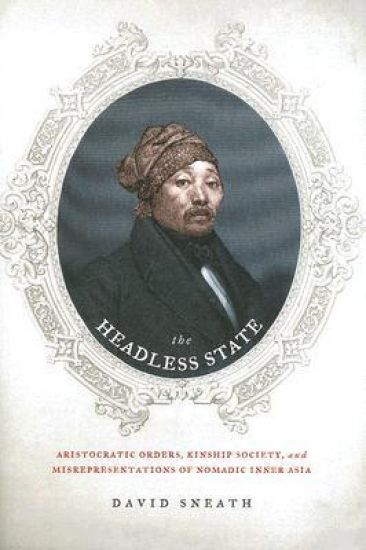
The Headless State

The Headless State

David Sneath

Columbia University Press
2007
sidottu
In this groundbreaking work, social anthropologist David Sneath aggressively dispels the myths surrounding the history of steppe societies and proposes a new understanding of the nature and formation of the state. Since the colonial era, representations of Inner Asia have been dominated by images of fierce nomads organized into clans and tribes-but as Sneath reveals, these representations have no sound basis in historical fact. Rather, they are the product of nineteenth-century evolutionist social theory, which saw kinship as the organizing principle in a nonstate society. Sneath argues that aristocratic power and statelike processes of administration were the true organizers of life on the steppe. Rethinking the traditional dichotomy between state and nonstate societies, Sneath conceives of a "headless state" in which a configuration of statelike power was formed by the horizontal relations among power holders and was reproduced with or without an overarching ruler or central "head." In other words, almost all of the operations of state power existed at the local level, virtually independent of central bureaucratic authority. Sneath's research gives rise to an alternative picture of steppe life in which aristocrats determined the size, scale, and degree of centralization of political power. His history of the region shows no clear distinction between a highly centralized, stratified "state" society and an egalitarian, kin-based "tribal" society. Drawing on his extensive anthropological fieldwork in the region, Sneath persuasively challenges the legitimacy of the tribal model, which continues to distort scholarship on the history of Inner Asia.
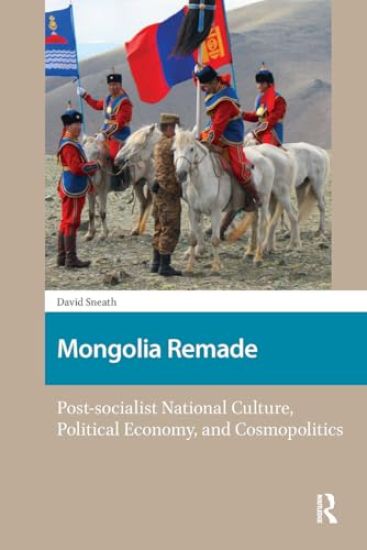
Mongolia Remade

Mongolia Remade

David Sneath

TAYLOR FRANCIS LTD
2025
nidottu
This book explores the historical and contemporary processes that have made and remade Mongolia as it is today: the construction of ethnic and national cultures, the transformations of political economy and a ‘nomadic’ pastoralism, and the revitalization of a religious and cosmological heritage that has led to new forms of post-socialist politics. Widely published as an expert in the field, David Sneath offers a fresh perspective into a region often seen as mysterious to the West.
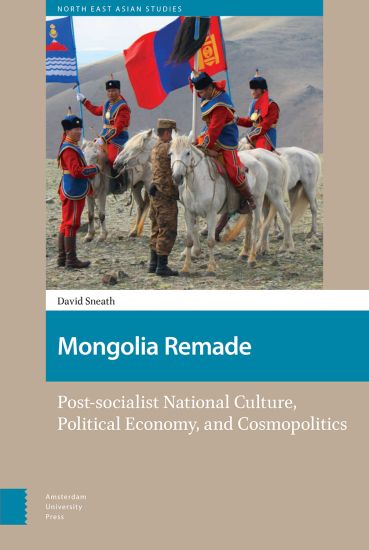
Mongolia Remade

Mongolia Remade

David Sneath

Amsterdam University Press
2018
sidottu
This book explores the historical and contemporary processes that have made and remade Mongolia as it is today: the construction of ethnic and national cultures, the transformations of political economy and a ‘nomadic’ pastoralism, and the revitalization of a religious and cosmological heritage that has led to new forms of post-socialist politics. Widely published as an expert in the field, David Sneath offers a fresh perspective into a region often seen as mysterious to the West.