Kirjojen hintavertailu. Mukana 11 342 296 kirjaa ja 12 kauppaa.

Kirjahaku

Etsi kirjoja tekijän nimen, kirjan nimen tai ISBN:n perusteella.

11 kirjaa tekijältä David Stoesz

The Dynamic Welfare State

The Dynamic Welfare State

David Stoesz

Oxford University Press Inc
2016
sidottu
The Dynamic Welfare State explains the decline of the classic welfare state and documents the emergence of a third stage in the American welfare state, evident in corporations exploiting markets in healthcare, education, and financial services. Architects of the welfare state envisaged government as the provider of essential services to citizens; however, as the Medicare Modernization Act of 2003 and the Affordable Care Act of 2010 show, corporations and the wealthy have become adept at using trade associations, hiring lobbyists, influencing elections, and contributing to think tanks in order to craft public policy so that it is congruent with industry preferences. Additionally, The Dynamic Welfare State describes the failure of health and human services professionals to advance the welfare of the public, graphically illustrated by the poverty trap, deinstitutionalization of the mentally ill, and "the school-to-prison pipeline." A reconfigured welfare state is essential if government social programs are to honor their public commitments for the 21st century. This requires an appreciation for the contributions of nonprofit and for-profit organizations as well as the role of capitalism in welfare philosophy. Empowerment, mobility, and innovation are themes for a dynamic welfare state that is congruent with the 21st century.

Pandora's Dilemma

Pandora's Dilemma

David Stoesz

Oxford University Press Inc
2017
sidottu
What are the challenges facing social welfare in America? Theories of stakeholders, the policy process, electoral politics, the precariat, child welfare, online education, the devolution of the welfare state, and its sequel, the investment state, illuminate critical factors determining the future of social welfare as well as the professions. Beyond explaining social change, theories include applications for future research. After the turmoil of the 2016 election, Pandora's Dilemma is not only the first empirically-based theoretical explanation, but also a long-overdue illustration of the value of theory in social welfare. This book is essential reading for social welfare scholars trying to make sense of Brexit and the Trump presidency.
The Investment State

The Investment State

David Stoesz

Oxford University Press Inc
2018
sidottu
Social investment is a strategy that addresses neoliberal austerity by putting private capital to public purpose. An investment state serves as a sequel to the welfare state by maximizing capability, expanding employee benefits, implementing evidence-based policy, democratizing polity and commerce, and advancing social and institutional inclusion. The Investment State provides a template for future social policy, which can be adapted to cities, states, nations, and international trade agreements. It serves as a sequel to the author's previous book, The Dynamic Welfare State (OUP, 2016) -- which included a theory of welfare state decline -- by envisioning a new paradigm for social programs.
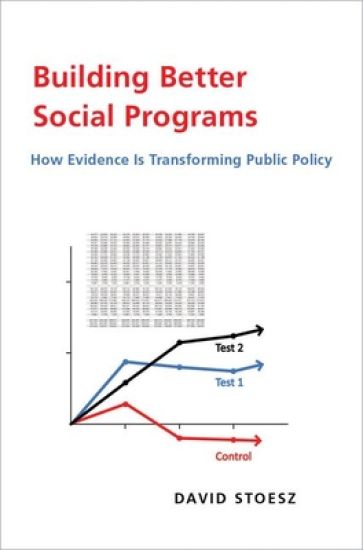
Building Better Social Programs

Building Better Social Programs

David Stoesz

Oxford University Press Inc
2020
sidottu
Evidence-based policymaking has, in recent decades, become a focus of program innovation in social care that engages foundations, universities, and state and federal governments. Rigorous research, epitomized by Randomized Controlled Trials, has become the benchmark for demonstrating efficacy and efficiency in social programming. Building Better Social Programs situates evidence-based policymaking with respect to the welfare state, describes key organizations driving the evidence-based movement, and proposes innovations designed to extend benefits to the working class. In addition to providing case studies of cost-effective programs delivering positive outcomes, this volume will include interviews with luminaries who have propelled the evidence-based policy movement. It serves as essential reading for faculty, graduate students, program managers, and foundation program officers.
Quixote's Ghost

Quixote's Ghost

David Stoesz

Oxford University Press Inc
2005
sidottu
American social policy, writes David Stoesz, is currently experiencing an alarming paradigm shift. Quixote's Ghost, a provocative new analysis of the ideological fight for control of American social welfare policy, demonstrates how the Right pirated the pragmatism championed by the Left since the New Deal and what that means for the future of social policy. Stoesz's fascinating account documents how conservative think tanks arose to combat the dominance of liberal intellectualism in the university system, and by now have taken command of the "means of analysis," flooding Congress with proposals and effectively shifting American public philosophy from liberalism to conservatism. While the Right devoted enormous amounts of energy in reconstructing social policy, Stoesz argues that the American liberal-intellectual class-the Liberati-abandoned its original mission, defecting from the welfare state project to pursue a philosophical tangent, postmodernism, that vilified social policy and romanticized oppressed populations. Presenting case studies from welfare reform and children's services, he illustrates how both the Right and the Left have shortchanged American social policy. In the process, he proposes radical pragmatism as the solution to counter the dominance of an emerging welfare-industrial complex and revive a Progressive orientation to social policy. Only through citizen empowerment, social mobility, and government restructuring, Stoesz argues, can we effectively craft a new approach to social policy that meets the requirements of the 21st century and transcends the impasse between the Left and the Right. Quixote's Ghost, framed by the metaphor of a Romantic Left whose actions-like Don Quixote's obsession with chivalry-are out of synch with the present reality, will be of immense interest to students and academics alike. As one of the few books to chart this radical shift in social policy and its implications on the ground, it will be sure to challenge both the Right and the Left to craft a new approach to thinking about American social policy.
A Poverty of Imagination

A Poverty of Imagination

David Stoesz

University of Wisconsin Press
2000
sidottu
Tracing the roots of recent US reforms to the early days of the war on poverty, this work describes a social welfare system grown inept, corrupt, and susceptible to conservative redesign. It focuses on the economic barriers impeding movement out of poverty into the American mainstream.
A Poverty of Imagination

A Poverty of Imagination

David Stoesz

University of Wisconsin Press
2000
nidottu
Tracing the roots of recent US reforms to the early days of the war on poverty, this work describes a social welfare system grown inept, corrupt, and susceptible to conservative redesign. It focuses on the economic barriers impeding movement out of poverty into the American mainstream.
Welfare State 3.0

Welfare State 3.0

David Stoesz

Routledge
2021
nidottu
This book identifies specific changes to bring U.S. social policy in accord with the Information Age of the 21st century, in contrast to the policy infrastructure of industrial America.Welfare State 3.0: Social Policy after the Pandemic acknowledges the existing social infrastructure, considers viable options, and provides supporting data to suggest social policy reform by four strategies: consolidating programs, harmonizing applications, expanding equity, and conducting experiments. The book favors discreet, poignant proposals of social programs. In 12 chapters, the text provides an analysis that honors past accomplishments, recognizes the influence of established stakeholders, and concedes program inadequacies, while plotting specific opportunities for policy improvement. In contrast to liberalism’s tendency toward idealism, the book adopts a realpolitik appreciation for social policy.Written by one of the most respected academics of U.S. social policy, this book will be required reading for all undergraduate and postgraduate students of social policy, social work, sociology, and U.S. politics more broadly.
Welfare State 3.0

Welfare State 3.0

David Stoesz

Routledge
2021
sidottu
This book identifies specific changes to bring U.S. social policy in accord with the Information Age of the 21st century, in contrast to the policy infrastructure of industrial America.Welfare State 3.0: Social Policy after the Pandemic acknowledges the existing social infrastructure, considers viable options, and provides supporting data to suggest social policy reform by four strategies: consolidating programs, harmonizing applications, expanding equity, and conducting experiments. The book favors discreet, poignant proposals of social programs. In 12 chapters, the text provides an analysis that honors past accomplishments, recognizes the influence of established stakeholders, and concedes program inadequacies, while plotting specific opportunities for policy improvement. In contrast to liberalism’s tendency toward idealism, the book adopts a realpolitik appreciation for social policy.Written by one of the most respected academics of U.S. social policy, this book will be required reading for all undergraduate and postgraduate students of social policy, social work, sociology, and U.S. politics more broadly.
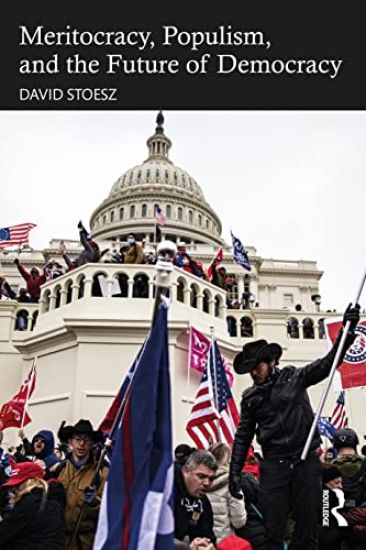
Meritocracy, Populism, and the Future of Democracy
This book explores the fundamental shift that has occurred in America and Britain as elites accumulate unprecedented capital and influence and a meritocracy has emerged to manage national affairs, a change that means opportunity, affluence, and power have migrated away from most of the population. Arguing the following four points: Geography accounts for the accumulating influence of metropolitan regions, at the expense of smaller cities and rural communities of the heartland. Occupational groups, particularly lawyers, physicians, and financiers, have constructed professional cartels to secure rents at the expense of the prosperity of the public. Think tanks and universities have become the necessary pathways to attain leadership in public affairs. The internationalization of commerce has contributed to a parallel network of economic institutions and think tanks sharing ideas and personnel to lobby for policies favorable to their sponsors. Stoesz connects present and past to look at the progressive-era, the history of professions, and questions of welfare state reform, post-neoliberalism, and marketization. His book will be of great interest to students of sociology, political science, public administration, social policy, history, and economics. Scholars in think tanks and universities as well as political consultants will also find it invaluable.
Meritocracy, Populism, and the Future of Democracy
This book explores the fundamental shift that has occurred in America and Britain as elites accumulate unprecedented capital and influence and a meritocracy has emerged to manage national affairs, a change that means opportunity, affluence, and power have migrated away from most of the population. Arguing the following four points: Geography accounts for the accumulating influence of metropolitan regions, at the expense of smaller cities and rural communities of the heartland. Occupational groups, particularly lawyers, physicians, and financiers, have constructed professional cartels to secure rents at the expense of the prosperity of the public. Think tanks and universities have become the necessary pathways to attain leadership in public affairs. The internationalization of commerce has contributed to a parallel network of economic institutions and think tanks sharing ideas and personnel to lobby for policies favorable to their sponsors. Stoesz connects present and past to look at the progressive-era, the history of professions, and questions of welfare state reform, post-neoliberalism, and marketization. His book will be of great interest to students of sociology, political science, public administration, social policy, history, and economics. Scholars in think tanks and universities as well as political consultants will also find it invaluable.