Kirjojen hintavertailu. Mukana 12 016 292 kirjaa ja 12 kauppaa.

Kirjahaku

Etsi kirjoja tekijän nimen, kirjan nimen tai ISBN:n perusteella.

4 kirjaa tekijältä David Stouck

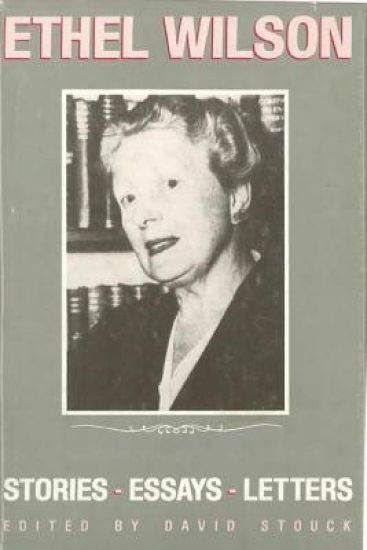
Ethel Wilson

Ethel Wilson

David Stouck

University of British Columbia Press
1987
sidottu
When Ethel Wilson published her first novel, Hetty Dorval,in 1947, she was nearly sixty years old. With her following books, sheestablished herself as British Columbia's most distinguishedfiction writer and one of Canada's best loved and most studiedauthors. Although she enjoyed and even encouraged her reputation as anunambitious latecomer who wrote for her own pleasure, she was, as DavidStouck reveals in this book, a person who took her writing veryseriously. Drawing on the Wilson papers held at the University of BritishColumbia, Stouck provides an important survey of Wilson's talentswhile at the same time offering the fullest biography of the author todate. Especially interesting is Wilson's previously unpublishedcorrespondence with her editor John Gray and with fellow writers suchas Mazo de la Roche, Earle Birney, Dorothy Livesay, and MargaretLaurence. Nine short stories are included in this volume, eight of which arepreviously unpublished and one which is reprinted for the first time ina collection of Wilson's work.

As for Sinclair Ross

As for Sinclair Ross

David Stouck

University of Toronto Press
2005
sidottu
Sinclair Ross (1908-1996), best known for his canonical novel As for Me and My House (1941), and for such familiar short stories as "The Lamp at Noon" and "The Painted Door," is an elusive figure in Canadian literature. A master at portraying the hardships and harsh beauty of the Prairies during the Great Depression, Ross nevertheless received only modest attention from the public during his lifetime. His reluctance to give readings or interviews further contributed to this faint public perception of the man. In As for Sinclair Ross, David Stouck tells the story of a lonely childhood in rural Saskatchewan, of a long and unrewarding career in a bank, and of many failed attempts to be published and to find an audience. The book also tells the story of a man who fell in love with both men and women and who wrote from a position outside any single definition of gender and sexuality. Stouck's biography draws on archival records and on insights gathered during an acquaintance late in Ross's life to illuminate this difficult author, describing in detail the struggles of a gifted artist living in an inhospitable time and place. Stouck argues that when Ross was writing about prairie farmers and small towns, he wanted his readers to see the kind of society they were creating, to feel uncomfortable with religion as coercive rhetoric, prejudices based on race and ethnicity, and rigid notions of gender. As for Sinclair Ross is the story of a remarkable writer whose works continue to challenge us and are rightly considered classics of Canadian literature.
Ethel Wilson

Ethel Wilson

David Stouck

University of Toronto Press
2003
sidottu
When Ethel Wilson published her first novel, Hetty Dorval, she was in her sixtieth year. With her subsequent books, among them the widely read Swamp Angel (1954), she established herself as one of Canada's most important writers. Although she fostered a reputation for being an unambitious latecomer, a happily married doctor's wife who wrote for her own pleasure, she in fact took her writing very seriously, trying for several years to place her work with major American publishers. David Stouck's engaging biography of this elusive Canadian writer draws on archival material and interviews to describe, in detail, her early life as an orphan in England and Vancouver and her long writer's apprenticeship, spanning from the publication of some children's stories in 1919 to the appearance of Hetty Dorval in 1947. Stouck's narrative charts the resistance among publishers, critics, and readers to the curious mixture in her work of an Edwardian sensibility and a postmodern intelligence. He also documents her own resistance to both literary nationalism and creative writing classes as strategies for promoting literature. She was nevertheless one of the few Canadian women writers to emerge from the 1950s, and she is still being read - all her books remaining in print. Stouck observes that Wilson's writing is marked by epistemological and ethical uncertainties that are rooted in the contingencies of language, because, as Wilson herself liked to quote from Lewis Carroll, the 'meaning [of words] depends on who is the master.' Ethel Wilson: A Critical Biography is the story of a distinguished writer whose works are rightly considered classics of Canadian literature.
Arthur Erickson

Arthur Erickson

David Stouck

Douglas McIntyre
2016
pokkari
Arthur Erickson, Canada's preeminent philosopher-architect, was renowned for his innovative approach to landscape, his genius for spatial composition and his epic vision of architecture for people. Erickson worked chiefly in concrete, which he called "the marble of our times," and wherever they appear, his buildings move the spirit with their poetic freshness and their mission to inspire. Erickson was also a controversial figure, more than once attracting the ire of his fellow architects, and leading a complicated personal life that resulted in a series of bankruptcies. In a fall from grace that recalls a Greek tragedy, Canada's great architect -- a handsome, elegant man who lived like a millionaire and counted among his close friends Pierre Trudeau and Elizabeth Taylor -- eventually became penniless. Arthur Erickson is both an intimate portrait of the man and a stirring account of how he made his buildings work.