Kirjojen hintavertailu. Mukana 11 545 202 kirjaa ja 12 kauppaa.

Kirjahaku

Etsi kirjoja tekijän nimen, kirjan nimen tai ISBN:n perusteella.

8 kirjaa tekijältä David Stuttard

Roman Mythology

Roman Mythology

David Stuttard

Thames Hudson Ltd
2019
sidottu
All Roads Lead to Rome, as the famous saying goes. The sites and events throughout the ancient world provided Romans with a rich tapestry to weave the stories of their past. Rome itself was a melting pot of peoples from across the Mediterranean and beyond, each bringing their myths and legends of heroes and heroines, gods and goddesses. Whether for aristocrats dressing up for banquet, or bloodthirsty audiences in the amphitheatres thrilled to watch condemned criminals forced to enact the roles of mythological creatures, Roman myths formed the backdrop to the rituals and customs of everyday life. Offering a fresh approach to Roman mythology, each site begins with a brief, evocative description of the location and landscape, followed by its associated myths and stories, as well as any rituals performed there in antiquity. Drawing on the great works of Dionysius of Halicarnassus and Plutarch, Ovid, Horace and Virgil, and with maps, illustrations and a gazetteer giving practical information about the sites today, this is a fresh look at a subject of great fascination.
A History of Ancient Greece in 50 Lives

A History of Ancient Greece in 50 Lives

David Stuttard

Thames Hudson Ltd
2021
nidottu
The political leaders, writers, artists and philosophers of ancient Greece turned a small group of city states into a pan-Mediterranean civilization, whose legacy can be found everywhere today. But who were these people, what do we know of their lives and how did they interact with one another? In this original new approach to telling the Greek story, David Stuttard weaves together the lives of fifty movers and shakers of the Greek world into a continuous, chronologically organized narrative, from the early tyrant rulers Peisistratus and Polycrates, through the stirrings of democracy under Cleisthenes to the rise of Macedon under Philip II and Alexander the Great and the eventual decline of the Greek world as Rome rose.With 29 illustrations, 25 in colour
Greek Mythology

Greek Mythology

David Stuttard

Thames Hudson Ltd
2016
sidottu
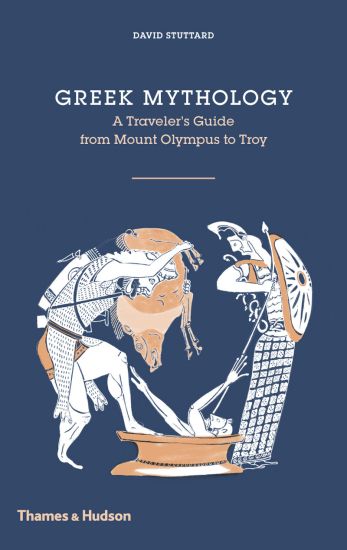
The Greek myths have a universal appeal, reaching far beyond the time and physical place in which they were created. But many are firmly rooted in specific settings: Thebes dominates the tragedy of Oedipus; Mycenae broods over the fates of Agamemnon and Electra; Knossos boasts the scene of Theseus’ slaying of the Minotaur; Tiryns was where Heracles set out from on each of his twelve labours. Here, the reader is taken on a tour of 22 destinations in Greece and Turkey, from Mount Olympus to Homer’s Hades, recounting the tales from Greek mythology and the history associated with each, evoking their atmosphere and highlighting features that visitors can still see today. Drawing on a wide range of Classical sources, with quotations newly translated by the author and freshly illustrated with specially commissioned drawings, this book is both a useful visitor’s guide to famous sites connected with Greek mythology and an enthralling imaginative journey for the armchair traveller.
Nemesis

Nemesis

David Stuttard

Harvard University Press
2018
sidottu
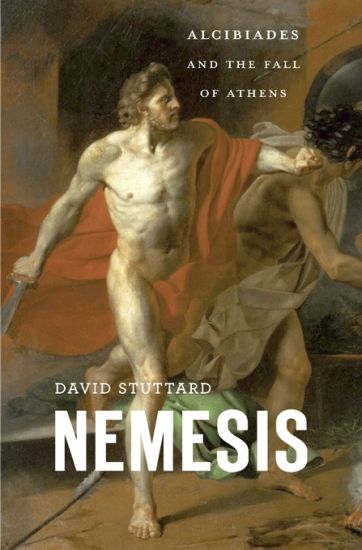
Alcibiades was one of the most dazzling figures of the Golden Age of Athens. A ward of Pericles and a friend of Socrates, he was spectacularly rich, bewitchingly handsome and charismatic, a skilled general, and a ruthless politician. He was also a serial traitor, infamous for his dizzying changes of loyalty in the Peloponnesian War. Nemesis tells the story of this extraordinary life and the turbulent world that Alcibiades set out to conquer.David Stuttard recreates ancient Athens at the height of its glory as he follows Alcibiades from childhood to political power. Outraged by Alcibiades’ celebrity lifestyle, his enemies sought every chance to undermine him. Eventually, facing a capital charge of impiety, Alcibiades escaped to the enemy, Sparta. There he traded military intelligence for safety until, suspected of seducing a Spartan queen, he was forced to flee again—this time to Greece’s long-term foes, the Persians. Miraculously, though, he engineered a recall to Athens as Supreme Commander, but—suffering a reversal—he took flight to Thrace, where he lived as a warlord. At last in Anatolia, tracked by his enemies, he died naked and alone in a hail of arrows.As he follows Alcibiades’ journeys crisscrossing the Mediterranean from mainland Greece to Syracuse, Sardis, and Byzantium, Stuttard weaves together the threads of Alcibiades’ adventures against a backdrop of cultural splendor and international chaos. Navigating often contradictory evidence, Nemesis provides a coherent and spellbinding account of a life that has gripped historians, storytellers, and artists for more than two thousand years.
Phoenix

Phoenix

David Stuttard

Harvard University Press
2021
sidottu
A Times Literary Supplement Best Book of the YearA vivid, novelistic history of the rise of Athens from relative obscurity to the edge of its golden age, told through the lives of Miltiades and Cimon, the father and son whose defiance of Persia vaulted Athens to a leading place in the Greek world.When we think of ancient Greece we think first of Athens: its power, prestige, and revolutionary impact on art, philosophy, and politics. But on the verge of the fifth century BCE, only fifty years before its zenith, Athens was just another Greek city-state in the shadow of Sparta. It would take a catastrophe, the Persian invasions, to push Athens to the fore. In Phoenix, David Stuttard traces Athens’s rise through the lives of two men who spearheaded resistance to Persia: Miltiades, hero of the Battle of Marathon, and his son Cimon, Athens’s dominant leader before Pericles.Miltiades’s career was checkered. An Athenian provincial overlord forced into Persian vassalage, he joined a rebellion against the Persians then fled Great King Darius’s retaliation. Miltiades would later die in prison. But before that, he led Athens to victory over the invading Persians at Marathon. Cimon entered history when the Persians returned; he responded by encouraging a tactical evacuation of Athens as a prelude to decisive victory at sea. Over the next decades, while Greek city-states squabbled, Athens revitalized under Cimon’s inspired leadership. The city vaulted to the head of a powerful empire and the threshold of a golden age. Cimon proved not only an able strategist and administrator but also a peacemaker, whose policies stabilized Athens’s relationship with Sparta.The period preceding Athens’s golden age is rarely described in detail. Stuttard tells the tale with narrative power and historical acumen, recreating vividly the turbulent world of the Eastern Mediterranean in one of its most decisive periods.
Power Games

Power Games

David Stuttard

British Museum Press
2012
pokkari
Power; the power of the gods; the power of Greek cities; the power of the human body: all these were celebrated at the ancient Olympic Games. This title revolves around the Games of 416 BC a turning point in Greek politics when a cold war between Athens and other major cities was about to erupt into bloody fighting.
Parthenon

Parthenon

David Stuttard

British Museum Press
2013
nidottu
The Parthenon is one of the world’s most iconic buildings: today, its silhouette symbolizes Greece. Built on the rocky acropolis of Athens in the aftermath of the devastating invasion of Xerxes, the Parthenon was part temple to Athene, part war memorial, part treasure trove of some of the most outstanding art of its age. Parthenon: Power and Politics on the Acropolis takes the reader through the dramatic story of the conception and creation of the Parthenon, setting it against a turbule nt historical background and rooting the building firmly in the real and mythological landscape of Athens. Written as a pacy, narrative history, the text features a cast of memorable characters, including Themistocles, the general whose decision to eva cuat e Athens led to the Persian sack of the acropolis; Pericl es, visionary statesman and mastermind of the Athens’ building project; and Pheidi as, who created the cult statue of Athene, and narrowly escaped impeachment for embezzlement. Beautifully illustrated with evocative site photography, details from the Parthenon sculptures and other related artworks from the superb collection of the British Museum, this book explores the Parthenon as the spiritual heart of a network of commanding buildings, de vised by Pericles and continued by his successors to promote the power of Athens as leader of the Greek world.