Kirjojen hintavertailu. Mukana 11 342 296 kirjaa ja 12 kauppaa.

Kirjahaku

Etsi kirjoja tekijän nimen, kirjan nimen tai ISBN:n perusteella.

17 kirjaa tekijältä David Swartz

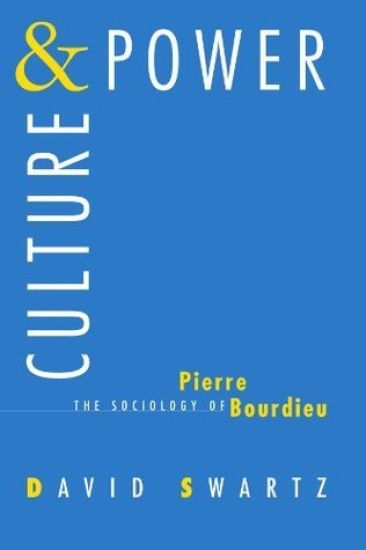
Culture and Power

Culture and Power

David Swartz

University of Chicago Press
1998
nidottu
Pierre Bourdieu is a prominent social theorist and researcher in contemporary sociology. In this critical examination of his oeuvre David Swartz focuses on a central theme in Bourdieu's work - the complex relationship between culture and power, and explains that sociology for Bourdieu is a mode of political intervention. Swartz clarifies Bourdieu's difficult concepts, noting where they have been misinterpreted by critics, and where they have fallen short in resolving important analytical issues. The book also shows how Bourdieu has synthesized his theory of practices and symbolic power from Durkheim, Marx, and Weber, and how his work was influenced by Sartre, Levi-Strauss, and Althusser.
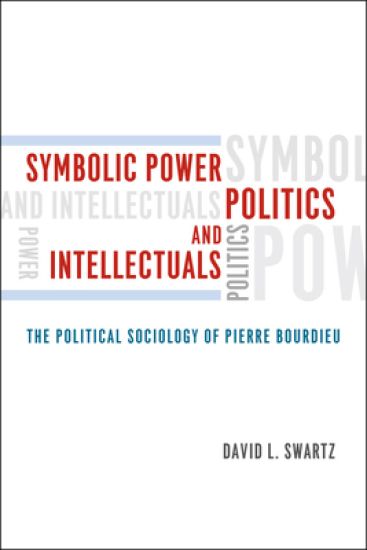
Symbolic Power, Politics, and Intellectuals

Symbolic Power, Politics, and Intellectuals

David Swartz

University of Chicago Press
2013
sidottu
Power is the central organizing principle of all social life, from culture and education to stratification and taste. And there is no more prominent name in the analysis of power than that of noted sociologist Pierre Bourdieu. Throughout his career, Bourdieu challenged the commonly held view that symbolic power - the power to dominate - is solely symbolic. He emphasized that symbolic power helps create and maintain social hierarchies, which form the very bedrock of political life. By the time of his death in 2002, Bourdieu had become a leading public intellectual, and his argument about the more subtle and influential ways that cultural resources and symbolic categories prevail in power arrangements and practices had gained broad recognition. In "Symbolic Power, Politics, and Intellectuals", David L. Swartz delves deeply into Bourdieu's work to show how central - but often overlooked - power and politics are to an understanding of sociology. Arguing that power and politics also stand at the core of Bourdieu's sociology, Swartz illuminates Bourdieu's political project for the social sciences, as well as Bourdieu's own political activism, explaining how sociology is not just science but also a crucial form of political engagement.
Symbolic Power, Politics, and Intellectuals – The Political Sociology of Pierre Bourdieu
Power is the central organizing principle of all social life, from culture and education to stratification and taste. And there is no more prominent name in the analysis of power than that of noted sociologist Pierre Bourdieu. Throughout his career, Bourdieu challenged the commonly held view that symbolic power - the power to dominate - is solely symbolic. He emphasized that symbolic power helps create and maintain social hierarchies, which form the very bedrock of political life. By the time of his death in 2002, Bourdieu had become a leading public intellectual, and his argument about the more subtle and influential ways that cultural resources and symbolic categories prevail in power arrangements and practices had gained broad recognition. In "Symbolic Power, Politics, and Intellectuals", David L. Swartz delves deeply into Bourdieu's work to show how central - but often overlooked - power and politics are to an understanding of sociology. Arguing that power and politics also stand at the core of Bourdieu's sociology, Swartz illuminates Bourdieu's political project for the social sciences, as well as Bourdieu's own political activism, explaining how sociology is not just science but also a crucial form of political engagement.
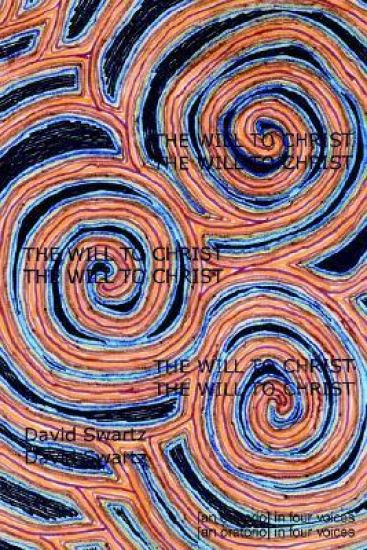
The Will to Christ

The Will to Christ

David Swartz

iUniverse
2005
pokkari
The author studied at Penn State, where he played no football, and Iowa, where he skirted the Workshop. He found God, lysergic acid, and despair in the Sixties, survived by getting that era into his art-some nineteen novels, twelve verse plays and more poetry than Browning. "The Will to Christ" contains ambition, a paean to bipolar disorder, four dramatic monologues by major players in the genesis and termination of the only messiah he's known, poetry on a sustained level that is often frightening. While the author has two other books and over a hundred poems in print, another ninety wouldn't offer a tenth of what this great long-poem rewards in continued reading. Here is an epic, twenty-two years in the making, that summons even Milton. The latter would be clearly horrified.
Orpheu

Orpheu

David Swartz

New Meridian Arts
2022
pokkari
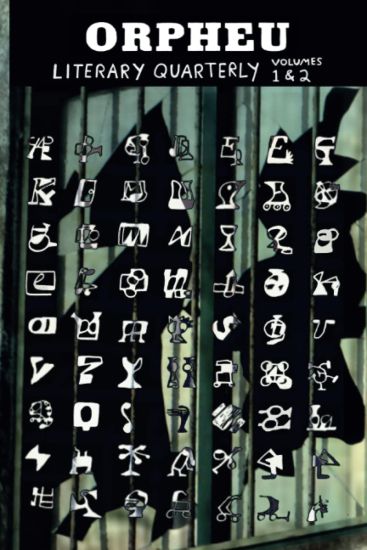
Properly speaking, ORPHEU is an exile of artistic temperaments seeking art as secrecy or torment... Our intent is to materialize, as a group or idea, a determined number of revelations in thought or art, that, based on this aristocratic principle, find in ORPHEU, their esoteric ideal, ingrained in the way we feel and know ourselves. LUIS DE MONTALV R Lisboa, Portugal1915 The generation of Orpheu, despite the diversity of its expressions, from the most conservative to the most radical, represents one of the most profound revolutions in the language and themes of Portuguese literature, with traces that extended into the 20th century and which remain both alive and unmatched up until this day. Nuno J dice Orpheu - Revista Trimestral de Literatura was published in 1915. The project was to be a quarterly magazine, the first issue corresponding to the months of January to March and the second from April to June. A third, of which proofs remain, due to lack of money to print it, was never completed or launched. The title is the result of a commitment to the symbolist tendency of Lu s de Montalvor, who signed the introduction, and from the fact that among the collaborators there was a Brazilian poet, Ronald de Carvalho, who wanted the magazine to reach the public in Brazil. The translator notes that: "My translation of Orpheu is, for me, the key to an unknown door. As a whole, they reveal a turn inwards towards a way of looking at oneself as the other, encapsulating the absent-present, feminine-masculine, nowhere-everywhere collision at the core of art and life."