Kirjojen hintavertailu. Mukana 12 016 292 kirjaa ja 12 kauppaa.

Kirjahaku

Etsi kirjoja tekijän nimen, kirjan nimen tai ISBN:n perusteella.

5 kirjaa tekijältä David T. Conley

College Knowledge

College Knowledge

David T. Conley

Jossey-Bass Inc.,U.S.
2008
nidottu
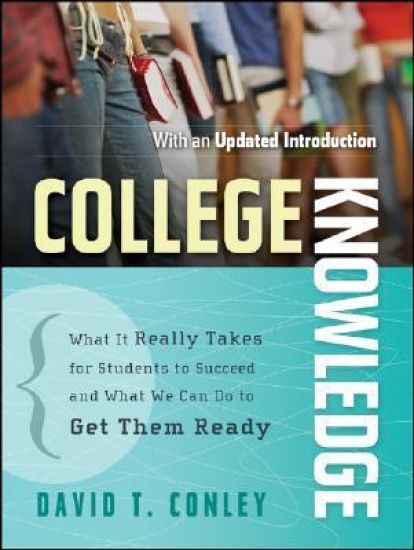
Although more and more students have the test scores and transcripts to get into college, far too many are struggling once they get there. These students are surprised to find that college coursework demands so much more of them than high school. For the first time, they are asked to think deeply, write extensively, document assertions, solve non-routine problems, apply concepts, and accept unvarnished critiques of their work. College Knowledge confronts this problem by looking at the disconnect between what high schools do and what colleges expect and proposes a solution by identifying what students need to know and be able to do in order to succeed. The book is based on an extensive three-year project sponsored by the Association of American Universities in partnership with The Pew Charitable Trusts. This landmark research identified what it takes to succeed in entry-level university courses. Based on the project's findings - and interviews with students, faculty, and staff - this groundbreaking book delineates the cognitive skills and subject area knowledge that college-bound students need to master in order to succeed in today's colleges and universities. These Standards for Success cover the major subject areas of English, mathematics, natural sciences, social sciences, second languages, and the arts.
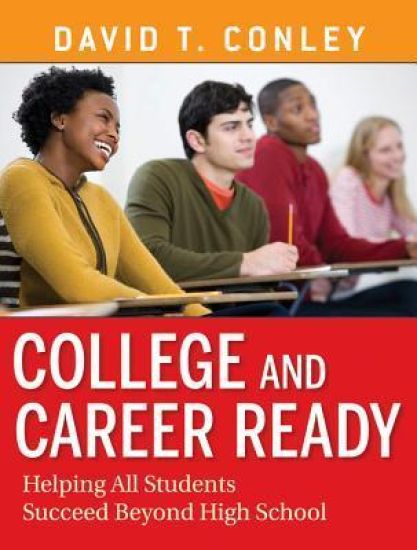
College and Career Ready

College and Career Ready

David T. Conley

John Wiley Sons Inc
2012
nidottu
Giving students the tools they need to succeed in college and work College and Career Ready offers educators a blueprint for improving high school so that more students are able to excel in freshman-level college courses or entry-level jobs-laying a solid foundation for lifelong growth and success. The book is filled with detailed, practical guidelines and case descriptions of what the best high schools are doing. Includes clear guidelines for high school faculty to adapt their programs of instruction in the direction of enhanced college/career readinessProvides practical strategies for improving students' content knowledge and academic behaviors Offers examples of best practices and research-based recommendations for change The book considers the impact of behavioral issues-such as time management and study habits-as well as academic skills on college readiness.
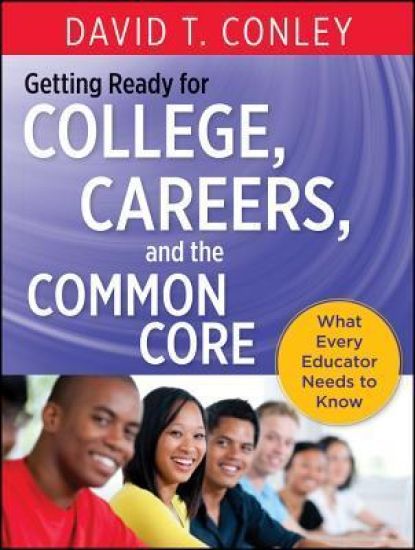
Getting Ready for College, Careers, and the Common Core
Create programs that prepare students for college, careers, and the new and challenging assessments of the Common Core State Standards Written for all educators but with an emphasis on those at the secondary level, this important resource shows how to develop programs that truly prepare students for both the Common Core assessments and for college and career readiness. Based on multiple research studies conducted by Conley as well as experience he has gained from working with dozens of high schools that succeed with a wide range of students, the book provides specific strategies for teaching the CCSS in ways that improve readiness for college and careers for the full range of students. Draws from research-based models for creating programs for high school students that will ensure readiness for tests and for college and beyondIncludes strategies and practices for teachers to help students develop postsecondary preparednessIs the third in a series of books on readiness written by David Conley, including College Knowledge and College and Career Ready Teachers can use this valuable resource to understand the "big picture" behind the Common Core State Standards, how to teach to them in ways that prepare students for new, challenging assessments being implemented over the next few years and, more importantly, how to help all students be ready for learning beyond high school.
The Promise and Practice of Next Generation Assessment

The Promise and Practice of Next Generation Assessment

David T. Conley

Harvard Educational Publishing Group
2018
nidottu
In The Promise and Practice of Next Generation Assessment, David T. Conley presents the case for a new, comprehensive system of assessment using different measurements for different purposes. Changes in the purposes of education, he argues, demand forms of assessment that go beyond merely ranking students to supporting the ambitious aim of helping all students meet career and college readiness goals. Conley describes the interplay between assessment and learning, and shows how “next generation” approaches can produce results that are more effective in informing classroom instruction. Acknowledging the complexity and limitations of many of these novel approaches, he suggests that rather than relying on a system built on a single measure—high-stakes, multiple-choice tests—what is needed is a system that draws on a more diverse portfolio of personalized assessments. Conley provides several examples of programs, schools, and districts that are piloting next generation approaches, and describes the opportunities and implementation challenges involved in making this shift. With decades of experience in learning and assessment, Conley outlines how next generation models can support ambitious learning for all students.
The Promise and Practice of Next Generation Assessment

The Promise and Practice of Next Generation Assessment

David T. Conley

Harvard Educational Publishing Group
2018
sidottu
In The Promise and Practice of Next Generation Assessment, David T. Conley presents the case for a new, comprehensive system of assessment using different measurements for different purposes. Changes in the purposes of education, he argues, demand forms of assessment that go beyond merely ranking students to supporting the ambitious aim of helping all students meet career and college readiness goals.Conley describes the interplay between assessment and learning, and shows how ""next generation"" approaches can produce results that are more effective in informing classroom instruction. Acknowledging the complexity and limitations of many of these novel approaches, he suggests that rather than relying on a system built on a single measure—high-stakes, multiple-choice tests—what is needed is a system that draws on a more diverse portfolio of personalized assessments. Conley provides several examples of programs, schools, and districts that are piloting next generation approaches, and describes the opportunities and implementation challenges involved in making this shift.With decades of experience in learning and assessment, Conley outlines how next generation models can support ambitious learning for all students.