
Kirjahaku
Etsi kirjoja tekijän nimen, kirjan nimen tai ISBN:n perusteella.
60 kirjaa tekijältä David Thomson

“A marvelous bombshell of a book, by one of our most formidably knowledgeable and insightful writers on film, it is filled with surprises and witty asides. Though Thomson is quick to pounce on the hypocrisies and historical omissions of some of these war movies, there is nothing compromised about his own daredevil judgments. We are in the hands of a master critic/essayist.”—Phillip LopateFrom one of the greatest living writers on film, a magisterial look at a century of battle depicted on screen, and a meditation on the twisted relationship between war and the movies.In The Fatal Alliance the acclaimed film critic David Thomson offers us one of his most provocative books yet—a rich, arresting, and troubling study of that most beloved genre: the war movie. It is not a standard history or survey of war films, although Thomson turns his typically piercing eye to many favorites—from All Quiet on the Western Front to The Bridge on the River Kwai to Saving Private Ryan. But The Fatal Alliance does much more, exploring how war and cinema in the twentieth century became inextricably linked. Movies had only begun to exist by the beginning of World War I, yet in less than a century, had transformed civilian experience of war—and history itself—for millions around the globe. This reality is the moral conundrum at the heart of Thomson’s book. War movies bring both prestige and are so often box office blockbusters; but is there something problematic at how much moviegoers enjoy depictions of violence on a grand scale, such as Apocalypse Now, Black Hawk Down, or even Star Wars? And what does this truth say about us, our culture, and our changing sense of warfare and the past?


Woodbrook is a rare house that gives its name to a small, rural area in Ireland, not far from the old port of Sligo. He stayed for ten years. This memoir, acknowledged as a masterpiece, grew out of two great loves - for Woodbrook and for Phoebe, his pupil.

Set in the 1920s, this marvellously sensitive autobiography recreates the varied community of Nairn, with its fishermen and townsfolk, its crofters and its prosperous upper-middle-classes.
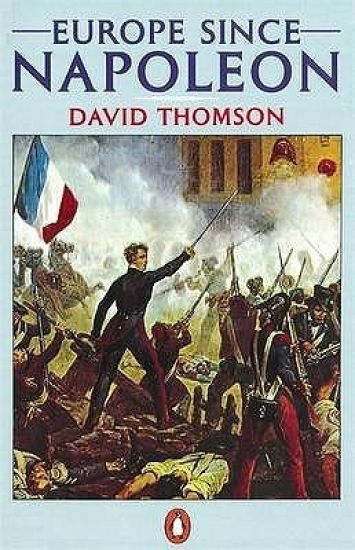
A history of Europe since Napoleon, covering all of the main topics of that period.

David Thomson's 'Have You Seen?' - A Personal Introduction to 1,000 Films is a quirky, idiosyncratic and hugely entertaining look at a century of cinema. This is veteran film writer David Thomson's personal, irreverent, hilarious and utterly original take on the 1,000 films he has most loved - and hated - from Abbott and Costello Meet Frankenstein to Zabriskie Point, from esteemed classics to forgotten curiosities, guilty pleasures to noir treats, horror gems to kitsch disasters. The result is probably the most enjoyable film book you will ever read (and you'll never think about The Sound of Music in the same way again). 'Delightful ... it's like having the most film-literate pal you can imagine sitting beside you in a multiplex' Independent 'A joy ... he's incapable of writing a boring sentence' Evening Standard Books of the Year 'This book sets the bar. There isn't a more intelligent, insightful and provocative guide to individual movies in the world' Financial Times 'Every reader's simple instinct will be to plunge into the heart of it' Sunday Times 'A dazzlingly authoritative treat ... crammed with insight and epigram' Observer 'Eccentric, brilliant, scholarly, perverse, witty, egocentric and infuriating, sometimes all at once' Philip French 'He enrages, exasperates, but never leaves one indifferent' The Times Books of the Year David Thomson is, among many other things, author of The New Biographical Dictionary of Film, now in its fourth edition. His recent books include a biography of Nicole Kidman, Fan Tan (a novel written in collaboration with Marlon Brando) and The Whole Equation: A History of Hollywood.

In this triumphant work David Thomson, one of film's greatest living experts and author of The New Biographical Dictionary of Film, tells the enthralling story of the movies and how they have shaped us.Sunday Times, New Statesman, The Times, Guardian, Observer and Independent BOOKS OF THE YEARTaking us around the globe, through time and across multiple media, Thomson tracks the ways in which we were initially enchanted by this mesmerizing imitation of life and let movies - the stories, the stars, the look - show us how to live. But at the same time he shows us how movies, offering a seductive escape from the everyday reality and its responsibilities, have made it possible for us to evade life altogether. The entranced audience has become a model for powerless citizens trying to pursue happiness by sitting quietly in a dark room. Does the big screen take us out into the world, or merely mesmerize us? That is Thomson's question in this great adventure of a book. A passionate feat of storytelling that is vital to anyone trying to make sense of the age of screens - the age that, more than ever, we are living in.

A provocative, highly engaging essay on the art of pretending on the stage, on screen, and in daily life Does acting matter? David Thomson, one of our most respected and insightful writers on movies and theater, answers this question with intelligence and wit. In this fresh and thought-provoking essay, Thomson tackles this most elusive of subjects, examining the allure of the performing arts for both the artist and the audience member while addressing the paradoxes inherent in acting itself. He reflects on the casting process, on stage versus film acting, and on the cult of celebrity. The art and considerable craft of such gifted artists as Meryl Streep, Laurence Olivier, Vivien Leigh, Marlon Brando, Daniel Day-Lewis, and others are scrupulously appraised here, as are notions of “good” and “bad” acting. Thomson’s exploration is at once a meditation on and a celebration of a unique and much beloved, often misunderstood, and occasionally derided art form. He argues that acting not only “matters” but is essential and inescapable, as well as dangerous, chronic, transformative, and exhilarating, be it on the theatrical stage, on the movie screen, or as part of our everyday lives.
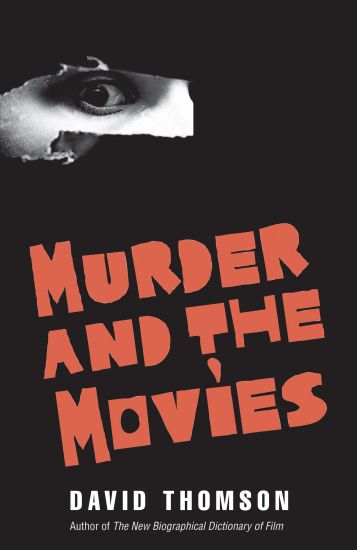
A renowned movie critic on film’s treatment of one of mankind’s darkest behaviors: murder “[Thomson’s] analysis of death in Hitchcock movies is gorgeous. His restlessness is palpable. There is an anxiety in this brief, hurried book that suits these political and medical times.”—Lisa Schwarzbaum, New York Times Book Review Included in the New York Times Book Review’s “Best Books to Give” holiday list, 2020 How many acts of murder have each of us followed on a screen? What does that say about us? Do we remain law-abiding citizens who wouldn’t hurt a fly? Film historian David Thomson, known for wit and subversiveness, leads us into this very delicate subject. While unpacking classics such as Seven, Kind Hearts and Coronets, Strangers on a Train, The Conformist, The Godfather, and The Shining, he offers a disconcerting sense of how the form of movies makes us accomplices in this sinister narrative process. By turns seductive and astringent, very serious and suddenly hilarious, Murder and the Movies admits us into what Thomson calls “a warped triangle”: the creator working out a compelling death; the killer doing his and her best; and the entranced reader and spectator trying to cling to life and a proper sense of decency.

Behind the scenes at the legendary Warner Brothers film studio, where four immigrant brothers transformed themselves into the moguls and masters of American fantasyWarner Bros charts the rise of an unpromising film studio from its shaky beginnings in the early twentieth century through its ascent to the pinnacle of Hollywood influence and popularity. The Warner Brothers—Harry, Albert, Sam, and Jack—arrived in America as unschooled Jewish immigrants, yet they founded a studio that became the smartest, toughest, and most radical in all of Hollywood. David Thomson provides fascinating and original interpretations of Warner Brothers pictures from the pioneering talkie The Jazz Singer through black-and-white musicals, gangster movies, and such dramatic romances as Casablanca, East of Eden, and Bonnie and Clyde. He recounts the storied exploits of the studio’s larger-than-life stars, among them Al Jolson, James Cagney, Bette Davis, Errol Flynn, Humphrey Bogart, James Dean, Doris Day, and Bugs Bunny. The Warner brothers’ cultural impact was so profound, Thomson writes, that their studio became “one of the enterprises that helped us see there might be an American dream out there.”

A deep—and darkly comic—dive into the nature of disasters, and the ways they shape how we think about ourselves in the world “In this brilliant book, David Thomson tells the story of how we came to make disaster and catastrophe our best friends—how we let terror cocoon and take over our imaginations to avoid seeing the things that really frighten us. Riveting and totally original.”—Adam Curtis, BBC filmmaker and political journalist “Erudite. . . . Engaging. . . . A cri de coeur about art’s struggle to keep up with reality.”—Kirkus Reviews Audiences swell with the scale of disaster; humans have always been drawn to the rumors of our own demise. In this searching treatment, noted film historian David Thomson examines iconic disasters, both real and fictional, exposing the slippage between what occurs and what we observe. With reportage, film commentary, speculation, and a liberating sense of humor, Thomson shows how digital culture commodifies disaster and sates our desire to witness chaos while suffering none of its aftereffects. Ranging from Laurel and Hardy and Battleship Potemkin to Cormac McCarthy’s The Road, and from the epic San Andreas to the intimate Don’t Look Now, Thomson pulls back the curtain to reveal why we love watching disaster unfold—but only if it happens to others.
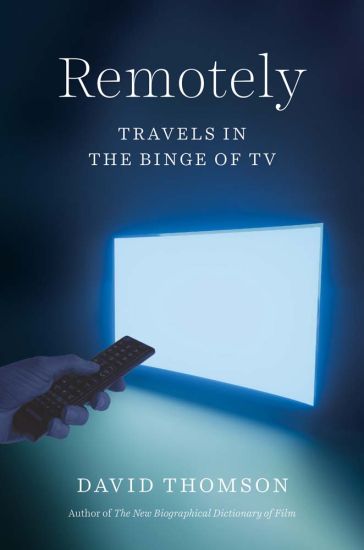
A leading film critic on the evolving world of streaming media and its impact on society The city at night under lockdown, a time of plague and anxiety. It is an exciting new age of television, the light that flutters in every cell in the city. But no one seems to be asking: What is the endless stream doing to us? In Remotely, the most innovative writer on film and screens asks what happened to us as we sought consolation under lockdown by becoming a society of bingeing creatures. From Candid Camera and I Love Lucy to Ozark, Succession, and Chernobyl, David Thomson and his wife, Lucy Gray, wander through shows old and new, trying to pin down the nature and justification for what we call “entertainment.” Funny, mysterious, and warm, at last here is a book that grasps the extent to which television is not just a collection of particular shows—hits and misses—but a weather system in which we are lost pilgrims searching for answers.

David Thomson, one of our most celebrated film writers, gives us a haunting, fascinating memoir about growing up as an only child in wartime England. He was born in London in the aftermath of the war, where he was raised by his mother, grandmother, and upstairs tenant, Miss Davis. He remembers how his grandmother brought him to a street corner to see Churchill and how the bombed-out houses that still smelled of smoke became his playground. We see Thomson attempt to overcome his profound sadness at being abandonded by his cold and distant father by finding solace in the cinema houses. Movies became his great escape, and the worlds revealed in Red River, The Third Man, and Citizen Kane helped to alleviate his loneliness and bolster his rich imaginative life.
A book that sees Hollywood as an idea, a trick, a religion even that swept the world, a book that knows what the bosses did, and why and how, but which also feels the impact on the mass audiences in the dark auditoriums. There isn't a book that explains - even at a basic level - how the business, the money, of pictures operates. THE WHOLE EQUATION takes the history and describes the grand panorama so that the reader knows how he or she fitted in, along with Bogart, the Marx Brothers and Daryl Zanuck. The business is the neglected aspect of the story, neglected because its truths threaten the alleged magic, the romance of the movies. Yet, the money is the true sexual secret of Hollywood, and David Thomson leaves the reader quite clear, that amid all the hype and pretension, we should always 'follow the money'.

The definitive story of the medium that defines our times The Big Screen tells the enthralling story of the movies: their rise and spread, their remarkable influence over us, and the technology that made the screen as important as the images it carries. But The Big Screen is not another history of the movies. Rather, it is a wide-ranging narrative about the movies and their signal role in modern life. The celebrated film authority David Thomson takes us around the globe, through time, and across many media to tell the complex, gripping, paradoxical story of the movies. He tracks the ways we were initially enchanted by movies as imitations of life--the stories, the stars, the look--and how we allowed them to show us how to live. At the same time, movies, offering a seductive escape from everyday reality and its responsibilities, have made it possible for us to evade life altogether. The entranced audience has become a model for powerless and anxiety-ridden citizens trying to pursue happiness and dodge terror by sitting quietly in a dark room. Does the big screen take us out into the world or merely mesmerize us? That is Thomson's question in this grand adventure of a book, vital to anyone trying to make sense of the age of screens--the age that, more than ever, we are living in.
A historical odyssey through the Hollywood film industry ranges from the silent movie era to the present day, exploring the ways in which movies both shape and are shaped by American culture; discussing the contributions of such pioneers as Griffith, Chaplin, Selznick, and Spielberg; profiling Hollywood's leading citizens, past and present; and more. Reprint. 20,000 first printing.
The New Biographical Dictionary of Film: Sixth Edition
David Thomson
Knopf Publishing Group
2014
nidottu
With more than 100 new entries, from Amy Adams, Benedict Cumberbatch, and Cary Joji Fukunaga to Joaquin Phoenix, Mia Wasikowska, and Robin Wright, and completely updated, here from David Thomson--"The greatest living writer on the movies" (John Banville, New Statesman); "Our most argumentative and trustworthy historian of the screen" (Michael Ondaatje)--is the latest edition of The New Biographical Dictionary of Film, which topped Sight & Sound's poll of international critics and writers as THE BEST FILM BOOK EVER WRITTEN.3/7

It was made like a television movie, and completed in less than three months. It killed off its star in forty minutes. There was no happy ending. And it offered the most violent scene to date in American film, punctuated by shrieking strings that seared the national consciousness. Nothing like Psycho had existed before the movie industry- even America itself- would never be the same. In The Moment of Psycho , film critic David Thomson situates Psycho in Alfred Hitchcock's career, recreating the mood and time when the seminal film erupted onto film screens worldwide. Thomson shows that Psycho was not just a sensation in film: it altered the very nature of our desires. Sex, violence, and horror took on new life. Psycho , all of a sudden, represented all America wanted from a film- and, as Thomson brilliantly demonstrates, still does.
In the first fully illustrated work of his illustrious career, David Thomson re-examines a series of moments – which readers will experience in beautifully reproduced imagery – from seventy-two carefully selected films across a hundred-year time span. Hailed by John Banville as `the greatest living writer on the movies’, David Thomson takes readers on an unprecedented visual journey. His moments range from a set of Eadward Muybridge’s pioneering photographs to sequences in films from the classic – Citizen Kane , Sunset Boulevard and The Red Shoes – to the unexpected – The Piano Teacher , Burn After Reading – immersing the reader via a groundbreaking marriage of imagery and the author’s accompanying narrative. David Thomson’s evocative, unflinching prose and profound understanding of what makes film and art form identify him as one of the great film writers of our time, making it likely that Moments that Made the Movies will be widely viewed as an important classic on the subject of international cinema.