Kirjojen hintavertailu. Mukana 12 016 292 kirjaa ja 12 kauppaa.

Kirjahaku

Etsi kirjoja tekijän nimen, kirjan nimen tai ISBN:n perusteella.

6 kirjaa tekijältä David Toke

Green Politics and Neo-Liberalism

Green Politics and Neo-Liberalism

David Toke

Palgrave Macmillan
2001
sidottu
Green Politics and the Culture of Consumerism uses environmental policy to demonstrate the weaknesses of rational choice theory and the strengths of discourse analysis. It builds on this distinction to adapt the green critique of the external costs of economic growth and to examine the links between stress, social division, and excessive competition that are associated with neoliberalism.
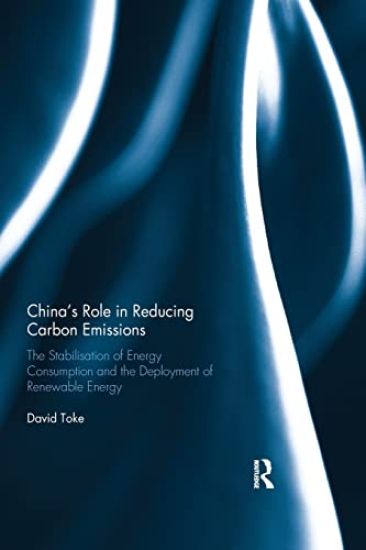
China’s Role in Reducing Carbon Emissions
China, a still developing economy comprising a fifth of the world’s population, will play a key role in the global movement towards reducing carbon emissions. The aims of the Paris Agreement may stand or fall with China, both for its own contribution and the example it will set the developing world.China’s Role in Reducing Carbon Emissions discusses the prospects for China achieving radical reductions in carbon emissions, within the context of the current economic and political landscape. With a particular focus on technologies such as such as wind power, solar power and electric vehicles, Toke examines how China is transitioning to a state of stable energy consumption via a service-based economy and heavy investment in non-fossil energy sources. The book concludes that China may be set to reduce its carbon emissions by approximately two-thirds by 2050.This book is a valuable resource for students and scholars of climate change, sustainable development, political science and energy, as well as energy professionals seeking to understand the implications of recent developments in China.
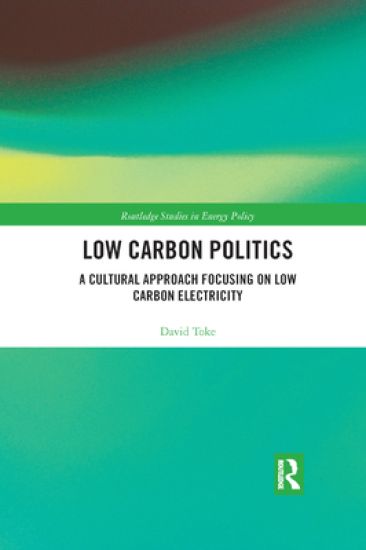
Low Carbon Politics

Low Carbon Politics

David Toke

Routledge
2019
nidottu
Low Carbon Politics focuses on how policies and institutions have influenced the deployment of renewable energy and nuclear power in the electricity sector. Cultural theory is used to analyse this. Egalitarian pressures have had a profound influence on technological outcomes, not merely in securing the deployment of renewable energy but also in increasing the costs of nuclear power. Whereas in the 1970s it might have been expected that individualist, market based pressures allied to dominant hierarchies would deliver nuclear power as the main response to problems associated with fossil fuels, a surprising combination has emerged. Egalitarian and individualist pressures are, together, leading to increasing levels of deployment of renewable energy. This work finds that electricity monopolies tend to favour nuclear power whereas competitive arrangements are more likely to lead to more renewable energy being deployed. It covers developments in a number of countries including USA, UK, China, South Africa and also Germany and Denmark. This book will be of great relevance to students, academics and policymakers with an interest in energy policy, low carbon politics and climate change.
Energy Revolutions

Energy Revolutions

David Toke

PLUTO PRESS
2024
pokkari
'A vision of how, in the renewable era, shared ownership of energy could lead to a future of equality and economic security' - Molly Scott Cato This book exposes the energy crisis as an inevitable result of an industry run by and for corporate profit. Energy policy was never meant to favour sustainability or energy security – for decades, it has been shaped by corporate interests while hampering renewable alternatives. Now we suffer the consequences. Written by a leading energy expert, Energy Revolutions reveals the urgent need to radically increase state intervention, including public ownership, and deploy energy democracy for the public interest. It explores examples of energy democracy around the world, showing us how to fight back against fossil fuel interests, avoid climate catastrophe and the threat of nuclear technological dependency; transforming energy into a cheap, decentralised renewable good for all.
China’s Role in Reducing Carbon Emissions
China, a still developing economy comprising a fifth of the world’s population, will play a key role in the global movement towards reducing carbon emissions. The aims of the Paris Agreement may stand or fall with China, both for its own contribution and the example it will set the developing world.China’s Role in Reducing Carbon Emissions discusses the prospects for China achieving radical reductions in carbon emissions, within the context of the current economic and political landscape. With a particular focus on technologies such as such as wind power, solar power and electric vehicles, Toke examines how China is transitioning to a state of stable energy consumption via a service-based economy and heavy investment in non-fossil energy sources. The book concludes that China may be set to reduce its carbon emissions by approximately two-thirds by 2050.This book is a valuable resource for students and scholars of climate change, sustainable development, political science and energy, as well as energy professionals seeking to understand the implications of recent developments in China.
Low Carbon Politics

Low Carbon Politics

David Toke

Routledge
2018
sidottu
Low Carbon Politics focuses on how policies and institutions have influenced the deployment of renewable energy and nuclear power in the electricity sector. Cultural theory is used to analyse this. Egalitarian pressures have had a profound influence on technological outcomes, not merely in securing the deployment of renewable energy but also in increasing the costs of nuclear power. Whereas in the 1970s it might have been expected that individualist, market based pressures allied to dominant hierarchies would deliver nuclear power as the main response to problems associated with fossil fuels, a surprising combination has emerged. Egalitarian and individualist pressures are, together, leading to increasing levels of deployment of renewable energy. This work finds that electricity monopolies tend to favour nuclear power whereas competitive arrangements are more likely to lead to more renewable energy being deployed. It covers developments in a number of countries including USA, UK, China, South Africa and also Germany and Denmark. This book will be of great relevance to students, academics and policymakers with an interest in energy policy, low carbon politics and climate change.