Kirjojen hintavertailu. Mukana 11 699 587 kirjaa ja 12 kauppaa.

Kirjahaku

Etsi kirjoja tekijän nimen, kirjan nimen tai ISBN:n perusteella.

5 kirjaa tekijältä David Toop

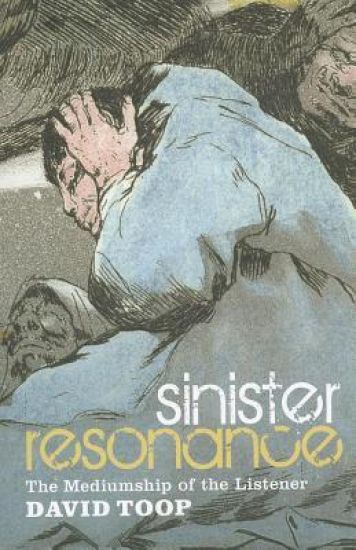
Sinister Resonance

Sinister Resonance

David Toop

Continuum Publishing Corporation
2011
nidottu
This is a major new work from one of the world's most erudite, intellectual, and influential thinkers and writers about sound and music. "Sinister Resonance" begins with the premise that sound is a haunting, a ghost, a presence whose location is ambiguous and whose existence is transitory. The intangibility of sound is uncanny - a phenomenal presence in the head, at its point of source and all around. The close listener is like a medium who draws out substance from that which is not entirely there. The history of listening must be constructed from the narratives of myth and fiction, 'silent' arts such as painting, the resonance of architecture, auditory artefacts and nature. In such contexts, sound often functions as a metaphor for mystical revelation, forbidden desires, formlessness, the unknown, and the unconscious. As if reading a map of hitherto unexplored territory, "Sinister Resonance" deciphers sounds and silences buried within the ghostly horrors of Arthur Machen, Shirley Jackson, Charles Dickens, M.R. James and Edgar Allen Poe, Dutch genre painting from Rembrandt to Vermeer, artists as diverse as Francis Bacon and Juan Munoz, and the writing of many modernist authors including Virginia Woolf, Samuel Beckett, and James Joyce.
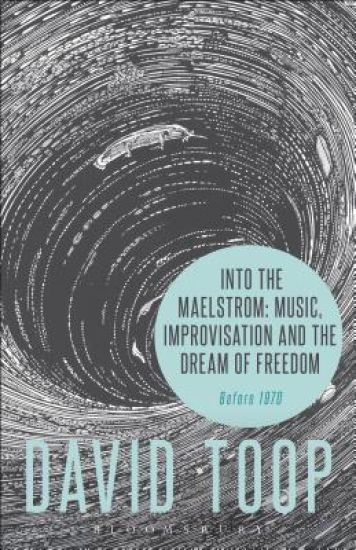
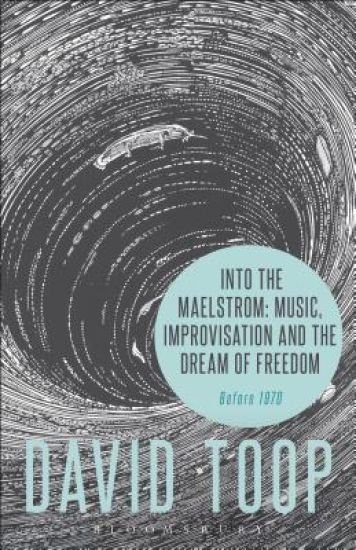
Into the Maelstrom: Music, Improvisation and the Dream of Freedom
Shortlisted for the Penderyn Music Book Prize 2017.In this first installment of acclaimed music writer David Toop’s interdisciplinary and sweeping overview of free improvisation, Into the Maelstrom: Music, Improvisation and the Dream of Freedom: Before 1970 introduces the philosophy and practice of improvisation (both musical and otherwise) within the historical context of the post-World War II era. Neither strictly chronological, or exclusively a history, Into the Maelstrom investigates a wide range of improvisational tendencies: from surrealist automatism to stream-of-consciousness in literature and vocalization; from the free music of Percy Grainger to the free improvising groups emerging out of the early 1960s (Group Ongaku, Nuova Consonanza, MEV, AMM, the Spontaneous Music Ensemble); and from free jazz to the strands of free improvisation that sought to distance itself from jazz. In exploring the diverse ways in which spontaneity became a core value in the early twentieth century as well as free improvisation’s connection to both 1960s rock (The Beatles, Cream, Pink Floyd) and the era of post-Cagean indeterminacy in composition, Toop provides a definitive and all-encompassing exploration of free improvisation up to 1970, ending with the late 1960s international developments of free music from Roscoe Mitchell in Chicago, Peter Brötzmann in Berlin and Han Bennink and Misha Mengelberg in Amsterdam.
Into the Maelstrom: Music, Improvisation and the Dream of Freedom
Shortlisted for the Penderyn Music Book Prize 2017.In this first installment of acclaimed music writer David Toop’s interdisciplinary and sweeping overview of free improvisation, Into the Maelstrom: Music, Improvisation and the Dream of Freedom: Before 1970 introduces the philosophy and practice of improvisation (both musical and otherwise) within the historical context of the post-World War II era. Neither strictly chronological, or exclusively a history, Into the Maelstrom investigates a wide range of improvisational tendencies: from surrealist automatism to stream-of-consciousness in literature and vocalization; from the free music of Percy Grainger to the free improvising groups emerging out of the early 1960s (Group Ongaku, Nuova Consonanza, MEV, AMM, the Spontaneous Music Ensemble); and from free jazz to the strands of free improvisation that sought to distance itself from jazz. In exploring the diverse ways in which spontaneity became a core value in the early twentieth century as well as free improvisation’s connection to both 1960s rock (The Beatles, Cream, Pink Floyd) and the era of post-Cagean indeterminacy in composition, Toop provides a definitive and all-encompassing exploration of free improvisation up to 1970, ending with the late 1960s international developments of free music from Roscoe Mitchell in Chicago, Peter Brötzmann in Berlin and Han Bennink and Misha Mengelberg in Amsterdam.
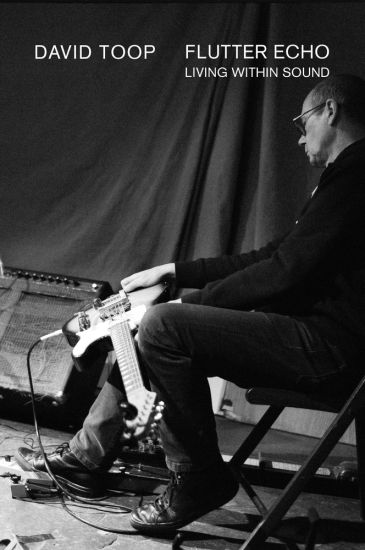
Flutter Echo

Flutter Echo

David Toop

Ecstatic Peace Library
2019
nidottu
David Toop has become one of our most significant touchstones of contemporary music writing and reportage. Employing intensified studies into World Music in relation to popular (as well as marginalized) contemporary trends, Toop has created one of the most distinctive publishing histories of modern music thinking for our times. Flutter Echo is his memoir of a life enchanted with all aspects of music both composed and abstract. Toop's personal growth as a practicing musician, visual artist, and witness to some of the most significant events in modern music history is a completely fascinating view into a world of considered thought and random access. From recording for Brian Eno's Obscure Records imprint in 1975 to co-publishing the radical music magazines Musics and Collusion to developing music programming for BBC to releasing recordings he personally made of Yanomami Shaman rituals to working with artists such as creative pop icon Bjoerk and Jamaican dub pioneer Prince Far-I, Toop has experienced one of the most interesting and dynamic timelines in the dynamic world of our contemporary sound world. Player, listener, scholar, reporter, communitarian, parent, iconoclast - David Toop brings his own life in music to focus in a remarkable, wonder-filled, engaging read.
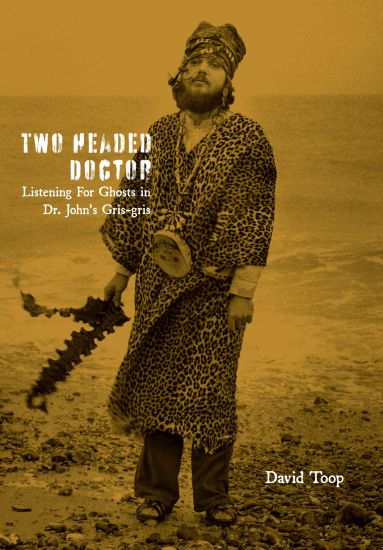
Two-Headed Doctor

Two-Headed Doctor

David Toop

STRANGE ATTRACTOR PRESS
2024
nidottu
A forensic investigation into a single LP: Dr. John, the night tripper's Gris-gris. Two-Headed Doctor is a forensic investigation into a single LP: Dr. John, the night tripper's Gris-gris. Though released in 1968 to poor sales and a minimum of critical attention, Gris-gris has accumulated legendary status over subsequent decades for its strangeness, hybridity, and innovative production. It formed the launch pad for Dr. John's image and lengthy career and the ghostly presence of its so-called voodoo atmosphere hovers over numerous cover versions, samples, and re-invocations. Despite the respect given to the record, its making is shrouded in mystery, misunderstandings, and false conclusions. The persona of Dr. John, loosely based on dubious literary accounts of a notorious voodooist and freed slave, a nineteenth-century New Orleans resident known as Doctor John, provided Malcolm Mac Rebennack with a lifelong mask through which to transform himself from session musician in order to construct a solo career. Somewhere between puzzle, experimental rhythm, blues disguised as rock, and elaborate hoax, Gris-gris was a collaborative project between Rebennack and producer/arranger Harold Battiste (at the time musical director for Sonny & Cher). A few brief sessions held at Gold Star Studios in Los Angeles brought together many of New Orleans' finest musicians, including Shirley Goodman, John Boudreaux, Plas Johnson, Jessie Hill, Ernest McLean, and Tami Lynn. Along with their complex histories, the cast of characters implicated in the story includes Ornette Coleman, Lafcadio Hearn, Zora Neale Hurston, Cher, Sonny Bono, Sam Cooke, Ishmael Reed, Black Herman, Prince La La, and many others. The story details in discursive style the historical context of the music, how it came together, its literary sources, production and arrangements, and the nature of the recording studio as dream state, but also examines as a disturbing undercurrent the volatile issue of race in twentieth-century music, the way in which it doomed relationships and ambitious projects, exploited great talents, and distorted the cultural landscape.