Kirjojen hintavertailu. Mukana 11 342 296 kirjaa ja 12 kauppaa.

Kirjahaku

Etsi kirjoja tekijän nimen, kirjan nimen tai ISBN:n perusteella.

11 kirjaa tekijältä David W. Blight

Narrative of the Life of Frederick Douglass

Narrative of the Life of Frederick Douglass

David W. Blight

St Martin's Press
2002
nidottu
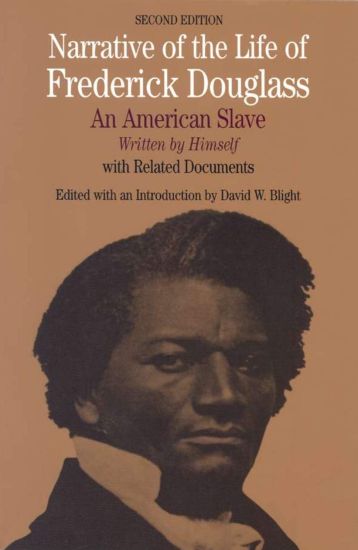
This is a book that should be on the reading list of every course on American history or literature...with its excellent notes, bibliography and appendices, this supersedes other versions available in paperback.' Adam Lively, Times Educational Supplement This new edition of the Narrative of the Life of Frederick Douglass is the first prepared especially for American history courses. David W. Blight's extensive introduction and the related materials he provides place the Narrative in both its historical and literary contexts. The book also includes a chronology of Douglass's life, a bibliography, questions for consideration, illustrations, and an index. 'David Blight's introduction to the Narrative provides a rich path into Frederick Douglass's own wonderful story'. William S. McFeely, author of Frederick Douglass.
Race and Reunion

Race and Reunion

David W. Blight

The Belknap Press
2002
nidottu
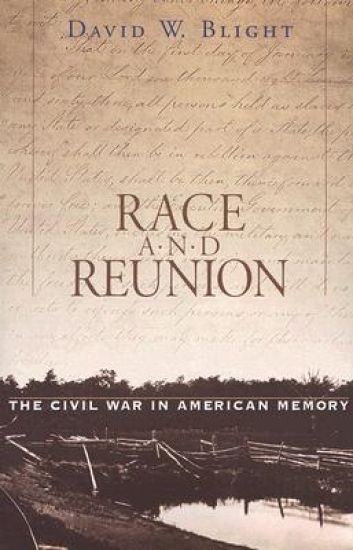
Winner of the Bancroft PrizeWinner of the Gilder Lehrman Lincoln PrizeWinner of the Merle Curti awardWinner of the Frederick Douglass PrizeNo historical event has left as deep an imprint on America's collective memory as the Civil War. In the war's aftermath, Americans had to embrace and cast off a traumatic past. David Blight explores the perilous path of remembering and forgetting, and reveals its tragic costs to race relations and America's national reunion.In 1865, confronted with a ravaged landscape and a torn America, the North and South began a slow and painful process of reconciliation. The ensuing decades witnessed the triumph of a culture of reunion, which downplayed sectional division and emphasized the heroics of a battle between noble men of the Blue and the Gray. Nearly lost in national culture were the moral crusades over slavery that ignited the war, the presence and participation of African Americans throughout the war, and the promise of emancipation that emerged from the war. Race and Reunion is a history of how the unity of white America was purchased through the increasing segregation of black and white memory of the Civil War. Blight delves deeply into the shifting meanings of death and sacrifice, Reconstruction, the romanticized South of literature, soldiers' reminiscences of battle, the idea of the Lost Cause, and the ritual of Memorial Day. He resurrects the variety of African-American voices and memories of the war and the efforts to preserve the emancipationist legacy in the midst of a culture built on its denial. Blight's sweeping narrative of triumph and tragedy, romance and realism, is a compelling tale of the politics of memory, of how a nation healed from civil war without justice. By the early twentieth century, the problems of race and reunion were locked in mutual dependence, a painful legacy that continues to haunt us today.
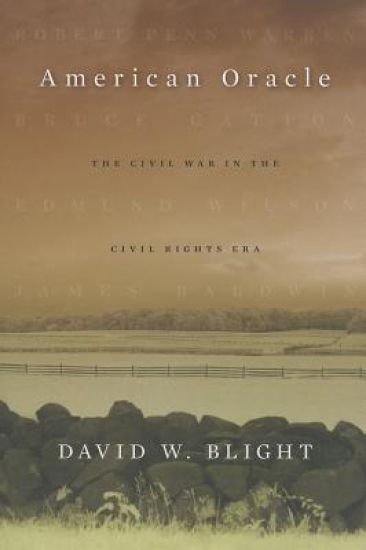
American Oracle

American Oracle

David W. Blight

The Belknap Press
2013
nidottu
“The ghosts of the Civil War never leave us, as David Blight knows perhaps better than anyone, and in this superb book he masterfully unites two distant but inextricably bound events.”-Ken BurnsStanding on the steps of the Lincoln Memorial on August 28, 1963, a century after the signing of the Emancipation Proclamation, Martin Luther King, Jr., declared, “One hundred years later, the Negro still is not free.” He delivered this speech just three years after the Virginia Civil War Commission published a guide proclaiming that “the Centennial is no time for finding fault or placing blame or fighting the issues all over again.”David Blight takes his readers back to the centennial celebration to determine how Americans then made sense of the suffering, loss, and liberation that had wracked the United States a century earlier. Amid cold war politics and civil rights protest, four of America’s most incisive writers explored the gulf between remembrance and reality. Robert Penn Warren, the southern-reared poet-novelist who recanted his support of segregation; Bruce Catton, the journalist and U.S. Navy officer who became a popular Civil War historian; Edmund Wilson, the century’s preeminent literary critic; and James Baldwin, the searing African-American essayist and activist—each exposed America’s triumphalist memory of the war. And each, in his own way, demanded a reckoning with the tragic consequences it spawned.Blight illuminates not only mid-twentieth-century America’s sense of itself but also the dynamic, ever-changing nature of Civil War memory. On the eve of the 150th anniversary of the war, we have an invaluable perspective on how this conflict continues to shape the country’s political debates, national identity, and sense of purpose.
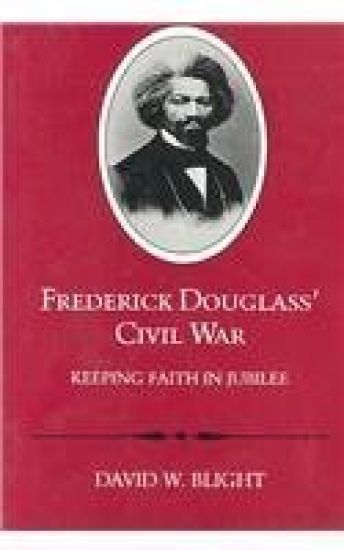
Frederick Douglass' Civil War

Frederick Douglass' Civil War

David W. Blight

Louisiana State University Press
1991
nidottu
In this sensitive intellectual biography David W. Blight undertakes the first systematic analysis of the impact of the Civil War on Frederick Douglass' life and thought, offering new insights into the meaning of the war in American history and in the Afro-American experience. Frederick Douglass' Civil War follows Douglass' intellectual and personal growth from the political crises of the 1850s through secession, war, black enlistment, emancipation, and Reconstruction. This book provides an engrossing story of Douglass' development of a social identity in relation to transforming events, and demonstrates that he saw the Civil War as the Second American Revolution, and himself as one of the founders of a new nation. Through Douglass' life, his voice, and his interpretations we see the Civil War era and its memory in a new light.
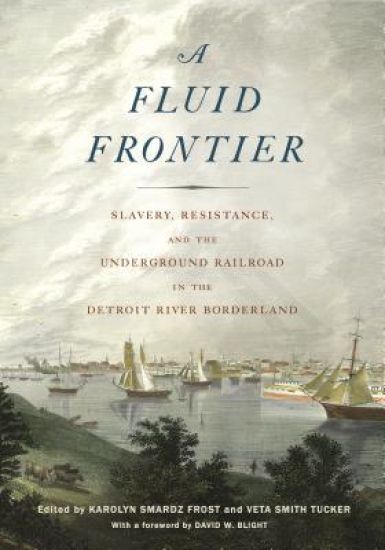
A Fluid Frontier

A Fluid Frontier

David W. Blight

Wayne State University Press
2016
nidottu
As the major gateway into British North America for travelers on the Underground Railroad, the U.S./Canadian border along the Detroit River was a boundary that determined whether thousands of enslaved people of African descent could reach a place of freedom and opportunity. In A Fluid Frontier: Slavery, Resistance, and the Underground Railroad in the Detroit River Borderland, editors Karolyn Smardz Frost and Veta Smith Tucker explore the experiences of the area’s freedom-seekers and advocates, both black and white, against the backdrop of the social forces—legal, political, social, religious, and economic—that shaped the meaning of race and management of slavery on both sides of the river.In five parts, contributors trace the beginnings of and necessity for transnational abolitionist activism in this unique borderland, and the legal and political pressures, coupled with African Americans’ irrepressible quest for freedom, that led to the growth of the Underground Railroad. A Fluid Frontier details the founding of African Canadian settlements in the Detroit River region in the first decades of the nineteenth century with a focus on the strong and enduring bonds of family, faith, and resistance that formed between communities in Michigan and what is now Ontario. New scholarship offers unique insight into the early history of slavery and resistance in the region and describes individual journeys: the perilous crossing into Canada of sixteen-year-old Caroline Quarlls, who was enslaved by her own aunt and uncle; the escape of the Crosswhite family, who eluded slave catchers in Marshall, Michigan, with the help of others in the town; and the internationalcrisis sparked by the escape of Lucie and Thornton Blackburn and others.With a foreword by David W. Blight, A Fluid Frontier is a truly bi-national collection, with contributors and editors evenly split between specialists in Canadian and American history, representing both community and academic historians. Scholars of the Underground Railroad as well as those in borderland studies will appreciate the interdisciplinary mix and unique contributions of this volume.
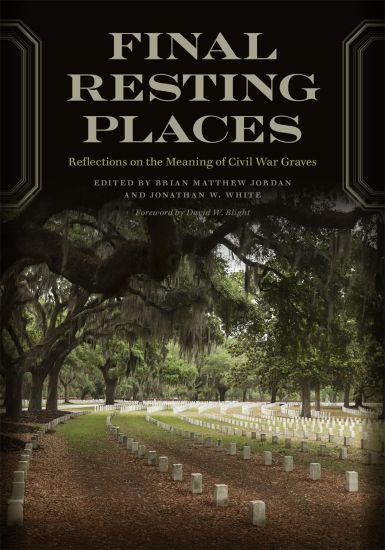
Final Resting Places

Final Resting Places

David W. Blight

UNIVERSITY OF GEORGIA PRESS
2023
sidottu
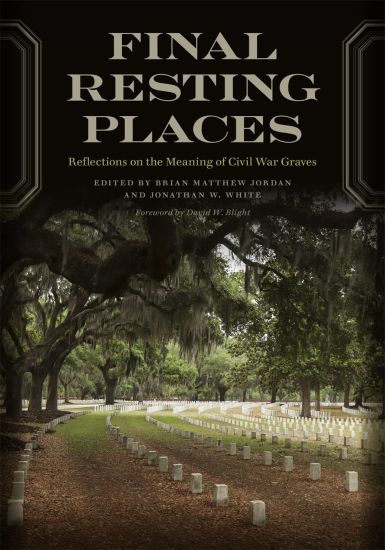
Final Resting Places brings together some of the most important and innovative scholars of the Civil War era to reflect on what death and memorialization meant to the Civil War generation—and how those meanings still influence Americans today. In each essay, a noted historian explores a different type of gravesite—including large marble temples, unmarked graves beneath the waves, makeshift markers on battlefields, mass graves on hillsides, neat rows of military headstones, university graveyards, tombs without bodies, and small family plots. Each burial place tells a unique story of how someone lived and died; how they were mourned and remembered. Together, they help us reckon with the most tragic period of American history. CONTRUBUTORS: Terry Alford, Melodie Andrews, Edward L. Ayers, DeAnne Blanton, Michael Burlingame, Katherine Reynolds Chaddock, John M. Coski, William C. Davis, Douglas R. Egerton, Stephen D. Engle, Barbara Gannon, Michael P. Gray, Hilary Green, Allen C. Guelzo, Anna Gibson Holloway, Vitor Izecksohn, Caroline E. Janney, Michelle A. Krowl, Glenn W. LaFantasie, Jennifer M. Murray, Barton A. Myers, Timothy J. Orr, Christopher Phillips, Mark S. Schantz, Dana B. Shoaf, Walter Stahr, Michael Vorenberg, and Ronald C. White
Final Resting Places

Final Resting Places

David W. Blight

UNIVERSITY OF GEORGIA PRESS
2023
pokkari
Final Resting Places brings together some of the most important and innovative scholars of the Civil War era to reflect on what death and memorialization meant to the Civil War generation—and how those meanings still influence Americans today. In each essay, a noted historian explores a different type of gravesite—including large marble temples, unmarked graves beneath the waves, makeshift markers on battlefields, mass graves on hillsides, neat rows of military headstones, university graveyards, tombs without bodies, and small family plots. Each burial place tells a unique story of how someone lived and died; how they were mourned and remembered. Together, they help us reckon with the most tragic period of American history. CONTRUBUTORS: Terry Alford, Melodie Andrews, Edward L. Ayers, DeAnne Blanton, Michael Burlingame, Katherine Reynolds Chaddock, John M. Coski, William C. Davis, Douglas R. Egerton, Stephen D. Engle, Barbara Gannon, Michael P. Gray, Hilary Green, Allen C. Guelzo, Anna Gibson Holloway, Vitor Izecksohn, Caroline E. Janney, Michelle A. Krowl, Glenn W. LaFantasie, Jennifer M. Murray, Barton A. Myers, Timothy J. Orr, Christopher Phillips, Mark S. Schantz, Dana B. Shoaf, Walter Stahr, Michael Vorenberg, and Ronald C. White
Frederick Douglass

Frederick Douglass

David W. Blight

Simon Schuster
2018
sidottu
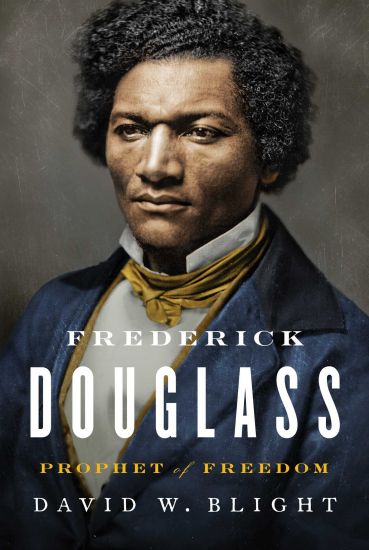
**Winner of the Pulitzer Prize in History** “Extraordinary…a great American biography” (The New Yorker) of the most important African-American of the nineteenth century: Frederick Douglass, the escaped slave who became the greatest orator of his day and one of the leading abolitionists and writers of the era.As a young man Frederick Douglass (1818–1895) escaped from slavery in Baltimore, Maryland. He was fortunate to have been taught to read by his slave owner mistress, and he would go on to become one of the major literary figures of his time. His very existence gave the lie to slave owners: with dignity and great intelligence he bore witness to the brutality of slavery. Initially mentored by William Lloyd Garrison, Douglass spoke widely, using his own story to condemn slavery. By the Civil War, Douglass had become the most famed and widely travelled orator in the nation. In his unique and eloquent voice, written and spoken, Douglass was a fierce critic of the United States as well as a radical patriot. After the war he sometimes argued politically with younger African Americans, but he never forsook either the Republican party or the cause of black civil and political rights. In this “cinematic and deeply engaging” (The New York Times Book Review) biography, David Blight has drawn on new information held in a private collection that few other historian have consulted, as well as recently discovered issues of Douglass’s newspapers. “Absorbing and even moving…a brilliant book that speaks to our own time as well as Douglass’s” (The Wall Street Journal), Blight’s biography tells the fascinating story of Douglass’s two marriages and his complex extended family. “David Blight has written the definitive biography of Frederick Douglass…a powerful portrait of one of the most important American voices of the nineteenth century” (The Boston Globe). In addition to the Pulitzer Prize, Frederick Douglass won the Bancroft, Parkman, Los Angeles Times (biography), Lincoln, Plutarch, and Christopher awards and was named one of the Best Books of 2018 by The New York Times Book Review, The Wall Street Journal, The Boston Globe, The Chicago Tribune, The San Francisco Chronicle, and Time.
Frederick Douglass

Frederick Douglass

David W. Blight

Simon Schuster
2020
pokkari
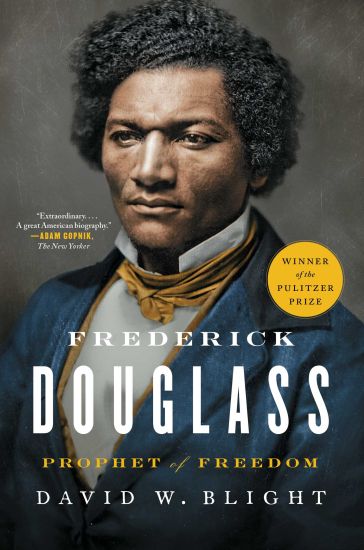
* Selected as One of the Best Books of the 21st Century by The New York Times * Winner of the Pulitzer Prize in History * “Extraordinary…a great American biography” (The New Yorker) of the most important African American of the 19th century: Frederick Douglass, the escaped slave who became the greatest orator of his day and one of the leading abolitionists and writers of the era.As a young man Frederick Douglass (1818–1895) escaped from slavery in Baltimore, Maryland. He was fortunate to have been taught to read by his slave owner mistress, and he would go on to become one of the major literary figures of his time. His very existence gave the lie to slave owners: with dignity and great intelligence he bore witness to the brutality of slavery. Initially mentored by William Lloyd Garrison, Douglass spoke widely, using his own story to condemn slavery. By the Civil War, Douglass had become the most famed and widely travelled orator in the nation. In his unique and eloquent voice, written and spoken, Douglass was a fierce critic of the United States as well as a radical patriot. After the war he sometimes argued politically with younger African Americans, but he never forsook either the Republican party or the cause of black civil and political rights. In this “cinematic and deeply engaging” (The New York Times Book Review) biography, David Blight has drawn on new information held in a private collection that few other historian have consulted, as well as recently discovered issues of Douglass’s newspapers. “Absorbing and even moving…a brilliant book that speaks to our own time as well as Douglass’s” (The Wall Street Journal), Blight’s biography tells the fascinating story of Douglass’s two marriages and his complex extended family. “David Blight has written the definitive biography of Frederick Douglass…a powerful portrait of one of the most important American voices of the nineteenth century” (The Boston Globe). In addition to the Pulitzer Prize, Frederick Douglass won the Bancroft, Parkman, Los Angeles Times (biography), Lincoln, Plutarch, and Christopher awards and was named one of the Best Books of 2018 by The New York Times Book Review, The Wall Street Journal, The Boston Globe, The Chicago Tribune, The San Francisco Chronicle, and Time.
Beyond the Battlefield

Beyond the Battlefield

David W. Blight

University of Massachusetts Press
2002
nidottu
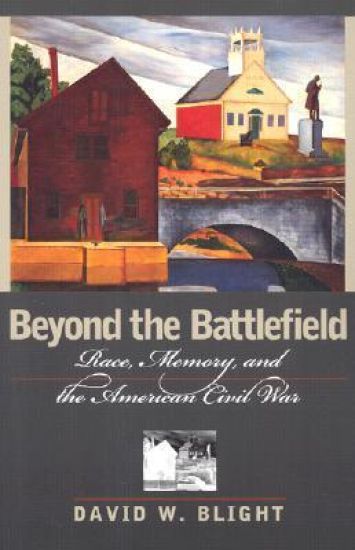
During the past decade and a half, scholars have increasingly addressed the relationship of history and memory. Among American historians, David W. Blight has been a pioneer in the field of memory studies, especially on the problems of slavery, race, and the Civil War. In this collection of essays, Blight examines the meanings embedded in the causes, course, and consequences of the Civil War, the nature of changing approaches to African American history, and the significance of race in the ways Americans, North and South, black and white, developed historical memories of the nation's most divisive event. The book as a whole demonstrates several ways to probe the history of memory, to understand how and why groups of Americans have constructed versions of the past in the service of contemporary social needs. Topics range from the writing and thought of Frederick Douglass and W.E.B. Du Bois to a comparison of Abraham Lincoln and Douglass on the level of language and memory. The volume also includes a compelling study of the values of a single Union soldier, an analysis of Ken Burns's PBS series The Civil War, and a retrospective treatment of the distinguished African American historian Nathan I. Huggins. Taken together, these lucidly written pieces offer a thoroughgoing assessment of the stakes of Civil War memory and their consequences for American race relations. Beyond the Battlefield demonstrates not only why we should preserve and study our Civil War battlefields, but also why we should lift our vision above those landscapes and ponder all the unfinished questions of healing and justice, of racial harmony and disharmony, that still bedevil our society and our historical imagination.