

Kirjahaku
Etsi kirjoja tekijän nimen, kirjan nimen tai ISBN:n perusteella.
43 kirjaa tekijältä David Wagner
During the past decade, homelessness became a widespread phenomenon in the United States for the first time since the Great Depression. The public frequently blamed the poor for their plight. Journalistic and academic accounts, in contrast, often evoked pathos and pity, regarding the homeless primarily as objects of treatment and rehabilitation. David Wagner challenges both of these dominant images, offering an ethnographic portrait of the poor that reveals their struggle not only to survive but also to create communities on the streets and to develop social movements on their own behalf. Definitely not passive victims, the homeless of Checkerboard Square survive within an alternative street culture, with its own norms and social organization, in a world often hidden from the view of researchers, journalists, and social workers. Checkerboard Square reveals the daily struggle of street people to organize their lives in the face of rejection by employers, government, landlords, and even their own families. Looking beyond the well-documented causes of homelessness such as lack of affordable housing or unemployment, Wagner shows how the poor often become homeless through resistance to the discipline of the workplace, authoritarian families, and the bureaucratic social welfare system. He explains why the crisis of homelessness is not only about the lack of services, housing, and jobs but a result of the very structure of the dominant institutions of work, family, and public social welfare.
This book shows how the poor often become homeless through resistance to the discipline of the workplace, authoritarian families, and the bureaucratic social welfare system. It also shows how street people develop their own self-consciousness, culture, and alternative community.

The war on drugs ? the campaigns against smoking cigarettes ? v-chips to control what children watch on TV ? censoring the Internet and Calvin Klein jeans ads?bipartisan lectures about the dangers of teen sex ? constant warnings about food and fat ? all are examples of what David Wagner terms the ?New Temperance.?The New Temperance contrasts the ne

Many of us grew up hearing our parents exclaim 'you are driving me to the poorhouse!' or remember the card in the 'Monopoly' game which says 'Go to the Poorhouse! Lose a Turn!' Yet most Americans know little or nothing of this institution that existed under a variety of names for approximately three hundred years of American history. Surprisingly these institutions variously named poorhouses, poor farms, sometimes almshouses or workhouses, have received rather scant academic treatment, as well, though tens of millions of poor people were confined there, while often their neighbors talked in hushed tones and in fear of their own fate at the 'specter of the poorhouse.' Based on the author's study of six New England poorhouses/poor farms, a hidden story in America's history is presented which will be of popular interest as well as useful as a text in social welfare and social history. While the poorhouse's mission was character reform and 'repressing pauperism,' these goals were gradually undermined by poor people themselves, who often learned to use the poorhouse for their own benefit, as well as by staff and officials of the houses, who had agendas sometimes at odds with the purposes for which the poorhouse was invented.

The war on drugs , the campaigns against smoking cigarettes , v-chips to control what children watch on TV , censoring the Internet and Calvin Klein jeans ads, bipartisan lectures about the dangers of teen sex , constant warnings about food and fat , all are examples of what David Wagner terms the New Temperance." The New Temperance contrasts the new obsession with personal behaviour in America during the last two decades with the brief period of relative freedom in the 1960s and early 1970s and suggests strong consistencies with our past. In particular, the late twentieth century appears to have re-created the mood of the Victorian and Progressive Periods, when social movements such as the Temperance, Social Purity, and Vice and Vigilance movements held sway. The New Temperance questions the constant mantra in the media and in political debates about the dangers of personal behaviour and challenges America's love affair with repression.

This book, based on in-depth interviews of radical social workers, who at one time were associated with the Catalyst collective, explores through oral history the social psychological effects of upward mobility on political ideology. Historically large numbers of idealistic activists entered social work and other human services professions, but there have been few studies about the careers of such individuals and what has happened to radicals who pursue careers as community organizers, caseworkers or therapists, administrators or planners. Contents: A Radical Professionalism?; Radical Social Work; The Moral Careers of Radical Social Service WorkersóBecoming Radical, Becoming Social Workers, Images of Success/Worlds of Pain, and Occupations and Ideology; Radicalism, Social Action, and Social Service CareersóThe Decline of Oppositional Activism, Politics at the Retail Level: "Radical Practice", The Absorption of Radicalism; and Bibliography.

This book, based on in-depth interviews of radical social workers, who at one time were associated with the Catalyst collective, explores through oral history the social psychological effects of upward mobility on political ideology. Historically large numbers of idealistic activists entered social work and other human services professions, but there have been few studies about the careers of such individuals and what has happened to radicals who pursue careers as community organizers, caseworkers or therapists, administrators or planners. Contents: A Radical Professionalism?; Radical Social Work; The Moral Careers of Radical Social Service Workers-Becoming Radical, Becoming Social Workers, Images of Success/Worlds of Pain, and Occupations and Ideology; Radicalism, Social Action, and Social Service Careers-The Decline of Oppositional Activism, Politics at the Retail Level: 'Radical Practice', The Absorption of Radicalism; and Bibliography.

This book closely examines controversial claims and beliefs surrounding poverty and anti-poverty programs in the United States. It authoritatively dismantles falsehoods, half-truths, and misconceptions, leaving readers with an unbiased, accurate understanding of these issues.Poverty and Welfare in America: Examining the Facts, like every book in the Contemporary Debates series, is intended to puncture rather than perpetuate myths that diminish our understanding of important policies and positions; to provide needed context for misleading statements and claims; and to confirm the factual accuracy of other assertions. This book clarifies some of the most contentious and misunderstood aspects of American poverty and the social welfare programs that have been crafted to combat it over the years. In addition to providing up-to-date data about the extent of American poverty among various demographic groups in the United States, it examines the chief causes of poverty in the 21st century, including divorce, disability, and educational shortfalls. Moreover, the book provides an evenhanded examination of the nation's social welfare agencies and the effectiveness of various social service programs managed by those agencies in addressing and reducing poverty.

Chill: An easy, stress-reducing coloring book for adults
David Wagner
Createspace Independent Publishing Platform
2015
nidottu

Chill 2: The second easy, stress-reducing coloring book for adults
David Wagner
Createspace Independent Publishing Platform
2015
nidottu

Chill 3: The third easy, stress-reducing coloring book for adults
David Wagner
Createspace Independent Publishing Platform
2015
nidottu

Best of Chill: The easy, stress-reducing coloring book for adults
David Wagner
Createspace Independent Publishing Platform
2015
nidottu

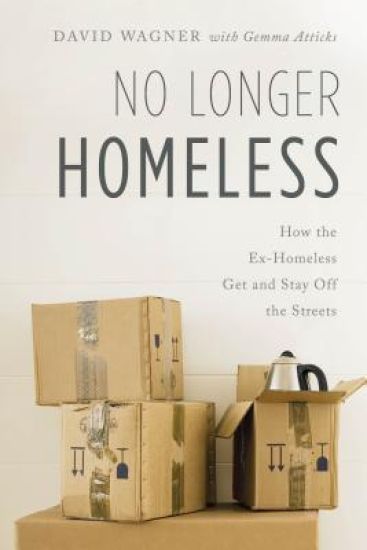
Research suggests that between 6 and 14 percent of the US population has been homeless at some point in their lives—a huge number of people. No Longer Homeless shares the stories of people who have formerly been homeless to examine how they transition off the streets, find housing, and stay housed. No Longer Homeless offers a unique perspective of people who have managed to change their lives, the resources they needed, and the factors that contributed to lasting change. The book profiles men and women of different races and ages across the country, and it shares stories of people who have been off the streets from two months to twenty years. It addresses topics such as addiction, mental health, income—from formal employment and off-the-books work, and community resources. No Longer Homeless is a powerful look at a group of people we rarely hear about—those who have formerly been on the streets—sharing the details of their lives to help individuals, organizations, and communities learn to better support the ongoing challenges of homelessness.
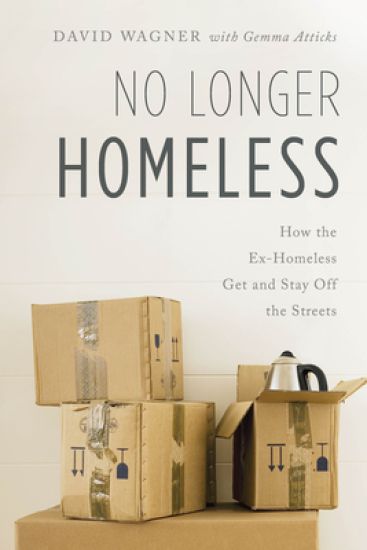
Research suggests that between 6 and 14 percent of the US population has been homeless at some point in their lives—a huge number of people. No Longer Homeless shares the stories of people who have formerly been homeless to examine how they transition off the streets, find housing, and stay housed. No Longer Homeless offers a unique perspective of people who have managed to change their lives, the resources they needed, and the factors that contributed to lasting change. The book profiles men and women of different races and ages across the country, and it shares stories of people who have been off the streets from two months to twenty years. It addresses topics such as addiction, mental health, income—from formal employment and off-the-books work, and community resources. No Longer Homeless is a powerful look at a group of people we rarely hear about—those who have formerly been on the streets—sharing the details of their lives to help individuals, organizations, and communities learn to better support the ongoing challenges of homelessness.

Lifeguard Blood: Four Brothers Share Their True Harrowing Stories From the Beach
David Wagner
Createspace Independent Publishing Platform
2018
nidottu
How does a scrawny kid who despises swimming-especially in the bitterly cold waters of the Pacific Ocean during the month of March-become one of a handful of aquatic athletes selected to become an ocean lifeguard for his coastal town in Southern California? For Dave Wagner, protecting the lives of swimmers and surfers was already a family tradition, starting with his father and carried on by his two older brothers, sister, and twin brother. The pressure was on With the Wagner family comprising, at one point, roughly 10% of the Oceanside Lifeguard Agency, Dave is uniquely qualified to share these real-life stories of danger and heroism from his over three decades of ensuring the safety of ocean beachgoers, both in and out of the water. The first hand rescues described by the author, a few of which unfortunately end in tragedy, are a gripping portrayal of how beach lifeguards regularly put their lives on the line to save the lives of others. The job requires physical ability, courage, endurance, and altruism, but most of all, respect for the tremendous power and unpredictability of the ocean. Follow Dave, and at times his brothers, as he relates true life-and- death encounters from the top of the lifeguard tower. It may forever change the way you think about your next trip to the beach...

A groundbreaking critique of American charity which Barbara Ehrenreich says "demolishes the conventional wisdom that private philanthropy is innately superior to public welfare measures." What's Love Got to Do with It? is an insightful debunking of the way charitable giving disguises American neglect of the public welfare. Award-winning Professor of Social Work and Sociology David Wagner points out that while the United States prides itself on being one of the most generous nations, it provides its citizens with the lowest public benefits of any Western society and has rates of poverty and inequality among the highest in the industrialized world. These two facts, Wagner argues, are not unrelated: independent philanthropy actually provides a cover for the harshness of America's free-market capitalism. In a book that Howard Zinn, author of A People's History of the United States, says "raises sobering questions for all of us who want to live in a just society," Wagner offers a provocative contribution to our thinking on philanthropy and social welfare.Author Biography: David Wagner's previous books include the award-winning Checkerboard Square and The New Temperance. He is a professor of social work and sociology at the University of Southern Maine.

David Wagner explores the lives of poor people during the three decades after the Civil War, using a unique treasure of biographies of people who were (at one point in time) inmates in a large almshouse, combined with genealogical and other official records to follow their later lives. Ordinary People develops a more fluid picture of "poverty" as people's lives change over the course of time.
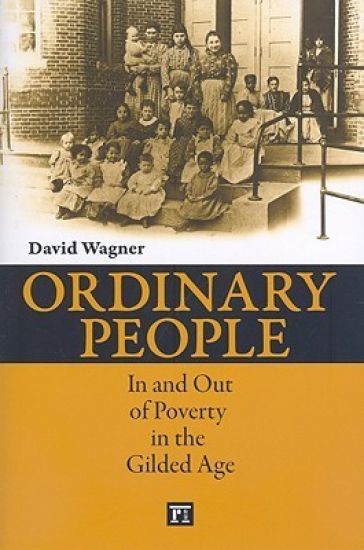
David Wagner explores the lives of poor people during the three decades after the Civil War, using a unique treasure of biographies of people who were (at one point in time) inmates in a large almshouse, combined with genealogical and other official records to follow their later lives. Ordinary People develops a more fluid picture of "poverty" as people's lives change over the course of time.