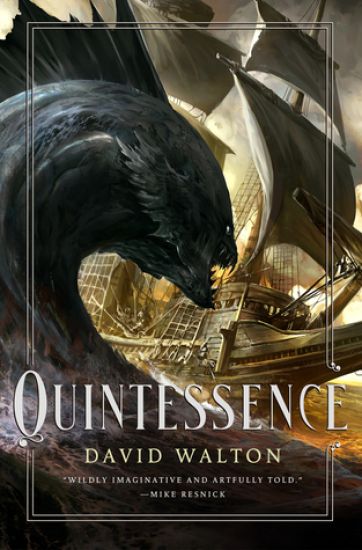
Five hundred years ago, in an alternate Age of Exploration, the earth is flat. Alchemy is a true science, sea monsters menace the oceans, and Europe is embroiled in religious controversy. At the edge of the world, where the stars reach down close to the Earth, wonders abound. This drives the bravest explorers to the beckoning Western Ocean.Christopher Sinclair is an alchemist who cares only about one thing: quintessence, a substance he believes will grant magical powers and immortality. And he has a ship.Fleeing an inquisition, physician Stephen Parris follows Sinclair to an island that perches upon the farthest horizon, bringing his daughter Catherine with him. The island teems with fantastical animals and alluring mysteries...and may even harbor the most coveted secret of all ... in this novel by David Walton.
David Walton's collection of eight stories, five of which are set in Pittsburgh, offers darkly humorous meditations on modern life. In "Skin and Bone" an unexpected, strange, and ultimately tragic encounter between a karate student and his instructor raises questions about guilt and responsibility. "The Sundeck" touches on sex, loneliness, and the difficulty for people to meaningfully connect. In the title story, a dinner party attended by a struggling academic begins with the toast "No more angst or ennui" only to end in hostility and disaster. Evening Out was the first book to win the Flannery O'Connor Award for Short Fiction.
"Will be a very useful tool for any student trying to make sense of the vast expanses of contemporary cultural theory and criticism. Well-written and admirably self-reflective, it combines rigorous explications and applications of many of the most influential concepts and theorists." - Lawrence Grossberg, University of North Carolina "Accessible and insightful throughout; offering help to both experienced and inexperienced students of cultural theory. Highly recommended." - John Storey, University of Sunderland Doing Cultural Theory teaches more than just the basics of cultural theory. It unpacks its complexities with real-life examples, and shows readers how to link theory and practice. This book: Offers accessible introductions to how cultural studies has engaged with key theories in structuralism, poststructuralism and postmodernismTeaches straightforward ways of practising these theories so students learn to think for themselvesUses 'practice' boxes to show students how to apply cultural theory in the real worldGuides students through the literature with carefully selected further reading recommendation. Other textbooks only show how others have analyzed and interpreted the world. Doing Cultural Theory takes it a step further and teaches students step-by-step how to do cultural theory for themselves.
"Will be a very useful tool for any student trying to make sense of the vast expanses of contemporary cultural theory and criticism. Well-written and admirably self-reflective, it combines rigorous explications and applications of many of the most influential concepts and theorists." - Lawrence Grossberg, University of North Carolina "Accessible and insightful throughout; offering help to both experienced and inexperienced students of cultural theory. Highly recommended." - John Storey, University of Sunderland Doing Cultural Theory teaches more than just the basics of cultural theory. It unpacks its complexities with real-life examples, and shows readers how to link theory and practice. This book: Offers accessible introductions to how cultural studies has engaged with key theories in structuralism, poststructuralism and postmodernismTeaches straightforward ways of practising these theories so students learn to think for themselvesUses 'practice' boxes to show students how to apply cultural theory in the real worldGuides students through the literature with carefully selected further reading recommendation. Other textbooks only show how others have analyzed and interpreted the world. Doing Cultural Theory takes it a step further and teaches students step-by-step how to do cultural theory for themselves.
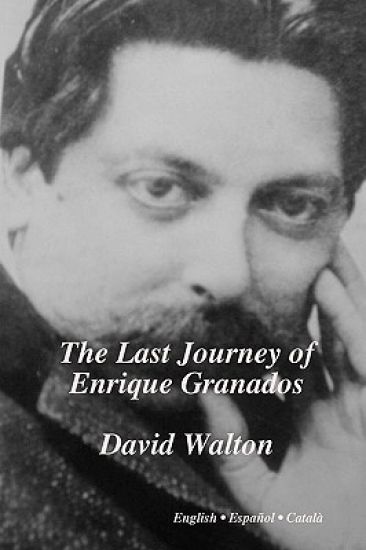
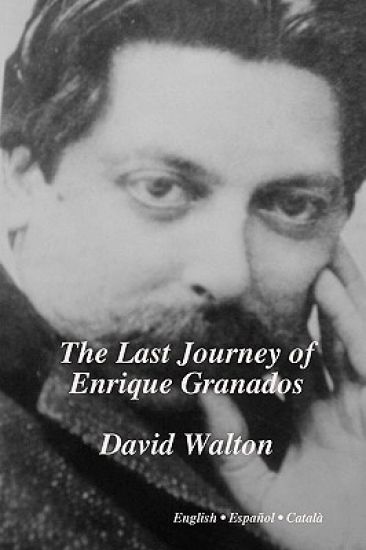
"A survivor of the 1916 torpedo attack on a Cross channel ferry, Sussex, recognised Spanish composer Granados in a lifeboat, his wife in the water. Granados dived in to save her and perished. Subsequently, the Sussex incident became a pawn in the propaganda battle of WW1. Extensive research into family involvement in WW1 put Walton in possession of historical detail not generally known. He assisted American novelist John Milton to obtain background material for 'The Fallen Nightingale'. Walton subsequently wrote his own account of the composer's unhappy final journey.This is the truth behind the story. David Walton graduated in Modern Languages at University College, London, and undertook further studies at the University of Florence and at Trinity College of Music. He worked for some years as a Civil Servant, notably at the port of Folkestone, where he became very familiar with cross-Channel ferries between England and France. Book includes translations in Spanish and Catalan."
A survivor of the 1916 torpedo attack on a Cross channel ferry, Sussex, recognised Spanish composer Granados in a lifeboat, his wife in the water. Granados dived in to save her and perished. Subsequently, the Sussex incident became a pawn in the propaganda battle of WW1. Extensive research into family involvement in WW1 put David Walton in possession of historical detail not generally known. He assisted American novelist John Milton to obtain background material for 'The Fallen Nightingale'. This book, which includes translation into Spanish and Catalan, is Walton's own account of the composer's unhappy final journey. It is the truth behind the story.
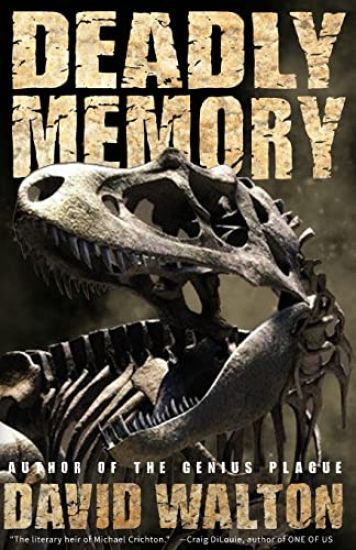
"Walton has brought hard sci-fi roaring back to life." -WALL STREET JOURNALTHE PAST TURNS DEADLY in this sequel to the globe-spanning paleontology thriller Living Memory. Ancient genetic technology drives world politics as China and the US vie for the power contained in Thailand's fossil deposits. Deep in an underground CIA facility, Samira studies an unprecedented find but fears her discoveries will be used as a weapon. Meanwhile, from the depths of the ocean, a killer organism surfaces that hasn't been seen in two hundred and fifty million years. Will world powers share what they know in time to save humanity?"The literary heir of Michael Crichton. LIVING MEMORY packs an exciting thriller with intriguing science." -Craig DiLouie, author of THE CHILDREN OF RED PEAK"Walton brings rich detail to the concept of scientifically adept dinosaurs who recorded their memories for posterity on the eve of their extinction and keeps the modern timeline just as gripping with tense geopolitics, smugglers, and resurrected mammoths and dodos. Readers will be hooked." -Publishers Weekly"Living Memory is first-rate hard science fiction. Michael Crichton would approve and so do I. Highly recommended " - The Internet Review of Books"David Walton is one of our very best writers of science-fiction thrillers." -Robert J. Sawyer, Hugo Award-winning author of Quantum Night
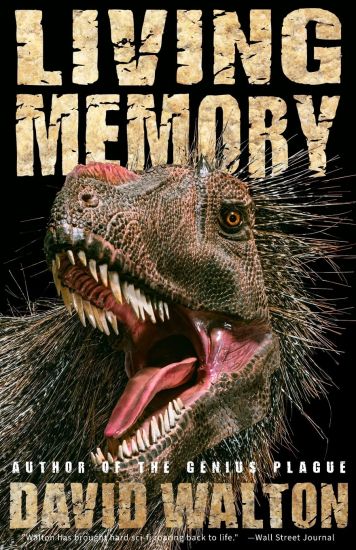
We always thought we were the first.When paleontologists Samira and Kit uncover dinosaur skeletons in northern Thailand, they also find the remains of an ancient genetic technology that nations will kill to control. Catapulted into a web of murder and intrigue involving the Chinese Ministry of State Security, a powerful Asian crime syndicate, the CIA, and a beautiful Thai princess, Samira and Kit don't know who they can trust. Torn apart by competing factions and stranded on opposite sides of the world, they race to discover the truth before the world goes to war. Can they bring the past to life before it kills them all?Living Memory is the first book of a globe-spanning thriller series by the author of The Genius Plague.
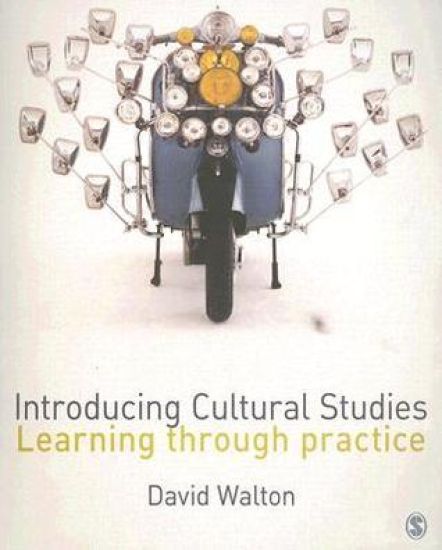
"An outstanding entry level text aimed at those with little or no cultural studies knowledge... Innovative, creative and clever." - Times Higher Education "The ideal textbook for FE and first year HE cultural studies students. Its quality and character allow the reader to ‘feel’ the enthusiasm of its author which in turn becomes infectious, instilling in the reader a genuine sense of ebullient perturbation." - Art/Design/Media, The Higher Education Authority An introduction to the practice of cultural studies, this book is ideal for undergraduate courses. Full of practical exercises that will get students thinking and writing about the issues they encounter, this book offers its readers the conceptual tools to practice cultural analysis for themselves. There are heuristics to help students prepare and write projects, and the book provides plenty of examples to help students develop their own ideas. Written in a creative, playful and witty style, this book: Links key concepts to the key theorists of cultural studies. Includes a wide range of references of popular cultural forms. Emphasizes the multidisciplinary nature of cultural studies. Includes pedagogical features, such as dialogues, graphs, images and recommended readings. The book's skills-based approach enables students to develop their creative skills, and shows students how to improve their powers of analysis generally.
"An outstanding entry level text aimed at those with little or no cultural studies knowledge... Innovative, creative and clever." - Times Higher Education "The ideal textbook for FE and first year HE cultural studies students. Its quality and character allow the reader to ‘feel’ the enthusiasm of its author which in turn becomes infectious, instilling in the reader a genuine sense of ebullient perturbation." - Art/Design/Media, The Higher Education Authority An introduction to the practice of cultural studies, this book is ideal for undergraduate courses. Full of practical exercises that will get students thinking and writing about the issues they encounter, this book offers its readers the conceptual tools to practice cultural analysis for themselves. There are heuristics to help students prepare and write projects, and the book provides plenty of examples to help students develop their own ideas. Written in a creative, playful and witty style, this book: Links key concepts to the key theorists of cultural studies. Includes a wide range of references of popular cultural forms. Emphasizes the multidisciplinary nature of cultural studies. Includes pedagogical features, such as dialogues, graphs, images and recommended readings. The book's skills-based approach enables students to develop their creative skills, and shows students how to improve their powers of analysis generally.
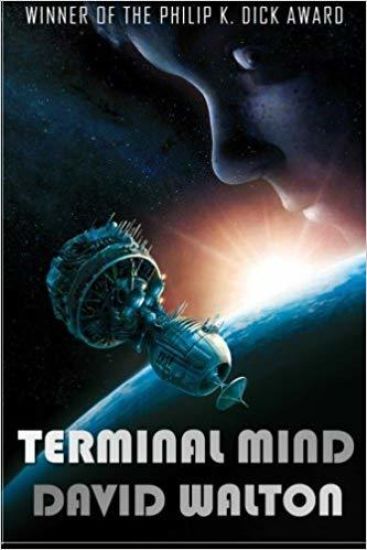
The Philip K. Dick award-winning science fiction novel. Years in the future, the U.S. is a splintered country. The city-state of Philadelphia is ripe for revolution. Mark McGovern, the son of a rich politician, lives in a world of expensive parties and frivolous biological mods, a sharp contrast to the poor underworld of his best friend, Darin Kinsley. When the two accidentally release a sophisticated virus called a 'slicer' into the net, Mark must try to stem the tide of casualties before the charged political situation explodes. But the slicer is more than a virus. To destroy it, Mark must first sort truth from lies, not only for himself, but for the mind of the child who holds his fate.
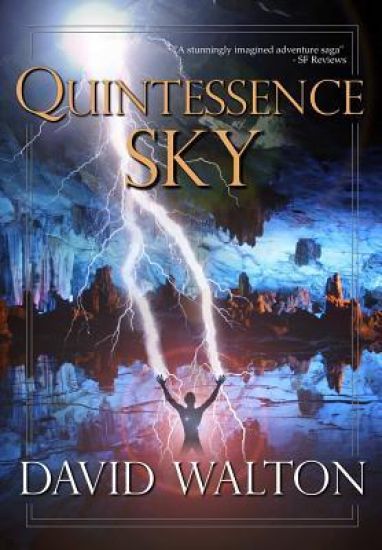
Quintessence Sky continues where the events of Quintessence (Tor Books, 2013) left off. At the edge of the flat Earth, a strange fire in the sky burns, altering the balance of the elements and threatening all life on Horizon Island. Matthew Marcheford experiments to determine the cause, while the growing animosity of the manticores and the arrival of more ships from Europe jeopardize the colony's fragile peace. When Matthew's fiancee, Catherine Parris, is betrayed and abandoned deep underground, the secrets she uncovers there may be Horizon's last hope. King Philip of Spain, determined to control quintessence, hires a Jesuit priest named Ramos de Tavera. Ramos unlocks secrets that would give Philip the power to conquer the world, but he hesitates, knowing the king's ambition and brutality. Instead, he seeks the advice of Princess Elizabeth, imprisoned in the Tower, and his faith in church and country begins to falter. To protect his family from the king's wrath, Ramos must work together with Matthew and Catherine across thousands of miles to rescue Elizabeth and save the Horizon colony from destruction.
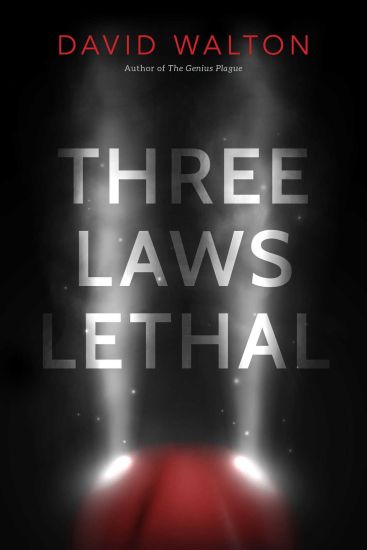
Featured on Wall Street Journal's list of the Best Science Fiction of 2019 The place, New York City; the time, the very near future. The streets of Gotham are swarming with self-driving cars, which are now a reality, and the competition between two entrepreneurs for this cutthroat futuristic business grows increasingly fierce. But when the escalating technological warfare produces superintelligent AI computers that use data to decide who should live and die, the results are explosive . . . and deadly. It is left to young Naomi Sumner, inventor of the virtual world in which the AIs train, to recognize that the supercomputers are developing goals of their own--goals for which they are willing to kill. But can she stop these inhuman machines before it is too late? More importantly, will she stop them? Three Laws Lethal takes the reader on a wild ride in a world that is still imaginary . . . for now . . .
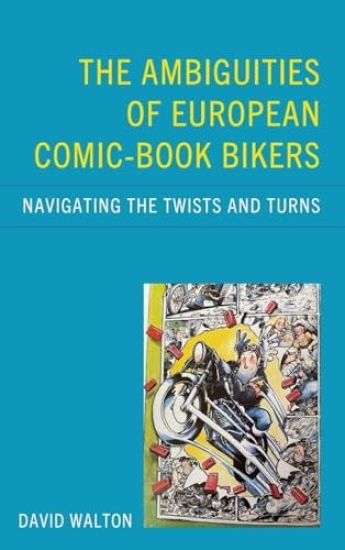
In this book, David Walton explores European comic-book biker publications as a subgenre of popular culture. Using a multidisciplinary approach, he reveals an intricate amalgam of ingenuity, irony, and highly ambiguous humor. The creative resourcefulness of the comic-book biker authors is seen to dramatize and celebrate the material existence of motorcycles and lifestyles while laughing at the foibles, inconsistencies, manias, fantasies, and practices of those characterised as motorized flâneurs. At the core of Walton’s analysis is the exploration of identity formation, marked by tensions between individualism and collective affinities, undermined by egoism and competitiveness.At the same time, Walton argues that the storylines (despite much comic invention, caricature, and exaggeration) create resonances which hold up a distorted but highly revealing mirror to the multiple subgroups of people who ride motorcycles for pleasure. The author also demonstrates how the implied biker-readers of this subgenre confront comic representations of themselves which repeatedly undermine any positive self-image they may possess. Yet the comics are also seen to offer valuable insights into much broader cultural concerns ranging from subculture, consumption habits, (in)authenticity, taste, freedom, risk, and delinquency – without forgetting other key aspects of cultural studies like class, race and ethnicity, gender, sexuality, and ecocriticism.
Small Space Living: 30 Creative Easy DIY Hacks How To Live Comfortable In Your Tiny House Tiny House Living: Ways to Furnish and Decorate Each Room of Your 5-Room House is a book that talks about various interesting and exciting ideas of decorating and furnishing a house. They are easy to adopt ideas, and above all, help you save a lot of money. The book has 4 chapters in total. The author has not only brought out the content in words but also in pictures, so that you read and also visualize what is addressed in the book. The Chapters, 1 to 4, are 'Simple decorating tips to make your rooms look more fabulous, How to choose the perfect paint color of your living room, Tips to decorate your Bedroom and Ways to Furnish and Decorate Each Room of Your 5-Room House respectively. This information will help you a lot when it comes to furnishing and decorating your house, as many people end up getting it all wrong because of some misguided information. Just to give you a gist, did you know why your house suddenly looked so small when you painted a certain color on the wall? Well, this book will inform you why it is so, and by clicking page by page, you will also learn some of things you ought to consider before choosing a paint color for your wall. The author also gives you various ways you can use to decorate and furnish your rooms, from the bedroom, to the kitchen (which is regarded as the heartbeat of the home), to the living room and not forgeting the young ones too, kids' room. Loaded with every information you need about decorating and furnishing your house, you can do yourself justice by getting its copy before it is too late. Happy reading Download your E book "Small Space Living: 30 Creative Easy DIY Hacks How To Live Comfortable In Your Tiny House" by scrolling up and clicking "Buy Now with 1-Click" button
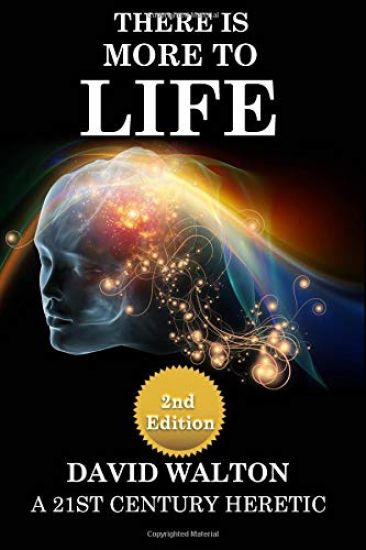
David has been having 'spiritual experiences' since he was five years old and this book is his life story and a lot more. He explains that there is more support from 'them upstairs' than we realise, it's easy to get and available to us all, every last one of us. Quantum Science throws 'light' on some of his experiences and he reference others who have also had similar experiences to his. When we look at individual events in isolation they may not seem to mean much, however when we pull everything together we begin to see the 'big picture'. This is the intention of this book, to pull things together, to see the big picture and what a picture it is. What he shows is what Quantum Science calls 'dimensions' can also be called 'spiritual experiences.' Some may understand Quantum Science by experience if not the complex mathematics. David has been having experiences of other dimensions for over 60 years. He now knows that 'Mother Ayahuasca, ' the sacred plant medicine from South America, instigated all of them. Ayahuasca opens our consciousness to the higher dimensions where we meet 'entities' of great wisdom. Mother Ayahuasca is one, she is known by many names, another being, 'The Holy Spirit.' The first edition of this book was published in 2016. Since then his relationship with Mother Ayahuasca or 'The Holy Spirit' has become deeper, more profound and meaningful. She has taught and is still teaching him about the very nature of our three dimensional reality and what the higher 'dimensions' offer. Mother Ayahuasca, 'The Holy Spirit', is pure unconditional love; she has a great sense of humour and is an absolute joy to 'connect' with. She knows us better than we know ourselves and has great wisdom. When needed she can be firm and even administer 'tough love', ultimately she is the best friend you could ever have as all you ever get from her is honesty and truth. Her initial teachings are very personal; we are taught what we need to be taught not what we may ask to learn. Once we implement these lessons, which we have to do if we want to progress, she takes us further, into the very nature of consciousness and the experience of 'heaven' and that is not what you may think. She has guided his consciousness above our three dimensional realm on many occasions and this is what this book is about. The experience of stepping outside time was though a huge challenge for him. More recently he has physically dematerialised; He'd not have known this without a witness. He's told this is the beginning of the next stage of his learning that will lead to bi-location. Quantum Science is right, time and space are illusionary and we can transverse them. David is also directed by a channelled entity that describes Mother Ayahuasca as his sister. Zak sits in what he calls 'an ocean of consciousness' that is inhabited by Christ Consciousness, Buddha Nature and more. It is in this 'ocean of consciousness' that religious deities can be found, ultimately they, and we, are all one. Zak explained why in 2014 he was directed to Peru to discover Mother Ayahuasca. She was needed for his spiritual development that he tells him has now plateaued at a spiritual dimension of 22. He sits at 26 and the majority of people in the third dimension sit between 12 and 15. This may sound grandiose but when you read what has been happening to him over the past 60 years it does provide an explanation. What Mother Ayahuasca - The Holy Spirit - Zak and others, have taught him contradicts the Western paradigm of traditional science and religions but does show us that, in reality - 'There Is More To Life' - and he shows you how to discover this for yourself.
Effectively understand yourself and others, to achieve a happier, healthier life.Improve your personal and professional relationships by learning a range of mental skills that can help you to successfully manage both yourself and the demands of working with others. Teaching you to stay in control, interpret body language and cope with negativity, this Practical Guide will help you to become aware of your own feelings and those of others, understand them and manage their impact.Filled with exercises, case studies and useful tips, Emotional Intelligence will help you to get smart about emotions and improve both your physical and psychological well-being.
Chronic pain affects huge numbers of people - the WHO estimates that 37-41% of people across developed and developing countries suffer, and the figure rises in countries like the UK where the population is ageing. From arthritis to migraine, back pain to diabetes, chronic pain is a huge problem for individuals, their families and carers, health providers and employers.David Walton, a clinical and cognitive psychologist who experiences chronic pain himself, guides readers through an understanding of the nature of pain; how the body and mind react to it; how to minimise pain; and how to choose the right therapies, medication and relief strategies. Modern research is presented in an engaging and positive way, alongside self-assessment questionnaires, case studies and practical do's and don'ts.Through an understanding of pain mechanisms and relief strategies, readers will be enabled to manage their symptoms better and regain some control over their daily lives.
A compassionate, life-changing guide to coping with pain, using psychological and practical strategies.Chronic pain affects huge numbers of people - the WHO estimates that 37-41% of people across developed and developing countries suffer, and the figure rises in countries like the UK where the population is ageing. From arthritis to migraine, back pain to diabetes, chronic pain is a huge problem for individuals, their families and carers, health providers and employers.David Walton, a clinical and cognitive psychologist who experiences chronic pain himself, guides readers through an understanding of the nature of pain; how the body and mind react to it; how to minimise pain; and how to choose the right therapies, medication and relief strategies. Modern research is presented in an engaging and positive way, alongside self-assessment questionnaires, case studies and practical do's and don'ts.Through an understanding of pain mechanisms and relief strategies, readers will be enabled to manage their symptoms better and regain some control over their daily lives.
Wilde Between the Sheets: Oscar Wilde, Mail Bondage and De Profundis argues that Oscar Wilde’s narrative strategies reveal a quick-witted, ingenious fighter—an active agent who tested boundaries and recognized the dangers of doing so, adopting essentialist or anti-essentialist strategies according to whatever shifting purpose he is writing with. David Walton challenges the one-dimensional view of Wilde as a tragic victim defeated by the penal system, arguing that Wilde constructed a self by weaving complex networks of time and paradoxical notions of space, along with a network of literary references and other intertexts. Walton goes on to claim that Wilde fashions a self while simultaneously being shaped by those he fashions, creating a critical dialogue which shows that, by constructing Wilde through interpretive acts, he has already been partially fashioned by Wilde himself.