Kirjojen hintavertailu. Mukana 11 244 527 kirjaa ja 12 kauppaa.

Kirjahaku

Etsi kirjoja tekijän nimen, kirjan nimen tai ISBN:n perusteella.

55 kirjaa tekijältä David Whitwell

Recovery Beyond Psychiatry

Recovery Beyond Psychiatry

David Whitwell

Free Association Books
2005
nidottu
David Whitwell's thesis is that it is not conventional psychiatric treatment that is key to recovery but non-specific aspects of care such as support, safety, general health, good relationships. The author's conclusion is that recovery should be adopted as the goal of mental health services. Treatment then becomes just one option that can be used in certain situations, for example acute psychiatry becomes a particular set of procedures for dealing with essentially urgent and dangerous situations - as a special kind of first aid which needs to be fitted into the individual's long-term recovery plan.
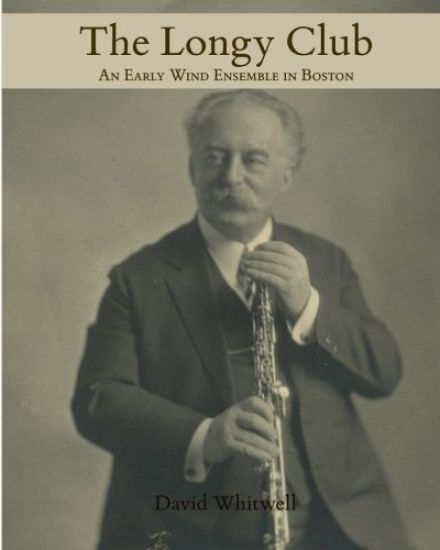
The Longy Club: 1900-1917

The Longy Club: 1900-1917

David Whitwell

Whitwell Publishing
2011
nidottu
The Longy Club was a large chamber wind ensemble made up entirely of members of the Boston Symphony and founded by the principal oboist, Georges Longy. Longy and several of the other players had been students of the musicians of the famous Soci t de Musique de Chambre pour Instruments Vent in Paris which had commissioned the well-known Petite Symphonie by Gounod. Repertoire lists--This book includes a complete repertoire list of both the Longy Club and the Soci t de Musique de Chambre pour Instruments Vent. The numerous reviews of several Boston newspapers provide a fascinating view of musical taste in Boston during the first years of the 20th century.
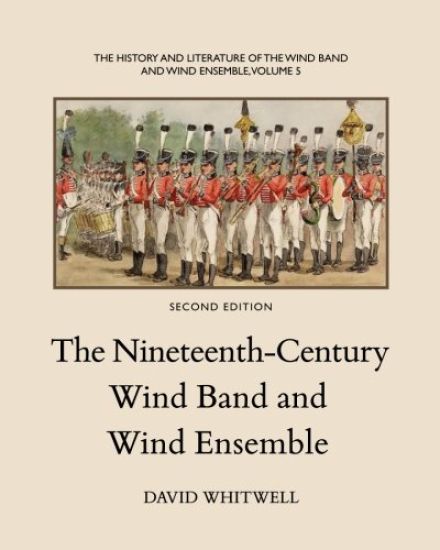
The History and Literature of the Wind Band and Wind Ensemble: The Wind Band and Wind Ensemble of the Classical Period
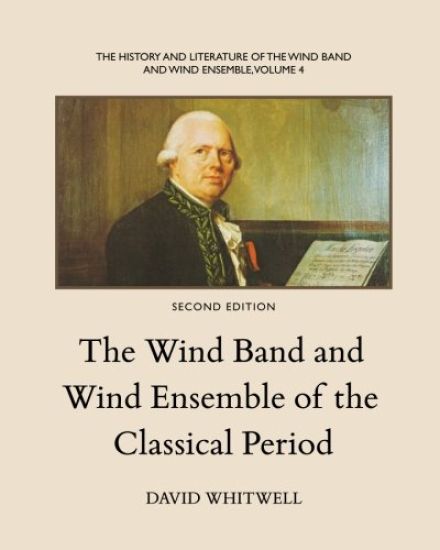
The Wind Band and Wind Ensem-ble of the Classical Period is the fourth vol-ume in Dr. David Whitwell's ground break-ing thir-teen vol-ume His-tory and Lit-er-a-ture of the Wind Band and Wind Ensem-ble series. Whitwell's metic-u-lous schol-ar-ship reveals the con-tin-u-ous his-tory of the wind ensem-ble, from its ear-li-est roots to the twentieth cen-tury - an unbro-ken tra-di-tion of wind music that music schol-ars have never been fully able to appre-ci-ate until now. This vol-ume includes the story of the transformation of the twelve-member Hautboisten bands into the remarkable Harmoniemusik repertoire of the Classical Period. This is the climax of the history of the small band with the greatest composers, including Mozart, Haydn, Beethoven and Schubert, composing for an ensemble associated with the highest society. At the same time occurs the beginning of the preference for the modern large ensemble, created for an integral role in the political celebrations of the historic French Revolution.
Aesthetics of Music: Aesthetics of Music in the Early Renaissance
For the first time, Dr. David Whitwell presents a thor-ough study of the per-for-mance of music in soci-ety together with the philo-soph-i-cal views on art ver-sus enter-tain-ment, the role of per-for-mance in edu-ca-tion and char-ac-ter for-ma-tion and how ear-lier philoso-phers viewed the inter-play among Rea-son, Emo-tions, expe-ri-ence and the senses. The present vol-ume stud-ies these ques-tions and more dur-ing the first two cen-turies of the Renais-sance. While the Church con-tin-ued to spon-sor impor-tant music, the spot-light had clearly turned to the grow-ing cul-ti-va-tion of the arts in the indi-vid-ual courts and the pub-lic at large, as is doc-u-mented by a num-ber of great writ-ers, among them Petrarch, Boc-cac-cio and Chaucer. It should be no sur-prise that some friends of Leonardo da Vinci con-sid-ered him the great-est musi-cian known to them, a fact almost entirely for-got-ten today. This wide inter-est in the per-for-mance of music caused the music the-o-rists to begin to aban-don the old Church dogma about music being a branch of math-e-mat-ics and to recon-sider music as an expres-sion of man.
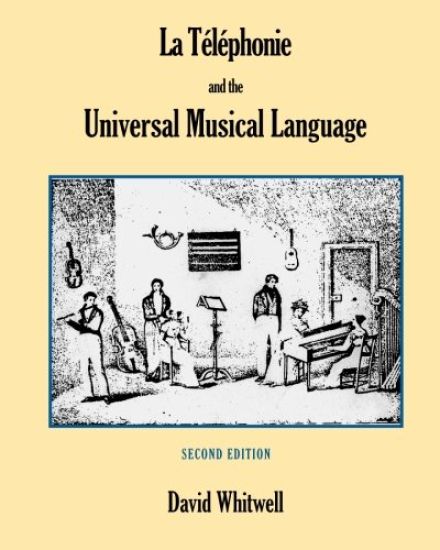
La Téléphonie and the Universal Musical Language
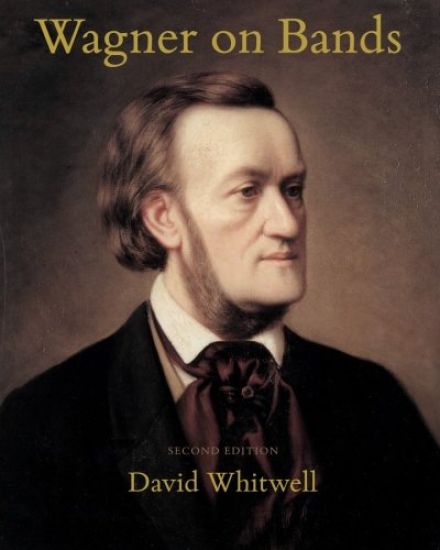
Fran ois Sudre was a nineteenth-century musician who invented something long dreamed of by philosophers: a language based on music. For several decades he successfully demonstrated his new musical language throughout Europe to astonished audiences. No one ever reported a case where this system failed to communicate a desired text, regardless of the original language. On the other hand, no one else could duplicate his accomplishment and so the new musical language failed to take root. There was one remarkable result, however, for Sudre's system was clearly the seed which, in Wagner, blossomed into his leit-motiv idea associated with his four operas of The Ring.