Kirjojen hintavertailu. Mukana 12 373 699 kirjaa ja 12 kauppaa.

Kirjahaku

Etsi kirjoja tekijän nimen, kirjan nimen tai ISBN:n perusteella.

7 kirjaa tekijältä David William Cohen

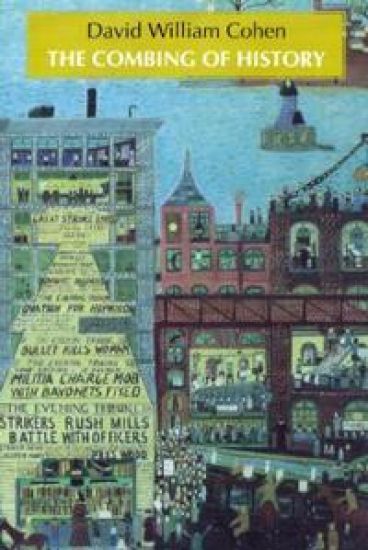
The Combing of History

The Combing of History

David William Cohen

University of Chicago Press
1994
sidottu
How is historical knowledge produced? And how do silence and forgetting figure in the knowledge we call history? Taking us through time and across the globe, David William Cohen's exploration of these questions exposes the circumstantial nature of history. His investigation uncovers the conventions and paradigms that govern historical knowledge and historical texts and reveals the economic, social and political forces at play in the production of history. Drawing from a wide range of examples, including African legal proceedings, German and American museum exhibits, Native American commemorations, public and academic debates, and scholarly research, David William Cohen explores the "walls and passageways" between academic and non-academic productions of history.
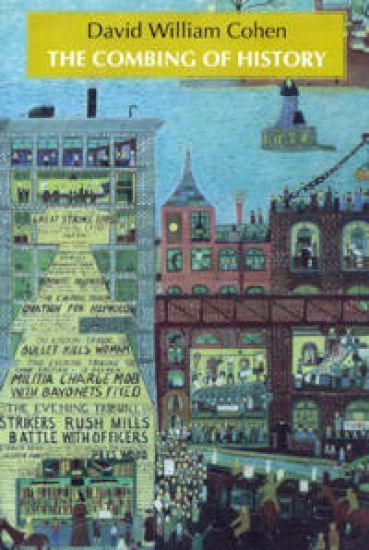
The Combing of History

The Combing of History

David William Cohen

University of Chicago Press
1994
nidottu
How is historical knowledge produced? And how do silence and forgetting figure in the knowledge we call history? Taking us through time and across the globe, David William Cohen's exploration of these questions exposes the circumstantial nature of history. His investigation uncovers the conventions and paradigms that govern historical knowledge and historical texts and reveals the economic, social and political forces at play in the production of history. Drawing from a wide range of examples, including African legal proceedings, German and American museum exhibits, Native American commemorations, public and academic debates, and scholarly research, David William Cohen explores the "walls and passageways" between academic and non-academic productions of history.
Womunafu's Bunafu

Womunafu's Bunafu

David William Cohen

Princeton University Press
2015
pokkari
This book reconstructs the career of Womunafu, the son of a ruler of a small state in what is today Uganda. Recognized as an infant to be possessed by Mukama, the spirit of a heroic figure in the tradition of the wider region, Womunafu was placed in a large enclosure, one of four he would occupy from 1830 until his death in 1906. During his long life Womunafu had many wives and children and achieved a position of dominance in the village that came to be known as Bunafu. In considering his life, David William Cohen offers an unusual study of the process through which authority was organized in a pre-colonial African community and advances the study of political institutions and change. His study also explores the nature of evidence regarding African history. By assessing the usefulness of various kinds of oral data and attempting to render the "moving contexts" of the past, the author makes significant methodological contributions to the disciplines of history and anthropology. Originally published in 1978. The Princeton Legacy Library uses the latest print-on-demand technology to again make available previously out-of-print books from the distinguished backlist of Princeton University Press. These editions preserve the original texts of these important books while presenting them in durable paperback and hardcover editions. The goal of the Princeton Legacy Library is to vastly increase access to the rich scholarly heritage found in the thousands of books published by Princeton University Press since its founding in 1905.
Womunafu's Bunafu

Womunafu's Bunafu

David William Cohen

Princeton University Press
2016
sidottu
This book reconstructs the career of Womunafu, the son of a ruler of a small state in what is today Uganda. Recognized as an infant to be possessed by Mukama, the spirit of a heroic figure in the tradition of the wider region, Womunafu was placed in a large enclosure, one of four he would occupy from 1830 until his death in 1906. During his long life Womunafu had many wives and children and achieved a position of dominance in the village that came to be known as Bunafu. In considering his life, David William Cohen offers an unusual study of the process through which authority was organized in a pre-colonial African community and advances the study of political institutions and change. His study also explores the nature of evidence regarding African history. By assessing the usefulness of various kinds of oral data and attempting to render the "moving contexts" of the past, the author makes significant methodological contributions to the disciplines of history and anthropology. Originally published in 1978. The Princeton Legacy Library uses the latest print-on-demand technology to again make available previously out-of-print books from the distinguished backlist of Princeton University Press. These editions preserve the original texts of these important books while presenting them in durable paperback and hardcover editions. The goal of the Princeton Legacy Library is to vastly increase access to the rich scholarly heritage found in the thousands of books published by Princeton University Press since its founding in 1905.
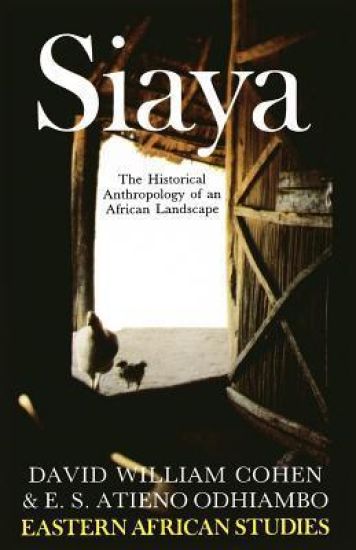
Siaya

Siaya

David William Cohen; E. S. Atieno Odhiambo

Ohio University Press
1989
pokkari
The authors of this highly original book set out to remove the persistent boundary between the authors and readers of ethnography on one hand and the subjects of ethnography on the other – those who observe and those who are observed. The authors use stories to reveal Siaya, the Luo-speaking area of Western Kenya down near the Lake but still surprisingly vulnerable to drought. There are the stories of survival by a woman with her carpenter husband in Nairobi, there is the launching of a boat as bride into the Lake and there is the great Boro Christmas disco riot. The book finishes with an Afterword on the burial of the lawyer S. M. Otiono that divided its whole of Kenya. It is both written about and for the Luo. It brings together Luo ideas and debates about their own past and present with findings, arguments and questions produced about this "other people;" by outside scholars writing in their own disciplines. Among the Luo, what constitutes culture, what is correct behavior, what is history, are questions that are heavily fought over. This is one of those rare books that makes students and other interested individuals question their own cultural preconceptions and what are the genuine concerns of academic disciplines.
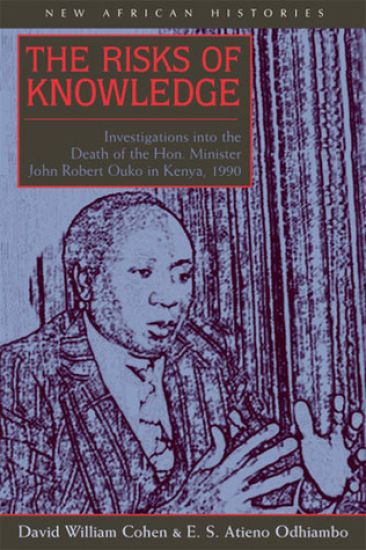
The Risks of Knowledge

The Risks of Knowledge

David William Cohen; E. S. Atieno Odhiambo

Ohio University Press
2004
sidottu
In February 1990 assailants murdered Kenya's distinguished Minister of Foreign Affairs and International Cooperation, Robert Ouko. The horror of the attack, the images of his mutilated and burned corpse, the evidence of a notorious cover-up, and the revelations of the pressures, conflicts, and fears he faced in his last weeks have engaged Kenya's publics for years. The Risks of Knowledge minutely examines the multiple and unfinished investigations into the crime. Among the probes was an extensive 1990 inquiry organized by a New Scotland Yard team invited to Kenya by the government, as well as an open public commission of inquiry appointed by President Daniel arap Moi. The commission ran for seventeen months in 1990-91 before the president shut it down. International and Kenyan unrest over Ouko's brutal death brought increasing attention to corruption and violence associated with the Moi government, leading in late 1991 to multiparty politics and in December 2002 to the elections that ended the Moi era. This powerfully argued book raises important issues about the production of knowledge and the politics of memory that will interest a large interdisciplinary audience.
The Risks of Knowledge

The Risks of Knowledge

David William Cohen; E. S. Atieno Odhiambo

Ohio University Press
2004
pokkari
In February 1990 assailants murdered Kenya's distinguished Minister of Foreign Affairs and International Cooperation, Robert Ouko. The horror of the attack, the images of his mutilated and burned corpse, the evidence of a notorious cover-up, and the revelations of the pressures, conflicts, and fears he faced in his last weeks have engaged Kenya's publics for years. The Risks of Knowledge minutely examines the multiple and unfinished investigations into the crime. Among the probes was an extensive 1990 inquiry organized by a New Scotland Yard team invited to Kenya by the government, as well as an open public commission of inquiry appointed by President Daniel arap Moi. The commission ran for seventeen months in 1990-91 before the president shut it down. International and Kenyan unrest over Ouko's brutal death brought increasing attention to corruption and violence associated with the Moi government, leading in late 1991 to multiparty politics and in December 2002 to the elections that ended the Moi era. This powerfully argued book raises important issues about the production of knowledge and the politics of memory that will interest a large interdisciplinary audience.